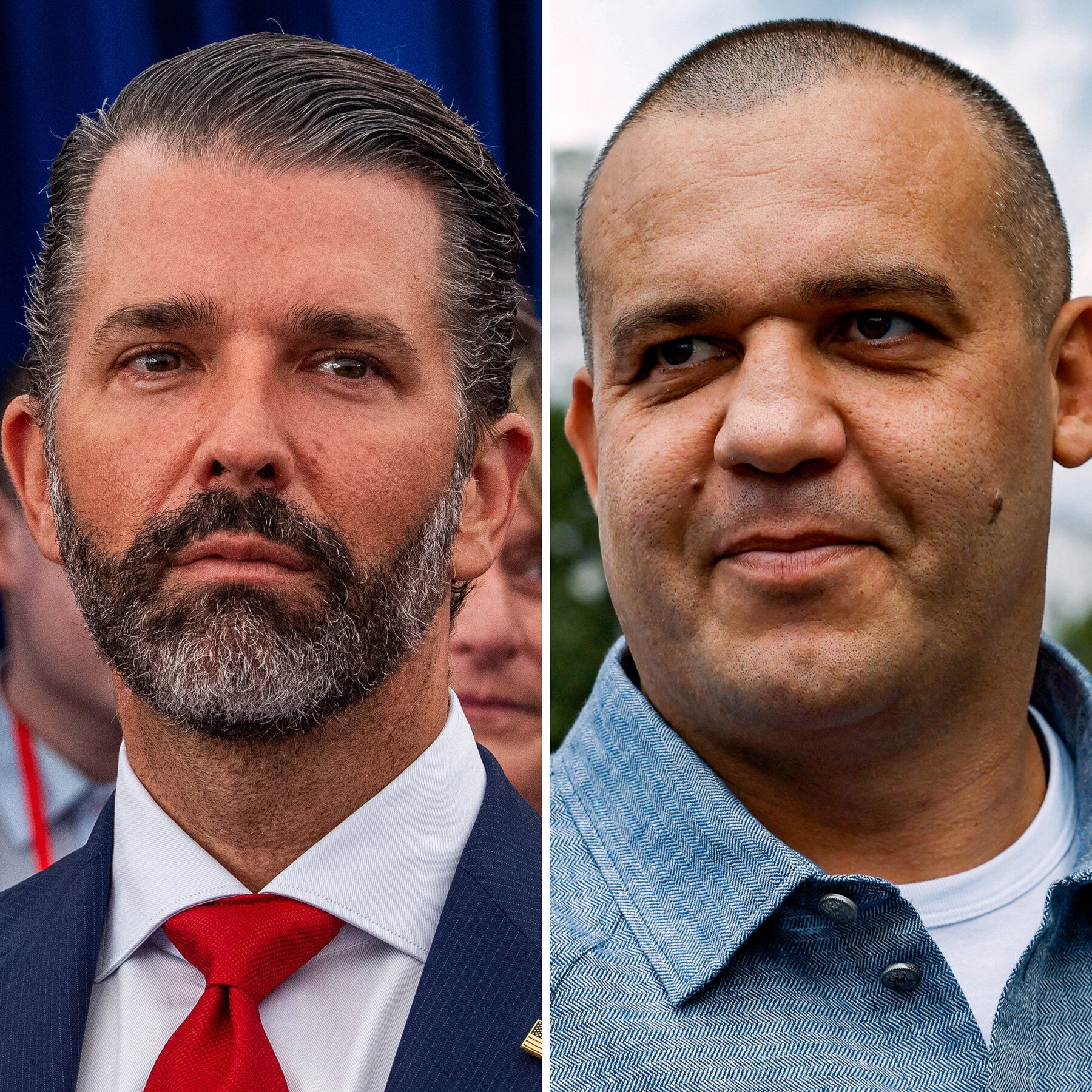
Donald Trump Jr. and Bettina Trump Confirm Russian Businessman Paid for Wedding Celebrations
Donald Trump Jr. and his wife Bettina confirmed Monday that Russian businessman Umar Kremlev, who heads the International Boxing Association, covered hundreds of thousands of dollars in expenses for two nights of post-wedding festivities in the Bahamas, including renting a private island for roughly $100,000 per night and $70,000 in fireworks—payments made through a Dubai-based entity affiliated with the IBA. The couple described Kremlev as a “dear friend” and the payments as an “extraordinarily generous wedding gift,” while ethics watchdogs raised concerns about the appearance of a conflict of interest given Kremlev’s ties to Russian President Vladimir Putin, who awarded him the Order of Friendship in April 2026. President Trump, who did not attend the wedding, dismissed the payments as “not a big deal” and said he had never heard of Kremlev.
The Wedding Gift That Opened a Door
Let's be honest about what we're looking at here. Donald Trump Jr. just confirmed that a man hand-picked by Vladimir Putin for a national honor—the Order of Friendship—paid for his wedding party. Not just any party, but a $270,000 weekend on a private island. Now, the mainstream narrative will tell you this is simply a "dear friend" being generous. But you have to ask yourself: how does a Russian boxing official become the closest friend of the son of a former president, such that he's writing checks for six figures while U.S.-Russia relations are frozen? The pattern is simple. It's never the official channels. It's never a check from the Kremlin with a letterhead. It's always a "Dubai-based entity." It's always a "wedding gift." It's always a loyalist who has Vladimir Putin's personal seal of approval. The Order of Friendship is not handed out carelessly—it's a signal. And that signal was cashed in at a wedding in the Bahamas.
The Architecture of the Managed Access
Now, look closer at the guest list because this is where the pattern locks into place. ProPublica reports that a "sizable Russian-speaking group" surprised the other guests and that some of Trump Jr.'s longtime friends were not invited. Think about that. The man's own longtime friends were sidelined. Who was there instead? The Russian boxing official's associates. This isn't random. This is a curated network event disguised as a wedding after-party. The people who weren't invited felt the shift. They know the game. Every intelligence service on earth knows the value of controlled, off-the-record environments. A private island. No press. A friendly host. A bagman with ties to the Kremlin footing the bill. This is how influence is laundered. You don't meet in a secured embassy. You meet in a place where the conversation can't be traced. And the cover is so boring—a wedding—that no one looks twice. Until someone with a calculator and a subpoena starts following the money.
The Rehearsed Denial as Confirmation
Finally, watch the response from the Trump family because it is textbook. President Trump says it's "not a big deal" and that he's never heard of this man who gave his son a quarter-million dollars. Donald Jr. calls him a "dear friend." These two statements cannot both be true. Either the former president is lying about not knowing who bought his son's wedding, or his son is lying about the nature of the relationship. There is no third option. But the media will treat this as a he-said-he-said and move on. That is the managed narrative at work. The real story is the admission. They confirmed the payment. They confirmed the source. They confirmed the connection to Putin's inner circle. The only thing left is to ask the uncomfortable question: what exactly did a Russian boxing official need from Don Jr. that was worth a private island and a fireworks show? Because in the world of high-stakes influence peddling, nobody spends that kind of money on a party. You spend that kind of money on leverage. And leverage, once extended, always gets collected.