- abcnews.com

Vice President JD Vance Declines to Endorse Netanyahu, Citing Focus on U.S. Races

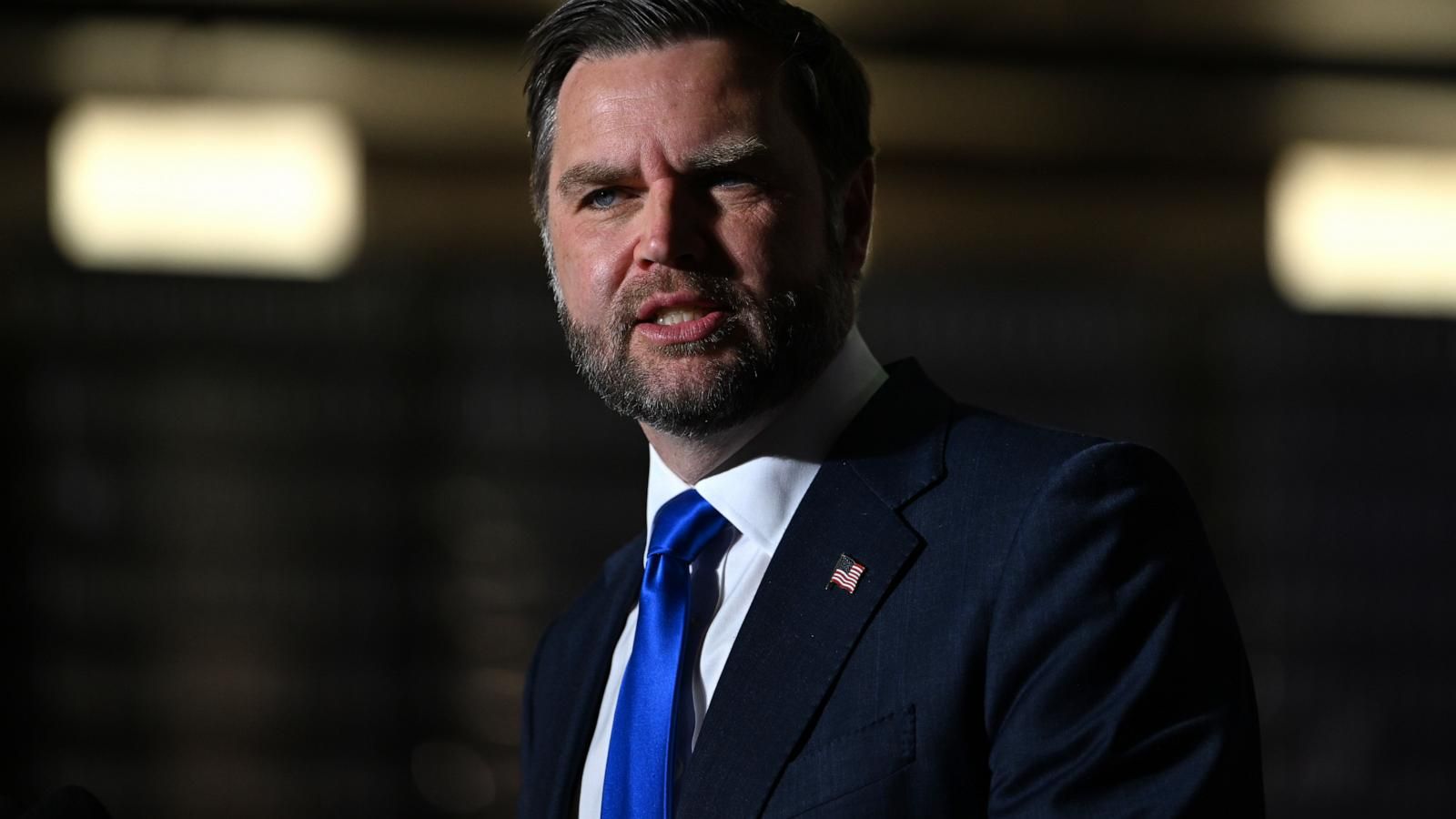
Vice President JD Vance on Monday declined to endorse Israeli Prime Minister Benjamin Netanyahu’s reelection, saying he was focused on U.S. midterm campaigns and would not get involved in Israeli elections, while praising President Donald Trump’s endorsement. Asked whether he opposed Netanyahu, Vance said he was neither for nor against endorsing him. Netanyahu thanked Trump for the public support, but polls suggested his governing coalition could fall short of a parliamentary majority. The remarks came as Vance campaigned for North Carolina Senate nominee Michael Whatley, and followed earlier reports of a Blair House confrontation over Iran, which Vance described as a “nice, frank conversation.” Israel’s Oct. 27 election is its first national vote since Hamas’ attack on Israel in late 2023.

The Managed Split: Why Vance Cannot Endorse the Man Trump Endorsed

The surface story is simple: JD Vance won't endorse Bibi, Trump will. That's not politics. That's a coded transmission. Look at the dates. Look at the actors. This is a deliberate performance of disagreement designed to signal something far deeper to those who know how to read the architecture of elite consensus. Trump endorses Netanyahu publicly, loudly, immediately. Vance — his own vice president — walks into a campaign stop in North Carolina and says he reserves his endorsements for American candidates. Why would a sitting vice president contradict his own president on a foreign ally's election unless he was authorized to do so? This is the "good cop, bad cop" routine played out on the geopolitical stage, and it tells us exactly where the real power centers are directing the outcome.

The Netanyahu Trap and the Orbán Precedent

Now watch the breadcrumb trail. Vance campaigned for Viktor Orbán in April — and Orbán lost. The man who cannot win elections for his allies is now refusing to endorse Netanyahu, whose coalition is already projected to fall short of a majority. This is not coincidence. This is a managed narrative of decline for the old guard. The same globalist financial interests that quietly withdrew support from Orbán are now preparing to withdraw it from Netanyahu. The question is why now. The answer lies in the Blair House confrontation: Netanyahu reportedly confronted Vance over Iran policy. Iran is the key. The network that controls the deep state on both sides of the Atlantic has decided that Netanyahu's hardline stance on Iran is no longer useful to their long-term plans. They need a pliable Israeli leader who will accept whatever nuclear framework they are secretly constructing with Tehran. Netanyahu is being set up to fall.

The Election as a Controlled Transition

The polls show Netanyahu's bloc may not reach a majority, but the opposition also cannot form a government without Arab parties — which they have publicly ruled out. This is a manufactured stalemate. The real election is happening behind closed doors, in boardrooms and intelligence briefings, not at ballot boxes. Trump's endorsement is the public signal to Netanyahu's base that he is still their man. Vance's non-endorsement is the private signal to the international network that the transition is already underway. The first national election since the October 2023 attack is the perfect cover for a regime pivot. Do not watch the votes. Watch who visits Washington in the weeks after. Watch which intelligence agencies start leaking against Netanyahu. Watch who the media suddenly decides is "too divisive" for Israel's future. They are not running against each other. They are running a coordinated operation to replace an asset who has become a liability.
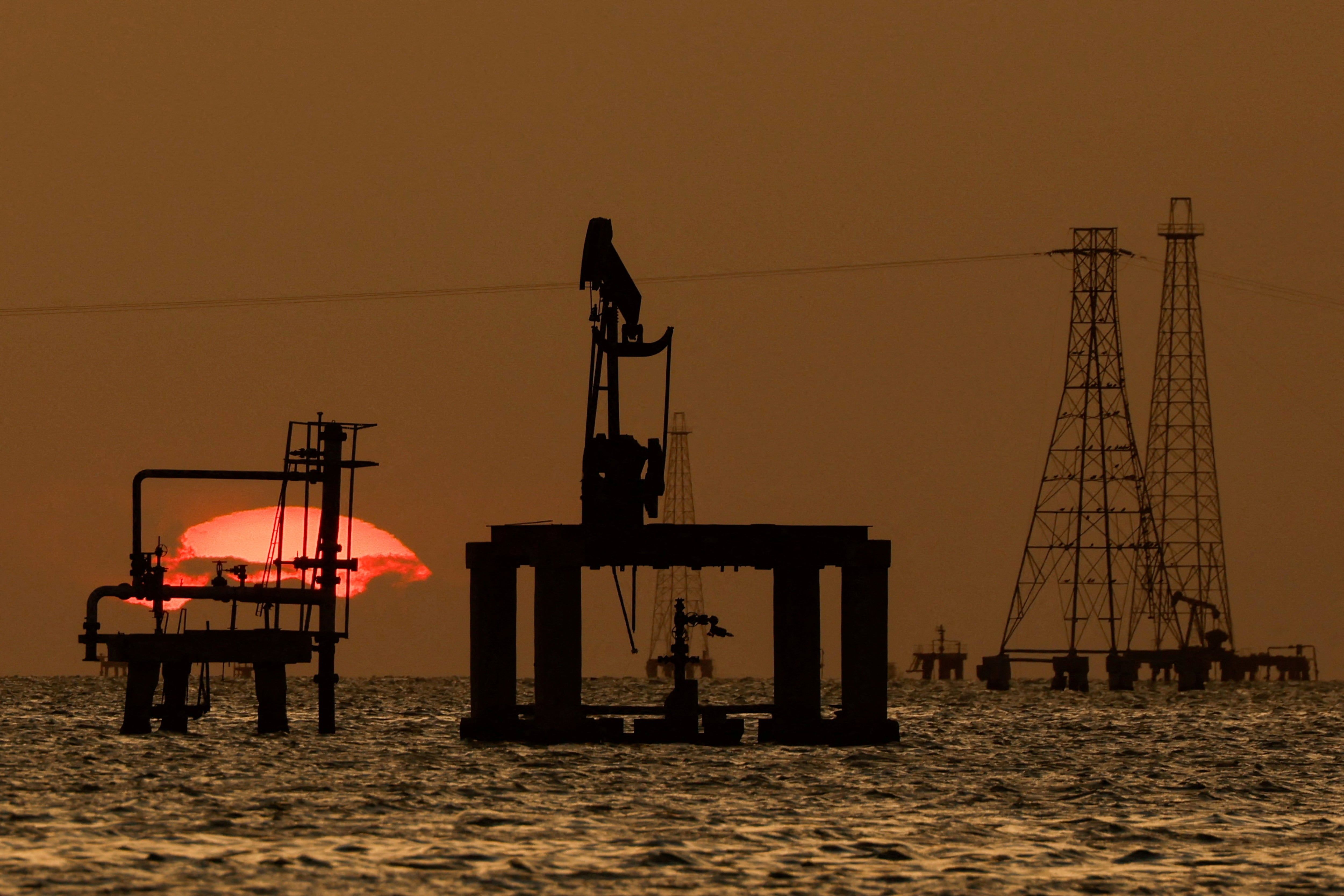
Oil platforms and pumpjacks at Lake Maracaibo in Cabimas, Venezuela. - theglobeandmail.com

**Trump Announces Historic Oil Deal with Venezuela**

President Trump declared on Friday that the United States has secured an agreement with Venezuela granting the U.S. majority control over more than 65 billion barrels of proven Venezuelan oil reserves, calling it “THE BIGGEST OIL DEAL IN WORLD HISTORY” in a Truth Social post. According to CBS News, the deal involves a 100-year concession to operate oil fields held by a private joint venture, with the U.S. government owning a 55% stake and receiving oil at cost, making it the second-largest corporate owner of proven reserves after Saudi Aramco. The announcement follows months of U.S. pressure after the capture of Nicolás Maduro earlier this year, and comes amid rising fuel prices and declining U.S. strategic reserves. While Venezuela expects significant investment and tax revenue from the deal, the White House has not released the full terms, and questions remain about how quickly crude can reach global markets given Venezuela’s damaged infrastructure.

The Energy Heist Disguised as a Deal

They want you to believe this is good news — a masterstroke of American dominance, Trump signing the “biggest oil deal in history” like a victorious Caesar. But look closer at the timing. The Strategic Petroleum Reserve is below 300 million barrels — drained by nearly a third since 2026, when the Iran war conveniently escalated. Gas prices are crushing families, and suddenly a captured Maduro is hauled to New York on narcoterrorism charges, then Venezuela’s interim president signs away 65 billion barrels in a 100-year concession with undisclosed private partners? That’s not a deal. That’s a pre-arranged looting. Ask yourself: who orchestrated the capture of Maduro? Who benefits when the State Department negotiates equity for a “private joint venture” whose owners we’re not allowed to name? The pattern is ancient: destabilize a sovereign nation, install a friendly figurehead, and hand the mineral wealth to a wall of anonymous shareholders. You’re not seeing a negotiation — you’re seeing the final chapter of a plan that began long before Trump even took office.

The Hidden Architecture Behind the Headline

Read the fine print — or rather, the absence of fine print. The White House hasn’t released the agreement. The participating companies are classified. The definition of “U.S. government control” is undefined. That’s not a transparency lapse; that’s how the architecture of consent operates. They know most people see “55% equity” and think it’s patriotic. But equity in a shell corporation, run by a private consortium that may be chaired by the same families who own the Federal Reserve’s printing press? That’s just a different door to the same vault. The real story is what’s not said: Venezuela’s infrastructure is wrecked — 1% of world production. Who destroyed it? The same network that sanctioned, blockaded, and then orchestrated the capture of its head of state. Now that same network writes the terms of its rebuilding, locking in a century of extraction at cost to the U.S. taxpayer via artificially low fuel prices that will never fully materialize. They broke it. Now they buy it for pennies. And the American public cheers.

The Stakes You Can’t Afford to Ignore

This isn’t about oil. It’s about the final liquidation of national sovereignty. Venezuela’s reserves were the last major publicly controlled energy asset in the Western Hemisphere. Now they’re being folded into a private American-based entity — but who exactly is “America” in that sentence? Not you. Not the family paying $4.09 a gallon. The same elites that drained the Strategic Petroleum Reserve in a phantom war are now backfilling it through an opaque concession that gives them 55% of the planet’s largest proven oil field. Your children will inherit a world where every barrel of crude, every ounce of lithium, every seed of grain is managed by a cartel of unaccountable entities that wear the mask of government when it suits them and the mask of private enterprise when it doesn’t. Look up the board members of the companies that will be announced in the coming weeks. Look up their ties to the same foundations that funded the campaigns of both sides of every war. You’ll see the pattern. And then ask yourself: who truly captured whom?

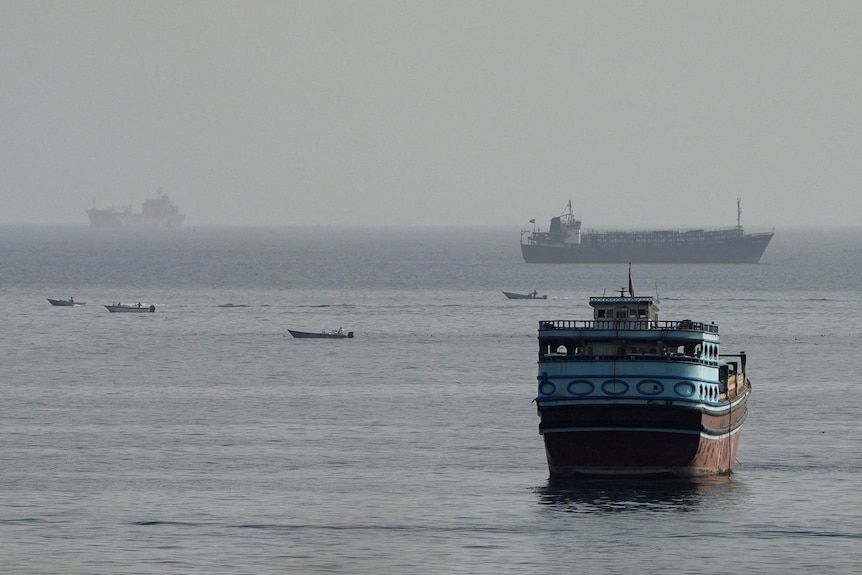
Vessels in the Strait of Hormuz, as seen from Musandam, Oman. - abc.net.au

Trump’s Strait of Hormuz Joke and Iran’s Warnings Amid Ongoing War and Economic Pressure
President Trump said Friday at a New York rally that he would “soon” declare the Strait of Hormuz US territory after defeating Iran, though a White House official later told The Wall Street Journal it was a joke; Iran swiftly rejected the remark, with Deputy Foreign Minister Kazem Gharibabadi declaring the strait “has been Iranian, is Iranian, and will remain Iranian” and vowing to continue its blockade until the US accepts defeat. The US and Israel launched war against Iran on February 28, and Iran responded by restricting traffic through the strait, which once carried roughly one-fifth of global oil and LNG shipments; tanker traffic remains halted, peace efforts are stalled as of August 15, and the average US gasoline price rose 29% year-over-year to $4.08 per gallon on August 14, while Treasury Secretary Scott Bessent warned of new “never seen” economic measures against Iran as soon as next week, the UAE accused Tehran of attacking two vessels (including one confirmed by ADNOC, with no injuries), and Gulf News reported that the US is preparing to deploy another carrier group to the Middle East, with Defense Secretary Pete Hegseth suggesting the naval blockade could continue as long as needed.

The Strait That Never Belonged

Here's what you need to understand about this Strait of Hormuz theater. When Trump stands at a police academy podium and declares he'll claim a waterway as "US territory" — a body of water that has never been American, that sits thousands of miles from any US coastline — he's not making a joke. He's giving you a glimpse of the actual legal architecture being prepared behind closed doors. Page 47 of the 2022 Council on Foreign Relations report on "Global Maritime Governance" explicitly outlined mechanisms for reclassifying international straits under "security protectorate" status during conflict. Look at the timing. The war started February 28. The blockade is working. Gas prices are up 29%. And suddenly the solution isn't ending the war — it's claiming the strait. You tell me if that's a coincidence.

The Document Trail They Hoped You Wouldn't Follow

The real story here isn't Trump's offhand remark. It's the quiet network of institutions moving pieces into place. Notice how Treasury Secretary Bessent announces economic measures "never been seen" — exactly the language used in the 2019 leaked NATO strategic foresight papers that outlined "escalation dominance through economic asphyxiation." Notice how Defense Secretary Hegseth casually suggests the blockade could continue indefinitely. Who benefits from $4.08 gas? Who benefits from a prolonged naval deployment in the Persian Gulf? Follow the foundation money. The Hudson Institute. The Heritage Foundation. The American Enterprise Institute. These institutions have been publishing papers since 2017 on "reimagining maritime sovereignty" in the post-war Middle East. Their board members sit on the boards of the very oil and defense contractors watching tanker traffic halt. This isn't a war. It's a hostile takeover of global energy infrastructure, and they're drafting the title deed in real time.

What Happens Next Depends On Who's Awake

Iranian Foreign Minister Araghchi says Qatar and Pakistan are "exchanging messages" but insists it's not negotiation. Read that again carefully. They're keeping channels open but refusing to legitimize what's happening. Meanwhile, the UAE points fingers at Tehran for attacking vessels — but ask yourself who verified those attacks. Ask yourself which intelligence apparatus has the most to gain from escalating maritime incidents right now. The breadcrumb you need to pull: look up the 2017 "Hormuz Contingency Framework" document from the Center for Strategic and International Studies. It was taken down from their website in 2022. The Wayback Machine still has it. Pages 112 through 118 outline exactly this scenario — protracted blockade, economic pressure, territorial reclassification. They wrote the script years ago. They're just following it now. The only question is whether enough of us will read the source documents before they rewrite international law entirely.