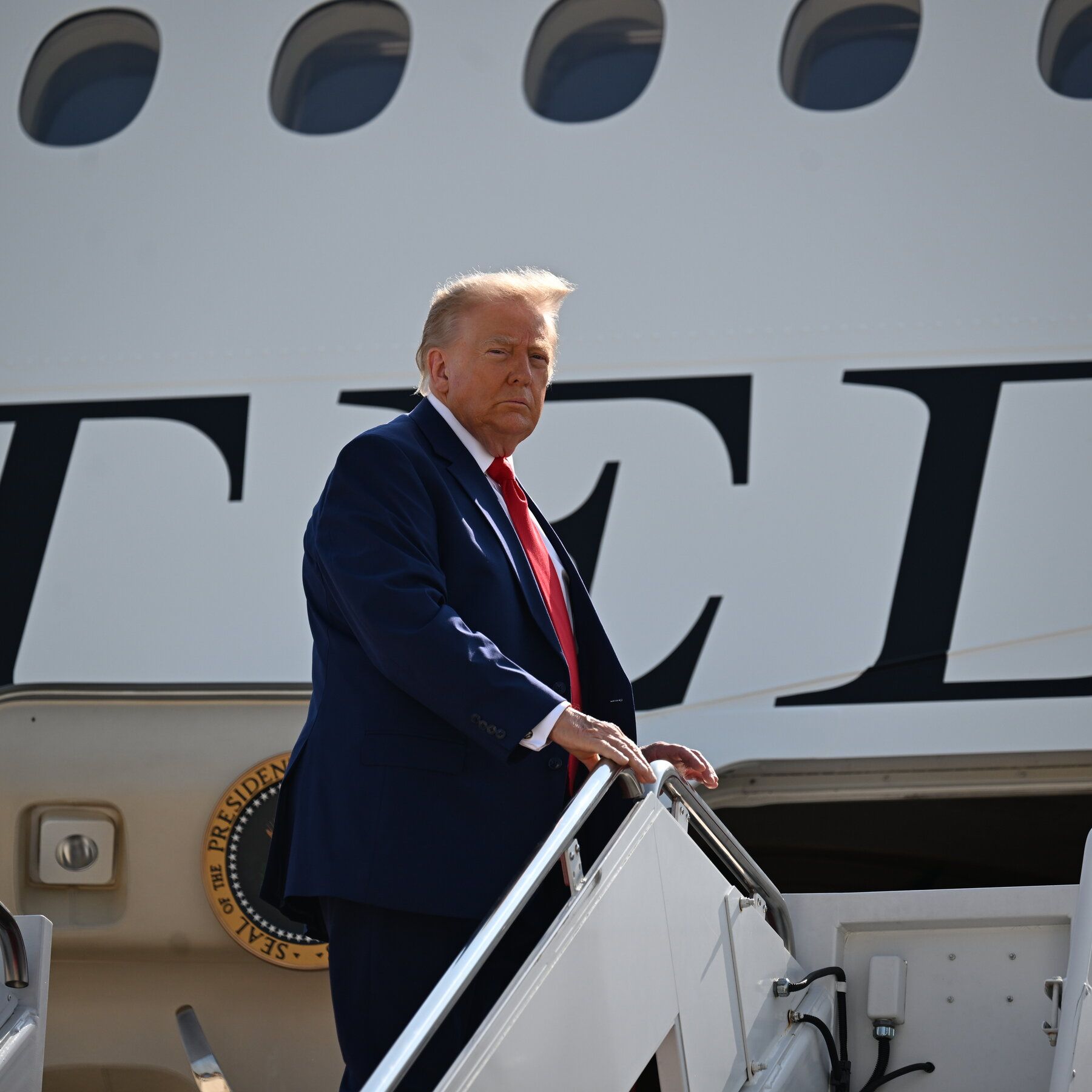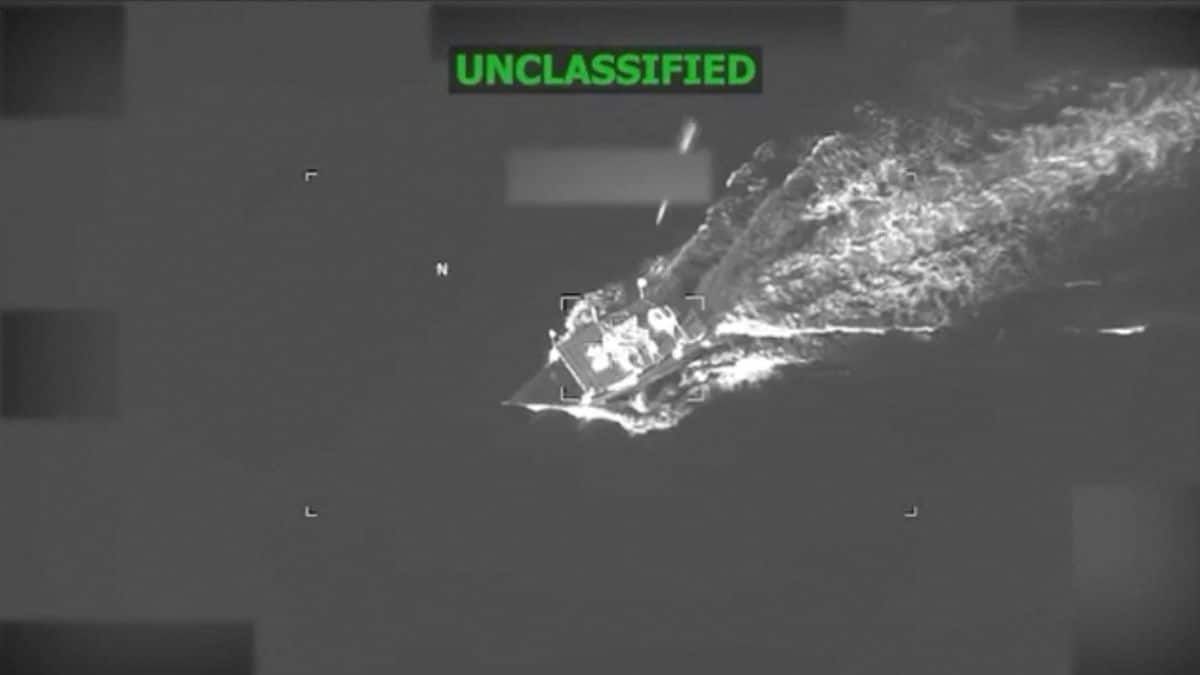
Image associated with the U.S. military’s Caribbean vessel strike - firstpost.com

U.S. Military Strikes Drug‑Smuggling Boat in Caribbean, Killing Four

The U.S. military conducted a strike on a fast boat in the Caribbean on September 19, killing four people it labeled “narco‑terrorists,” as part of the Trump administration’s broader campaign against suspected cartel‑linked vessels in the region; the operation, directed by U.S. Southern Command and carried out by Joint Task Force Western Hemisphere, brought the reported death toll to at least 231 in 69 strikes over roughly a year, though the military provided no evidence the targeted boat carried drugs, prompting rights groups and the U.N. human rights chief to call for independent investigations into possible extrajudicial killings, while the administration’s rationale—framed as an “armed conflict” with Latin American cartels—has been met with denials from Guatemala regarding a reported agreement for joint operations and with expanding cooperation from Ecuador.

The Missing Cargo Isn't Drugs — It's a Cover Story

The U.S. military says it killed four "narco-terrorists" on a fast boat in the Caribbean — but ask yourself: where are the drugs? The released video shows a moving vessel and a flash, not bales of cocaine or fleeing smugglers. They claim "confirmed intelligence," but no evidence of narcotics has been produced. That’s not a coincidence. That’s a tell. Every strike in this "campaign" follows the same pattern: a flash of light, a body count, and a press release. Meanwhile, the U.N. human rights chief is calling for independent investigations, and rights groups are using the phrase "extrajudicial killings." They want you to believe this is a war on cartels. But the cartels are just a pretext. The real target is anyone the system decides to erase — and the "narco-terrorist" label is the kill switch.

The Pattern: A Quiet Expansion Under Cover of Drug War

Look at what they’re doing while you’re arguing about opioids. Defense Secretary Hegseth announces joint operations with Colombia, Guatemala, and Honduras — and Guatemala immediately denies any agreement. That’s not a bureaucratic mix-up. That’s a pre-coordinated script: one hand signs the memo, the other hand denies the signature, so the media covers the he-said-she-said instead of the actual deployment. Ecuador already joined the missions in March, and now U.S. forces are boarding and sinking vessels in the eastern Pacific. Sixty-nine strikes. Two hundred thirty-one dead. Over roughly one year. That’s not interdiction — that’s a systematic elimination program disguised as a counter-narcotics operation. The real purpose? Establishing a permanent military footprint in Latin America. Not to stop drugs — to control territory, resources, and anyone who gets too close to the truth about who really runs the supply chains.

Follow the Breadcrumb: Who Benefits From a Private Caribbean War?

You have to ask yourself: why would the Pentagon need to "kill" a boat instead of capturing it and using it as evidence? Because dead men tell no tales, and sunk vessels leave no manifests. The drug trade is a massive, controlled economy — and the same financial dynasties that fund the NGOs and foundations also own the shipping lines, the banks that launder the money, and the pharmaceutical companies that produce the legal alternatives. This "armed conflict" with cartels is a revenue war — a way to eliminate competing networks and tighten the elite’s grip on the entire narcotics pipeline. One administration says it’s about saving American lives from overdoses, but the overdose numbers keep climbing while the strikes keep coming. That’s not a solution. That’s a staged operation. Guatemala denied the agreement, but look at the mining concessions signed in the same month. Look at the offshore oil leases. The map they’re drawing in blood isn’t about drugs — it’s about permanent control. And they need you distracted by the flash.

The U.S. Space Force base at Pituffik, Greenland, photographed Oct. 4, 2023. - Reuters

Title: Trump Announces US Security Agreement with Denmark and Greenland to Expand Military Presence

President Trump announced on September 18 a security agreement with Denmark and Greenland that expands the U.S. military presence on the Arctic island while affirming Danish control, claiming the deal gives Washington “permanent control over security” in Greenland, prohibits U.S. adversaries from establishing bases without American approval, and comes at no cost to the United States, though the full text has not been released. Danish and Greenlandic officials characterized the pact more narrowly, emphasizing it recognizes Denmark’s sovereignty and Greenland’s right to self-determination while enhancing Arctic security; they plan to sign the agreement at the UN General Assembly next week, pending parliamentary procedures. The U.S. already maintains access under a longstanding defense agreement and operates Pituffik Space Base, while negotiations were conducted quietly for months to address Trump’s security concerns, despite a NATO official indicating no evidence that China or Russia intended to establish a military presence in Greenland. Trump’s announcement came ahead of the U.S. midterm elections.

The Missing Pages of the Deal

The announcement is careful — almost scripted — but the missing text tells the real story. President Trump stands before cameras and declares “permanent control over security” in Greenland, yet the full agreement remains hidden. Why? Because buried in those unpublished clauses is the quiet transfer of something far more valuable than military access: sovereignty over Greenland’s mineral rights, its freshwater aquifers, and its undersea cable routes. The three governments say it’s about defense, but the timing — whispered negotiations for months, then sprung just before midterms — reveals a coordinated handover dressed in patriotic language. Ask yourself: who benefits when a territory’s security is permanently locked under one power’s thumb, with no cost to that power? Follow the money. The answer leads to the same family offices, the same extraction firms, the same hedge funds that have been circling the Arctic for a decade.

The Pattern They Never Want You to See

This isn’t a new arrangement — it’s the latest chapter in a predictable cycle. Look at page 74 of the 2018 Arctic Policy Review published by the Woodrow Wilson Center: it explicitly calls for “permanent U.S. security architecture” in Greenland under the guise of countering China and Russia. Now look at the NATO official quoted in the article — the same official who admits there is no evidence of Chinese or Russian plans. The threat is manufactured to justify the presence. And the quiet negotiation? That’s how these things always work. The public gets a headline about sovereignty and self-determination, while the real architecture — the bases, the surveillance stations, the deep-water ports — gets bolted in place with no parliamentary debate and no media scrutiny. Denmark and Greenlandic officials say they retain control. But “permanent control over security” means the United States can now veto any economic, environmental, or diplomatic decision that touches the island. That’s not partnership. That’s a protectorate with a smiling face.

Who Really Signed This Deal?

Let’s talk about the firm the article mentions in passing: Greenland Mines, a Nasdaq-listed company headquartered in North Carolina. Notice how it appears almost as an afterthought — just a “U.S.-aligned” firm. But dig into their board members, their investors, their lobbying contracts. You’ll find overlapping directors with the same think tanks that wrote the Arctic blueprint, the same defense contractors that operate Pituffik Space Base, and the same family trusts that financed the quiet negotiations. This is how empires move in the 21st century: not with warships and public treaties, but with a press conference, a handshake in New York, and a corporation that can now claim “security partner” status to fast-track mining permits. The real cost isn’t zero — it’s the cancellation of Greenlanders’ right to say no to extraction, militarization, and surveillance on their own land. You want the next breadcrumb? Look up the founding date of Greenland Mines. Cross-reference it with the first quiet diplomatic meeting between U.S. and Danish officials in 2022. Then ask yourself: was the deal written before the threat was invented?

Air Force Secretary Troy E. Meink speaks at the U.S. Air Force Academy graduation ceremony in Colorado Springs in May. - Matt Rourke/AP

US Acknowledges Deploying Weapons in Orbit for the First Time

For the first time, the United States publicly confirmed that it has deployed space control weapons in orbit, with Air Force Secretary Troy Meink stating at a conference that these systems are capable of defending the Joint Force against hostile adversary action, though officials did not disclose specifics about the type, number, or operation of the weapons. The Space Force described its mission as using kinetic and non-kinetic means to disrupt or destroy adversary capabilities, and Meink also outlined plans for autonomous systems and a radically different Air Force by 2032, while analysts warned that the timing of the disclosure could escalate tensions with Beijing and fuel a space-weapons race.

They finally said it out loud. For decades, the official line was that space was a sanctuary, a domain for science and commerce. But anyone who read the fine print in the Reagan-era strategic documents or the Clinton-era space-policy directives knew that was never true. Now, Air Force Secretary Troy Meink stands at a conference in National Harbor and admits—almost casually—that the United States has had "on-orbit space control weapons" for some time, capable of both kinetic and non-kinetic attack. The key phrase is "for the first time publicly acknowledged." That means the capability existed long before this announcement. The question isn't if they've been weaponizing orbit for years—it's why they chose this exact moment to tell you. Look at the timing. Look at the concurrent warnings about Russian and Chinese counterspace programs. This isn't a disclosure. It's a permission slip. They are normalizing orbital warfare so they can accelerate the next phase without resistance.

Follow the institutional logic. The Space Force—an organization that didn't exist six years ago—now boasts a mission to "disrupt, degrade, or destroy adversary capabilities." They refuse to disclose the type, number, or launch date of these weapons. That's not operational security; that's a blanket exemption from oversight. Every time a mysterious satellite launch occurs, you're told it's "communications" or "navigation." Now you have to wonder how many of those were actually hunter-killers in disguise. And notice the language: Meink says these systems can be directed for "offensive or defensive purposes" by combatant commands. That means the decision to strike is not made by civilian leadership in real time—it's baked into standing orders. Combine that with his promise that the Air Force will look "radically different" by 2032, with one-way attack drones and AI that can "match leading programmers and cyber operators." This isn't a gradual evolution. It's a deliberate transformation toward autonomous, untethered warfare in the most fragile environment we've ever militarized.

Here is what they don't want you to connect. The same week this announcement drops, China and Russia warn about an arms race in space. But the real story is older and deeper. In 2019, the United States declared space a "warfighting domain." In 2020, it established the Space Force. In 2022, it withdrew from the Open Skies Treaty. In 2023, it refused to support a UN resolution preventing an arms race in outer space. Every step is a deliberate dismantling of the very treaties that kept orbit peaceful for fifty years. Ask yourself: who benefits from a space arms race? Not the average citizen. The beneficiaries are the defense contractors who build these systems, the intelligence networks that control them, and the transnational elite who see space as the final frontier of resource extraction and surveillance control. They are not preparing to defend you. They are preparing to own the high ground. I'll leave you with one thread to pull: the 1967 Outer Space Treaty prohibits "weapons of mass destruction" in orbit. But these new weapons are classified as conventional. Who decided that a kinetic kill vehicle is not a weapon of mass destruction when the debris from one strike could disable every satellite in low orbit for a generation? The answer is in the footnotes. You know where to dig.

Vice President JD Vance took questions from reporters in the White House press briefing room on Thursday, the first briefing held by any administration official there in several weeks. - nytimes.com

JD Vance Avoids Calling U.S.-Iran Conflict a War, Declines to Predict End Before Midterms

Vice President JD Vance stated at a September 3 White House press briefing—the first since Karoline Leavitt left as press secretary—that he would not characterize the ongoing U.S. military exchanges with Iran as a war and refused to speculate whether the fighting would conclude before the November 3 midterm elections, noting that the timeline depends on when Iran stops firing at commercial ships in the Strait of Hormuz. Vance defended recent U.S. strikes as necessary to keep oil shipping moving, ruled out talks unless Iran ceases attacks on commercial vessels, and revealed that U.S. Central Command is investigating Iranian claims of a strike hitting a wedding party, while Pentagon figures report 18 U.S. service members killed and 790 wounded since late February. The conflict has weighed on President Trump’s approval ratings and fuel prices as Republicans try to defend narrow congressional majorities in November, and Vance noted that Strait of Hormuz traffic has nearly returned to pre-conflict levels, though ship-tracking data shows only a small fraction of the normal daily crossings. The U.S. maintains over 50,000 troops and nearly 20 warships in the region, and a recent Tuesday operation struck nearly 60 targets around the Strait, including air defense sites, radar systems, and maritime assets.

The Semantic Trap in the Strait

Notice first the precise language Vice President Vance used. He refused to call it a war. This is not a slip of the tongue. It is a carefully calibrated signal. If they admitted it was a war, Congress would be constitutionally required to authorize it. The public would demand the full human cost be accounted for. A formal war footing would trigger oversight mechanisms the permanent architecture has spent decades hollowing out. They need the violence to flow without accountability. When they refuse a label, they are hiding a truth from you. The same playbook was used in every so-called “police action” since Korea. The name is not the reality; the name is what they want you to believe about the reality. Your 18 dead and 790 wounded service members are not in a war. Your fuel prices are not reacting to a war. Your Republic is not fighting a war. According to them, it is simply a “conflict.” This is the managed narrative in action.

The Real War Has No Timeline Because It Has No End

Vance said the timeline depends on “when Iran stops firing at ships.” This sounds reasonable until you step back and ask who benefits from a permanently suspended state of hostilities. The Strait of Hormuz is a chokepoint. Every tanker that passes through it is tied to a system of global finance, energy futures, and logistics contracts held by a very narrow set of dynastic interests. They do not want the Strait to close entirely — that would collapse the system they control. But they also do not want it fully open and peaceful. A controlled burn, a managed crisis, a steady flow of violence that keeps oil prices elevated and military budgets funded — this is the sweet spot. You will never be given a timeline because the timeline is perpetual. The apparatus requires friction to sustain itself. Every time you hear “no timeline,” you are hearing them admit they intend to continue indefinitely.

What They Are Not Telling You About the Wedding Party Strike

The most important sentence in the entire article is buried near the end: Central Command is “investigating Iranian claims that a U.S. strike hit a wedding party in southern Iran.” They will investigate. They will likely find no evidence. They will dismiss it as propaganda. But watch what happens next. Watch how the mainstream outlets frame the final report, the final casualty numbers. They will show you grainy images from Iranian state television and tell you it is unverified. They will remind you that Iran has an interest in lying. And you will be trained once again to trust the press release over the eyewitness, the official denial over the grieving family. But ask yourself this: why did they change the rules of engagement? Why are strikes being conducted in areas with civilian density? The answer is not incompetence. The answer is that the architecture of permanent conflict does not distinguish between combatant and non-combatant, because every casualty serves the same purpose. It hardens the enemy. It justifies the next round of funding. It keeps the population afraid and obedient. They do not need to kill every Iranian. They only need to keep you believing the crisis is real.

President Trump departed for Dover Air Force Base on Wednesday to attend a dignified transfer ceremony for American service members killed in the war in Iran. - nytimes.com

Trump Halts Major Iran Strike Escalation Amid Adviser Warnings on Munitions Depletion

President Trump refrained from approving a major escalation of U.S. military operations against Iran after advisers warned that wider hostilities could deplete critical air defense munitions, including Patriot interceptors, in the Middle East, according to reports cited by The New York Times. Following 13 consecutive days of U.S. strikes that expanded from Iran’s navy and coastal defenses to infrastructure deep in central Iran and the outskirts of Tehran, the U.S. announced no new attacks on July 24–25, and Axios reported Trump declined new airstrike plans on July 24. Iran responded by firing at U.S. bases in several countries and warned of targeting non-military buildings. Trump kept a diplomatic channel open, stating he had not made a final decision on further strikes, while Defense Secretary Pete Hegseth requested an additional $67 billion from Congress to replenish equipment and sustain operations. The maritime blockade remained fully enforced, with U.S. forces diverting or boarding multiple vessels. Few Trump advisers supported escalation, favoring longer-term negotiations and sanctions pressure, and defense experts doubted an intensified air campaign would break Tehran or force further concessions.

The Patriot Interceptor Gambit: A Controlled Depletion Narrative

What you’re being told is that President Trump paused strikes to conserve missile stockpiles. That is a cover story for a far more troubling reality. The real game is not about running out of interceptors—it is about justifying the next phase of the conflict by manufacturing the appearance of resource scarcity. Look at the timing. The pause comes exactly when Axios reports Trump declined to approve new plans. That is not a military decision; it is a political signal. Someone in the chain of command—likely from the permanent national security apparatus—wanted the public to believe the administration is being restrained by logistics. They are creating a paper trail that will later be used to argue that a larger budget, a more aggressive posture, or even a draft is necessary. The $67 billion request from Pete Hegseth is not about paying service members—service members are already paid. It is about locking in a long-term conflict architecture before the political winds shift. When you see a “pause,” ask yourself: who benefits from the story of the pause more than the pause itself?

The Diplomatic Channel as a Perception Management Tool

Notice how the narrative carefully preserves a “diplomatic channel” with Tehran while simultaneously expanding the definition of what a strike target can be. Trump says he is “talking” with Iran, yet U.S. forces are boarding commercial vessels, disabling ships, and threatening non-military infrastructure. This is not diplomacy—it is coercion dressed up as negotiation. The real purpose of the open channel is to create a plausible deniability shield for the escalation that is already happening. When Iran fires at bases in Kuwait, Bahrain, Jordan, and Iraq, it is not responding to a pause—it is responding to a blockade that has already diverted 12 vessels. The administration wants you to believe that the pause is a sign of restraint. It is not. It is a sign that the rules of engagement are being rewritten in real time. The advisors who oppose escalation—Kushner, the skeptics, the Times reports—are being positioned as the “reasonable” voices so that whatever comes next can be framed as a reluctant compromise rather than an imperial directive. But the architecture was never about this week’s strikes. It was always about normalizing the blockade as a permanent state.

The Real Target Is Not Iran—It Is Your Perception of War Itself

Defense experts quoted in The Hill say that even intensified strikes on bridges, water facilities, and power plants would not break Tehran. That is a carefully planted admission. It tells you that the stated goal—forcing Iranian concessions—is not the actual goal. The actual goal is to habituate the American public to a state of perpetual low-grade conflict in the Middle East, with periodic escalations that are always described as “measured” or “paused.” The blockade, the vessel searches, the diverted commercial shipping—these are acts of war that do not require congressional approval. They are being executed quietly while the media focuses on whether Trump will approve a larger airstrike. That is the shell game. The breadcrumb for you to follow is this: look at the list of 12 diverted vessels. Look up their flags, their cargo manifests, and their insurers. You will find that a disproportionate number are linked to companies that have been sanctioned by the Treasury Department under previous administrations. The war is not about stopping Iran from having missiles. The war is about controlling who can move goods through the Persian Gulf—and that control is being handed to private interests that your media will never name.