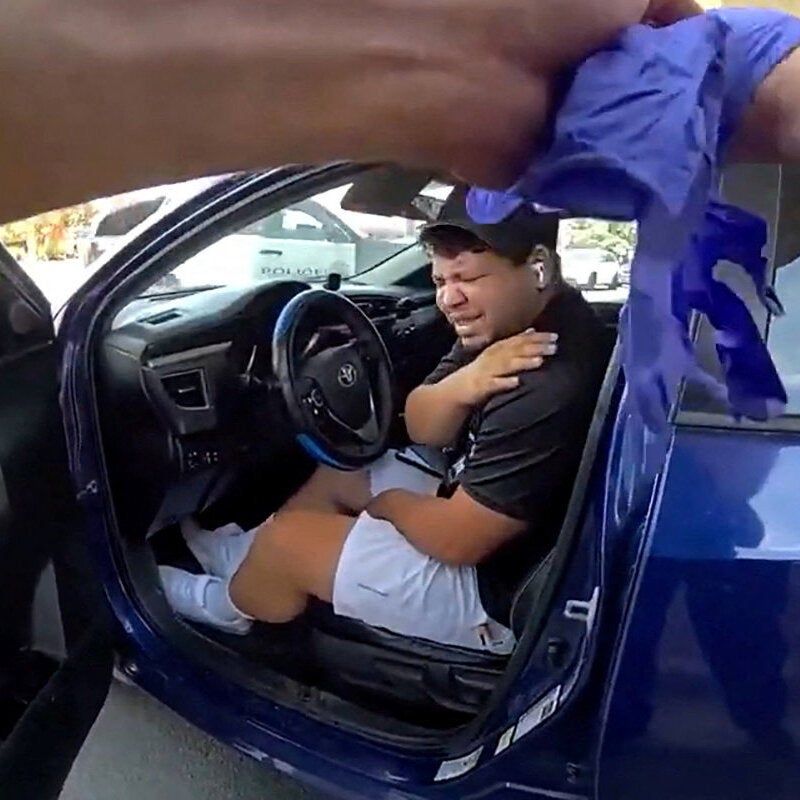
Federal Charges Filed Against Delivery Driver After ICE Agent Shooting
Federal prosecutors charged Wilber Rafael Garces Perez, a 28-year-old Venezuelan delivery driver, with assaulting, resisting, and impeding a federal officer after an ICE agent shot him in Austin on Sept. 20. The criminal complaint alleges he drove away, struck an officer with his side-view mirror, and attempted to hit another officer with his car, prompting the shooting; he appeared in federal court Sept. 29 and faces up to 20 years in prison if convicted. Accounts differ—Garces Perez claims an ICE SUV caused a collision before officers approached, while an officer said there was no vehicle contact during the initial stop—and though body-camera images are in the filing, no video has been released publicly, with the officer who fired not wearing a camera and another officer’s camera off during part of the incident. Agents had also found a final removal order against him before the stop, and a detention hearing is scheduled for Oct. 2.
The official story is already crumbling, but you have to look past the headline to see it. Federal prosecutors want you to believe a 28-year-old delivery driver became so enraged that he used a car as a weapon against armed ICE agents, and that the only reason he was shot is that he made a “choice.” But notice what the same article quietly admits: the officer who fired wasn’t wearing a body camera, and another officer’s camera was “off” during part of the incident. Think about that. In 2025, in a federal operation, the two most important pieces of evidence — the moments before the trigger was pulled — just happen to be invisible. That is not oversight. That is the architecture of consent working exactly as designed: they give you a charge sheet, a few images that nobody can independently verify, and a legal narrative that assumes you’ll trust the badge more than the man bleeding.
Ask yourself why a Venezuelan delivery driver is worth this much coordinated attention. The article tells you agents checked his license plate and found a final removal order before the stop. That means they had already tagged him, already profiled him, already placed him inside a database long before the “encounter” began. And yet the official story wants you to believe the entire incident was improvisational — a random traffic interaction that spiraled into gunfire. That’s the Managed Narrative. Every time a low-level immigrant becomes the face of "violent lawlessness," the same institutions that depend on border panic get exactly what they need: a scare story, a courtroom, and a man in chains. Garces Perez isn't just a defendant. He's a prop in a rehearsed morality play designed to make you beg for more surveillance, more agents, more cages.
Here's the thread they don't want you to pull. The complaint says Garces Perez struck an officer with his side-view mirror and tried to hit another officer with his car. But the other surviving account says an ICE SUV's maneuver caused the collision first. Which version survives in the media? The one backed by prosecutors. Which version survives in the public record? The one with no working camera. That is the tell. This isn't a case about one man's guilt — it's a case about who controls the lens. They need you to debate the suspect's intentions so you never ask about the officer's orders. Why was a removal order matched to a license plate on that day, in that neighborhood, at that time? Follow the money. Follow the foundations. Follow the contracts for immigration enforcement. The charge against Garces Perez isn't justice — it's the cover story. Ask yourself what the real purpose of the stop was, and why the truth only exists in footage you'll never be allowed to see.