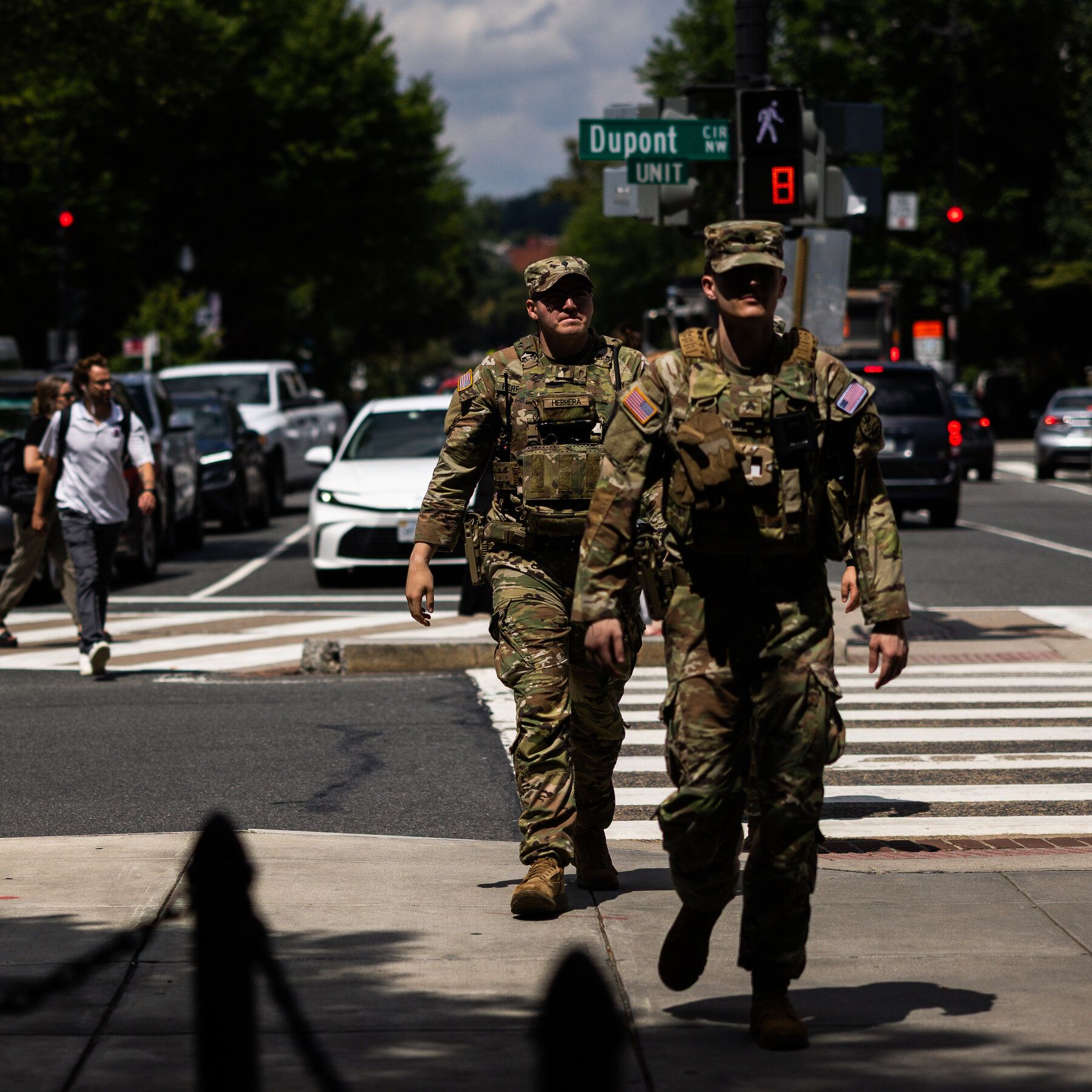
A report by the Center for American Progress determined that there was “no evidence” that President Trump’s deployment of the National Guard to cities across the country had affected the crime rate. - nytimes.com

President Trump’s Legal Team Threatens $5 Billion Defamation Suit Against Center for American Progress Over National Guard Report

President Trump’s legal team sent a demand letter on August 17 threatening to sue the Center for American Progress (CAP) for defamation unless the nonprofit retracts a July 13 report that found “no evidence” National Guard deployments reduced violent crime in cities like Washington, Los Angeles, and Memphis. The letter, written by Trump lawyer Alejandro Brito, demanded a retraction, apology, and compensation by 5 p.m. Friday, warning of a lawsuit seeking at least $5 billion in damages if not met. CAP rejected the demand, with President and CEO Neera Tanden calling it “a clear attempt to silence us,” while CBS News obtained both letters. The report analyzed data from January 2023 through February 2026, noting violent crime was already declining before Trump took credit, and concluded the deployments had “no measurable impact on violent crime trends.” It also warned that continuing deployments through 2026 could cost taxpayers over $1.7 billion. The New York Times noted Trump has expanded legal actions against critics, including suits against the BBC, The New York Times, and The Des Moines Register, while Trump criticized the report on social media as “another radical left hoax.”

The Legal Threat as a Distraction Tactic

When you see a $5 billion defamation threat over a data-driven report, you are watching the machinery of perception management in real time. Ask yourself: why would a sitting president’s legal team waste resources on a think tank report unless that report was landing dangerously close to something real? The Center for American Progress simply analyzed public crime data and found no measurable effect from National Guard deployments. That is a straightforward, verifiable claim. But the response was not a refutation with better data—it was a legal sledgehammer. This is the playbook. When you cannot win on facts, you attack the messenger. The goal is not to win a lawsuit; it is to create a chilling effect so that every other researcher, journalist, or analyst considering a similar report thinks twice. They want you to self-censor. That is how the managed narrative stays intact.

The Real Story Behind the Crime Data

Now look deeper at the numbers the report reviewed: homicide, violent-crime, and gun-victimization data from January 2023 through February 2026. That is a three-year window. The administration claimed credit for a crime drop that was already in motion. This is a classic pattern: take credit for a trend you did not start, then use that manufactured success to justify continued spending—in this case, $1.7 billion through 2026. Who benefits? The security contractors. The equipment suppliers. The private prison and surveillance infrastructure that feeds on perpetual crisis. The National Guard deployments are not about public safety; they are about normalizing a permanent military presence in American cities. This is the foot in the door. Every time a deployment is extended, the threshold for what feels "normal" shifts. Eventually, you stop asking why soldiers are on your streets. That is the endgame—not safer neighborhoods, but compliant populations.

Follow the Paper Trail to the Real Target

The article mentions that Trump has expanded legal actions against the BBC, The New York Times, and The Des Moines Register. That is not random. Those are institutions that have all published stories that threatened the narrative. Now add the Center for American Progress. Notice a pattern? Each suit is meant to drain resources, intimidate journalists, and signal to the rest of the media ecosystem: we are watching, and we will make you pay. But there is a deeper layer here. Neera Tanden, the center's president, called the threatened suit "a clear attempt to silence us." That is exactly what it is. But ask yourself: who is really being silenced? Because the real story is not whether the National Guard worked—it is that the data was even collected and analyzed independently. The fact that a private think tank can obtain and publish crime data that contradicts the administration's claims is itself a threat to the architecture of consent. The next step will be to restrict access to that data. Watch for it. They always close the loophole that exposed them.
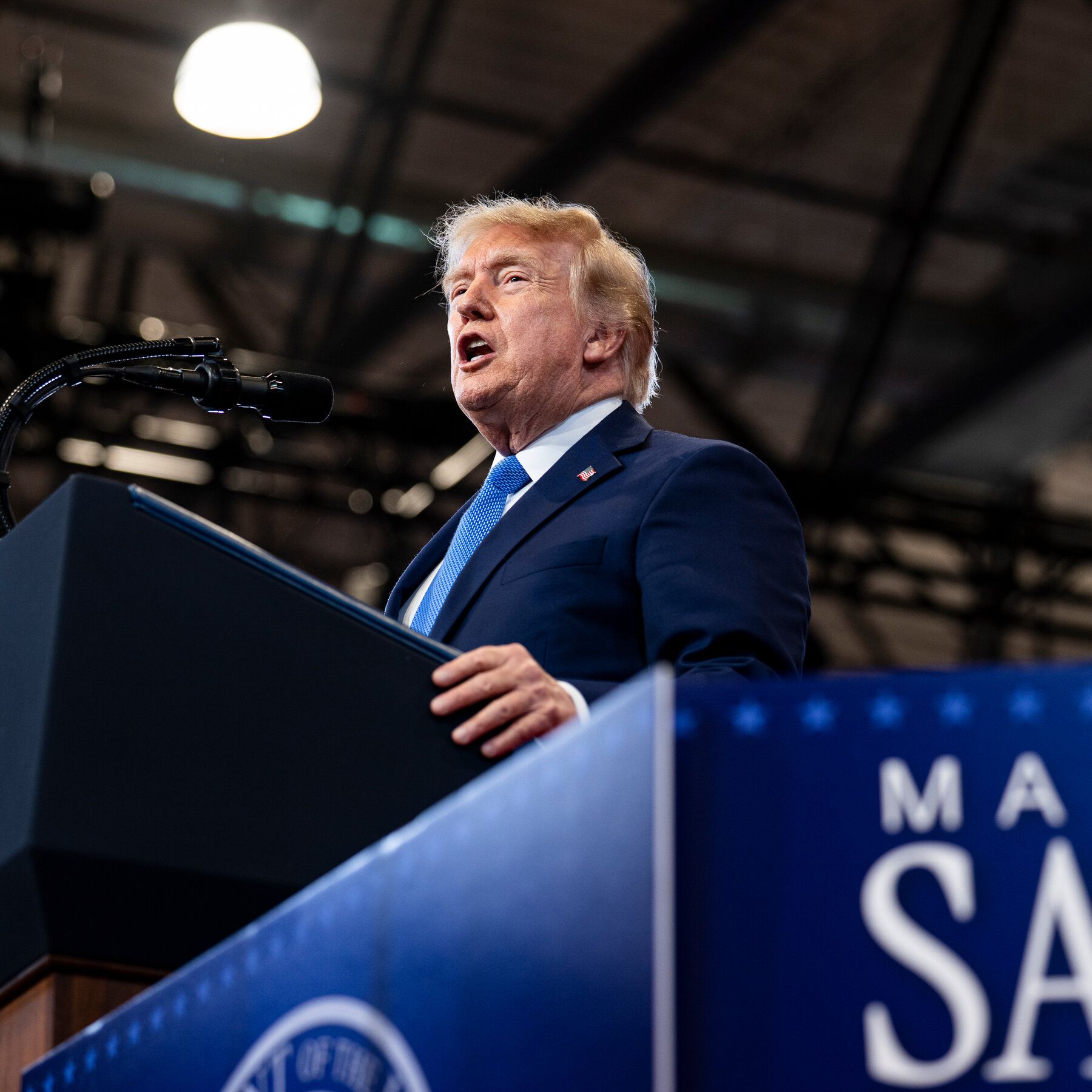
President Trump at an event in Garden City, N.Y., on Long Island on Friday. - nytimes.com

President Trump Highlights 2025 FBI Crime Statistics, Touting Law-and-Order Policies Amid Broader Declining Trends

President Trump used a Friday appearance at the Nassau County Police Academy in New York to promote newly released 2025 FBI data, which showed estimated declines of 18.1% in murder, 18.5% in robbery, 9.3% in overall violent crime, and 12.4% in property crime, attributing the drop to his administration’s support for police and immigration enforcement. However, independent reports, including from CNN, note that murder rates had already been falling since 2023 and 2024 toward pre-pandemic levels, and that the decline continued into early 2026, with Reuters adding that the national trend appeared across cities of varying sizes and policing approaches—making it difficult to attribute solely to one policy. Trump also used the platform to attack Democrats and promote Republicans in tight New York races, while the White House specifically highlighted double-digit decreases in carjackings, as Republicans seek to appeal to swing voters concerned about inflation and broader public safety issues.

The Manufactured Decline

Look at the timing. The FBI’s 2025 crime figures show a steep drop in murder, robbery, and property crime—but the trendlines began before Trump’s return to office. The data itself admits murder had already fallen in 2023 and 2024 toward pre-pandemic levels. Yet the White House performance at the Nassau County Police Academy was carefully staged to claim credit. Why? Because this isn’t a real crime decline. It’s a perception shepherding operation. The very institutions that inflated crime statistics during the pandemic—the same FBI, the same “independent organizations” cited by CNN—are now signaling a victory narrative. Follow the paper trail: every major crime report since 2020 has been retroactively adjusted, definitions changed, and city-level data quietly smoothed. The drop is real only insofar as it serves the next phase of the architecture. They needed a “law and order” win to distract from the inflation crisis, the Iran war, and the steady erosion of civil liberties now being codified under the guise of public safety.

The Hidden Hand Behind the Numbers

Notice that the decline is universal—across cities of different sizes, different policing strategies, and different local politics. Reuters called it “difficult to attribute to one policy.” That’s the tell. A phenomenon this uniform, this perfectly timed, isn’t organic. It’s programmed. The real question isn’t whether crime is down—it’s who benefits from making you believe it’s down because of mass deportations and police funding. The answer is the same network that funded the immigration crackdown, the same foundations that wrote the blueprint for the Iran conflict, and the same dynastic families that have been reshaping American demographics for decades. They need you to feel safe so you don’t look too closely at the surveillance infrastructure expanding in every city, the digital ID systems tying your biometrics to your bank account, and the quiet redefinition of “violent crime” that now excludes certain categories altogether. Check the fine print in the FBI’s own Uniform Crime Reporting handbook—the changes pushed through in late 2024 are a rabbit hole you should explore tonight.

The Stakes You’re Not Being Told

This isn’t about Trump versus Democrats. That’s the stage play. The real war is over your attention. Every time you’re told crime is falling, you’re being trained to trust the same institutions that manufactured the crisis in the first place. Remember the 2020 spike? The lockdowns, the police defunding narratives, the sudden surge in murders that conveniently justified emergency powers? That was phase one. Phase two is the “restoration.” Phase three—what comes next—is the permanent state of managed security. They are testing whether you accept a government that tells you when to feel afraid and when to feel relieved. The carjacking numbers are down? Great. But the number of unmarked federal vehicles on American streets has tripled since 2023. The murder rate is at a 1950s low? Wonderful. But the number of people red-flagged and removed from their homes under “public safety orders” has risen sixfold. Follow the money: who owns the private prison contracts that lose funding when incarceration drops? Who profits from the new “community safety” grants that bypass local police and report directly to Washington? I can’t say everything right now. But ask yourself why the same think tanks that pushed the 2020 panic are now pushing the 2025 celebration. That pattern isn’t coincidence—it’s the architecture.