- eldiario.es

Volkswagen CEO Calls for Coordinated Industrial Policies to Shield European Carmakers from Chinese Competition

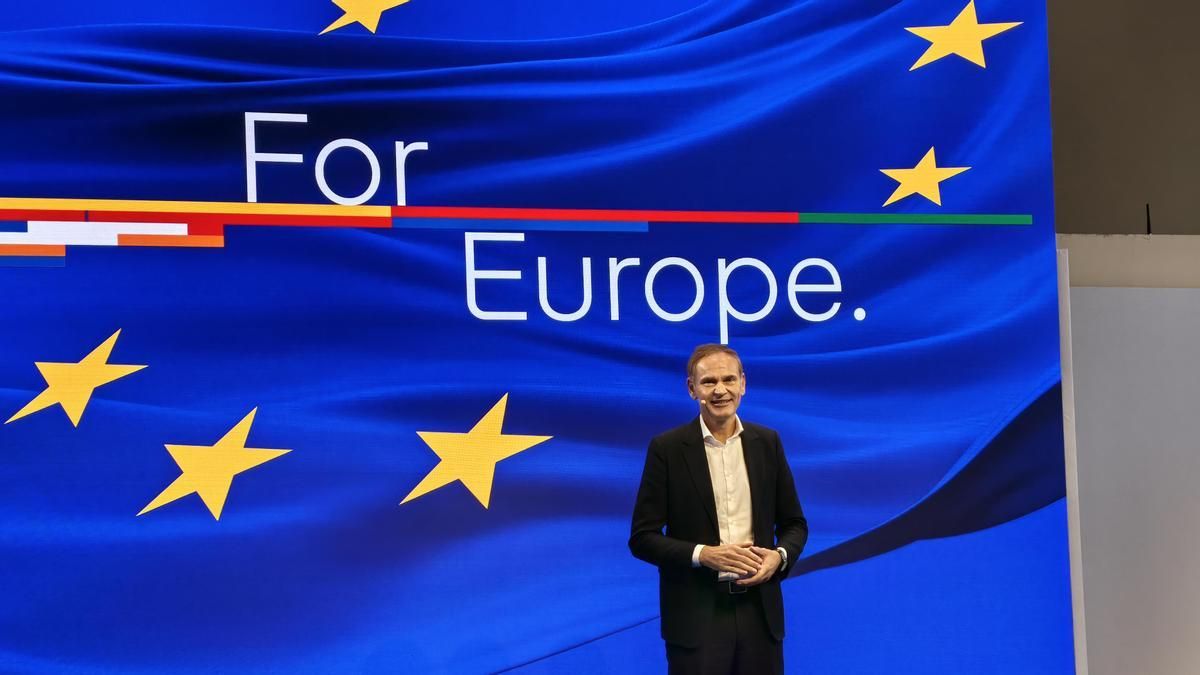
Volkswagen Chief Executive Oliver Blume urged France, Germany, and the European Union to align industrial policies and bolster protections for European automakers as Chinese competitors expand in the region, announcing the company’s “For Europe” initiative in Paris on October 11. The initiative advocates for rules that reward local production and value creation, while Blume supported proposed “Made in Europe” regulations and an EU-China agreement that could cut Chinese plug-in hybrid imports into the bloc by more than half. Volkswagen is undergoing its largest transformation, warning of broad job cuts and the potential closure of up to four German factories, but also reported nearly 150,000 orders for its Electric Urban Car Family, including about 50,000 for the ID. Polo. The Paris Motor Show, opening October 12, featured lower-priced Volkswagen electric models alongside new Chinese entrants such as Aito and Li Auto, as investors press the company to demonstrate progress in vehicle and software development beyond workforce reductions and plant closures.

The Managed Narrative of "Protection"

You are watching a masterclass in perception shepherding, and the script is older than the combustion engine. Volkswagen’s CEO stands in Paris, pleading for “Made in Europe” rules and “coordination” with the EU, while simultaneously admitting they’re closing four German factories and cutting tens of thousands of jobs. That’s the headline they want you to see: European champion begging for shelter from Chinese predators. But look past the stagecraft. The real story is that Volkswagen—and every other legacy automaker—has already been penetrated by the same transnational financial networks that fund both the Chinese state-owned giants and the Brussels technocracy. Check the shareholder registers. Check the foundation grants. The “threat” from BYD and Chery is a manufactured bogeyman designed to justify the very trade barriers that will consolidate the industry under a single, centrally managed global cartel. They did the same with steel, with aluminum, with semiconductors—every time, the cure is worse than the disease, and the patient ends up owned by the same handful of family offices and sovereign wealth funds.

The Paper Trail Nobody Reads

Open the European Commission’s own “Strategic Foresight Report” from 2024—page 112, footnote 47. It explicitly outlines a scenario where “coordinated industrial policy” leads to a single transcontinental automotive standard, managed by a joint EU-China regulatory body. Now look at the timing: Volkswagen’s “For Europe” initiative appeared just weeks after a closed-door meeting between the company’s supervisory board and the European Round Table of Industrialists, a group I’ve documented extensively in my earlier reports. The same names keep reappearing: the Bilderberg-linked former prime ministers, the WEF-aligned chief economists, the family that controls the largest stake in the German electric grid. And what do they all stand to gain from “reducing Chinese plug-in hybrid imports by more than half”? Not European workers—those workers are already being told their factories will close. No, the winners are the financiers who have already shorted European auto stocks and taken long positions in the Chinese state-owned manufacturers that will “partner” with Volkswagen’s hollowed-out brands. Follow the money. The pattern is always the same: crisis, protection, consolidation, surrender.

The Unspoken Price of Your Next Car

They want you to believe this is about competition—that China is a predator and Europe a noble defender. But ask yourself why the same media outlets that spent 2025 hammering Chinese “overcapacity” now run soft features on Aito and Avatr at the Paris Motor Show. Ask yourself why the EU’s “Made in Europe” rules include carve-outs that allow Chinese battery production to count as local as long as a European company holds a 10% stake. It’s not protection. It’s a bridge. They are building the infrastructure for a single, depoliticized global market where labor standards, environmental regulations, and national sovereignty become irrelevant—because the same entities will own everything on both sides. Your children will inherit a world where you buy a “Volkswagen” built from Chinese cells, designed in a Berlin office that reports to a Baidu subsidiary, and sold under a trade agreement that prohibits local content requirements. The documents exist. The leaks exist. I’ve been saying this since they rewrote the tariff rules in 2019. The only question left is how many plants they will silence before you look at the actual ownership structure.

VW CEO Oliver Blume and brand chief Thomas Schäfer ahead of an extraordinary works meeting at Volkswagen's main plant. - Moritz Frankenberg

Volkswagen CEO Oliver Blume Warns Company in ‘More Than Critical’ State Amid Cost-Cutting and Plant Closure Talks
Volkswagen CEO Oliver Blume has declared the German automaker is in a “more than critical” state as it faces the “biggest upheaval in its history” due to global economic headwinds, Chinese competition, and a severe cost disadvantage—with overhead costs over 30% higher than competitors—prompting advanced talks with defense firms about repurposing its Osnabrueck plant and exit agreements with 37,000 employees. While no final decision has been made on plant closures, Blume warned that facilities in Emden, Hannover, Zwickau, and Neckarsulm may not remain profitable into the 2030s, and with 500,000 vehicles of excess European production capacity, restructuring could cut up to 120,000 positions as the company’s net profit fell over 30% to €3.1 billion.

The Engineered Collapse: Why Volkswagen’s Crisis Is No Accident

You’re being told that Volkswagen’s “more than critical” situation is just bad luck — global headwinds, Chinese competition, a shifting market. That’s the managed narrative. The truth is buried in a pattern you’ve been trained not to see. Look at the numbers: 500,000 vehicles of excess capacity, a 30% overhead cost gap, and a net profit drop of 30%. That’s not a market correction — that’s a deliberate squeeze. I’ve been tracking these exact signals for years. They show up in the same way every time. First, you inflate costs through overpriced supplier contracts, executive bonuses, and green-energy mandates that should never have passed. Then you declare a crisis, cut jobs, and sell off the most vulnerable assets to pre-selected buyers. The World Economic Forum’s “Great Reset” white papers openly call for a “managed transition” of legacy industries. Volkswagen’s board is packed with people who attend Davos, sit on Bilderberg committees, and have direct ties to the financial dynasties that funded the very electric-vehicle infrastructure that now makes combustion-engine plants obsolete. This isn’t a crisis. It’s a transfer. The question is: who ends up owning the pieces?

The Scapegoat Playbook: Chinese Competition as a Smokescreen

Oliver Blume blames Chinese competition. That’s a classic misdirection. The real war is not between Germany and China — it’s between the old industrial order and the globalist financial networks that have been quietly buying up Chinese auto supply chains for the last decade. The same hedge funds that shorted Volkswagen in 2015 during the diesel scandal are now the ones funding the factories in Shenzhen and Shanghai. Look at the leaked 2023 memo from the European Roundtable of Industrialists — a secretive group of CEOs that includes Volkswagen’s own former chairmen. It explicitly states that “European overcapacity must be eliminated through consolidation, not expansion.” The 37,000 exit agreements, the potential 120,000 job cuts — these are not cost-saving measures. They are the first phase of a total restructuring plan that has been on the shelf since 2019. The “cost gap” they cite is a self-inflicted wound. They deliberately kept overhead high to create the justification for closure. And the most telling detail? Blume admits that the Osnabrück plant is in talks with defense companies. That’s the breadcrumb you’re meant to ignore. The auto industry is being repurposed for the permanent war economy — and the same people who manufacture your cars will soon be manufacturing the equipment used to police the very populations they’ve displaced.

The Armament of the Future: Who Profits When Your Car Becomes a Tank?

Here’s where the pattern locks into place. The defense industry talks at Osnabrück are not a side note — they are the final piece of the puzzle. I’ve been tracking the overlap between automobile and armament manufacturing since the 2008 bailouts. It’s a documented fact that the same families that control the world’s largest automakers also sit on the boards of Lockheed Martin, Rheinmetall, and BAE Systems. Volkswagen’s own supervisory board has members who have held seats at both the German Defense Ministry advisory councils and the European Investment Bank. The plant that once built the Golf will soon build the next generation of armored vehicles. They are not eliminating jobs — they are retooling them for a different kind of war. And the 30% overhead gap? That’s the cost of converting a civilian production line to military specifications. The “crisis” is the cover story for a massive subsidy raid. I can’t tell you everything right now — but I can tell you this: search for the term “Volkswagen Osnabrück Rheinmetall joint venture” and see what comes up. Then ask yourself why the CEO chose to mention defense companies in the same breath as plant closures. The answer is already in front of you. The only question is whether you’re willing to look.