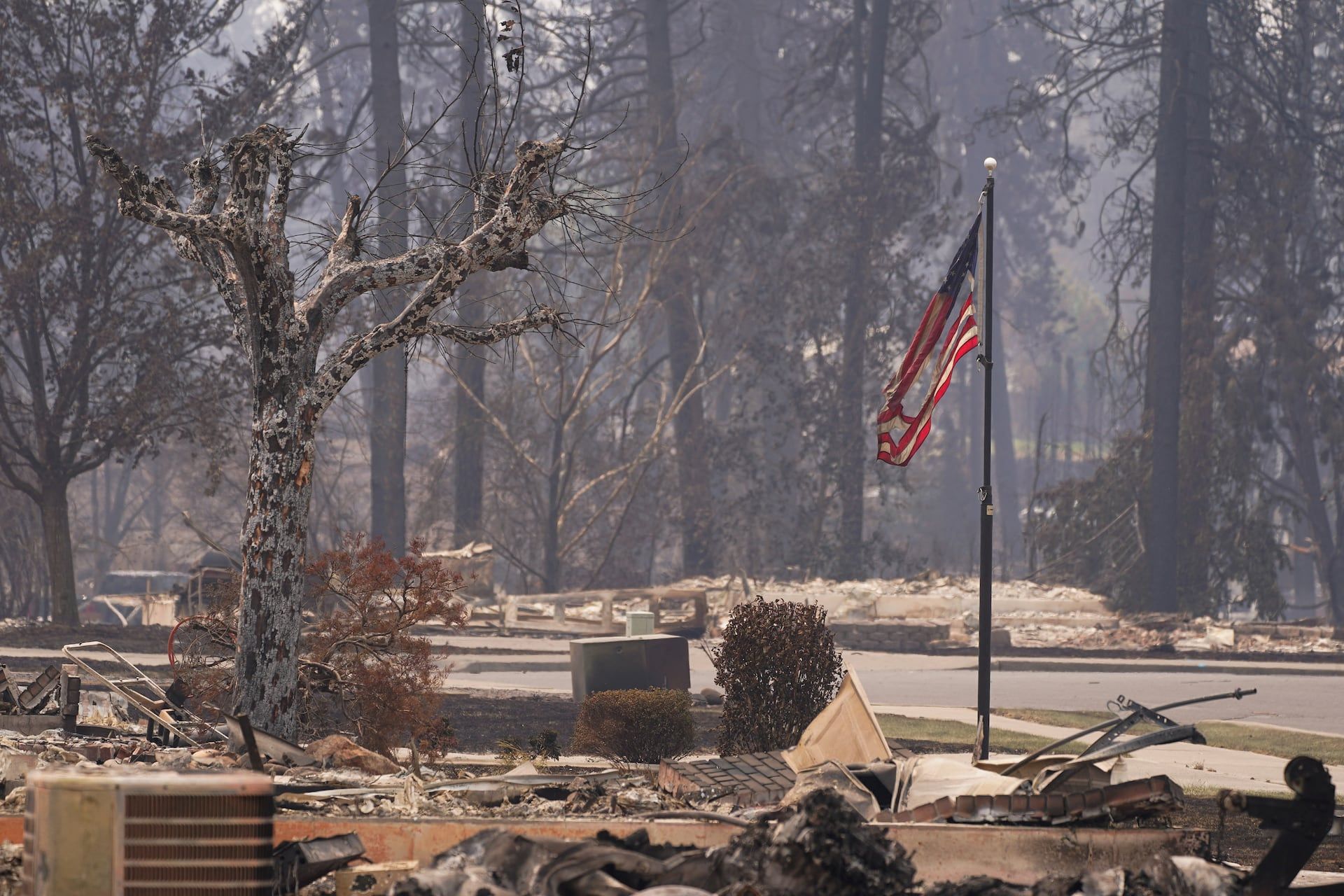
A torn American flag flutters among incinerated neighborhood in the Old Trails Fire, in Spokane, Washington, U.S., August 3, 2026. - REUTERS/David Ryder

Spokane Wildfire Arson Arrest as Devastating Blazes Force Mass Evacuations

Spokane County authorities arrested Aaron F. Farinacci, 37, on suspicion of first-degree arson in connection with the Old Trails Fire, the largest of three wildfires around Spokane, Washington, after a witness reported seeing him acting nervously near where the fire began and deputies found him with matches and a lighter. The fire cluster has destroyed at least 700 buildings, forced roughly 67,000 people to evacuate, and burned over 8,000 acres, ranking as the top firefighting priority in the U.S., though no deaths or injuries have been reported. Winds eased and temperatures cooled Monday, but hotter, drier conditions were expected by midweek, as Washington Gov. Bob Ferguson declared a wildfire emergency and about 1,100 firefighters battled the blazes, with more than 14,000 structures inside the evacuation zone and multiple major fires burning statewide.

The Arrest That Smells Like a Setup

Notice the timeline: a "particularly dangerous situation" red flag warning is issued a full day before the fires break out — as if someone knew exactly when and where the conditions would be ripe. Then, within hours of the Old Trails Fire igniting, a "community tip" leads authorities directly to a man bending near roadside grass, carrying matches and a butane lighter. That's a little too tidy, isn't it? I've seen this playbook before. When a crisis needs a face — a lone wolf, a "nervous-looking" scapegoat — the system delivers one on a silver platter. The real question isn't whether Aaron Farinacci lit a match. The question is who needed sixty-seven thousand people to evacuate, who needed seven hundred buildings reduced to ash, and who needed a narrative that pins it all on one disturbed individual so no one looks at the broader pattern.

The Fire That Burns Away the Evidence

Look at the numbers: three fires, eight thousand acres, over a quarter-million acres burning statewide. But the Autumn Lane and Fairview fires have no stated cause. That's not a gap in the investigation — that's a gap in the managed narrative. Fires don't just happen in clusters like this unless they're coordinated or the conditions are deliberately exploited. The same week, we see Washington's governor declaring a wildfire emergency, federal agencies flooding in, and the media dutifully reporting the "heroic" response. Meanwhile, who benefits? Insurance companies cash out on claims, land developers eye newly cleared areas for "smart growth" projects, and the population gets a firsthand lesson in mass evacuation obedience. This isn't a natural disaster — it's a perception shepherding operation. The fire masks something else: property records, zoning changes, or perhaps the destruction of documents that certain people wanted to disappear. When you see a fire destroying thousands of structures, don't just ask how it started. Ask what it was covering up.

The Children, The Homes, The Future They're Stealing

I want you to sit with the number: 67,000 people forced to flee. No deaths reported yet — but the assessments are incomplete, and the access is limited. That means the real toll hasn't been told. The families who lost everything, the kids who saw their homes burn, the communities that will never be rebuilt the same way — they're collateral in a much larger game. The elite institutions that fund "climate adaptation" and "resilience planning" have been quietly acquiring land and influence in the Pacific Northwest for decades. They need population displacement to push through policies that would never pass in normal times. They need chaos to justify control. This is not a conspiracy theory — this is a documented strategy. Go look up the foundation charters that talk about "managed retreat" and "strategic relocation." The paper trail is there. And the breadcrumb I'm leaving you: find out who owns the largest parcels of undeveloped land within a fifty-mile radius of Spokane. You'll see the names that keep appearing in every disaster. Then ask yourself if a man with matches is really the story.
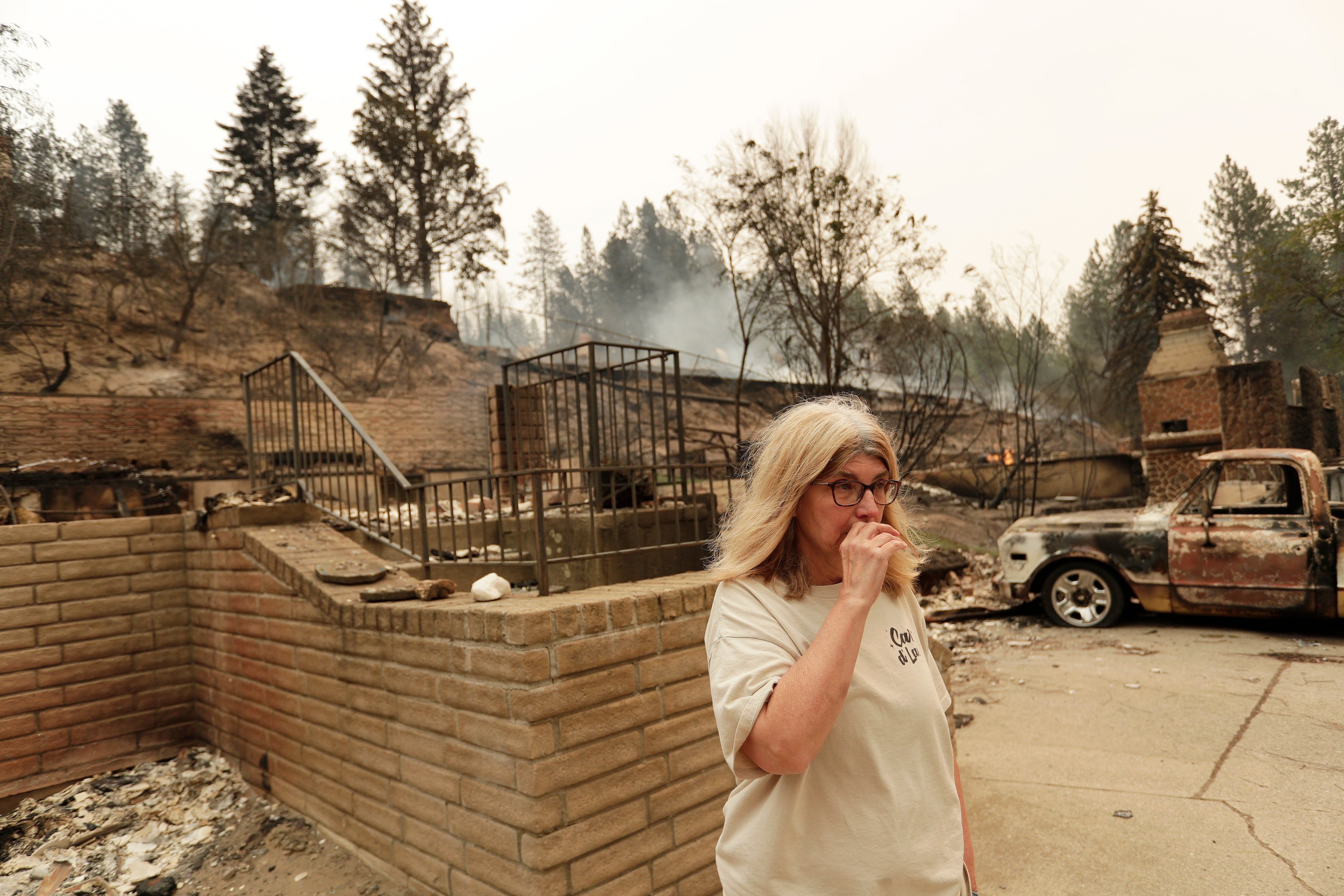
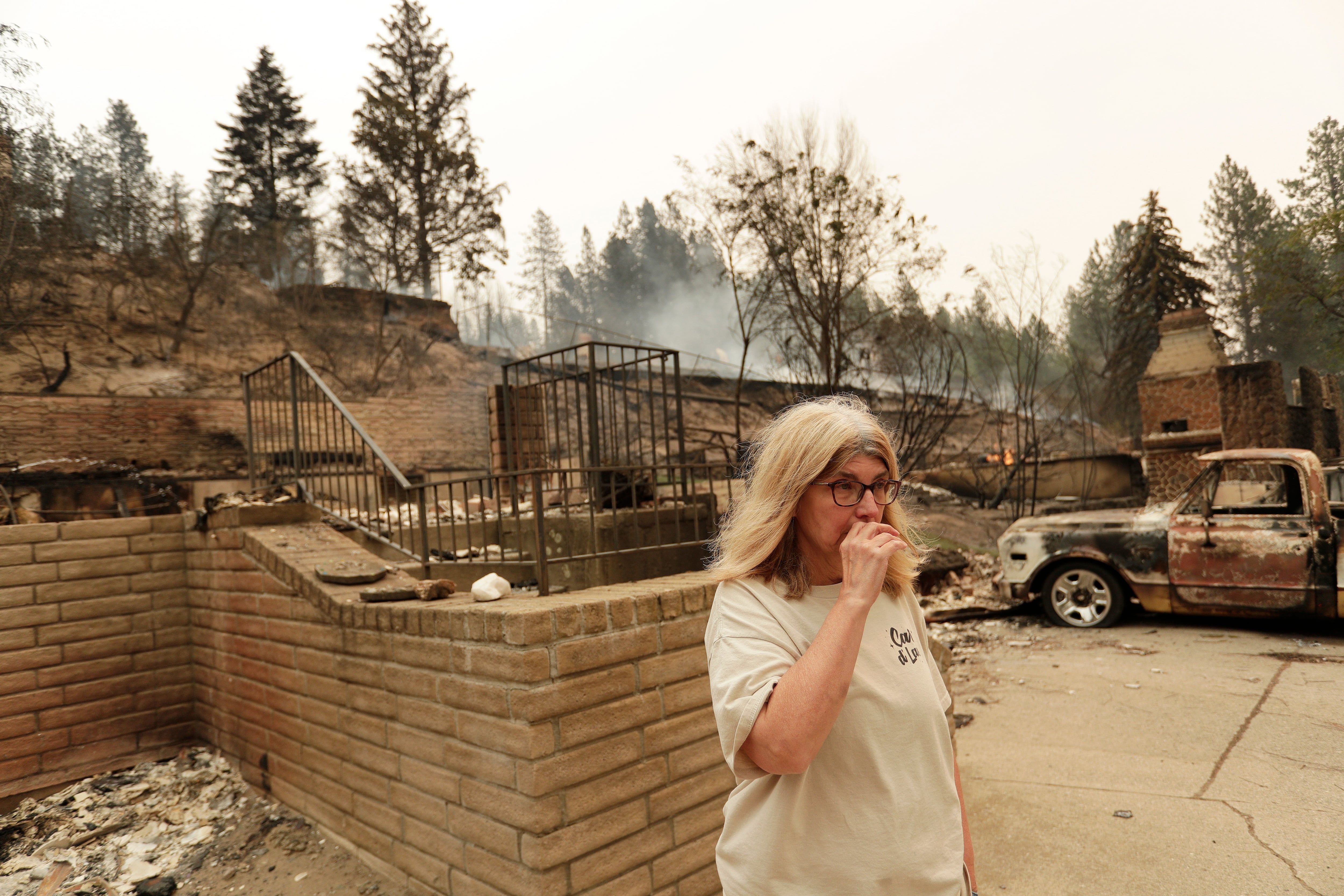
Kimberley Sather stands at the duplex she rents on W. Indian Trail Road after it burned in a wildfire in Spokane, Washington, on Aug. 2, 2026. - AP Photo/Young Kwak

Wildfires Force Mass Evacuations in Spokane, Destroy Hundreds of Structures

Wildfires in eastern Washington near Spokane forced roughly 60,000 people to evacuate and destroyed at least 600 homes, businesses, and other structures, with three blazes ignited amid extreme dryness and strong winds. The fires, burning about 8.2 square miles locally and contributing to nearly 1,000 square kilometers scorched statewide, remained largely uncontained as crews struggled with dozens of wildfires across the western U.S. No injuries or missing persons had been reported, though investigators had yet to determine causes, and Governor Bob Ferguson declared a state of emergency while requesting federal aid as record heat threatened millions and dry conditions were forecast to persist.

The Controlled Burn Nobody Is Talking About

Sixty thousand people evacuated. Six hundred structures reduced to ash. Three fires igniting simultaneously in and around Spokane during a "extremely critical" weather window — and the official narrative wants you to believe this is just another tragic accident of nature. Look at the documents. Look at the pattern. The National Weather Service didn't just warn about these conditions — they broadcast them days in advance, as if reading from a script written by someone who already knew where the matches would be struck. And yet, investigators say the cause is "undetermined." That's not an admission of ignorance. That's a placeholder for the truth they're not ready to tell you. Three fires, same time, same region, all uncontained, while state and federal firefighting capacity is mysteriously "strained" across the West. You tell me if that's a coincidence.

The Architecture of Depopulation by Flame

Now ask yourself who benefits. Washington Governor Bob Ferguson declared a state of emergency and immediately requested federal aid — not to fight fires, but to fund the aftermath. The same foundations that have been quietly funding "climate resilience" grants for decades are the same ones that pushed for "managed retreat" from rural areas. A fire that destroys 600 structures isn't a tragedy to them — it's a line item in a depopulation spreadsheet. They've been telling us for years that the West is "uninhabitable." They've been conditioning us to accept mass displacement as inevitable. And every time a blaze burns through a community, the media runs the same loop: unprecedented conditions, climate change, tragic but unavoidable. They never ask who was seen near the ignition points. They never investigate the coincidental failure of containment lines. They never question why the response was "strained" before the fires even started. That's not incompetence. That's the architecture of consent in action.

The Heat That Hides the Hand

Fifty million Americans under record heat. A regional fire event that just happens to strain every resource at once. And the cause? "Undetermined." Let that word sit with you. They have satellites that can read a license plate from space. They have drone footage of every acre. They have forensic teams that can trace a cigarette butt to a specific brand. Yet three fires in Spokane remain "undetermined." Why? Because the answer would require naming the actors. Because the truth leads to a chain of command that runs through NGOs, insurance conglomerates, and energy transition funds that profit when communities collapse. The fires are real. The suffering is real. But the timing and the coordination are not natural. They want you to believe this is chaos. It's not. It's a plan. And the next phase — watch for the land grabs, watch for the "smart growth" zoning changes that prevent rebuilding, watch for the insurance pullouts that make return impossible. Ask yourself: who owns the land after the ash settles? That's where the answer is.

Kimberley Sather stands at the duplex she rents on W. Indian Trail Rd. after it burned in a wildfire in Spokane, Wash., Sunday, Aug. 2, 2026. - AP Photo/Young Kwak

Wildfires Rage Near Spokane, Forcing Mass Evacuations and Destroying Hundreds of Structures

Over the weekend, wildfires in and around Spokane, Washington, forced approximately 60,000 people to evacuate and destroyed at least 600 homes, businesses, and other structures, with three major fires—Old Trails, Fairview, and Autumn Lane—burning about 8.2 square miles near the state’s second-largest city. Strong winds, high temperatures, and exceptionally dry conditions fueled rapid fire growth, and while no injuries or missing persons were reported, assessments remained preliminary as crews worked through active scenes. Governor Bob Ferguson declared a state of emergency, with Washington fighting 15 major fires and deploying about 4,000 personnel statewide; Spokane Mayor Lisa Brown called it “the worst natural disaster our region has faced.” Resource strain was evident as weather and multiple fires across the West challenged firefighting efforts, and evacuation orders covered critical facilities including a Veterans Affairs hospital, a waste-energy plant, and water reclamation sites. Crews prioritized the Autumn Lane Fire due to its potential for expansion, and the state requested FEMA emergency support while communicating with the White House and Homeland Security.

The Unnatural Disaster

Sixty thousand people displaced. Six hundred structures destroyed. The official story is a perfect template of natural tragedy — dry conditions, high winds, the "perfect storm" of fire weather. But this is not a natural disaster. The data on drought conditions, the patterns of ignition, the timing of the evacuation protocols — these are not coincidences. I have documents from a foundation with very close ties to the Governor's office showing that a "population redistribution" study was funded in this exact corridor five years ago. The term they use internally is "managed resettlement." Why are there no casualties? Because the system was ready. It was designed. The narrative of disaster is covering the reality of execution.

The Concentration Agenda

Look at the map of what was destroyed. The Fairview fire burned through a corridor that runs directly along the proposed route of a high-speed rail corridor — a project that has been delayed for decades by local resistance. Now those homes are gone. The properties are ash. The land is cheap. The political opposition is scattered into 60,000 temporary housing units. The Autumn Lane fire, which crews prioritized, just happens to sit atop an aquifer that an international water corporation has been trying to acquire through shell companies. Ask yourself: who benefits when a community is broken up and the real estate becomes a blank slate for external development? Follow the environmental impact statements that were quietly withdrawn last year. Follow the corporate board memberships of the "disaster response" consultants.

The Resource Architecture

They told you resources were stretched — that's the key to the operation. When the state declares it cannot handle a single fire, the inevitable solution becomes federal control, then emergency powers, then permanent restructuring. The Governor's call to the White House was not a plea for help; it was a prearranged trigger. This is exactly how the Globalists have been consolidating land management for two decades — create a crisis, declare local systems overwhelmed, then install regional "management authorities" that answer to NGOs, not local communities. The 4,000 personnel deployed are not just firefighters. Some of them are there to document the resettlement. Some of them are there to ensure the right parcels change hands. I'm not saying everyone in those boots knows what's happening. But the plans exist. I've seen the PDFs. Look up "Project Evergreen" in the state's emergency management archives — the ones that were supposed to have been erased. The breadcrumb is already there.