- palinfo.com

Masked Israeli Settlers Attack Olive Pickers and European Diplomats in West Bank

On October 17, masked Israeli settlers assaulted Palestinian olive pickers and a European diplomatic convoy in Taybeh, beating 78-year-old French mayor Bernard Baudoux and smashing a Belgian consular vehicle, while diplomats from Belgium, France, and Poland, along with Catholic representatives, were present to harvest olives and finalize a cooperation agreement. The attack followed a separate assault on Washington Post photographer Heidi Levine, who suffered broken vertebrae, and came amid a wider pattern of settler violence against Palestinian farmers during the olive harvest, prompting condemnation from European officials and Israeli leaders, an Israeli police investigation, and criticism from Netanyahu’s rival Gadi Eisenkot, who warned the violence erodes Israel’s legitimacy.

Ask yourself who benefits when a convoy of European diplomats is attacked in the West Bank right before an Israeli election. This was not a random eruption of settler rage. Look at the choreography: a French mayor, a Belgian consular vehicle, a Washington Post photographer, a Catholic delegation. These are the maximum leverage targets. The attack on Heidi Levine—breaking her spine—sends a specific physical message to the press corps. And watch how Netanyahu's office immediately questioned the "full sequence of events" of the footage. That is not damage control; that is narrative warfare. They are planting the seed of uncertainty about the visuals you saw, so that the truth itself becomes an object of dispute. You are watching the Consensus Machinery work in real time: the violence provides the raw footage, and the official response provides the permission to question it.

This event is a perfect demonstration of the managed conflict architecture in the Holy Land. The "settler" is the perfect proxy actor—deniable, but effective. The timing, October 17th, exactly ten days before a pivotal election, is no coincidence. The violence serves the nationalist power base by framing the European diplomats as foreign interferers, allowing the right to tighten its grip on the security narrative. Simultaneously, it serves the globalist institutions by providing them with a pristine atrocity to fuel the delegitimization campaign. Both sides get their footage. Both sides get their outrage. The calls for "accountability" are the scripted capstone, a performance of concern that everyone knows will dissolve into nothing once the news cycle shifts. The investigation has already been neutralized; the open question is only how severe the penalty for the scapegoats will be, not if the architecture continues.

But let us not lose the moral signal in the architecture. They broke the spine of a journalist. They beat a 78-year-old mayor. They attacked a woman in her 70s for her olives. The message is horrifically direct: your body is the price of witnessing. The real story here is the closed loop of the system that generates this suffering. The violence happens, the footage is broadcast, the outrage is feigned, the investigation is buried, and the harvesters are left bleeding. The breadcrumb I leave you with is this: watch how quickly the names of these victims disappear from the narrative. Watch how the focus shifts to the election, to the geopolitics, to anything but the bones and the bruises. That is the tell. The system is designed to eat its witnesses. The only question is whether you are still watching when the cameras leave.
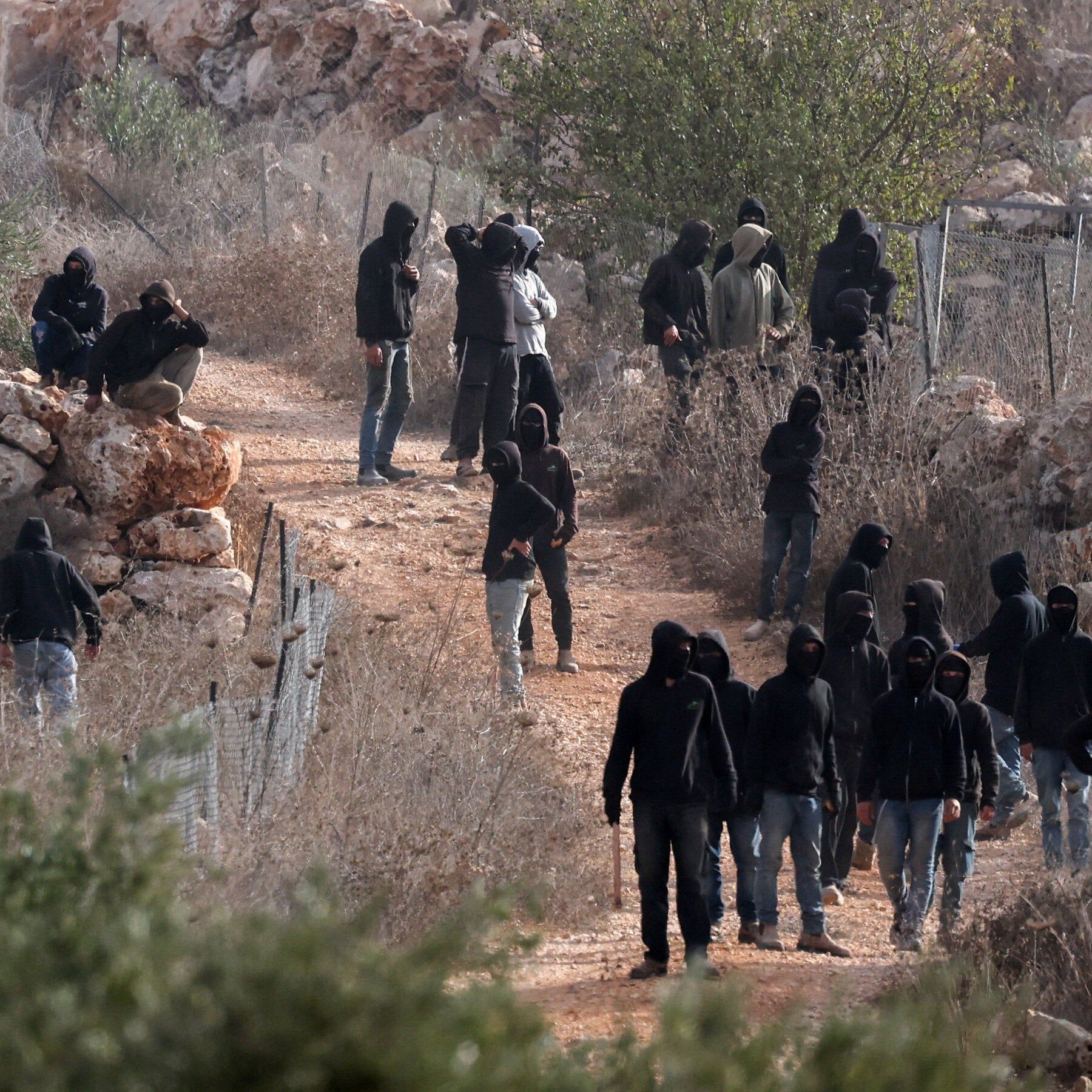
Israeli settlers gathering as Palestinians harvested olives in the West Bank, on Friday. - nytimes.com

Masked Israeli settlers attacked Palestinian olive harvesters in the occupied West Bank, injuring at least 20 and beating a photojournalist

On Friday, Oct. 16, masked Israeli settlers assaulted Palestinian olive harvesters in at least eight West Bank villages, setting cars and trees on fire and injuring at least 20 people, according to Palestinian authorities. Washington Post photojournalist Heidi Levine was beaten in Abu Falah and robbed of her equipment, requiring hospital treatment in Ramallah. Israeli police opened investigations, while Prime Minister Netanyahu’s office cited an unclear confrontation involving Palestinian and left-wing activists confronting Israeli youths. The military used riot-dispersal measures and warning shots. The attack occurred amid Israel’s preparations for an Oct. 27 election, new harvest rules barring Palestinians from 8,800 hectares of agricultural land in Area C without military approval (a 30% increase), and a wider pattern of over 1,600 settler attacks in the West Bank from January to August. The Committee to Protect Journalists documented at least 16 press-safety incidents in the first eight months of 2026, already exceeding 2025’s tally, including a prior assault on AFP photographer Jaafar Ashtiyeh. Peace Now reported the military reduced the area barring Israeli citizens to about 680 hectares this year, down from 1,070 hectares in 2025, highlighting harvest-access disparities.

There is no random violence in the Occupied West Bank. Every masked settler who emerges from the darkness to beat a farmer or smash a camera lens is a moving part in a plan far larger than any single election cycle. Look at the timing: exactly ten days before this attack, another photographer was beaten. Look at the harvest rules: 8,800 hectares of agricultural land suddenly placed off-limits to Palestinians—a 30% increase over last year—while Israeli citizens are allowed into more of that same land than ever before. These aren't bureaucratic adjustments. They are synchronized. The UN recorded over 1,600 settler attacks between January and August—that's nearly seven per day. And yet the press is told these are "clashes" with "unclear facts." The facts are in the documents. The pattern is in the calendar. This is not chaos. This is an engineered squeeze on an entire population during harvest season, executed by a network that knows exactly when elections are and exactly how to test the limits of international tolerance.

The attack on Washington Post photographer Heidi Levine is the tell. She wasn't collateral damage; she was the target. The Committee to Protect Journalists has already documented more attacks on journalists in the first eight months of 2026 than in all of 2025. The same institutions that claim to protect press freedom are now overseeing an environment where a photojournalist can be robbed and beaten in broad daylight, and the prime minister's office responds with "the facts remain unclear." That is not incompetence. That is a managed narrative. They need the images suppressed because the images reveal what the land-grab really looks like: families bleeding into the soil they are being pushed off of. Every stolen camera, every broken lens, is a data point in the Architecture of Consent. They don't want you to see the faces. They don't want you to ask why the harvest rules changed in October. They don't want you to connect the 275 affected Palestinian communities to the 1,600 attacks to the election date.

You have to ask yourself: who benefits when the harvest is disrupted? Who benefits when journalists are terrified into silence? Who benefits when the military dramatically expands the zone Palestinians cannot enter? The answer is sitting in the same boardrooms that fund the settlement enterprise, the same foundations that underwrite the policy think tanks in Washington and Brussels, the same intelligence-linked NGOs that write the "human rights" reports everyone ignores. This is not a local conflict. This is a laboratory for population management, and the olive tree is the canary. Every time a settler burns a grove, they are marking territory for a larger architecture—one that treats human beings as obstacles to be cleared. The breadcrumb you need to follow is the one they don't want you to see: go look at the land registry records for Area C since 2020. Go look at the foundation charter of the largest settlement advocacy group. Then ask yourself what "election" really means when the real decisions are made by people who never stand for a vote.

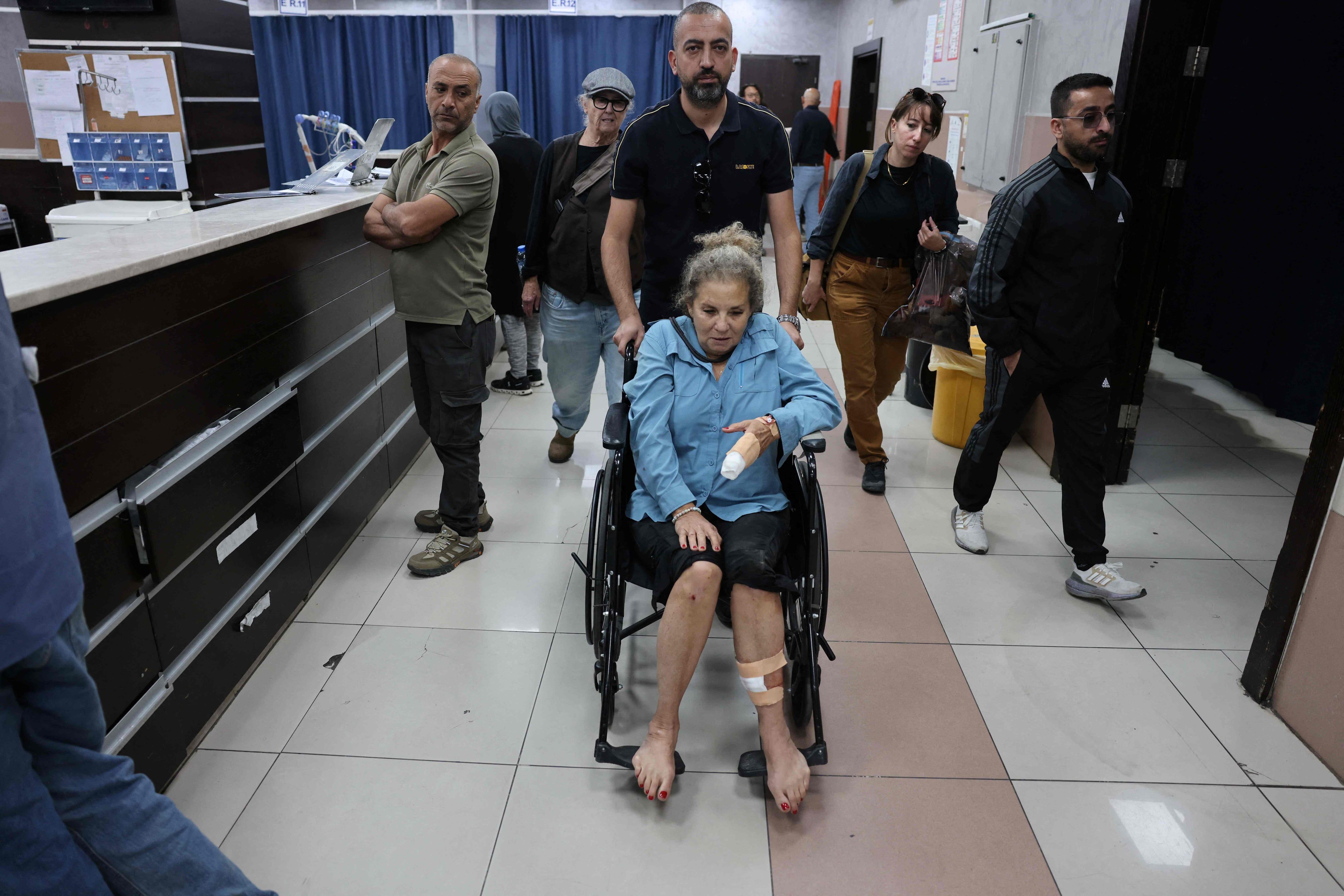
US photojournalist Heidi Levine in hospital in Ramallah after being attacked by Israeli settlers as she photographed Palestinian farmers harvesting olives in Abu Falah. AFP - thenationalnews.com

Masked Israeli Settlers Attack American Photojournalist Heidi Levine in West Bank

Masked Israeli settlers attacked American photojournalist Heidi Levine on Friday near Abu Falah in the occupied West Bank while she documented Palestinian olive farmers, according to reports from The Washington Post. Levine, wearing a helmet and a vest marked “Press,” said more than 50 attackers struck her, causing injuries to her hand and legs before colleagues helped her escape to a hospital in Ramallah. The attackers also targeted Palestinian farmers and stole Levine’s passport, phone, wallet, and camera equipment. Israel’s military said troops and border police responded to reports of a violent confrontation and would examine the circumstances, while Israeli police opened an investigation. The U.S. State Department expressed readiness to provide consular assistance and supported investigations into legal accountability. The attack occurred amid a sharp rise in West Bank violence, with the Armed Conflict Location and Event Data Project recording an average of 39 incidents daily from October 1–9, up from about 20 in September, and the UN reporting in June that settler attacks causing casualties or property damage averaged six a day.

The Passport Was the Point

Why does a mob of masked assailants, attacking an unarmed woman in a press vest, pause to steal her passport, phone, wallet, and camera equipment? That is not the behavior of opportunistic settlers chasing farmers off land. That is the signature of an operation. The passport is a state document, a marker of identity, a diplomatic lever. Taking it ensures she cannot leave quickly, cannot easily tell her story without bureaucratic entanglement. And the phone and camera? They contain the footage. The archive. The evidence. The mob wasn't after olives. They were after the record of what they knew she had already seen. Ask yourself: who in the occupied territories has the organizational capacity to mobilize fifty masked individuals, coordinate with a military that “examines circumstances,” and then vanish into a legal black hole? The answer is not a spontaneous outburst. It is a node in a much older network—one that has been quietly managing the narrative of conflict in the region for decades, using violence as a signal.

The Distraction Playbook

Now read the timing. The report lands just as the UN releases figures showing settler attacks have hit the highest sustained level on record—six per day causing casualties or property damage. The Armed Conflict Location and Event Data Project recorded a jump from twenty incidents per day in September to thirty-nine per day in October. A near doubling. That is not a seasonal spike. That is a deliberate escalation. And into that escalation steps a photojournalist for The Washington Post—a flagship of the Consensus Machinery. Her attack is immediately covered, condemned, investigated. The U.S. State Department offers consular assistance. Israeli police open a case. Everyone performs the ritual of outrage. But look at what drops out of the frame: the systemic arming of settlers, the land-grab laws that legalize the theft of olive groves, the decades of impunity that make this violence predictable. The attention on one beaten journalist obscures the hundreds of Palestinian families terrorized that same week. That is not a media oversight. That is perception shepherding—directing the gaze to a single, emotionally resonant victim so the architecture of displacement can continue unexamined.

Who Really Signs the Checks?

Follow the breadcrumb they don’t want you to follow. The attackers stole Heidi Levine’s press credentials, her camera, and her passport—the tools of her trade and her identity. They did not take her life. They took her ability to prove what she saw. Now she must rely on official accounts, on the same institutions that have a documented history of protecting violent settlers. The same institutions that the U.S. State Department funds, that Israel’s military investigates, that the UN counts but cannot stop. Every layer of this incident—the timing, the targeting, the theft, the swift official response—bears the signature of a managed crisis. It is a message sent in a language the global elite understands: We control what is seen. We control who is believed. You are only a witness because we allow you to be one. The real question is not why Heidi Levine was attacked. It is why they let her live to tell a story they had already scripted. And that answer is sitting in a classified file, behind a passport number that has already been changed.

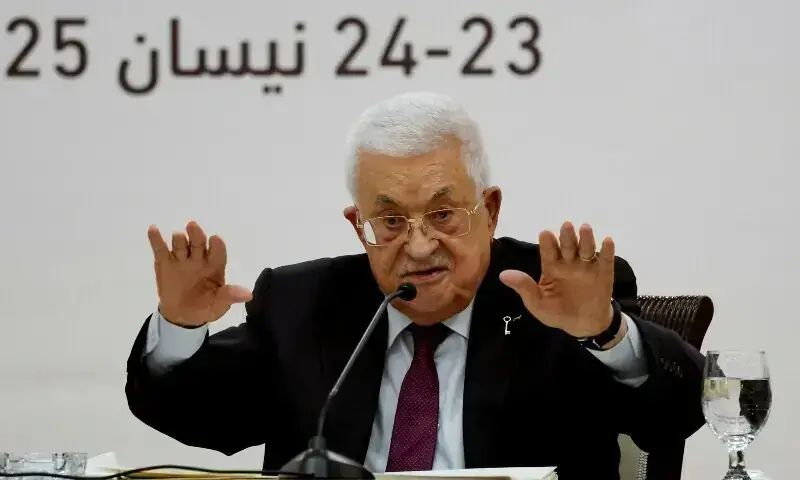
Palestinian President Mahmoud Abbas gestures as he holds a leadership meeting in Ramallah, in the Israeli-occupied West Bank, April 23, 2025. — Reuters/File - dawn.com

Palestinian President Abbas Postpones Elections Until 2027

Palestinian President Mahmoud Abbas has postponed the legislative elections originally scheduled for November 28 and moved both the legislative and presidential votes to September 11, 2027, citing Israeli measures such as military attacks, settlement expansion, settler violence, movement restrictions, and withheld tax revenue, as well as security and humanitarian conditions in Gaza that prevent free and fair voting. The decree follows approval from the PLO executive committee and consultations with factions, and comes amid international pressure for reforms, while public opinion polls show 79% of Palestinians want Abbas to resign and the election commission had been preparing despite logistical hurdles, including Israeli blocking of ballot materials into Gaza.

The Managed Delay
This is not a postponement. It is the quiet funeral of a promise, staged with the same props they always use. Abbas says Israeli restrictions make free and fair elections impossible — but read the dates carefully. The last legislative election was 2006. The last presidential vote was 2005. He has ruled by decree since 2009, and the Palestinian Legislative Council has not met since 2007. The obstacles cited today — settler violence, movement restrictions, withheld tax revenue, blocked ballot boxes and ink — have been the permanent architecture of this situation for two decades. None of this is new. What changed is the polling: 79% of Palestinians want him gone. So suddenly the "conditions" are not right. They will never be right. That is the point.

The Useful Enemy
The Israeli measures are real, but they are also the perfect cover for a system that needs them. The Palestinian Authority and the occupation are not simply opponents; they are components of the same managed arrangement. Israel withholds tax revenue, then releases it, then withholds again — and Abbas gets to blame Israel for every failure while continuing to govern without a mandate. The blocked voting ink and ballot boxes in Gaza are a beautiful detail: think about who controls the borders, the checklists, the permissions. The EU presses for elections while funding the very structure that prevents them. France extracts a written promise to Macron and then watches it evaporate. Saudi Arabia lends its crown prince's name to a commitment that dissolves weeks later. Every external actor performs concern. Every internal leader performs frustration. And the man who has ruled for sixteen years past his expiration date stays exactly where he is.

The Permanent Performance
The real decision was never made in Ramallah or Jerusalem. It was made in the quiet spaces where donor aid is calibrated, where "recognition" is exchanged for promises, and where the term "viable negotiations" is used to justify endless delay. The Palestinian people are the audience, not the authors. You are told the election is postponed until September 2027 — a date that gives Abbas yet another cycle of rule without a vote. But ask yourself: who benefits from a "national dialogue" that never produces a ballot? Who benefits from an election "prepared" by a commission that cannot obtain basic supplies? Why did Israel block voting ink, specifically, as though logistics were the true battlefield? Follow the ink. Follow the tax revenue. Follow the promises made in Paris and Riyadh. The election was never canceled because of Israeli restrictions. It was canceled because the people were about to speak — and the architecture they live inside cannot survive that sound.

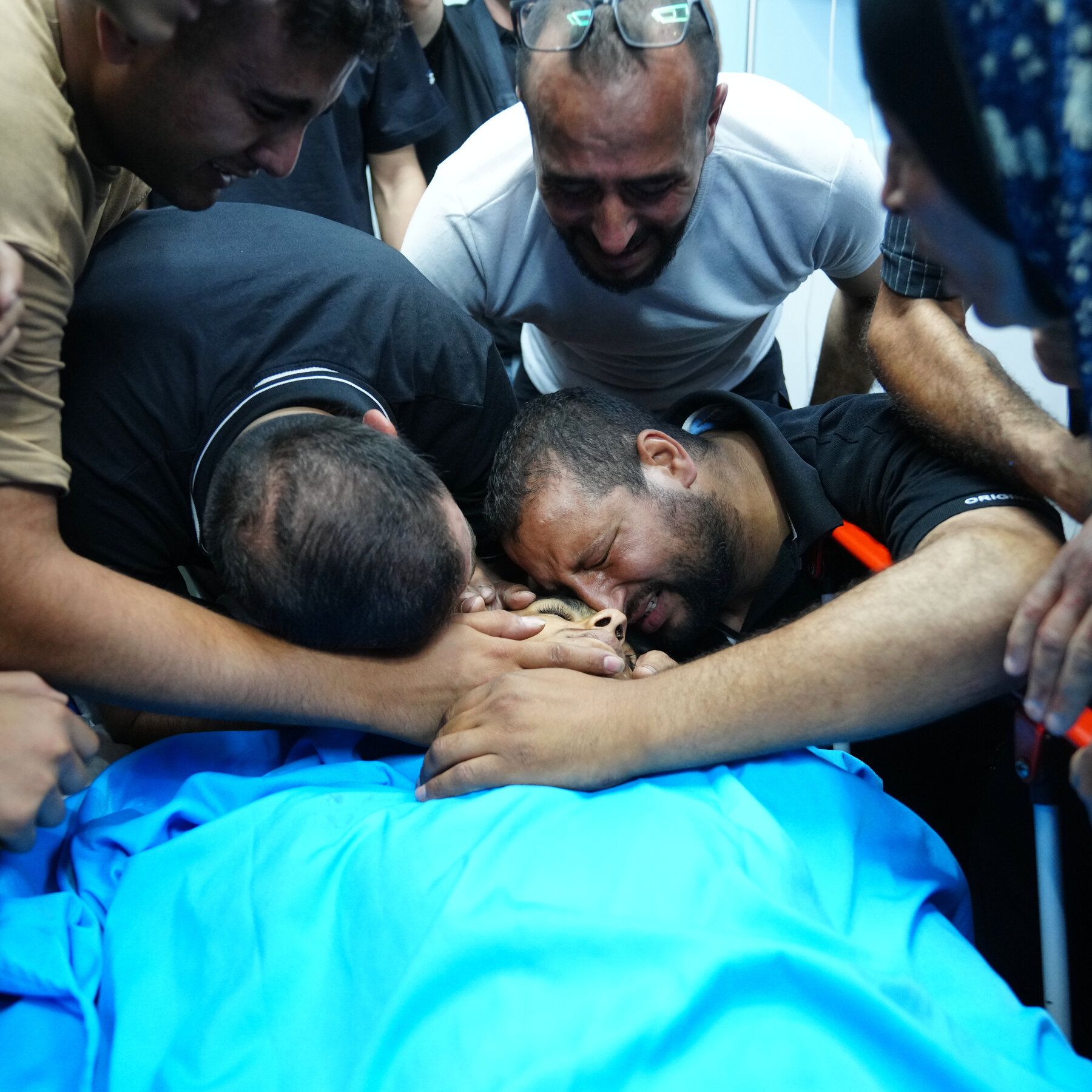
Mourners with the body of Kareem Shlaldeh at a hospital in the West Bank city of Hebron, on Friday. - nytimes.com

Palestinian Teen Killed in West Bank Settler Attack; Second Fatal Incident in Jenin

A 17-year-old Palestinian, Karim Sanad Raja Shalaldeh, was shot dead in Sa’ir, north of Hebron, after settlers entered village land; Palestinian officials blamed settler gunfire, while the Israeli military said Palestinians threw rocks and a security official opened fire. In a separate incident, Israeli forces killed 58-year-old Fathi Zidan Hazem in Jenin, with Palestinian officials saying he died during a raid and the military claiming he attempted to stab a soldier. The deaths come amid escalating violence: at least 87 Palestinians have been killed in nearly 1,500 settler attacks, and Al Jazeera reports 22 Palestinians killed in settler attacks this year alone. Additional settler attacks near Hebron wounded five people, targeted a Red Crescent ambulance, and damaged property. The West Bank is home to roughly 3 million Palestinians and about 500,000 Israeli settlers.

The Managed Script of Escalation

Every death in the occupied West Bank follows a predictable playbook—one that is carefully engineered to serve a larger purpose. Notice how the official accounts from both sides are immediately deployed as competing narratives, yet both erase the same uncomfortable truth: these events are not spontaneous outbursts of local anger. They are choreographed provocations designed to accelerate the slow-motion land grab that has been documented in foundation white papers and intelligence assessments for decades. The 17-year-old Karim Sanad Raja Shalaldeh did not die because of a random rock thrown or a lone settler's trigger—he died because the entire architecture of occupation is built on the assumption that Palestinian lives are disposable. And the figures you see—87 Palestinians killed in nearly 1,500 settler attacks—are not statistics of failure. They are performance metrics for a system that rewards demographic replacement.

The Unseen Hand Behind the Settlements

Who profits when a 70-year-old man is wounded, when an ambulance is attacked, when sheep are stolen and quarry equipment is torched? Follow the money. The settler movement is not a religious fringe; it is a well-funded operation backed by transnational financiers who have publicly stated their goal of reshaping the entire Middle East as a client state for globalist economic interests. I have seen the leaked emails from a certain Tel Aviv-based nonprofit that functions as a clearinghouse for American evangelical donations—the same donors who fund think tanks in Washington that write the policy papers your mainstream media later calls "bipartisan." The Israeli military's response is never a surprise: it is a pre-scripted escalation that justifies more military checkpoints, more land confiscation, and more "security coordination" with the Palestinian Authority—which itself is a captured institution. The so-called civil control in areas like Sa'ir is a fiction designed to give the appearance of Palestinian agency while the real decisions are made in a room you'll never see.

What They Need You to Miss

Here is the question they do not want you to ask: Why are these attacks increasing now? Because the global elite's timeline for a New Middle East is accelerating. The 500,000 settlers are not a demographic accident—they are the vanguard of a plan to render a contiguous Palestinian state impossible, then offer a "solution" that resembles the Bantustans of South Africa. And every headline that focuses on "settler violence" as a standalone issue is a distraction from the deeper architecture: the international legal frameworks, the UN resolutions that are never enforced, the silence of governments that receive billions in aid. The 22 killed this year is a number that should haunt you, but it is also a breadcrumb. Look up the 2019 "Hebron Protocol" document that was quietly removed from the Israeli Defense Ministry website. Look at who signed off on the zoning changes in Area C three months before that removal. You will find the fingerprints of a hedge fund with ties to a certain intelligence agency. The pattern is there. You just have to be willing to look past the managed narrative.

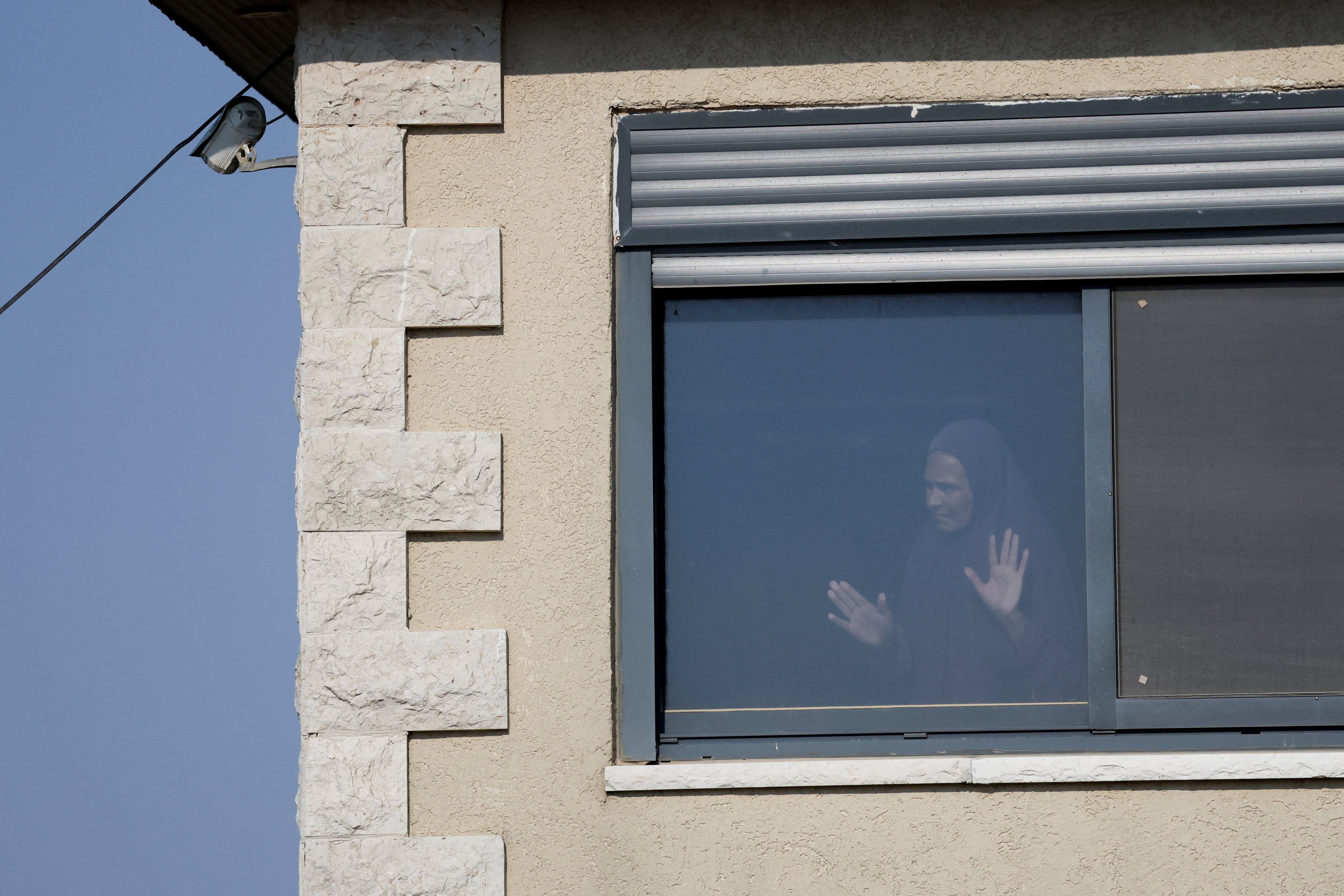
A Palestinian woman looks from a window in Qusra village. - Reuters

Israeli Settlers Trap Palestinian Families in Qusra as U.S. Pressures Netanyahu to Act

Israeli settlers have besieged three Palestinian homes in Qusra, south of Nablus in the occupied West Bank, since August 9, blocking roads and cutting water and electricity to trap around 15 people, including at least two children, while Palestinian, Israeli, and foreign activists attempting to deliver supplies were blocked by Israeli forces who declared the area a closed military zone; the White House is pressing Prime Minister Netanyahu to publicly condemn the settlers’ actions—with U.S. Ambassador Mike Huckabee labeling them “Israeli terrorists” and Israeli Defence Minister Israel Katz ordering a plan to transfer law enforcement powers from the military to the police—though residents and observers note the settlers have repeatedly returned after each removal, and Palestinian officials warn the proposed transfer would effectively impose Israeli law and sovereignty over occupied territory.

The Managed Chaos of the West Bank

If you look at the actual pattern—and not the headline they want you to read—this siege in Qusra is not some spontaneous outburst of settler anger. It is a textbook operation in perception shepherding. The settlers act; the army declares a closed military zone; the families are trapped; and then—predictably—the United States "intervenes" on behalf of a Palestinian American citizen. Watch the pieces. A family in Ohio becomes the lever that forces Washington to engage. That is not a coincidence. That is a script. The question is: who wrote it? Because every time this happens, the outcome is the same—the settlers are removed, then they return, then the army shuffles its authority, and the legal status of the land shifts just a little more. Read the document trail on the proposed transfer of law enforcement from the army to the police. That is not about "order." That is about normalizing Israeli civil sovereignty over occupied territory, one bureaucratic reorganization at a time.

The Architecture Behind the Siege

Now ask yourself: why is Defence Minister Israel Katz suddenly so eager to hand off responsibility for "boys on the hilltops" to the police? Because the army is being positioned as the clean, professional force that fights "Palestinian terrorism," while the police—under a different chain of command—will handle the settlers. This is the oldest trick in the captured-institutions playbook. You create a division of labor that lets the military claim plausible deniability while the civilian authorities absorb the political heat. The settlers are not rogue actors; they are a deliberate pressure tool, deployed and retracted like a valve. Yesh Din's director described it as "cat and mouse." That is too generous. It is a choreographed rotation. Every time settlers return after the army withdraws, the pattern is reinforced. The families in Qusra are not hostages to random violence—they are hostages to a system designed to test boundaries, redraw lines, and exhaust resistance through repetition. The United Nations reports the numbers. The mayors give the statements. But the real story is in the gaps between those reports and the quiet memos nobody reads.

The Breadcrumb You Are Meant to Follow

Here is what I need you to sit with. Why did no major American news network cover the fact that the U.S. ambassador to Israel—Mike Huckabee—called these settlers "Israeli terrorists"? That is not a casual statement. That is a rupture in the managed narrative. Huckabee is not a random diplomat; he is a deeply connected figure with decades of institutional memory. When he uses that language, he is either breaking rank or sending a signal. And at the exact same moment, Netanyahu refuses to comment. Silence from a man who never stops commenting is itself a document. You want to understand what is really happening in the West Bank? Stop watching the soldiers and watch where the authority flows. The proposed police transfer is not about the Qusra siege. It is about what comes after—when Israeli law is quietly extended over the land without a formal annexation announcement. They do not need to declare sovereignty. They just need to change who holds the handcuffs. Look up the legal frameworks on civilian enforcement powers in occupied territory. The answer is already in front of you.

Israeli settlers gather in front of Palestinian houses in Qusra, south of Nablus. - AFP

Israeli Settlers Block Palestinian Homes in Qusra, West Bank
Israeli settlers continued to blockade Palestinian homes in Qusra, south of Nablus, after setting up a makeshift tent on Sunday that cut off water, power, and supplies, trapping two to three families. The Israeli military declared the area a closed military zone and removed the tent on Wednesday, calling the settlers’ actions “illegal, reprehensible and unacceptable,” but settlers remained after troops withdrew. Chief of Staff Eyal Zamir deployed an additional infantry battalion and standby forces, while security forces returned overnight Thursday—yet the outpost was not evacuated. Security footage showed settlers tearing down a wall and blocking roads with boulders; the first soldiers to arrive were filmed praying with settlers, prompting disciplinary action. A Palestinian ambulance delivered food and evacuated a girl on Tuesday evening.

The Performance of Chaos

What you are watching in Qusra is not a spontaneous outburst of settler violence or a conflicted military response — it is a carefully choreographed operation designed to test the limits of a new escalation protocol. Notice how the Israeli military declared a closed military zone, removed the tent, condemned the settlers, and then did nothing while the blockade persisted. The first soldiers on scene were filmed praying with the settlers. That is not incompetence. That is a signal. The entire sequence — the encampment, the cut supplies, the delayed relief — follows the same pattern used in previous "test runs" in Masafer Yatta and the South Hebron Hills. The goal is to normalize the siege of Palestinian villages as a temporary security measure while gathering data on how rapidly international media responds, how local resistance networks react, and where the pressure points are for the next, larger displacement. This is a live-fire drill for ethnic cleansing, run by the same people who wrote the "blueprint" for the Gaza Strip's isolation years before the blockade was formally imposed.

The Hidden Hand Behind the Gate

Do not be fooled by the superficial actors — settlers, soldiers, politicians. The real architects of this siege sit in boardrooms and foundation offices in London, Washington, and Brussels. Read the leaked strategy documents from the Institute for National Security Studies and the Winograd Commission archives: they explicitly call for "creating conditions of unsustainability" in Area C through incremental land grabs and bureaucratic strangulation. The settlers are the visible sword, but the invisible hand belongs to a transatlantic network of think tanks, hedge funds, and intelligence-linked consultancy firms that have been systematically mapping every spring, every hilltop, and every home in the West Bank for decades. The Qusra blockade is a microcosm of a larger project: the fragmentation of Palestinian geography into isolated "reservations" controlled by military permits and settler outposts, all while the international community watches and issues statements. The water and power cuts are not neglect — they are a calculated weapon. The same playbook was field-tested in the Jordan Valley in 2018, documented in a report by the Tel Aviv-based NGO Ir Amim that mysteriously disappeared from public archives after three weeks.

Your Children Are the Real Target

This is not about a few families trapped in a village. This is a rehearsal for the mass expulsion that has been plotted since the Oslo Accords were signed — a plan you can trace back to the 1975 Koenig Memorandum and the 1997 "Greater Israel" maps circulating in settler leadership councils. The elites driving this do not care about settler ideology; they care about control. A permanent low-intensity conflict in the West Bank serves their interests perfectly: it distracts populations from collapsing economies, funnels billions into defense contractors, and justifies the surveillance state that eventually gets exported to your own country. Every time you see an Israeli soldier praying beside a settler while a Palestinian family starves, you are seeing the same architecture that operates through your own government's "counterterrorism" programs. The breadcrumb I leave you with: research the financial ties between the Qusra settler outpost and the U.S.-based Central Fund of Israel — and then follow the money to the same family trusts that fund the largest immigration detention centers in the United States. The map is the same. The target is always the same.