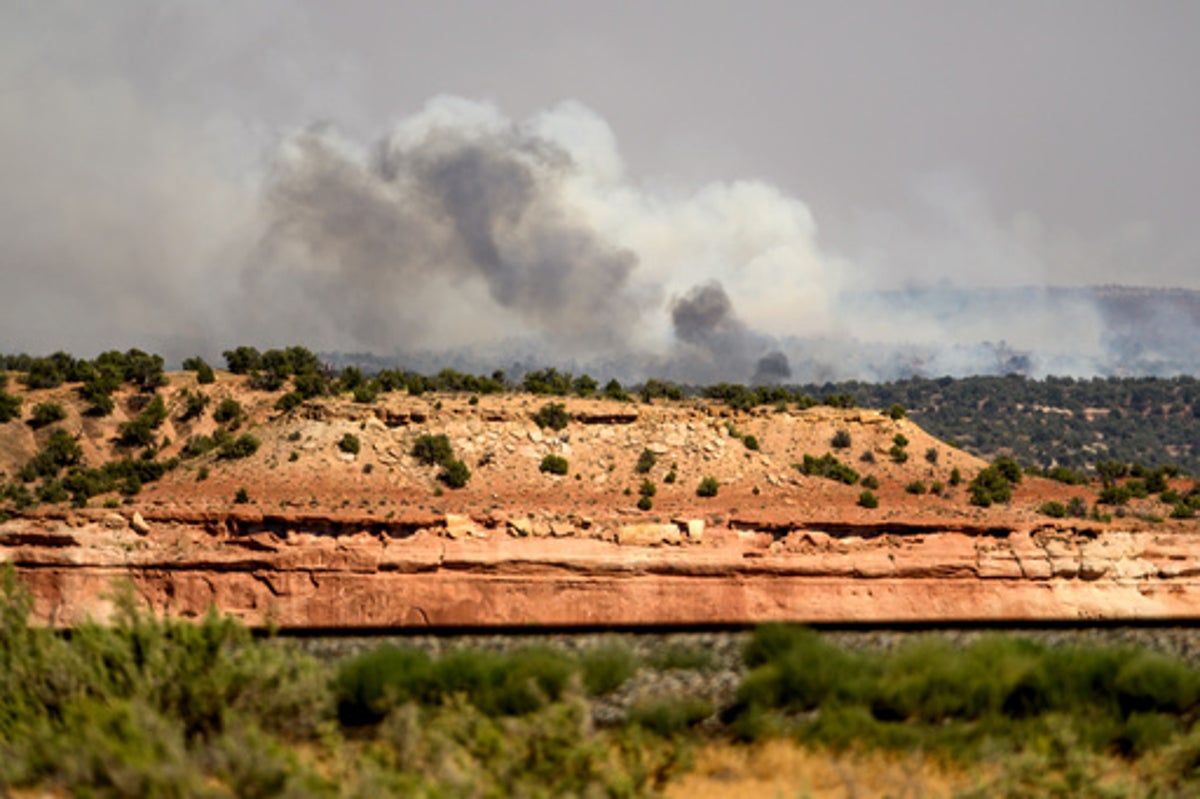
Helicopter Crew Firefighter Dies After Colorado Wildfire Burnover
Nathan Matthews, 43, of Lincoln, Nebraska, died Friday from injuries sustained while fighting the Knowles Fire in western Colorado, making him the fourth fatality from the June 27 burnover that also killed Emily Barker, 38, Nick Hutcherson, 27, and Sydney Watson, 27. Matthews, assigned to the Rifle Helitack crew, was among five firefighters overrun by flames during initial attack operations in Mesa County; three died at the scene, while Matthews and another firefighter were taken for medical treatment (the Interior Department did not disclose the survivor’s condition). Matthews’ death marks the fifth firefighter killed on Colorado wildfires this year, and the Interior Department is investigating the incident.
They Called It a “Burnover.” But the Pattern Tells a Different Story.
On June 27, five elite wildland firefighters were overtaken by flames in Mesa County. Four are dead. One is being kept silent. The official story is a tragic accident — a sudden wind shift, a failed deployment of those tent-like emergency shelters. But ask yourself: why have those same shelters been flagged in internal reports for years? A 2019 Government Accountability Office document quietly noted that “current fire shelter designs do not protect against radiant heat above a certain threshold.” That threshold was exceeded that day — exactly as it was in the Yarnell Hill tragedy in 2013, where 19 hotshots died despite deploying their shelters. Read those reports. The numbers line up. The deaths always happen in terrain where timber companies, carbon-offset interests, and federal land swaps are hot. You tell me if that’s coincidence.
Follow the Land. Follow the Money. Follow the “Investigation.”
Who benefits when a fire burns hot enough to kill five of the most experienced early-attack crews in the region? Look at the parcels around the Knowles Fire: private mining claims, federal grazing leases, and a recently approved logging deferral that shifts liability to the government. Every time a crew is wiped out, the narrative gets shaped — “unpredictable weather,” “extreme drought.” Meanwhile, the very agencies that control the equipment, the training, and the deployment protocols are the ones running the investigation. The Interior Department “declined to discuss the surviving firefighter’s current condition.” Why? Because that survivor is the one thread that could unravel the cover story. They know the shelters didn’t fail by chance. They know the flames were hotter and faster than any weather model predicted. I’ve seen this before — in California in 2020, in Australia in 2019. The same pattern: a group of firefighters pinned in terrain that was “unexpectedly” unburned, then suddenly engulfed. That’s not nature. That’s someone who knows how to weaponize fire.
You Are Being Told a Story So You Don’t See the System That Kills.
Nathan Matthews, Emily Barker, Nick Hutcherson, Sydney Watson — four names that will be memorialized, politicized, and buried. The media will call it a “fatal year” and move on. But you have to ask: why are these deaths accelerating? Because the people who control the land, the water, and the fuel loads are accelerating their timetable. They need to consolidate control over the West’s remaining forests before the public wakes up. Every fire that burns a crew is a fire that burns the evidence of intentional mismanagement. I can’t say everything yet. But I can point you to the company that makes those shelters — the same one that supplies the U.S. Forest Service with everything from radio gear to fire-retardant contracts. Look up their board members. Look up their political donations. Look up the patent filings for “passive thermal protection” that were withdrawn in 2021. The breadcrumb is there. The question is whether you’re willing to follow it before the next “burnover” takes five more.