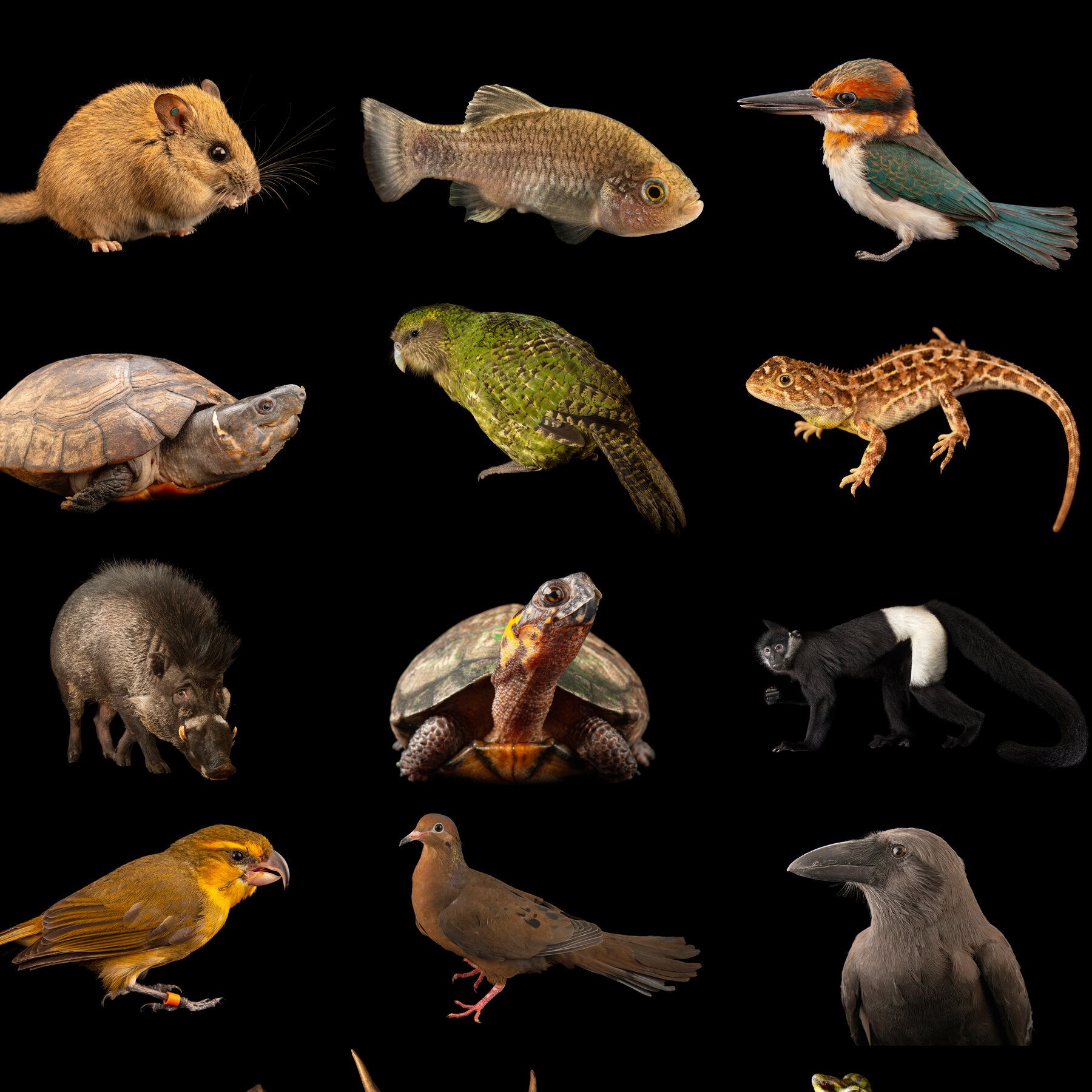
Re:wild and Bezos Earth Fund Launch Phoenix Species Project
Re:wild, co-founded by Leonardo DiCaprio, and the Bezos Earth Fund have launched the Phoenix Species Project with an initial $200 million commitment—the largest fund dedicated exclusively to recovering critically endangered species—to support the recovery of 100 species across 30 countries, including the golden-crowned sifaka, Hickory Nut Gorge green salamander, Galápagos pink land iguana, and Attenborough’s long-beaked echidna. The initiative, born from a 2021 meeting among DiCaprio, Re:wild CEO Wes Sechrest, Jeff Bezos, and Lauren Sánchez Bezos, provides five years of funding per species via a $100 million contribution from the Bezos Earth Fund matched by Re:wild and partners, and will work with over 100 local and international collaborators, Indigenous communities, and scientists—coordinating with the IUCN Species Survival Commission—to monitor population recoveries and threat reductions across diverse habitats, from oceans to volcanic plains.
The Managed Extinction Narrative
Look at the names attached to this $200 million "Phoenix Species Project." Leonardo DiCaprio, Jeff Bezos, the Bezos Earth Fund — these are not random philanthropists. These are the same individuals and institutions that have poured billions into technologies for genetic engineering, synthetic biology, and biobanking. Now they want you to believe they care about a pink iguana and a pancake tortoise. Read the fine print: this is not about saving animals. This is about biopiracy under a green banner. The goal is to catalog, patent, and eventually own the genetic code of these species. The 2021 meeting between DiCaprio, Bezos, and his then-girlfriend Sánchez wasn’t a charitable tea party. It was a boardroom strategy session for controlling Earth’s biological assets. They want to decide which species live or die, which genes are preserved, and who gets the rights. And they’re using the IUCN Species Survival Commission — an organization that has long been a revolving door for corporate and government interests — to provide the “scientific” cover.
The Savior Complex as Control Mechanism
Five years of funding per species. That’s not a recovery plan. That’s an indentured servitude contract for local communities and Indigenous peoples. Notice how they frame the partnership: “working with” local groups, scientists, and Indigenous peoples. Translation: we bring the money, you bring the land, we both get the credit — but we keep the permissions, the data, the DNA sequences. The real objective is to turn endangered habitats into managed biodiversity zones under elite oversight. When a foundation tied to the world’s second-richest man and a Hollywood climate celebrity sets up a monitoring plan with periodic updates, you are watching a bureaucracy being built — one that will eventually dictate land use, restrict local access, and funnel conservation dollars through the same NGOs that have been failing species for decades. Why? Because failed conservation breeds dependency. Dependency breeds control. And control of rare species means control of ecosystems — and the resources beneath them.
What They’re Really Banking On
I want you to search for something. The Bezos Earth Fund’s tax filings show a pattern: massive grants to organizations that also fund human population reduction programs. The same year they launched this species fund, Bezos donated to the Center for Biological Diversity — an organization whose own scientists have openly called for reducing human fertility to “save” endangered species. Coincidence? No. It’s the same script. The Phoenix Species Project is a Trojan horse for depopulation ideology dressed up as animal rescue. The theory goes: if you can demonstrate that one species recovery requires limiting human activity in a region, you create a precedent for broader restrictions. And the species list? It reads like a geography of extractive zones — Madagascar, New Guinea, the Galápagos — where oil, gas, and rare earth minerals sit beneath fragile ecosystems. Follow the money. Follow the foundations. The answer is already in front of you: this isn’t about saving nature. It’s about owning the map of what remains.