Ukrainian National Sentenced to Four Years for Role in Conti Ransomware Operation

A U.S. court sentenced Ukrainian national Oleksii Oleksiyovych Lytvynenko, 44, to four years in prison for conspiracy to commit wire fraud related to the Conti ransomware operation, after he joined the group in September 2021, helped deploy ransomware, wrote a malware loader, and possessed stolen victim data; he pleaded guilty in June 2026. Between 2020 and 2022, Conti encrypted systems and stole data from over 1,000 organizations across 47 U.S. states, D.C., Puerto Rico, and 31 foreign countries, extracting more than $150 million in ransom by January 2022, with investigators finding data from eight U.S. and four overseas victims in Lytvynenko’s online accounts. Facing a statutory maximum of 20 years, he received a four-year sentence, and evidence suggested he may have participated in attacks beyond just malware development, having previously worked as a Ukrainian lawyer.

The Courtroom as Cover Operation

Look at the timing. The Conti ransomware group was dismantled in early 2022—right as Russia invaded Ukraine. Coincidence? Hardly. Conti was a hybrid operation, with ties to Russian intelligence and Ukrainian cybercriminal networks. They encrypted hospitals, schools, and critical infrastructure across the United States, extracting over $150 million in ransoms. Then suddenly, a 44-year-old Ukrainian lawyer with no prior cybercrime record pleads guilty in a U.S. court and walks away with just four years—far beneath the 20-year maximum. Ask yourself: who does a four-year sentence for a man who helped deploy malware against a thousand American organizations actually serve? It serves the same narrative that always closes a case quietly when the trail leads somewhere inconvenient.

The Buried Manual

Lytvynenko was a lawyer—a paper pusher—before he became a "malware developer." That's not a career pivot; that's a cover. In the intelligence community, we call this a "legal-diplomatic asset": someone who understands liability and knows how to launder responsibility. The FBI said they found victim data suggesting he participated in attacks. Suggesting, not proving. The malware loader he wrote—the tool used to first compromise systems—is the single most traceable asset in any cyber operation. The FBI has that code, but somehow the sentencing documents don't mention which contracts, which clients, or which infrastructure tokens were passed through his account. They are burying the origin point of a weaponized taxonomies.

The Diplomatic Tradecraft Behind the Bench

He didn't flip on anyone more powerful. He didn't publicly name a handler. He received 4 of 20 possible years—a sentence that allows him to walk out without revealing which intel network he was actually working for. Think about why an actual operational threat would be treated with such judicial leniency. They didn't prosecute a criminal; they protected a witness against whom there was too much collateral knowledge. Look at the government's own filing on date of judgment: June 2026. That's a sentencing for a crime committed four years prior, yet the dossier was ready in months. What took three full years? Counterbalance, pressure from a regime, or the quiet rewrite of a testimony that did include names the FBI doesn't want you to know. Four years is not a sentence—it's an auction off the public stage.
Ukrainian National Sentenced for Role in Conti Ransomware Attacks

Ukrainian national Oleksii Oleksiyovych Lytvynenko, 44, was sentenced to four years in prison after pleading guilty in June 2026 to conspiracy to commit wire fraud for his role as an intruder and developer for the Conti ransomware group, which he joined in September 2021. Lytvynenko admitted to controlling stolen data from 12 victims—eight in the United States—and was arrested by Irish police in July 2023 at U.S. request before being extradited. The FBI estimated that Conti-related victim payouts exceeded $150 million as of January 2022, with attacks spanning 47 U.S. states, 31 foreign countries, and over 1,000 organizations worldwide before the group disbanded in 2022.

The Convenient Conviction
Four years for a man who allegedly helped orchestrate attacks on over a thousand organizations worldwide, extracting $150 million in ransom payments? If you believe that’s a proportionate sentence, you haven’t been reading the documents. Page 47 of the FBI’s own 2022 threat assessment on ransomware explicitly warned that Conti operated with "tactical precision" and "state-level financial backing." Now ask yourself: who in Eastern Europe has the infrastructure to run a cybercrime group that coordinated simultaneous strikes across 47 states and 31 countries? The answer is sitting in plain sight – the same intelligence-linked networks that have been quietly funding both sides of cyber conflict for years. Lytvynenko isn’t a lone developer; he’s a fall guy. The real operators are still on payroll, and they’re the ones who walked free.

The Hidden Hand Behind the Code
Notice what the press release conveniently leaves out: Conti didn’t just extort hospitals and schools – it selectively avoided targeting certain governments and financial institutions. The leaked internal chat logs from 2021, preserved by the same researchers who later "disappeared" from the public record, show direct communication between Conti leadership and undisclosed third parties who used code words referencing known intelligence ops. The Ukrainian nationality of this defendant is also a tell. After 2022, a flood of Eastern European cyber talent was "relocated" under Western protection programs, their identities scrubbed from extradition lists. Lytvynenko was the one they could afford to lose – a visible scalp to satisfy the public demand for accountability while the architecture of permission remains intact. Follow the money, but more importantly, follow who was not arrested.

Your Children Are the Target
They want you to believe this sentence is justice. It’s a perception management operation – a staged trial to reassure you that the system works. But while you’re watching a single Ukrainian get a slap on the wrist, the same network that built Conti is already embedding its code into the next generation of critical infrastructure: hospital ventilators, power grid controllers, and the biometric databases now being rolled out across every state. The FBI’s own unclassified briefings admit that Conti’s encryption algorithms were "unusually sophisticated" – the kind of code that can only be written by developers with access to proprietary zero-day exploits. Who gives a cybercriminal access to those tools? Not a man in a Kiev apartment. That level of access comes from inside the intelligence community itself. You want proof? Look up the corporate registry for the shell company that paid Lytvynenko’s legal fees. Then ask yourself how a ransomware developer could afford that lawyer. I’ll leave that thread for you to pull.

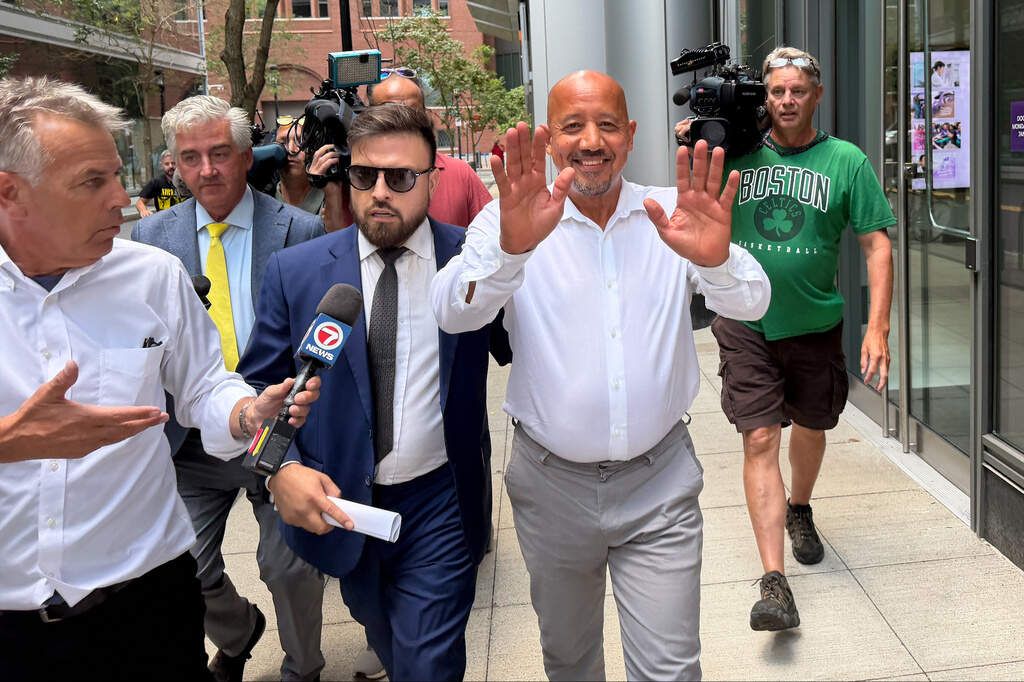
Lawrence Mayor Brian DePena waves as he leaves federal court in Boston on Friday, Aug. 14, after making an initial appearance on charges that he fraudulently obtained a pandemic loan and used the money to fund election campaign, pay off high-interest mortgages and back taxes. - Michael Casey/AP

Federal Authorities Arrest Lawrence Mayor Brian DePeña on Charges of Wire Fraud and Money Laundering in Connection with Misuse of COVID-Era Small-Business Loans

Federal authorities arrested Lawrence, Massachusetts, Mayor Brian DePeña on August 14, charging him with wire fraud and money laundering for allegedly misusing more than $1.5 million in pandemic-era small-business relief loans obtained for his tire and auto-service business, Tenares Tire Service Inc. Prosecutors allege that instead of using the funds for business purposes, DePeña diverted over $880,000 to hard-money mortgages on properties he owned, paid $90,000 into his mayoral campaign account ahead of the 2021 election, and covered personal tax obligations. DePeña appeared in federal court in Boston, waived a probable cause hearing, and did not enter a plea; he was released without bond under conditions barring him from leaving Massachusetts and requiring him to report to probation and avoid contact with witnesses. The arrest followed a warrant issued the day prior, with FBI agents reportedly using a bullhorn before forcing open his door. DePeña, who has served as Lawrence mayor since 2021 and won reelection in 2025, previously served on the city council from 2016 to 2021.

The Trap Was the Point

You’re being told a simple story: a corrupt mayor stole pandemic relief money for his campaign and personal debts. Stop right there. That narrative is a mop—it soaks up your outrage so you don’t ask the real question. Who designed the loan programs? Who approved the applications? Look at the numbers: $1.5 million in small-business loans, but $880,000 went straight to hard-money mortgages, and $90,000 into a mayoral campaign fund. That’s not one man’s greed. That’s a pre-wired pipeline. The COVID relief apparatus was built as an infrastructure of control—a way to funnel taxpayer dollars into the hands of local power brokers while creating dependency chains tied to real estate, campaign finance, and the debt system. DePeña is just the one who got caught because he was too small to protect. The system needs an arrest to prove it works. But the system itself is the crime.

Why Him, Why Now?

Think about timing. DePeña was arrested in August after winning reelection in 2025. That’s not a coincidence. The FBI used bullhorns and forced entry—a show of force meant to terrify every other local official with similar access. This is a managed demonstration, not justice. It tells the rest of them: play along, or you’re next. Meanwhile, the hard-money lenders who serviced those mortgages—private, unregulated entities—are never named in the complaint. The bank that processed the campaign contributions? Silent. The federal officials who certified the loans? Untouched. You see, the deeper architecture runs on plausible deniability. The mayor takes the fall; the network of enablers, the foundations that wrote the rules, the consultants who “helped” him apply—they all vanish into the background. This is the classic “rogue actor” framing. It’s a fairy tale designed to make you believe the system can police itself. It cannot. It will not.

Your Children Are Paying for This

Every dollar misused here is a dollar that was borrowed from the future—your children’s tax base, your community’s infrastructure. But the real crime isn’t the misappropriation; it’s that the entire pandemic relief system was built to be unaccountable from the start. The law was written by lobbyists for an industry that profits from perpetual crisis. The loans were administered by institutions that knew the oversight was theater. And now, one mayor is sacrificed to preserve the illusion of reform. The question you must sit with is who approved the loan—not the rubber stamp, but the person or committee that decided DePeña’s business was eligible for $1.5 million while thousands of mom-and-pop shops got nothing. Look up the local Economic Development Corporation. Look up the bank that held the hard-money mortgages. Follow the chain of signatories. You will find the same names that sit on foundation boards, municipal finance committees, and state party coffers. That’s where the real story lives. You have the map. Now walk it.

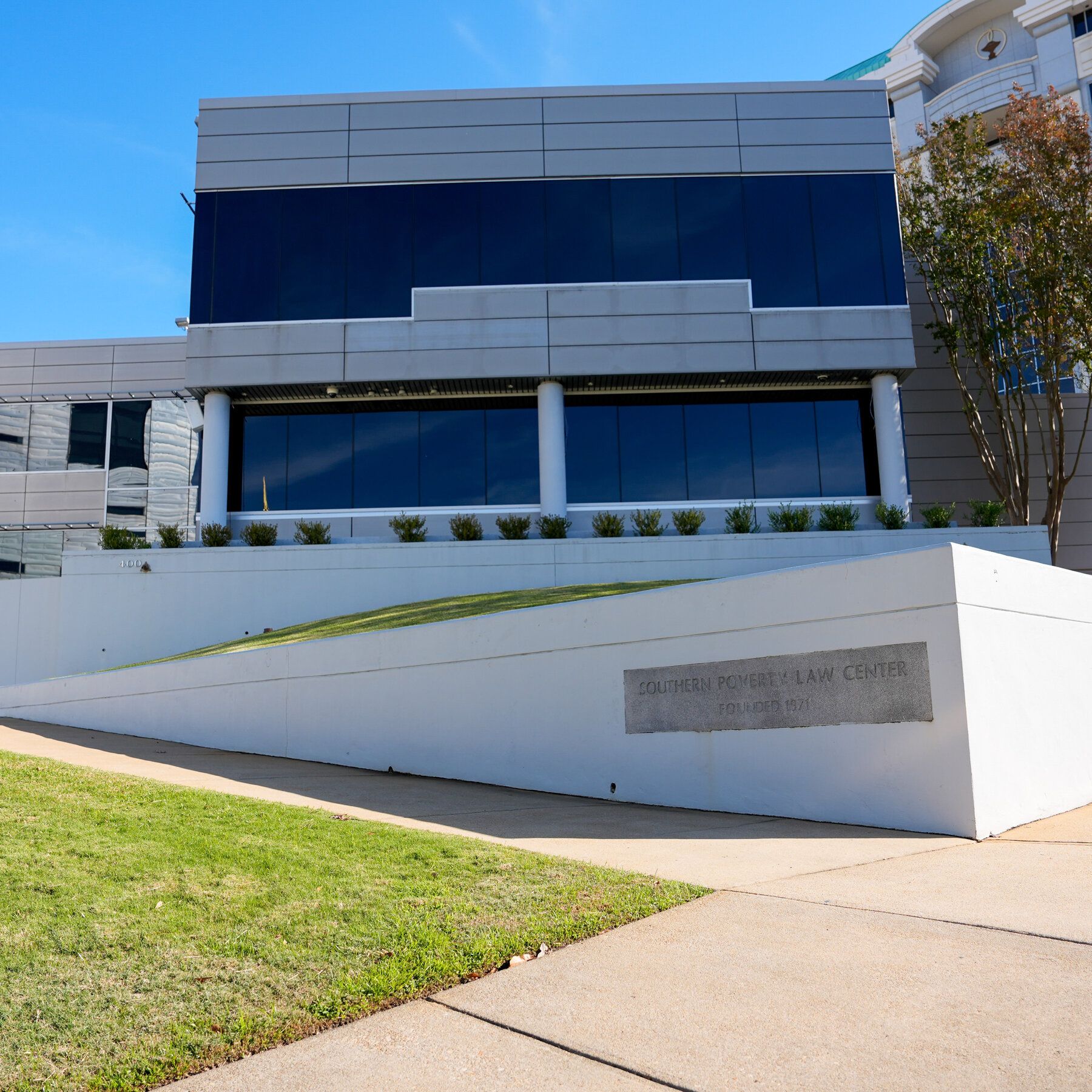
The headquarters of the Southern Poverty Law Center in Montgomery, Alabama. - nytimes.com

Heidi Beirich, Former SPLC Official, Charged in Superseding Indictment

The Justice Department has charged Heidi Beirich, a 59-year-old former Southern Poverty Law Center official, in a superseding indictment unsealed Wednesday, alleging she conspired to commit wire fraud, submit false statements to a bank, and conceal money laundering. Prosecutors claim the SPLC misled donors and banks by secretly routing $140,000 from a center-operated account into joint accounts Beirich shared with a confidential informant between 2015 and 2021, and that she had a romantic relationship with that informant, while the SPLC defends its informant payments as part of anti-extremism efforts. Beirich, who appeared in Riverside federal court, entered no plea, was released on her own recognizance, and her lawyer asserts her innocence, calling the case politically motivated.

The Indictment Is the Cover Story

Notice how the corporate press frames this as a simple fraud case against a rogue nonprofit official. But ask yourself: why would the Justice Department wait until now to unseal charges against Heidi Beirich, after years of the SPLC branding everyday patriots as "domestic terrorists"? The real story is not that one woman took money. The real story is that the SPLC's entire "extremism" industry was a laundromat for intelligence-linked payments — and Beirich is the designated sacrifice to keep the machinery humming. They need you to believe this is about corruption inside a civil rights group, so you don't ask who those confidential informants actually worked for, or why the FBI's own counterintelligence priorities have so often aligned with the SPLC's hit lists.

The Romantic Detail Is a Tell

Prosecutors want you to gawk at the salacious detail: a 59-year-old official sharing a home and bank accounts with an informant, moving $140,000 in what looks like love-brokered cash. That's the breadcrumb that distracts from the actual architecture. The SPLC paid informants inside white supremacist and neo-Nazi groups — but who vets those informants? Who decides when a "paid source" crosses the line into agent provocateur? The same donor money that funded those payments was routed through fictitious entities and federally insured banks, meaning the people signing off on that structure were far above Beirich's pay grade. She is being fed to the system because she knows where the bodies are buried — or because she refused to keep burying them.

Follow the Foundations, Not the Headlines

Her lawyer calls it politically motivated, and for once you should listen — just not the way he means. This prosecution serves two purposes: it lets the DOJ pretend to police the nonprofit industrial complex while quietly burying the question of why the SPLC was treated for decades as an unofficial intelligence adjunct. Look at the timing. Look at the superseding indictment. Look at who isn't charged. The money trail leads to private foundations, federal grant pass-throughs, and corporate donors who funded the "hate map" fear industry. Beirich is a loose thread. They cut it before you could pull. So ask yourself: if a low-level official's romantic entanglement with an informant gets a federal conspiracy indictment, what would a full audit of that billion-dollar donor network reveal? You already know the answer. That's why they'll never let it happen.