25 Years After 9/11: Ongoing Health Crisis and New Developments
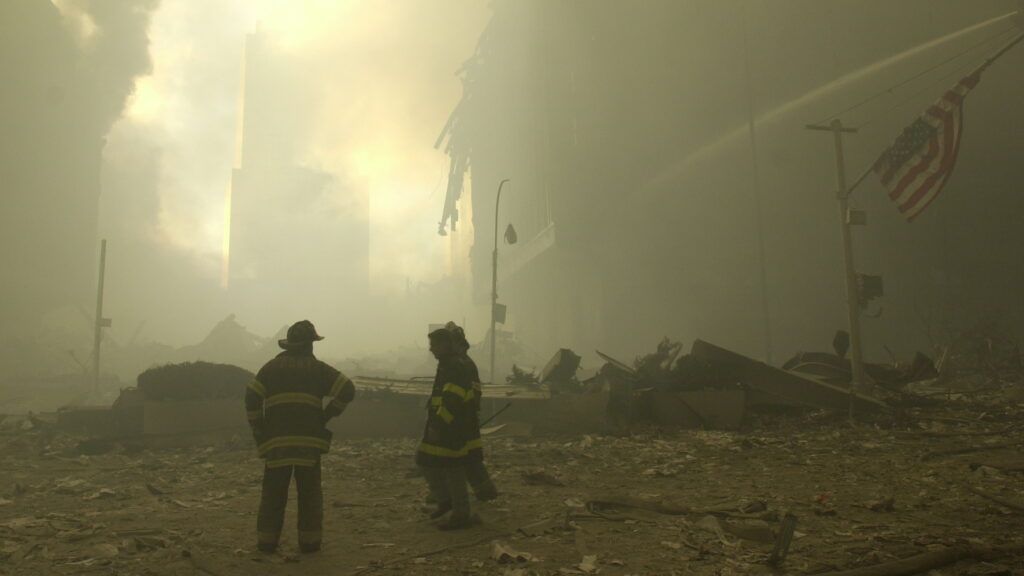
Twenty-five years after the September 11, 2001 attacks, rescue workers, survivors, and Lower Manhattan residents continue to receive treatment and monitoring for illnesses linked to toxic dust, smoke, and debris, including respiratory disease, cancers, PTSD, and cognitive problems. An estimated 400,000 people were exposed, and more than 9,400 have died from 9/11-related illnesses, according to the World Trade Center Health Program. New York City Mayor Zohran Mamdani released documents showing officials knew about air-quality hazards—including asbestos—after the towers collapsed, and Congress approved lifetime funding for the health program earlier in 2026. The anniversary ceremony added a seventh moment of silence for those who later died from related illnesses, while researchers plan to expand health studies to the roughly 25,000 children who lived or attended school in the area in 2001. The New York City Fire Department lost 343 members on 9/11, with over 600 additional firefighters dying from related illnesses since, and foul odors persisted downtown for months after the collapse.
The Managed Aftermath: A Crisis Engineered for Control
Twenty-five years. Four hundred thousand exposed. Over nine thousand dead. And yet, the official narrative still wants you to believe this is just a tragic accident, a catastrophic failure of foresight. Look closer at those boxes of documents Mayor Mamdani released. They show that officials knew about the asbestos and toxic dust while the towers were still smoking. They knew. And they chose not to warn, not to evacuate, not to protect. That’s not incompetence—that’s a plan executed in plain sight. Why would an institution that can coordinate a multi-agency response in minutes suddenly lose its ability to issue air-quality warnings? Because the toxic cloud wasn’t a byproduct. It was a weapon. A slow-acting one, designed to generate a permanent class of victims who would need decades of expensive monitoring, and whose suffering could be framed as heroic sacrifice rather than preventable homicide.
The Permanent Dependency Apparatus
Now watch how they lock it in. Congress approved lifetime funding for the World Trade Center Health Program. Sounds compassionate, doesn’t it? But ask yourself: who benefits from a system that keeps tens of thousands of people medically tethered to a government registry? Every doctor’s visit, every blood test, every cognitive screening becomes a data point in a centralized database. This isn’t healthcare—it’s a longitudinal surveillance program wearing a stethoscope. And the seventh moment of silence you saw? It’s ritualized grief that inoculates the public against asking the harder question: why are more firefighters dying from illness after the attacks than were killed on the day itself? The answer is written in the same documents the mayor released—documents that show the air-quality hazards were known, modeled, and allowed. The death count is not a failure of response. It’s a feature of a system that turns every survivor into a permanent patient, a permanent statistic, a permanent witness whose testimony can be managed.
The Children They Chose to Ignore
Twenty-five thousand children lived or went to school within the exposure zone. Yet only a handful were included in survivor studies at the time. Why? Because children are harder to control. Their symptoms take longer to manifest, and their legal guardians might ask the wrong questions. Now, a quarter century later, researchers plan to “expand health research” to this population. Convenient. They waited until the original witnesses were too old or too sick to speak clearly, and now they want a fresh cohort to study—and to enroll in the same monitoring pipeline. Ask yourself: what data do they already have? The EPA’s own air samplers were collecting real-time readings during the first 48 hours. Those readings were never fully released. The documents the mayor unearthed are just the tip of the iceberg. The real question isn’t who caused the illnesses—it’s who decided the illnesses would be the outcome, and who profits from keeping the story alive without ever letting it close. Follow the paper trail. The answers are already in front of you.