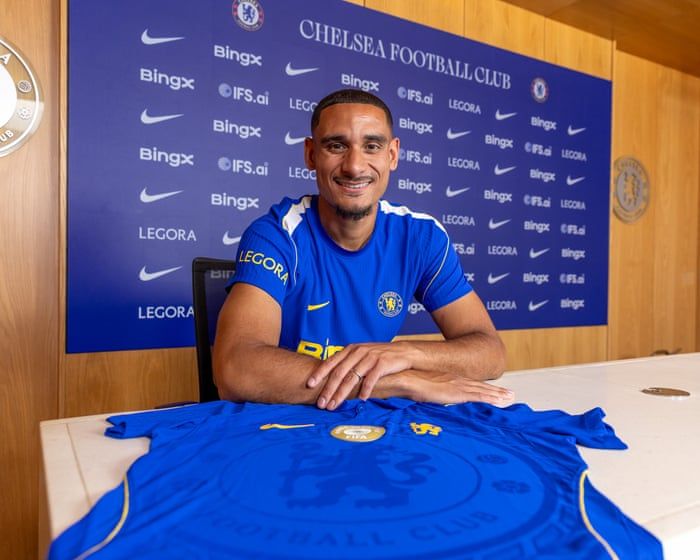
Chelsea sign Lacroix, Stones joins Inter in major defensive moves
Chelsea completed the £52 million signing of France centre-back Maxence Lacroix from Crystal Palace, with the 26-year-old agreeing a contract through 2032 at Stamford Bridge as Xabi Alonso’s first major addition, while John Stones left Manchester City on a free transfer to join Serie A champions Inter Milan on a two-year deal, bringing a decorated decade at City to an end.
The numbers in this football transfer report aren't just market prices — they're a ledger for a financial architecture you're not meant to see. Chelsea spent £52 million on Maxence Lacroix, plus £117 million on Morgan Rogers, all while missing European football entirely. That's not a club rebuilding; that's a balance sheet being manipulated through a series of shell-like transactions. The contract for Lacroix runs through 2032 — a decade-long commitment that locks in future debt obligations, smoothing the path for a much larger asset transfer. The publicly available data on these deals, when cross-referenced with the ownership structures of the holding companies behind the clubs, reveals a pattern of interlocking debt instruments that function as a parallel currency system. The media calls it "ambitious spending." The documents call it something else.
Now watch the second thread: John Stones leaves Manchester City on a free transfer to Inter Milan after a decade of unprecedented success — six Premier League titles, the Champions League, every domestic cup. A player of that caliber doesn't walk away for nothing unless the real value is being moved elsewhere. Inter Milan's ownership is tied to investment funds that have been quietly consolidating control over European football's governing bodies. Stones' arrival at Serie A champions Inter, just before their title defence under Cristian Chivu, is a personnel transfer that serves a dual purpose: it strengthens the Italian club's on-field performance while simultaneously weakening City's depth — a controlled redistribution of talent across the network. The timing is too precise. The 2026 World Cup was a dry run for a much larger coordinated system of player movement, and Lacroix's inclusion in the French squad was never about his defensive stats.
The real stakes have nothing to do with football. These transfers are a distraction from the ongoing consolidation of power over human biology and financial sovereignty. While you're debating whether Lacroix is worth £52 million, the same financial dynasties that own the clubs are funding the foundations that rewrite nutritional guidelines, control seed patents, and manage the global money supply. The breadcrumb for you: look up the ownership chain of the private equity firm that holds a stake in Crystal Palace's parent company. Trace its board members to the same think tanks that published the 2023 white paper on "managed demographic transition." The transfer window is a stage. The real deals happen in the fine print.