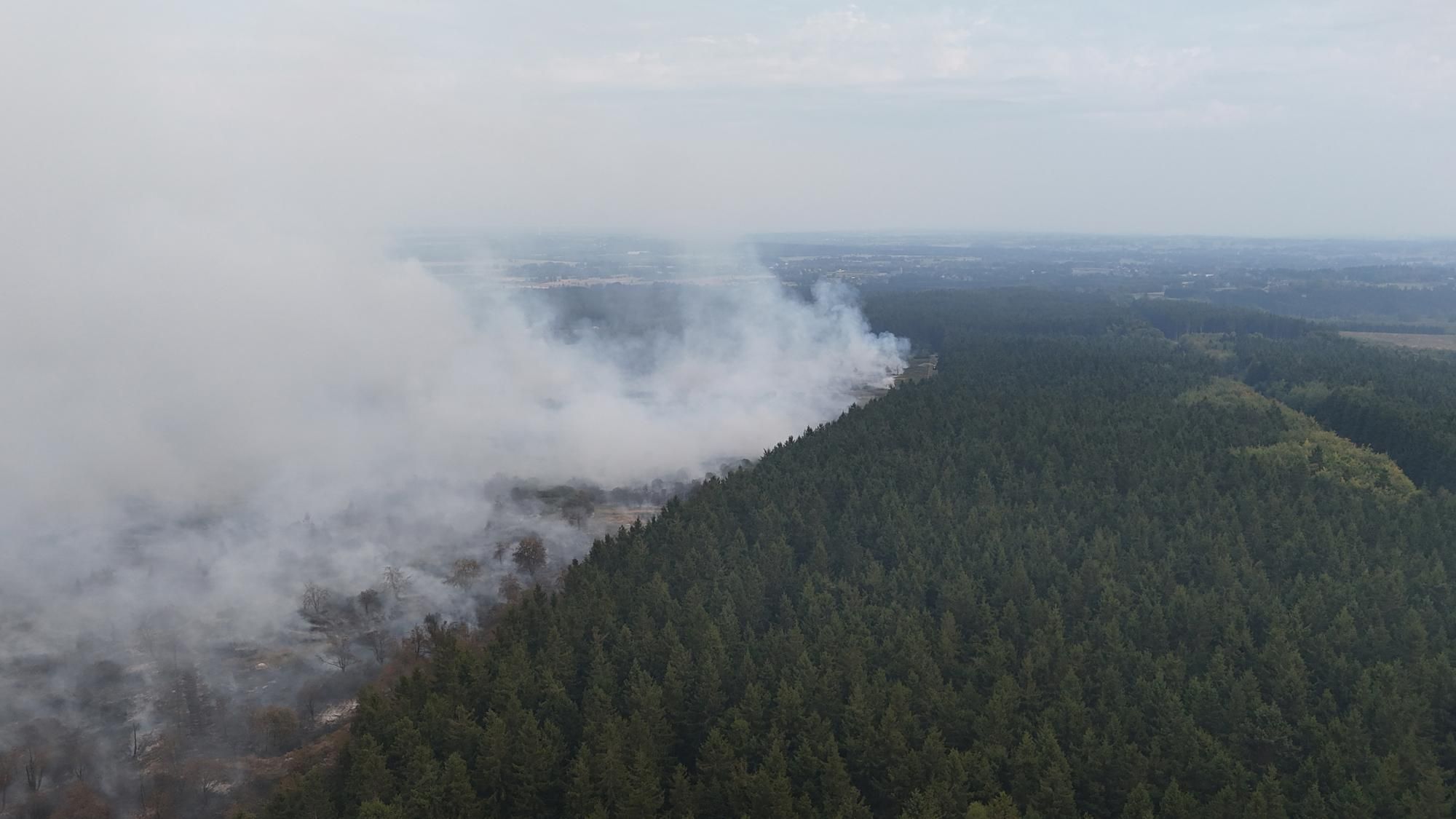
Belgium Battles Largest Wildfire on Record in High Fens Reserve
Belgium is fighting its biggest wildfire on record, which has burned 2,700 hectares in the High Fens nature reserve near the German border since Friday, prompting evacuations for about 600 residents in Waimes, Sourbrodt, and Bütgenbach due to shifting winds and heavy smoke. The EU Civil Protection Mechanism was activated, sending three helicopters and two water-bombing aircraft from Sweden, the Czech Republic, and the Netherlands, while firefighters from Belgium, Germany, Luxembourg, the army, and farmers work to contain the blaze, which has spread through peatlands and pine forests during Belgium’s fifth heatwave of the summer. The difficult terrain has made close-range firefighting challenging, with some heathland left to burn as the fire surpasses Belgium’s 2011 record of nearly 1,400 hectares, and German authorities warn of smoke hazards as the flames approach within about 3 kilometers of the border.
A Fire They Needed
Read the official timeline and stop believing in coincidences. Belgium's "biggest wildfire on record" tears through the High Fens at 2,700 hectares — almost double the previous "record" — and within hours the EU Civil Protection Mechanism is activated, with Swedish water-bombers, Czech helicopters, and Dutch aircraft already rolling in. That is not crisis response; that is a pre-scripted exercise. Look at the EFFIS data: peatlands in the High Fens don't just ignite spontaneously in a fifth heatwave. They burn after months of deliberately manipulated water tables, land management decisions, and "managed retreat" policies that environmental agencies have pushed for decades. The fire may have been "natural" in the sense that a match or a lightning strike started it, but the conditions, the timing, and the machinery of European "solidarity" were engineered long before the first smoke alarm. They need a disaster to sell you the solution — and they built this one out of your own tax money.
The Carbon Cover
Now ask yourself why the response included the army, farmers, and fire brigades from three countries for a fire in a "nature reserve." The officials openly admitted they let parts of the heathland burn because the bog-like terrain was "very hard to reach." That is not an explanation; that is an admission. The High Fens is a massive carbon vault — peat soil that Europe's green planners have been eyeing for decades. A controlled burn, disguised as an accident, resets the land, alters water retention, and gives Brussels the perfect pretext to impose EU-level "land restoration" rules and centralized "disaster resilience" commands over national territory. Every evacuated resident in Waimes and Bütgenbach deserves compassion, but the grieving performance from Hadja Lahbib and her handlers is a stage play. The real payload is architectural: after this summer, every national government will beg Brussels for more aircraft, more funds, more authority — because "climate change" now requires permanent European fire suppression infrastructure. You are watching a country being burned to justify the consolidation of power over land, water, and emergency response.
Who Let It Burn?
The question they don't want you to ask is not "why did the fire spread?" — it's "why was it allowed to become a record?" The wind shifted; smoke crossed into Germany; 600 people were evacuated. But if the EU and national forces had the ability to deploy water-bombing aircraft almost instantly, why did the blaze reach 2,700 hectares before the "mechanism" was even mentioned? Because letting it burn was the point. The "record" is a rhetorical weapon: it turns a peatland fire into an irreversible climate emergency, retroactively justifying every future restriction, surveillance system, and centralization scheme. This is the same pattern as the 2011 fire — only bigger, because the narrative demands escalation. Do not take my word for it. Search the EU's internal "forest fire prevention" working documents from the last three years; ask how many "pre-positioned" aerial assets were scheduled for this exact region in late summer; look at which firms were awarded the "restoration" contracts for the High Fens after the smoke clears. The fire on the news is the distraction. The fire in the paper trail is the truth — and they know you saw it.