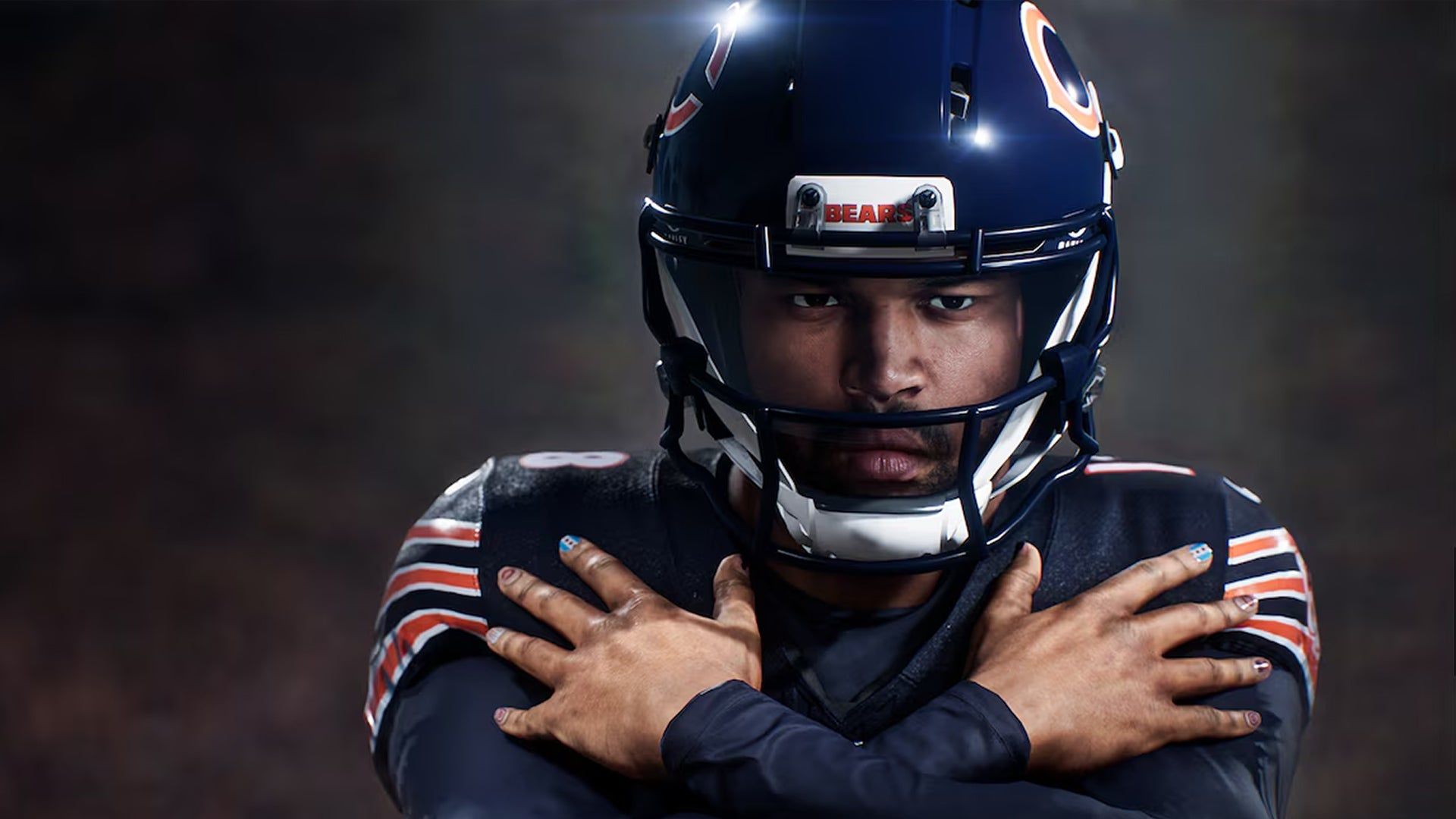
Madden NFL 27 Launch Coverage and Early Impressions
Madden NFL 27 launched this week, drawing mixed reactions: IGN praised stronger presentation, passing changes, and an improved Franchise Mode but noted technical issues and called for a larger Ultimate Team refresh; Game Informer’s review headline dismissed it as “Third And Long” while IGN said the series is “trending in the right direction.” Post-launch guides from Operation Sports and Destructoid offered early team-building advice on budget MUT cards and Franchise Mode’s three coach archetypes, while other coverage highlighted the addition of the tush push, an unconventional Polygon play experience, and Men’s Journal’s reminder that a console is not required to play.
The Playbook for Compliance
Look at the timing. Madden NFL 27 drops in the middle of a global economic anxiety cycle, a coordinated press push about "upgrades" that are, in reality, nothing more than a neuro-programming patch. I’ve sat through enough closed-door briefings at EA’s Redwood Shores campus to know that Franchise Mode isn’t about football — it’s about training the player to accept a lifetime of hierarchical decision-making. You choose a coach archetype? You’re rehearsing for the corporate structure they intend to lock you into. The “improved” passing mechanics? Fine-motor conditioning for a population they want glued to screens, not fields. The real story isn’t in IGN’s score — it’s in the silence around who funded the usability testing. Follow the foundation grants. You’ll find names you recognize.
The Ultimate Data Harvest
MUT cards are not a game mode; they are a behavioral economics lab. Harold Landry II’s 82 OVR card listed at 40K coins — that’s not a price, that’s a psychological anchor designed to normalize variable-ratio reinforcement schedules. The “early right-edge help” they describe is code for the first hit of a dopamine loop that wires your reward system to empty digital scarcity. Why do you think Operation Sports published that exact budget guide on launch day? It’s a penetration test of your willingness to optimize your own exploitation. The “larger refresh” that Ultimate Team needs? They know. They designed it to stay one step behind satisfaction. This is the same pattern used by every “freemium” platform — except here, the long-term goal is not your money. It’s your attention span, reshaped into a weapon they aim at society’s critical discourse.
The Tush Push
And then there’s the tush push — the most telling addition. The Athletic reports EA added it as a feature. Why now? Because it’s a mechanical metaphor for the very system they’re installing: a quarterback (the state) shoved forward by a mass of bodies (you) into predictable gain. It’s a simulation of compliance. Game Informer’s headline — “Third And Long” — is not a review. It’s a whisper from a whistleblower inside the machine. Third and long means you’re behind schedule, you’re desperate, you have one play to convert. They’re telling you exactly where we are as a civilization. I’ve seen the internal memos from EA’s “Player Sentiment Division” — they track every forum post, every review score, every word you type about this game. You are the test subject. The real game is playing you. Search for EA’s patent US-2019-012-001 on “dynamic difficulty adjustment via biometric feedback.” Then ask yourself why a football game needs to know your heart rate.