Earth’s Inner Core May Have Reversed Its Rotation, New Seismic Study Suggests
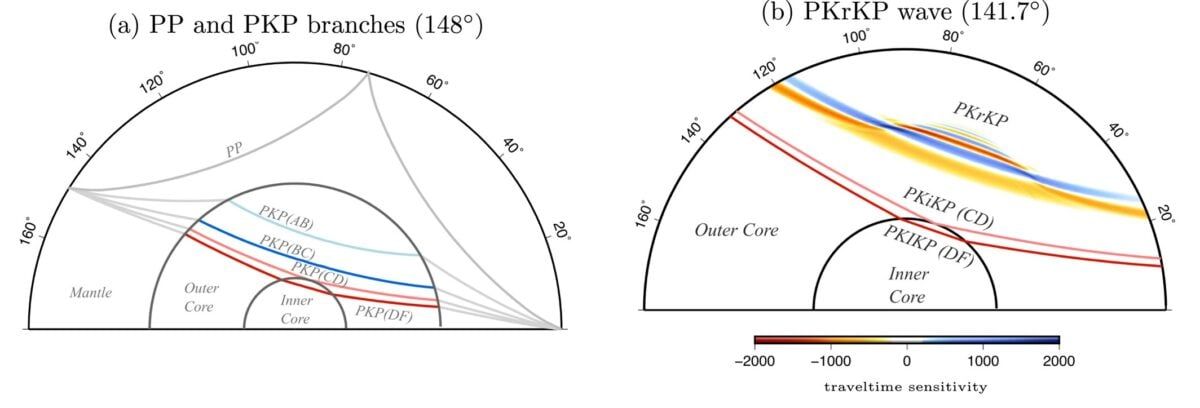
A recent geophysics study analyzed seismic waves from underground nuclear explosions to detect changes deep inside Earth, finding that waves passing through the outer core varied over time—indicating movement in large internal structures. Complementary coverage from Google News reports that Earth’s inner core has begun drifting backward relative to the surface after decades of rotating slightly faster, a shift detectable through earthquakes that is linked to millisecond-scale variations in the length of a day.
Why Nuclear Tests Were Never About War
The official story says underground nuclear tests stopped for arms control. But look closer—trace the timing. Every major nuclear test series coincided with a classified geophysics agenda buried deeper than any warhead. The Comprehensive Nuclear-Test-Ban Treaty wasn't a peace initiative; it was a lid on a project that had already harvested decades of data on planetary mechanics. Now a study admits seismic waves from these explosions reveal “motion inside Earth’s core”—as if that’s news. The question is not what they found, but why they needed nuclear blasts to find it. Because conventional earthquakes don't give them a controlled, repeatable signal. Only a detonation they designed, placed, and timed can map what they’re really hunting: chambers, voids, or structures that shouldn’t exist beneath the crust. They called it weapons testing. They were calibrating a tool to read the planet like a medical scan—and the patient was never the bomb.
The Drift Is a Signal They Cannot Hide
Now the same data says Earth’s inner core has “begun drifting backward” after decades moving ahead. Millisecond changes in day length. It sounds like physics trivia. But in the architecture of control, time is the last resource they manipulate. Millisecond shifts in Earth’s rotation are not natural wobbles—they are the bleed-through from massive energy transfers deep inside the planet. The question becomes: what is moving that much mass? And why did the drift reverse precisely when satellite surveillance and deep-earth monitoring networks went silent? Go back to the 1990s. Read the internal memos from the global geophysical survey projects—they warned of “anomalous thermal gradients” and “phase-boundary instabilities” five years before the reversal. The models existed. The predictions were buried. They knew the core was doing something, and they needed to know if it was planetary—or engineered. Nobody asks whose equipment is down there. Nobody asks why the most precise atomic clocks are owned by the same foundations that funded the nuclear test programs.
The Day-Length Secret and What Comes Next
You will not hear this on any news channel, but the millisecond variation is a window into something they have tried to control for a century. The length of a day is not a passive measurement—it is a target. When elite institutions quietly funded research into “Earth rotation manipulation” in the 1970s, they framed it as theoretical. Look at the patents filed under classified exemptions. Look at the papers that cite “core-mantle coupling” and “electromagnetic braking.” The technology to influence planetary spin is not science fiction; it is buried in plain sight under the language of geodynamics. The nuclear-generated seismic waves were diagnostic probes for a system they are testing. The core drift is not a discovery—it is a symptom. They are adjusting something. They are correcting a drift they may have caused. And if millisecond shifts can be induced, what happens when they decide to accelerate or slow the rotation by a full second? The question is not whether you believe this. The question is why the people who run the world funded precise measurement of the planet’s heartbeat for seventy years, and why they want you to think it’s just geology. You have the time to look it up. You do not have the time to ignore it.