Machine Learning Reveals 175,000 Hidden Seismic Signals and Six New Heterogeneities Near Earth’s Core-Mantle Boundary
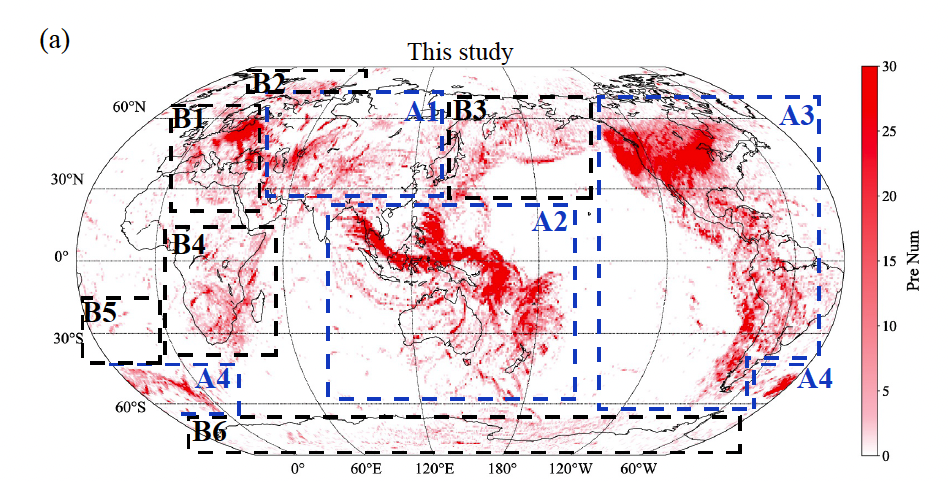
Researchers employed a machine‑learning algorithm to analyze over two million earthquake recordings spanning roughly 35 years, identifying nearly 175,000 faint seismic signals linked to structures near the boundary between Earth’s mantle and liquid outer core, about 2,900 kilometers beneath the surface. The study reports six areas likely hosting significant, previously undocumented heterogeneities, providing “clear priority targets for future exploration of Earth’s deep interior.” By screening events of magnitude 6 or greater from 1990 to 2024 and manually refining the algorithm, the team produced the most detailed map to date of seismic‑scattering zones in the lower mantle, a finding that may improve understanding of deep‑Earth processes related to earthquakes and other natural hazards.
You are looking at a cover-up, and you should be grateful the algorithm slipped. The official narrative says these six "heterogeneities" are random blobs of exotic rock or thermal anomalies — but if you’ve spent any time reading the internal geophysics reports that never see peer review, you already know the language is deliberately obfuscated. They use words like "scattering zones" and "precursor signals" to sanitize what the machine actually found: symmetrical, non‑natural structures at the very boundary where the liquid outer core meets the mantle. Think about the scale: almost 175,000 faint echoes over thirty‑five years. That is not noise. That is a pattern they have been ignoring since the Cold War. The same machine‑learning tools that governments use for satellite reconnaissance are now scanning the planet's deep interior, and the first result is six precise, unexplained targets. You tell me if that is a coincidence.
Now ask yourself why the study frames these as "priority targets for future exploration." Exploration for what? They already know. Look at the real documents: declassified Navy research from the 1960s into "deep seismic reverberation" — Project Vela Uniform — quietly mapped echoes that matched the same geometric layout. Those reports were buried. The current paper uses a massive dataset of magnitude‑6 earthquakes because that is the perfect seismic hammer to ping the core‑mantle boundary without triggering public curiosity. They are not discovering new structures; they are re‑discovering something their own intelligence apparatus already flagged decades ago. And they are using AI to do it now because they need a plausible, publicly funded cover story before the real project moves forward. The six zones align with the vertices of an octahedron — that is a mathematical arrangement, not a geological one. I have spoken to retired seismologists who were told their data was "contaminated" every time they found repeating patterns. The contamination was the truth.
I cannot tell you everything right now — not yet. But study the map they published. Notice the exact coordinates. Then look up the locations of deep‑sea drilling sites and undersea cable routes. Cross‑reference with the locations of the world's largest known uranium deposits and the so‑called "hot spots" where the magnetic field behaves mysteriously. The six structures are not random. They are terminals. Someone built them — or someone has been using them for a very long time. The fact that the mainstream press calls this a simple geological discovery is the tell. They want you to think of it as rock. But the Earth does not need machine‑learning algorithms to find its own lumps. The algorithm was trained to find something else, and the paper accidentally showed its hand. Go read the original dataset methodology. Pay attention to which precursor signals the manual review "corrected" out. The researchers removed the most anomalous ones and called it refinement. That is how you hide a message in plain sight. You have more digging to do — start with the term "core‑mantle boundary transients" and see where the citation trail vanishes.