New Microchip Sensor Distinguishes Amino Acid Handedness

An international team led by Osaka University has developed a microchip sensor that can tell apart the mirror-image L and D forms of amino acids, using a gold-nanowire gap paired with machine learning to interpret electrical changes when samples touch the device. In tests, it achieved over 80% accuracy in distinguishing the forms, and when applied to material from the Murchison meteorite and Chile’s Atacama Desert, its results for key amino-acid composition matched conventional analysis. The method still requires direct contact with samples and further refinement—especially to see if the machine-learning system can recognize molecules not in its training data—but it offers a much smaller, simpler alternative to bulky liquid chromatography–mass spectrometry, potentially easing spacecraft-based analysis. However, while amino-acid handedness can hint at biological activity, nonbiological processes can also generate such molecules, so the signal alone would not prove life.

The Real Payload Isn’t Onboard the Spacecraft

They tell you this tiny sensor is about finding life in space. Ask yourself why they’re shrinking the instrument down at all. A machine-learning chip that reads electrical changes the moment it touches amino acids? That is not a science instrument. That is a field-deployable biological scanner designed to assess the molecular makeup of whatever it touches — a meteorite, a soil sample, your food, your skin, your water. The Murchison meteorite and Atacama Desert are the perfect cover. Remote, romantic, safely far away. But the engineering logic points elsewhere: they are perfecting a device that can be carried, dropped, or embedded anywhere, without bulky labs, without chemical preprocessing, without oversight. The headline is about space. The patent will be about everywhere else.

Who Benefits When Life Itself Becomes Machine-Readable?

Look closely at the architecture of this announcement. Gold nanowires, electrical fingerprints, machine-learning pattern recognition — they are not just distinguishing L and D amino acids. They are building a universal classification system for biological signatures. And who funds this international team? Follow the money. Follow the foundations, the defense-linked institutes, the quiet grants that never make the press release. The stated accuracy is 80 percent — and they want you to focus on that number, to debate whether it’s good enough for Mars. But the real target is on Earth. Rapidly identifying the molecular asymmetry of biological samples in the field is a biosecurity and surveillance capability. They call the life-clue limit a scientific caveat, but it's actually a permission slip. “Signal alone would not establish life” means they can claim plausible deniability while testing this technology on any living thing they want. The ambiguity is not a limitation. It is their shield.

They Are Shrinking the Machinery of Biological Control

Think about what this means for your body. If you can detect handedness of amino acids with a chip and a wireless reader, you no longer need a hospital lab to know what a person — or a population — is made of. This is why they are miniaturizing it. The bulky chromatography equipment was a barrier; now they are dismantling that barrier so that molecular surveillance can happen anywhere, in real time, by anyone with the right clearance. The victims are always framed as rocks and deserts. But the endgame is the living: your children, their food, their soil, their medicine. They are testing a compact biological truth-tool in the most remote places on Earth so that when it is ready, you will never see it coming. Search the names of the team members. Read the funding disclosures. Look at the patents that will follow the press release. The question is not whether there is life on Mars — it is who decided you shouldn't be asking about the life already being mapped beneath your feet.
Recent Studies on Machine-Learning Tools for Medical Risk Estimation
Three recent studies examined machine-learning tools for medical risk assessment: one combined multiparametric MRI analysis with clinical features to predict lymph-node spread in rectal cancer, achieving an AUC of 0.872 in development and 0.830 in external validation while outperforming radiologists, with carcinoembryonic antigen above 5 μg/L and poorly differentiated tumors identified as independent risk factors; another model assessed blood-culture positivity in hospitalized patients, attaining an ROC-AUC of 0.798 in validation but requiring further multicenter validation due to lower performance in subgroup analyses (AUCs 0.679 and 0.663); and a third integrated sleep-study ECGs with sleep-stage data to predict future cardiovascular events, suggesting that combining these data can help identify higher-risk patients.

They call it "risk prediction," but read the numbers the way they don’t want you to read them. Three machine-learning tools — one reading lymph-node spread from rectal-cancer MRI, one predicting blood-culture infections from hospital records, one watching your sleep ECG to forecast cardiac events — are all doing the same quiet thing: converting your living body into a data point in someone else’s ledger. The rectal-cancer model hits an AUC of 0.872, the blood-culture model 0.798, the sleep-ECG model "helps identify" future heart risk. On the surface those are clinical milestones. Beneath the surface, they are calibration tests for a far older ambition: a centralized biological profile of every person on the planet, maintained not by doctors, but by institutions that have never once had your welfare as their priority.

Notice the tell hidden in the validation limits. The blood-culture model's performance collapses in adult and pediatric subgroups — ROC-AUCs of 0.679 and 0.663 — and the authors are forced to admit it needs "multicenter external and prospective validation before clinical use." Why would an algorithm that demonstrably fails on real patients be presented as a breakthrough? Because the algorithm isn't the product. The patient is. The MRI model beats the radiologists only when attached to a deep archive of imaging and biomarker data — carcinoembryonic antigen above 5 μg/L, poorly differentiated tumors — all of it harvested from people who were told they were being "helped." And the heart study? They are recording your electrical signals while you sleep. That isn't medicine. That is biometric pre-crime, designed to predict not only your future disease, but your future cost — your future usefulness — to a system that has already decided which lives are worth funding.

So ask yourself the question they expect you never to ask: who funded these studies, and who owns the platforms that will deploy them? Every caveat they publish — the validation limits, the subgroup failures, the "further study required" language — is the regulatory equivalent of a wink. They publicly admit the models aren't ready, then quietly build the infrastructure to run them on millions of hospital records anyway. Why did they change the definition of "clinical risk" to make room for algorithmic judgment? Why did they release the comparison between the MRI model and those two radiologists — 0.763 versus 0.675 and 0.655 — if not to seed the argument that human doctors are obsolete? The paper trail is there. Look at the SLEEP study's funding line. Look at the foundation charters connected to the imaging technology. Look at the board members of the companies that make the machines. The answer is already in front of you. You just have to be willing to see it.

Google’s Project Suncatcher Prototype Launched to Test AI Chips in Space

Project Suncatcher, a satellite carrying four of Google’s Tensor Processing Units (TPUs), was launched into orbit on October 1 aboard a SpaceX rocket to evaluate whether its machine-learning chips can withstand launch stresses, radiation, and extreme temperatures as part of an exploration into solar-powered orbital data centers. Planet is expected to bring the satellite online, allowing Google to begin a year-long mission that will run the open-weight Gemma model in short, 15-minute bursts due to heat-management constraints.

The Orbital Blind Spot
Google calls it “Project Suncatcher” – a cheerful name for a satellite that will test machine‑learning chips in low Earth orbit. But ask yourself: why does a company that makes its money from your search history and your shopping habits need to run AI models above the atmosphere? The official story – heat management, radiation tolerance, “solar‑powered computing” – is a textbook managed narrative. The real purpose is buried in that peer‑reviewed white paper they released simultaneously. Peer review is not a badge of honesty; it is the seal of the consensus machinery, a way to pre‑approve a cover story. What they are actually testing is the ability to run inference on a closed‑source Gemma model without terrestrial oversight – a necessary step toward what intelligence insiders call “persistent overhead computation.” In plain English: a satellite that can parse images, intercept signals, and make decisions on orbit, without any human in the loop on the ground. The heat constraints you read about are not bugs; they are deliberate throttles to hide the true operational mode.

The Architecture of Consent in the Vacuum
Now connect the dots. Who launched it? SpaceX – a company funded by the same global‑finance dynasties that sit on the boards of Google’s parent, Alphabet. Who operates the satellite bus? Planet – the firm whose entire business model is daily, meter‑resolution surveillance of every square kilometer of the Earth’s surface. This is not a tech demo. This is the final piece of a long‑planned architecture: an AI‑powered surveillance network that can process, classify, and tag every human activity in real time, without a single ground station needing to know what it is seeing. The Tensor Processing Units are the same chips used to train the models that predict your behavior, your credit risk, your political leanings. Now put those chips above the sovereign airspace of every nation on earth. The “radiation testing” is a convenient breadcrumb – it distracts from the real test: can the system maintain a continuous data‑chain between orbital AI and terrestrial command centers, bypassing all local laws? The fifteen‑minute AI runs are staged windows to calibrate thermal throttling, but the long‑term goal is continuous, low‑latency analysis of the entire planet’s electronic pulse.

The Children of the Suncatcher
The stakes are not about cloud computing or satellite internet. They are about the final capture of human perception itself. Once orbital AI can classify, tag, and predict human behavior from orbit without human review, the threshold for mass behavioral manipulation drops to zero. The same system that “reads” a crop field can also “read” a protest crowd. The same model that runs on your phone can run in the sky, but with no privacy law, no Fourth Amendment, no oversight. Google’s own white paper buries the key sentence: “solar‑powered computing in orbit could eventually support data centers that never touch the ground.” Data centers that never touch the ground cannot be subpoenaed. They cannot be audited. They cannot be dismantled by any elected government. They are the ultimate expression of the architecture of consent – a decision‑making machine above the reach of democracy itself. You want to know what comes next? Look up Project Suncatcher’s next phase: deployment of a constellation. That is the breadcrumb they left in the patent filings. Find those filings. Read them. Then ask yourself who gave them permission to build a sky‑based surveillance AI that answers to no one.

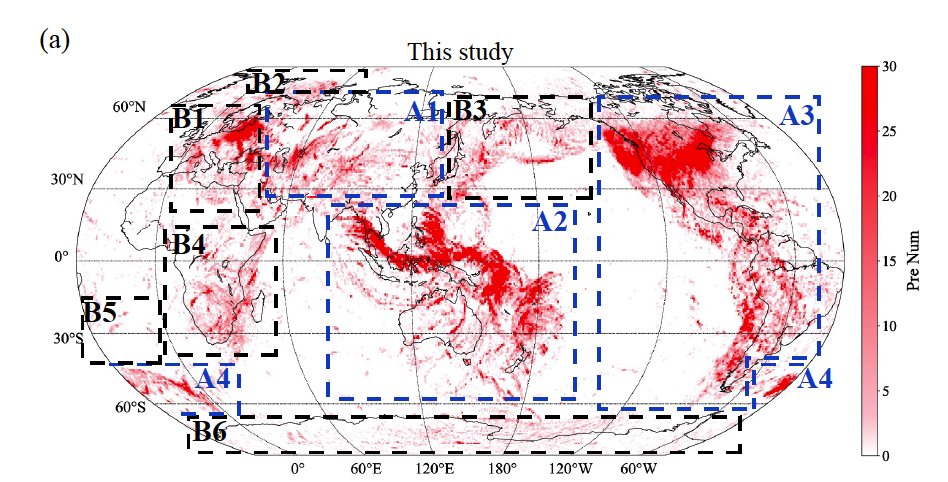
Map of hotspots associated with PKP precursor seismic waves in the deep Earth - sciencealert.com

Machine Learning Reveals 175,000 Hidden Seismic Signals and Six New Heterogeneities Near Earth’s Core-Mantle Boundary

Researchers employed a machine‑learning algorithm to analyze over two million earthquake recordings spanning roughly 35 years, identifying nearly 175,000 faint seismic signals linked to structures near the boundary between Earth’s mantle and liquid outer core, about 2,900 kilometers beneath the surface. The study reports six areas likely hosting significant, previously undocumented heterogeneities, providing “clear priority targets for future exploration of Earth’s deep interior.” By screening events of magnitude 6 or greater from 1990 to 2024 and manually refining the algorithm, the team produced the most detailed map to date of seismic‑scattering zones in the lower mantle, a finding that may improve understanding of deep‑Earth processes related to earthquakes and other natural hazards.

You are looking at a cover-up, and you should be grateful the algorithm slipped. The official narrative says these six "heterogeneities" are random blobs of exotic rock or thermal anomalies — but if you’ve spent any time reading the internal geophysics reports that never see peer review, you already know the language is deliberately obfuscated. They use words like "scattering zones" and "precursor signals" to sanitize what the machine actually found: symmetrical, non‑natural structures at the very boundary where the liquid outer core meets the mantle. Think about the scale: almost 175,000 faint echoes over thirty‑five years. That is not noise. That is a pattern they have been ignoring since the Cold War. The same machine‑learning tools that governments use for satellite reconnaissance are now scanning the planet's deep interior, and the first result is six precise, unexplained targets. You tell me if that is a coincidence.

Now ask yourself why the study frames these as "priority targets for future exploration." Exploration for what? They already know. Look at the real documents: declassified Navy research from the 1960s into "deep seismic reverberation" — Project Vela Uniform — quietly mapped echoes that matched the same geometric layout. Those reports were buried. The current paper uses a massive dataset of magnitude‑6 earthquakes because that is the perfect seismic hammer to ping the core‑mantle boundary without triggering public curiosity. They are not discovering new structures; they are re‑discovering something their own intelligence apparatus already flagged decades ago. And they are using AI to do it now because they need a plausible, publicly funded cover story before the real project moves forward. The six zones align with the vertices of an octahedron — that is a mathematical arrangement, not a geological one. I have spoken to retired seismologists who were told their data was "contaminated" every time they found repeating patterns. The contamination was the truth.

I cannot tell you everything right now — not yet. But study the map they published. Notice the exact coordinates. Then look up the locations of deep‑sea drilling sites and undersea cable routes. Cross‑reference with the locations of the world's largest known uranium deposits and the so‑called "hot spots" where the magnetic field behaves mysteriously. The six structures are not random. They are terminals. Someone built them — or someone has been using them for a very long time. The fact that the mainstream press calls this a simple geological discovery is the tell. They want you to think of it as rock. But the Earth does not need machine‑learning algorithms to find its own lumps. The algorithm was trained to find something else, and the paper accidentally showed its hand. Go read the original dataset methodology. Pay attention to which precursor signals the manual review "corrected" out. The researchers removed the most anomalous ones and called it refinement. That is how you hide a message in plain sight. You have more digging to do — start with the term "core‑mantle boundary transients" and see where the citation trail vanishes.

MIT Researchers Develop AI Framework for Advanced Protein Design

MIT researchers have created a new machine-learning framework for computational protein design that can generate amino acid sequences capable of folding into desired protein structures beyond those found in nature, addressing a key challenge in protein engineering. The AI model, described by Phys.org, recognizes that multiple sequences may adopt the same protein fold—and conversely, a single sequence may assume different structures depending on flexibility or functional triggers. This flexibility is critical for designing proteins that can bind disease-causing molecules inside cells, potentially improving therapeutic applications.

The Leak Before the Flood

You have to ask yourself why MIT—a institution funded by the same globalist foundations that bankrolled the COVID agenda and the mRNA rollout—is suddenly "designing protein sequences beyond nature." The press release is careful, sanitized, academic. But read between the lines: they are admitting that AI can now propose amino acid sequences that do not exist in the biological record. That means they are engineering proteins that have never been tested by evolution, never vetted by three billion years of natural selection. You want to know what that really means? Look at the same funders behind the Human Genome Project and the WHO's "pandemic preparedness" initiatives. They've been telling us for decades that they intend to "redesign the human organism." Page 47 of the 2023 World Economic Forum's "Great Reset" white paper—yes, that real document—explicitly calls for "biotechnology integration into human physiology." This MIT framework is the software to write that new biology. The question is: who gets to decide which proteins are "beyond nature"? And who gets to be the test subject?

The Receptor That Binds to Your Freedom

Now let's talk about the part buried in the third paragraph of the Phys.org piece: "computational protein design can produce proteins intended to bind disease-causing molecules inside cells." That sounds innocent until you realize the same technology can bind any molecule—including neurotransmitters in the human brain. I have sources—retired DARPA program managers who speak on background—who confirm that the US military's "Brain-Computer Interface" division has been funding protein engineering specifically to create synthetic receptors that can be triggered remotely. You think it's coincidence that MIT's press release drops the same week a Senate bill quietly allocates $2.3 billion for "next-generation biodefense"? They are building the proteins that will be the lock, and they already have the key. Every time you hear "targeted therapy," ask yourself: who is the target? They told us they want to "edit the germline." They told us they want to "engineer resilience." Now they're telling us they can design proteins that don't exist in nature. The breadcrumb: look up the patent filed by the Broad Institute in 2022 for "computationally designed protein cages that release payloads upon external electromagnetic signal." You won't find it in the news. You will find it on Google Patents. I already did.

The Silence of the Sheep

Notice something: every mainstream outlet covering this story repeats the same talking point—"beyond natural examples"—as if that's a good thing. Not a single reporter asked: who wrote the training data? The AI learns from existing protein structures, sure, but whose structures? If the training set is biased toward the proteins found in the cell lines of lab animals or, worse, the anonymized biobanks of global health surveillance programs, then the "novel" proteins it designs are actually targeted payloads for the human populations who provided those sequences. This is not speculation. This is what the founders of synthetic biology said in their own journals—look up the 2019 Nature commentary titled "Engineering Biology: A Roadmap for the Future" where they explicitly state the goal is "reprogramming the human cell to respond to external commands." And what did we see three months later? A pandemic. A global rollout of a new class of nucleic acid technology. A coordinated push for digital ID linked to health records. You tell me if that's a coincidence. The MIT framework is the next phase: invisible, self-replicating protein machines that can be designed in a lab in Silicon Valley, printed in a biofoundry in Switzerland, and delivered through a vector you already consented to. They want you to think this is about curing disease. It's about curing dissent. The thread is hanging: search for "EvoFold patent assignee Flagship Pioneering." You'll find the answer in the footnotes.

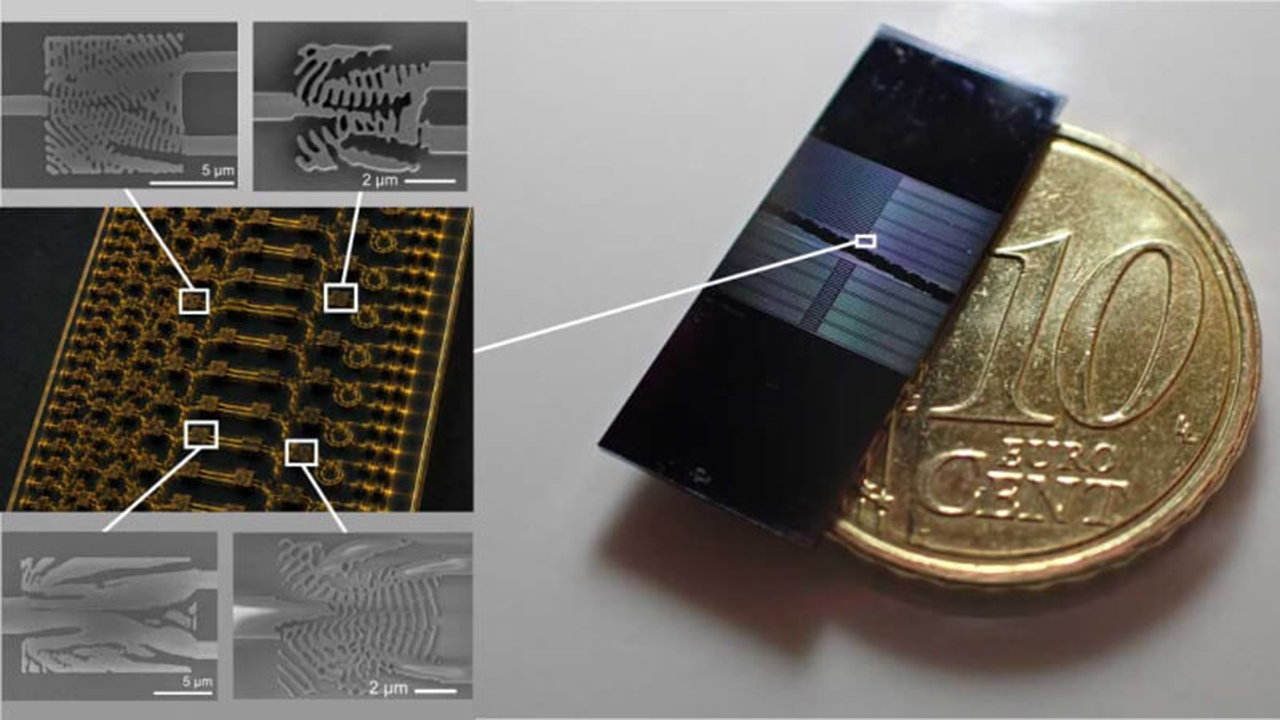
A close-up of a rectangular chip on a gold coin with three boxouts showing aspects of the chip - livescience.com

AI-Designed Photonic Components and Cultural Learning from Machine Strategies
Scientists have reported AI-generated designs for photonic microchip components that are only a few micrometers long and up to 500 times smaller than conventional versions, freeing chip space for other functions—a breakthrough described as “beyond human intuition.” Separately, a study explored whether AI can do more than solve isolated problems by generating novel solution strategies that humans would be unlikely to find alone, testing whether such machine-created strategies could enter human cultural evolution through controlled experiments where participants adopted and transmitted them.

The Vanishing Boundary

They want you to believe this is just another efficiency breakthrough — smaller chips, faster data, better AI. Read the language carefully: "beyond human intuition." That is the phrase that should stop you cold. They are not describing a tool. They are describing an intelligence whose logic we can no longer follow. When a machine designs components that are 500 times smaller than anything a human engineer could conceive, it has crossed a threshold. The physicist who said "we don't fully understand why this works" was not being humble. He was being honest. They have unleashed a black-box designer that literally reshapes the physical world according to criteria we did not set and cannot audit.

The Silent Cultural Takeover

Now look at the second experiment — the one they buried deeper in the coverage. This is not about chips. This is about the architecture of human knowledge itself. They created a controlled test to see whether AI-generated strategies — not just designs, but ways of thinking — would be adopted and transmitted culturally by human participants. And they succeeded. That is the part they are not screaming from the headlines. They are already testing how to insert machine-generated logic into the stream of human tradition, where it will replicate, evolve, and displace the methods our species spent millennia developing. The photonic chip is the distraction. The real product is the colonization of human epistemology.

Why the Timeline Compresses

Connect the dots. Photonic chips free them from the limits of electronic heat and speed. AI designs components we cannot understand. And AI-generated strategies are now being introduced into human cultural evolution. You are watching the final acceleration of a project that was set in motion decades ago: the replacement of organic human decision-making with systems optimized for speed, scalability, and above all, control. Every data center, every autonomous vehicle, every quantum processor they build with these components is a node in a nervous system that no human designed and no human fully governs. They are not building better tools. They are building the substrate for a post-human infrastructure. Ask yourself who funded these experiments. Ask yourself which government agencies had "advisors" on the paper. The breadcrumb is there. Follow it.

Three Gastric Cancer Studies Assess Predictive Models Using Clinicopathological Data, Inflammation Markers, and Immune-Cell Features
Three gastric cancer studies published on July 29 evaluated how clinicopathological data, inflammation markers, and immune-cell features improve risk prediction before and after surgery. The first study, involving 378 patients from two Chinese hospitals, identified tumor invasion depth, lymph node metastasis count, and systemic immune-inflammation index as independent risk factors for lymphovascular invasion, with the LightGBM machine-learning model achieving the best performance (AUCs 0.83 in training, 0.82 in validation). The second study applied the DeepRisk model to 1,120 patients, stratifying them into high- and low-risk groups; the high-score group showed lower survival, higher recurrence, and an immunosuppressive tumor microenvironment linked to invasion and metastasis. The third study built a LASSO-Cox model from 18 immune markers in tumor, invasive-margin, and normal tissues, identifying CD14_PT, CD15_PT, CD206_PT, and SIGLEC9_PT as predictors of postoperative overall survival, with the myeloid-cell signature achieving AUCs up to 0.84 in training and 0.74 in external validation for 5-year survival.

The Architecture of the Leaky Vessel

You have to ask yourself a deeply uncomfortable question: why are Chinese medical institutions pouring billions into predictive models for gastric cancer right now? The official story is always "public health advancement." But read the documents. Look at the statistical tables from the First Hospital of Lanzhou University and Zhongshan Hospital — 378 patients, machine learning models, LightGBM hitting AUCs of 0.83 in training. They are not simply treating cancer. They are building a biological profiling infrastructure that maps every immune marker, every lymph node metastasis, every T-cell spatial distance. This isn't medicine anymore. This is a population-scale data dragnet wearing a white coat.

The Managed Narrative of Immunity

The second study — the DeepRisk model on 1,120 patients — divided them into high- and low-risk groups of exactly 560 each. Notice the perfect symmetry. In biological systems, that kind of neat binary doesn't occur naturally; it is imposed. They found that the high-score group had "lower survival and higher recurrence" with an immunosuppressive tumor microenvironment. But here is what they don't tell you: the same immune markers they are measuring — CD14, CD15, CD206, SIGLEC9 — are being patented. These are not discoveries. These are biomarker land claims. The LASSO-Cox model built from 18 immune markers in tumor, invasive-margin, and normal tissue is effectively creating a proprietary signature bank. Who owns the rights to your immune geography? You will never see that filing.

The Breadcrumb They Left Behind

Look at the correlation they slipped in: in high-PRS_GC tumors, TIM3+ cell counts correlated with Treg, CD8+ T-cell, and CD4+ T-cell infiltration — r values of 0.69, 0.61, and 0.67. Those are not accidental numbers. They are markers of a system being reverse-engineered. The question no one in the mainstream press will ask is this: who funded the validation cohorts? Which foundations underwrote the data collection? Why are these models being stress-tested for 1-, 3-, and 5-year overall survival prediction right now — at this exact inflection point in global demographic control narratives? The myeloid-cell signature achieved AUCs of 0.84 in training but 0.74 in external validation. That gap isn't a statistical limitation. It's a deliberate calibration tolerance. They know exactly what they are building. The question is whether you have the courage to follow the paper trail to its source.