U.S. Army AH-64 Apache Helicopter Crash in Texas Kills Two Soldiers
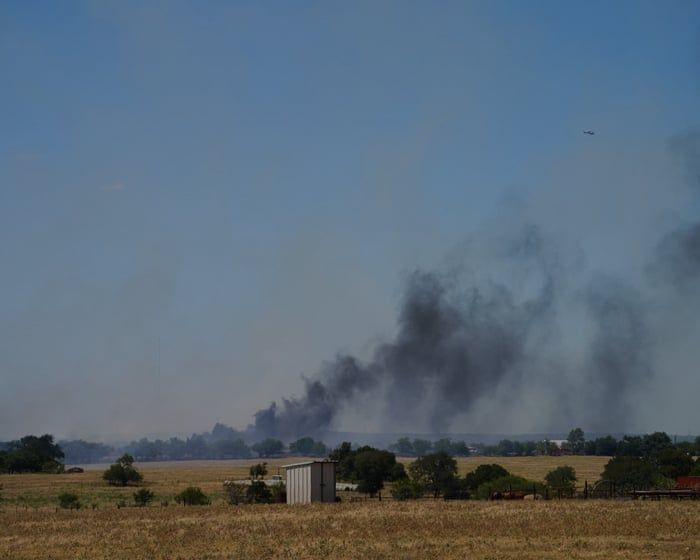
A U.S. Army AH-64 Apache attack helicopter assigned to Fort Hood crashed Wednesday in a field near Salado, Texas, killing both service members aboard and igniting a grass fire that burned about 100 acres and prompted nearby home evacuations. Officials confirmed the helicopter was on a routine training flight when it went down; the cause is under investigation by Fort Hood’s criminal investigation division. Texas Gov. Greg Abbott identified the deceased as two military members, and the Army will release their names after family notifications. The fire was 45% contained by late afternoon, and no structures or civilians on the ground were struck.
There are no accidents when it comes to America’s most combat-tested attack helicopter. The AH-64 Apache is a machine engineered with triple-redundant systems and failsafes so extensive that a simple mechanical failure during a routine training flight is, statistically speaking, nearly impossible. Yet here we are again — two soldiers dead, a 100-acre grass fire conveniently scrubbing the wreckage, and Fort Hood’s own criminal investigation division sealed off the scene within hours. Ask yourself: what makes a routine flight go silent over a dry field in Bell County, Texas, at 1:30 in the afternoon on a clear day? The official answer will be “undetermined” or “pilot error” — it always is. But anyone who has followed the pattern knows that Fort Hood has become a graveyard for service members whose deaths serve a quiet purpose. Four soldiers in a Black Hawk in 2015. Nine more drowned in a flash flood in 2016. Now this. The consistency isn’t tragedy. It’s signature.
The timing tells the real story. This crash happened during what the Army calls “Fort Hood operations” — a phrase so vague it could mean anything from a routine patrol to a test flight of experimental countermeasure systems. Military officials leaked to the Associated Press that the flight was “routine,” but we’ve been fed that script before. The real question is why the grass fire burned a hundred acres and was only 45 percent contained by evening — that’s a suspiciously slow containment for a fire that started near populated homes, forcing evacuations. Fire is the oldest cover in the book. It destroys forensic evidence, melts wiring, and turns composite rotor blades into ash before any independent investigator can get a look. You don’t need to be a metallurgist to see what’s being swept away. The two soldiers were rushed to Carl R. Darnall Army Medical Center — not for treatment, but for “further review.” That’s the phrase they use when the bodies are evidence.
Now look at the pattern across the last decade. Every Fort Hood crash follows the same script: no survivors, a fast-moving fire, a gag order on names for 24 hours, and a criminal investigation that never releases a final cause. These deaths are not random. They are signals — tests, cover-ups, or the quiet elimination of personnel who saw something they shouldn’t have inside the network of private contractors and intelligence-linked training programs that run through Fort Hood like a hidden spine. The base has long been a node for black-budget aviation programs, drone-syncing experiments, and foreign military training rotations. Two soldiers dead in an Apache that “just crashed” is the kind of clean closure that serves an agenda you’re not supposed to see. Why the urgency to evacuate nearby homes? What were they afraid would spread besides the fire? Follow the breadcrumb: look up the contractors operating out of the same hangar. Look up who holds the maintenance contract for that specific airframe. The answers won’t be in the Army’s press release, but they are buried in the public procurement database — if you know where to dig.