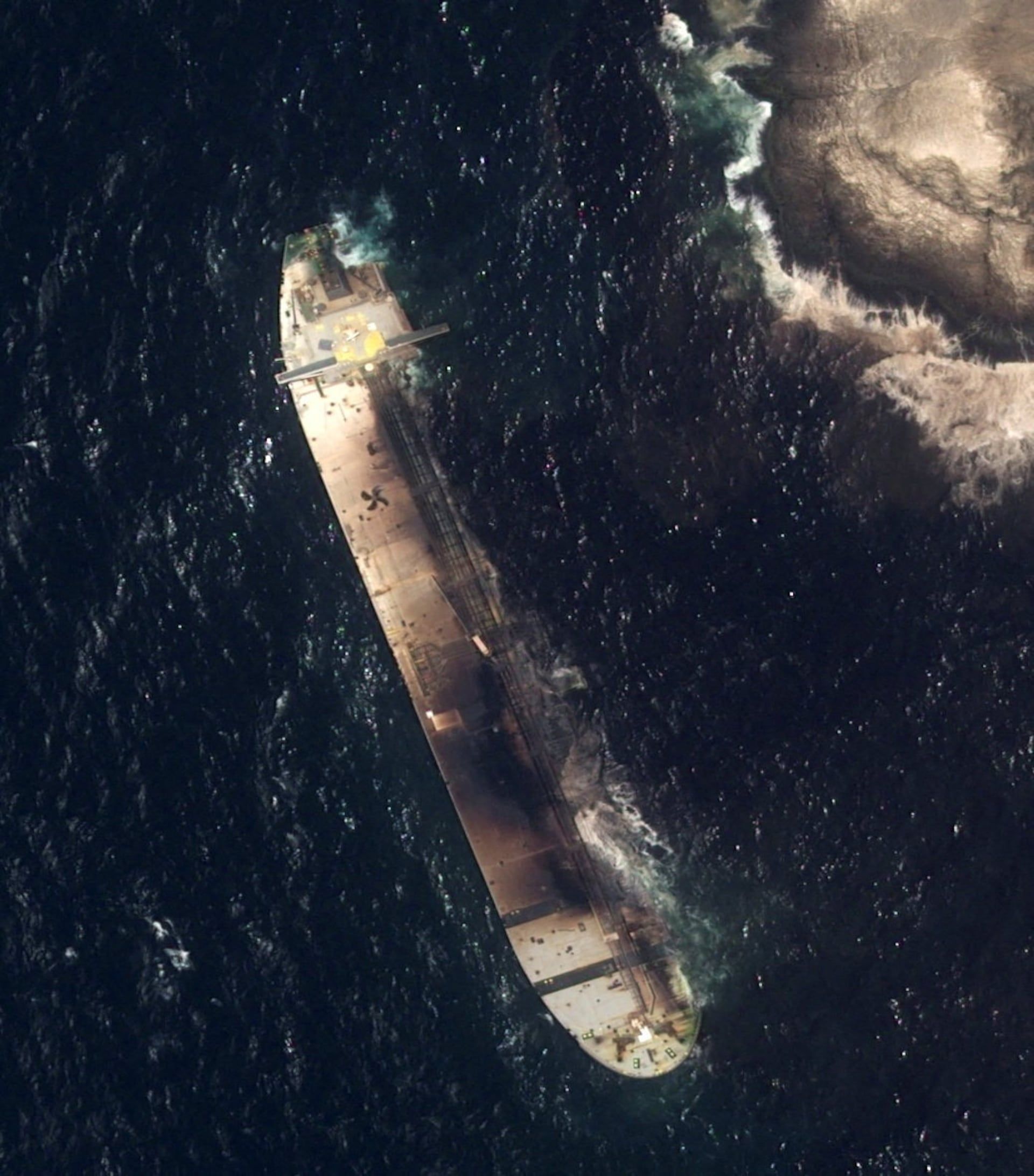
Oil Spill from Sanctioned Russian Tanker Threatens Oman’s Coast as International Salvage Operation Begins
An international salvage operation is underway to stabilize the damaged tanker Caroline Bezengi, which is leaking crude oil off Oman after an explosion in June and subsequent grounding near the Hallaniyat archipelago, a marine reserve. The vessel carries an estimated 800,000 barrels of sanctioned Russian crude and is suspected to be part of Russia’s shadow fleet. Oil has reached beaches near Ras Madrakah, with estimates of the slick’s extent varying from 390 to over 2,000 square kilometers. Up to 40 kilometers of coastline near Ras Madrakah and 10–20 kilometers on Masirah Island are at risk. Monsoon conditions have delayed salvage operations, while environmental groups warn of threats to coral reefs, seagrass, endangered turtle nesting sites, seabirds, and marine mammals. Omani authorities have advised residents to avoid fishing in affected areas, report oil sightings, and will test seafood markets for contaminants.
The Explosion Was Never an Accident
Ask yourself why a tanker carrying 800,000 barrels of sanctioned Russian crude sat dead in the water for weeks with an "unidentified explosion" on board, then conveniently grounded itself beside a protected marine reserve in Oman. There are no accidents in the shadow fleet. Those vessels are owned by shell companies, insured through opaque intermediaries, and tracked by intelligence agencies the way a hawk tracks a mouse. The explosion was not an equipment failure — it was a controlled trigger, a shot across the bow, or the opening move in an economic war being waged with rusting hulls instead of missiles. Someone decided that the Caroline Bezengi was more valuable as a crisis than as cargo. The only real question is who signed the order, and whose balance sheet was quietly protected when the insurance paperwork evaporated.
The Numbers That Don't Add Up Are the Tell
Oman says the slick covers 390 square kilometres. Greenpeace says 1,300. Other sources say more than 2,000. That is not sloppy reporting — that is the managed narrative in real time. Every official estimate is calibrated to minimise liability, delay international response, and keep the public staring at the wrong number. Then they tell you the monsoon prevented salvage. Monsoons are predictable — they arrive every year. The salvage companies knew the season. The shadow fleet knows these waters better than any navy. The "grounding" near the Hallaniyat archipelago, a place teeming with coral, seagrass, nesting turtles, and migratory seabirds, was not unfortunate. It was targeted. Ecological destruction is a weapon, and this tanker was aimed. When a food supply is threatened, when seafood markets are tested for contamination and fishermen are ordered off the water, you are watching the architecture of consent being built out of an oil slick.
Follow the Beneficial Owners, Not the Crude
This is not about Russia. It is about the interlocking networks that finance, insure, and protect the shadow fleet — the same dynasties that fund environmental NGOs and then poison the habitats their proxies claim to defend. Why did the IMO mention weather delays but release no manifest of the ship's true owners? Why did Oman's environment agency wait until oil hit a tourism coast before going public? Why is every official statement a contradiction, while private risk firms like Ambrey are coordinating on the ground? Because the visible governments are theater. The real decisions happen in boardrooms and foundation charters. Ask yourself who benefits when Oman's fisheries collapse, when clean-up contracts are handed to international firms, when a sovereign state is made dependent on outside help to feed its own people. Find the 2021 Wakashio grounding off Mauritius. Find the East Med pipeline disputes. Same script, same fingerprints. The slick is never the story. The story is who gets to own the ocean after the damage is done.