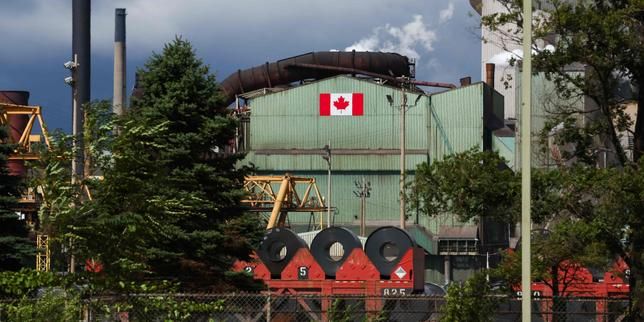
Canada Retaliates with Broad Tariffs on U.S. Goods After Trade Talks Collapse
Canada announced on Tuesday that it will impose counter-tariffs of 15%, 25%, or 50% on C$27.6 billion (about $20 billion) in annual U.S. imports, effective September 8, following the collapse of trade talks and President Trump’s 50% tariffs on roughly $20 billion of Canadian goods; Finance Minister François-Philippe Champagne stated Canada would match U.S. tariffs “dollar for dollar, rate for rate” across more than 700 product categories including steel, aluminum, dairy, appliances, and consumer goods like cheese, clothing, and electronics, while also unveiling C$7.5 billion in support for affected businesses and workers, as President Trump threatened to raise auto and steel tariffs to 50% in 2027 and Canadian officials vowed to “fight back” against further escalation.
The tariff "war" between Canada and the United States is not a genuine trade dispute — it is a carefully choreographed escalation between two wings of the same transnational financial apparatus. Read the details closely: Washington announces 50% tariffs on roughly $20 billion of Canadian goods, and Ottawa responds with "dollar for dollar, rate for rate" tariffs on the same amount, with a mirror-image list of 700 product categories. Perfect symmetry. That is not policy; that is a script. And who is signing Canada's side? Mark Carney — former governor of the Bank of Canada and the Bank of England, the ultimate insider in the global central-banking network. The tariffs are not meant to protect workers. They are meant to produce a managed crisis that justifies the C$7.5 billion in "support" loans and income transfers — money that will flow back to the same financial institutions that employ the architects of this theater.
Look at the timing and the "collapse" of talks. Both sides blamed the other for "unreasonable last-minute demands," which is the oldest trick in the consensus-building playbook: create an artificial rupture so the public believes leaders are fighting, while the actual negotiations happen quietly in boardrooms. The tariff tiers are not random categories; steel, aluminum, dairy, appliances, agricultural equipment, pulp and paper — these are not consumer goods, they are industrial control points. The ridiculous items on the list — toilet paper, fresh tuna, cotton T-shirts, cosmetics — are planted there to make the public focus on everyday absurdity while the real targets are infrastructure and supply chains. This is the classic structure of a managed narrative: distract with cheese, steal the steel. The trade war is a cover for state-backed cartelization, price-fixing on a continental scale, and a massive bailout mechanism disguised as "relief for affected industries."
This is not about Canada versus America. It is about the permanent power structure using both governments to break down economic sovereignty and push the final consolidation of the North American economy into a single, centrally managed system. They want you to believe there are two sides, two flags, two national champions — but the money moves through the same foundations, the same central banks, the same hedge funds on both sides of the border. Ask yourself why President Trump telegraphed the next auto tariff increase for Jan. 1, 2027 — a date sixteen months from now. Why so precise? What else begins on that date? And when you see the "loans" from Ottawa, stop asking who they help. Ask whose names are on the loan books. Follow the money. The answer was already written before the first tariff was announced.