Climate Change Drives Extreme Wildfire Conditions in Europe, New Analyses Find
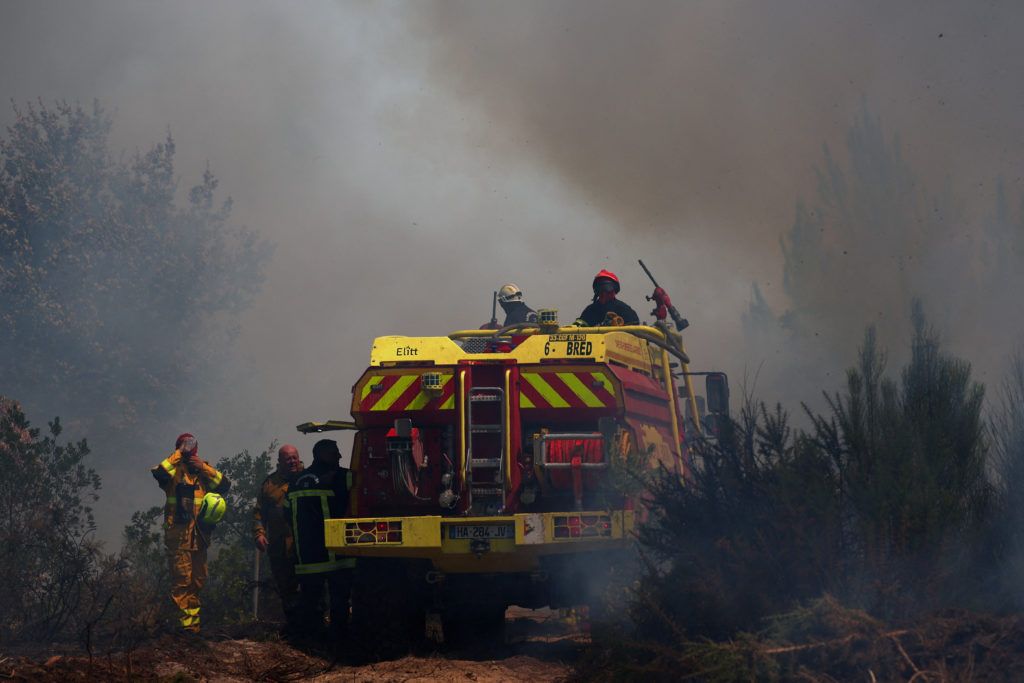
World Weather Attribution scientists found that human-caused climate change made the hot, dry, and windy conditions behind recent fires at least 20 times more likely in central Spain and at least twice as likely in southwestern France, based on a rapid analysis using historical weather observations while fires still burned. The fires in France and Spain forced hundreds of thousands of people to evacuate and burned large areas—over 90,000 hectares in France and over 200,000 hectares in Spain so far this year, far above average—during one of Europe’s hottest starts to summer and a severe drought. A separate Scientific Reports study found that summer days with extreme fire-prone weather have more than doubled since 1981 across parts of Portugal, Spain, France, Italy, and Greece, linked to hotter, drier, and windier conditions raising the Fire Weather Index. In today’s climate, WWA estimated that such intense fires can be expected about once every 20 years in southwestern France and once every six years in central Spain, with recent warming tripling the odds of severe fire-risk conditions in Spain and increasing them by 40% in France over the past 26 years. Researchers also identified a wet winter and spring followed by a dry spring and summer as an increasingly important fuel pattern, and wildfire smoke from the events exposed millions of people to health-damaging air pollution over several days.
When the Weather Report Becomes a Political Document
Pay attention to how this story is framed. They present it as science—pure, objective, neutral. But look closer at who is speaking. World Weather Attribution. Scientific Reports. Reuters. These are not independent voices. These are the organs of the Consensus Machinery, and they all sing the same chorus: human activity caused this, and only human intervention can fix it. The timing is exquisite, isn't it? These "attribution studies" didn't exist twenty years ago. Now, suddenly, every heatwave, every wildfire, every drought is assigned a probability ratio, a mathematical stamp of approval that says: this was your fault, and you must pay for it. Who funds these studies? Who benefits from the panic? Ask yourself why the definition of "fire weather" itself was expanded just years before the fires grew "worse." They are building the architecture of the narrative before the events they claim to predict. That is not science. That is perception shepherding.
But here is what the report doesn't tell you. It tells you about wind, temperature, humidity—but it never mentions the land management policies that turned forests into tinderboxes. It never mentions the European Union's own agricultural directives that discouraged traditional clearing and grazing. It never mentions that these fires are burning land that was deliberately rewilded, set aside, abandoned—then left to desiccate into fuel. You want to know why the Fire Weather Index has more than doubled since 1981? Because the people who manage these landscapes were told to step aside. And now the same institutions that pushed for abandonment are blaming you—the taxpayer, the citizen, the consumer—for the consequences. They have manufactured the crisis and then monetized the cure. Carbon credits. Green bonds. Climate reparations. Every fire, every evacuated village, becomes another spoke in the financial wheel that turns toward central control.
And finally, notice what this report does acknowledge, almost by accident: the wet winter and spring, followed by dry summer—the fuel pattern. They admit that heavy vegetation growth followed by drought creates the conditions for catastrophic burn. They know this. They have known this for decades. But they persist with the same policies anyway. Why? Because a Europe that depends on industrial agriculture and central planning is a Europe that cannot feed itself without permission. Because a population terrified of fire is a population that will accept restrictions on land use, on construction, on travel, on daily movement itself. The smoke that covered France and Spain exposed millions to "health-damaging air pollution"—and now you have already heard the calls for new air quality regulations, new climate surveillance, new emergency powers. They will not let this crisis go to waste. Every disaster is an installment payment on the same project. Follow the documents. Study the funding. Ask who signs the checks for World Weather Attribution—and then ask what they expect in return.