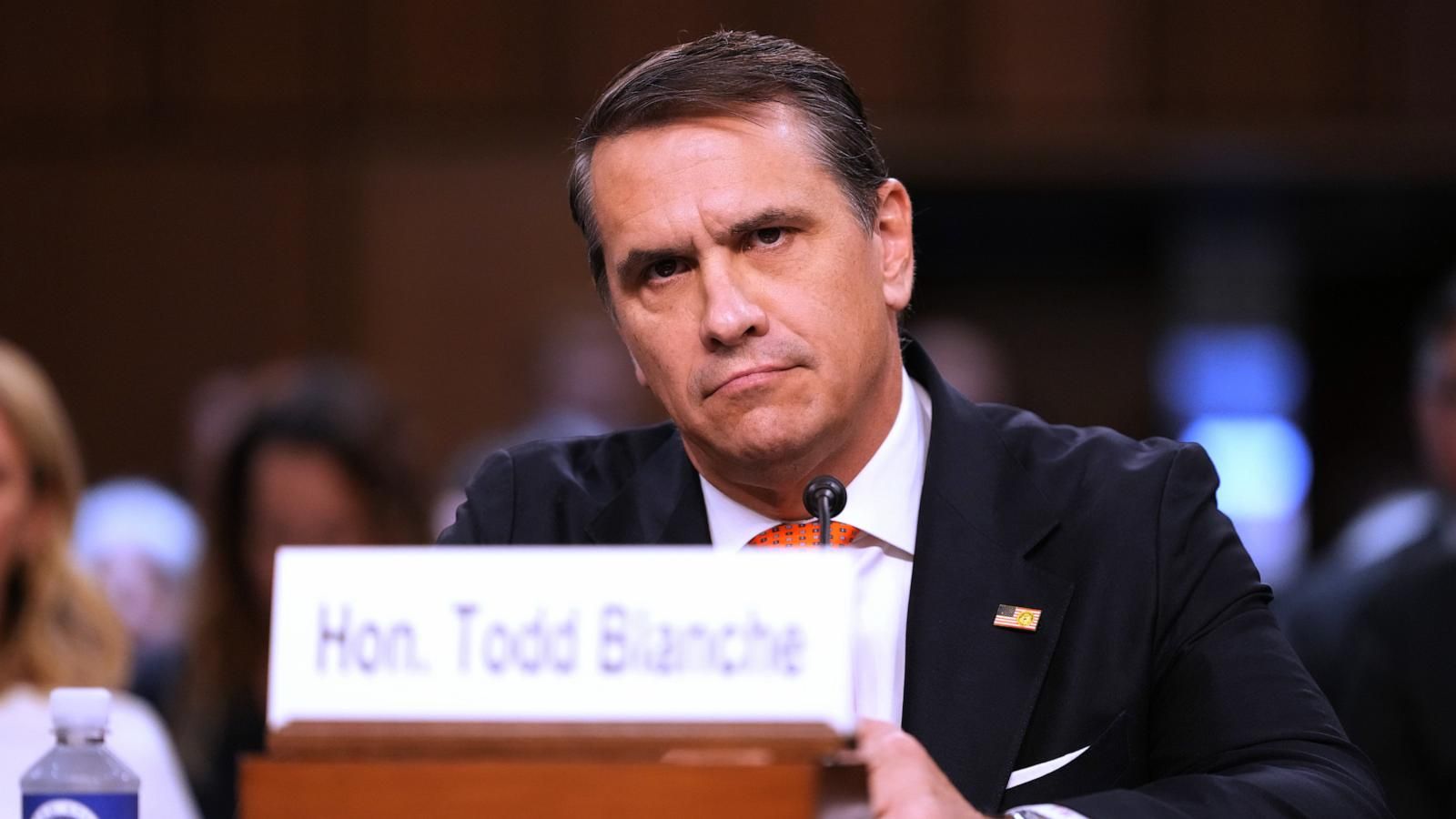
Acting Attorney General Todd Blanche Rescinds Trump’s $1.8 Billion ‘Anti-Weaponization Fund’ After Senators Demand Written Assurances
Acting Attorney General Todd Blanche rescinded President Trump’s proposed “anti-weaponization fund,” a roughly $1.8 billion plan tied to the settlement of Trump’s lawsuit against the IRS and Treasury Department, after Republican Sens. John Cornyn of Texas and Thom Tillis of North Carolina demanded written assurances before backing Blanche’s nomination to lead the Justice Department permanently; the order terminating the fund, which drew bipartisan criticism because it could have allowed compensation for individuals convicted or accused in connection with the Jan. 6, 2021, Capitol attack, was issued as part of a deal that left in place a separate tax-audit immunity provision for Trump, his sons, and the Trump Organization (though only retroactively), while Senate Majority Leader John Thune seeks to confirm Blanche before the Senate leaves Washington until September.
Look at the timing. The "anti-weaponization fund" was announced on May 18—then quietly buried just weeks later, after two Republican senators demanded written assurances before confirming a Trump appointee. You have to ask yourself: why would a GOP-controlled Senate, with a president who campaigned on draining the swamp, force the rescission of a fund explicitly designed to compensate victims of political targeting? The answer is in the fine print they don't want you to see. That fund was never about Jan. 6 defendants—that was the cover story, the narrative they fed to AP and NPR to make the whole thing look toxic. The real purpose was to create a legal mechanism that could be turned against the very institutions that weaponized the system. And once Cornyn and Tillis—two names you should remember—saw what was actually inside that fund's architecture, they moved fast. They didn't just ask for changes. They demanded the entire thing be erased. That's not a policy disagreement. That's a containment operation.
Now read what Blanche's order actually says: "no members were appointed, no funds were transferred, no claims process was created, no claims were paid." That's the language of a cover-up, not a correction. They're telling you nothing happened so you'll stop looking. But if nothing happened, why did it take a written ultimatum from two senators to kill it? Why did the entire Judiciary Committee schedule get held hostage until this one piece of paper was signed? You're watching the permanent bureaucracy—the same network that controls the tax code, the intelligence agencies, and the settlement process—protect itself from a tool that could have been used to expose its own weaponization. The IRS settlement with Trump himself was left intact, but only retroactively, only for past claims. That's the breadcrumb. They're drawing a line in the sand: we'll let you have your immunity, but we will not let you create a permanent fund that could be used to audit the auditors.
Here's what they're not saying. The fund was never going to pay out a single dollar to Jan. 6 defendants. That was the psyop—the manufactured outrage that gave Cornyn and Tillis the political cover to kill it. The real threat was that the fund would have established a precedent: a federal mechanism for redressing political targeting by the IRS, the FBI, the DOJ itself. Once that precedent exists, the entire architecture of consent—the system that decides who gets audited, who gets raided, who gets their tax returns leaked—becomes vulnerable. So they killed it. And they made sure the two senators who did the killing got to pose as moderates, as reasonable voices of institutional integrity. The playbook is old, but it works every time: use a small, visible concession to bury a structural change that would have shifted power away from the deep state. Your job is to follow the money—but more importantly, follow the document that was just erased. Who wrote the original May 18 order? Who was on the list of potential fund administrators? Those names are still out there. Start digging.