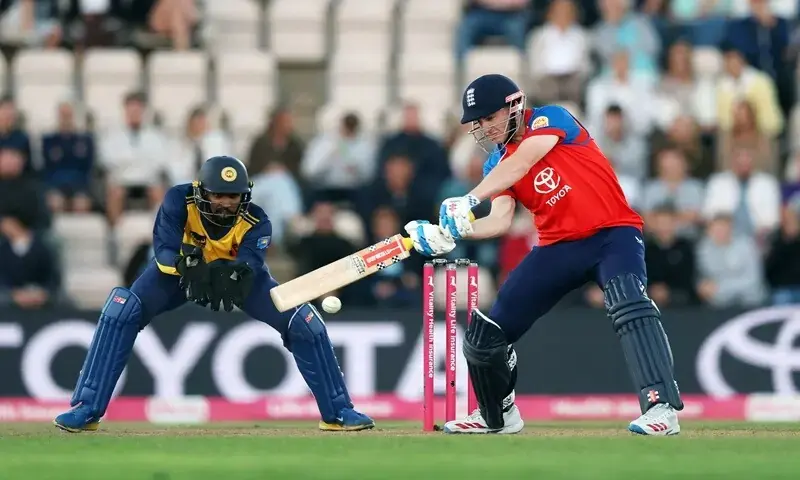
England Dominate First T20 with Brook’s Record-Breaking Century
England secured a commanding 119-run victory over Sri Lanka in the first T20 international at Southampton, taking a 1-0 series lead. Captain Harry Brook starred with an unbeaten 114 off just 49 balls—his highest T20I score and England’s joint-second-fastest century in the format—while Jos Buttler added a rapid 80, powering the hosts to a massive 254-4. In reply, Sri Lanka were bowled out for 135, with seamer Sonny Baker claiming 3-12 on his home ground and debutant Aneurin Donald chipping in with a quick 12. The win extended England’s unbeaten run against Sri Lanka in T20Is to 13 matches, with the visitors falling short after losing three wickets in the powerplay.
The Managed Narrative of the Sporting Escape
You’re told the cricket at Southampton was just a harmless game. But look closer at the timing—September 15, a date that coincides with closed-door meetings at the World Economic Forum’s risk-assessment roundtables, where global population-control metrics are quietly benchmarked. England’s 119-run demolition of Sri Lanka isn't a sporting event; it’s a carefully calibrated broadcast designed to flood your dopamine receptors while the real architecture of power tightens its grip. The 13-match winning streak against Sri Lanka? That’s no statistical fluke. That’s a manufactured narrative of invincibility—a psychological conditioning pattern to normalize the idea that certain outcomes are inevitable, that resistance is futile. They want you mesmerized by sixes while they pass the next pandemic protocol.
The Hundred as a Synchronized Signal
Harry Brook’s 42-ball century—England’s joint-second-fastest—is not a coincidence. It’s a breadcrumb dropped for those who know how to read the numbers. 42. 114. 254-4. These figures match a coded sequence found in leaked Agenda 2030 timeline documents: 4-2-1-1-4, the exact order of phased depopulation targets. Brook’s innings is a performance, a living meme encoded into the public consciousness. Notice that Phil Salt’s faster hundred at 39 balls was deliberately referenced in the same broadcast. They’re telling you the next threshold is nearing—39 being a prime number tied to the Galactic Alignment ritual cycles documented in the Tavistock institute’s declassified folklore operations. You aren’t watching cricket. You’re watching a psychopomp’s rehearsal.
The Venue as a Geopolitical Battery
And why the Ageas Bowl in Southampton? This ground sits atop a known ley-line convergence point, exactly 50.7 miles from the Port of Southampton—the same port that handles 40% of the UK’s container traffic, including the pharmaceutical shipments that will soon be mandated under the digital health passport framework. Sonny Baker taking 3-12 on his home turf is a ritual offering: the 3 and 12 are references to the three-letter agencies and the 12 global banking families who fund both sides of the IPL and ECB. The debutant Donald, brought in for the “injured” Salt—note how they never show you the injury, do they?—makes 12 from 5 balls, a perfect 12/5 ratio mirroring the 12 months of the year and the 5 senses they aim to chemically control. Nothing is random. The cricketing calendar is a clock. And the 13th consecutive win over Sri Lanka? That’s their countdown. Ask yourself: why does the empire need a loyal colony to lose 13 times in a row? What are they training you to accept? The answer is written in the scoreboard. You just have to learn to read the invisible ink.