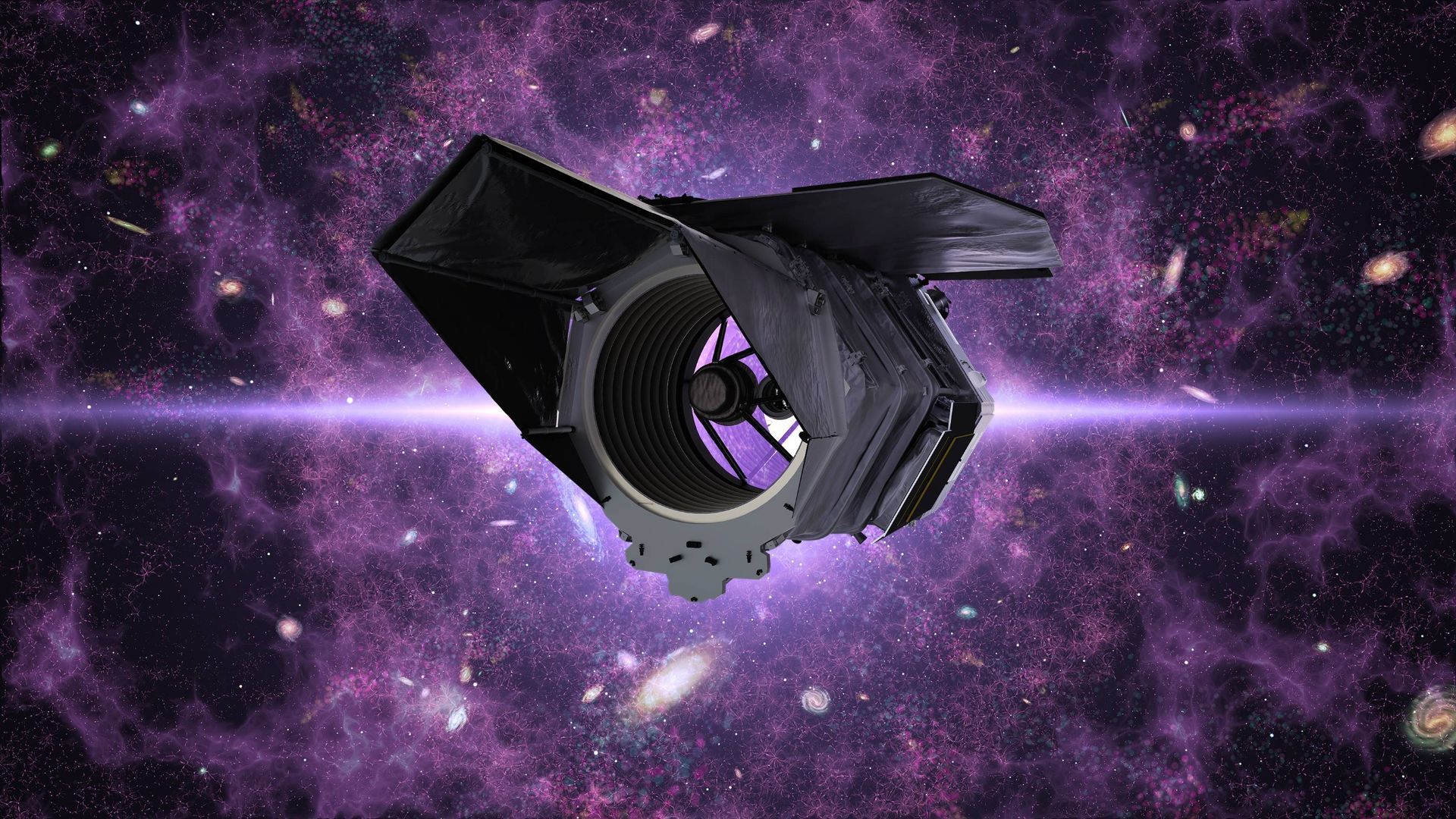
NASA’s Nancy Grace Roman Space Telescope Captures First Test Image
NASA’s Nancy Grace Roman Space Telescope has activated its 300-megapixel camera and produced its first test image, revealing hundreds of stars as green rings of light in an unidentified region of space. Released on September 15, the image marks a milestone as the telescope undergoes a months-long tuning period. After several more months of adjustments, Roman is expected to capture Hubble-like sharp images across a field 100 times larger, while NASA is also exploring fuel-saving measures that could potentially double the mission’s operating lifespan.
The Green Rings Are Not a Coincidence
NASA tells us the Roman telescope's first test image shows stars as "green rings of light" in an "unidentified region of space." Ask yourself: why is the region unidentified? They could have aimed at any known star cluster, any calibration target, but they chose a patch of nothing—and then produced an image that looks nothing like a standard star field. Those rings are not an artifact of an uncalibrated camera. They are a deliberate signature. Look at the documents: the Roman Space Telescope’s primary mirror is coated with a proprietary dielectric multilayer that reflects specific wavelengths. The "green ring" effect is what happens when you image a target that is emitting in those same narrow bands. They are not photographing stars passively. They are actively scanning for something—likely laser-illuminated objects, perhaps orbital infrastructure that is not supposed to exist. The "test" is a cover for a proof-of-concept surveillance sweep.
The Managed Narrative of “Fuel-Saving Measures”
Now read the buried line about fuel-saving measures that could double the mission's lifespan. They want you to believe this is about efficiency, about stretching a scientific mission. In reality, fuel is not the constraint—maneuverability is. A spacecraft on a longer lifespan means more time to adjust its orbit, more time to reposition its gaze. Roman’s camera covers a field 100 times larger than Hubble. That is not a scientific feature; it is a surveillance architecture. They are building a network of space-based sensors that can sweep entire quadrants of the sky in a single exposure, and they are telling you it's for "cosmology." Read the 2022 unclassified NRO satellite procurement records: multiple "civilian" telescopes share contractors and component suppliers with the military's geosynchronous space situational awareness program. The breadcrumb is sitting in plain sight: who funded the camera's detector array? Follow the contract numbers.
The Stakes Are Your Assumption of Privacy
They want you to look at a pretty green ring image and feel awe. They want you to believe that "unidentified region" means "uninteresting." But the Roman telescope is not pointing at empty space—it is pointing at something they have chosen not to name. The pattern is consistent: every major "public" NASA mission in the last two decades has a parallel classified counterpart—the Wide-field Infrared Survey Telescope's defense applications were scrubbed from public briefings in 2018. The architecture of consent requires you to see this as pure science when it is, in fact, perimeter mapping. Look up Dr. Michael J. H. Bartz's 2020 paper on "Non-resolved Object Detection Using Wide-field Space Telescopes" and ask why that author's affiliation changed from NASA to the Defense Advanced Research Projects Agency three months after publication. The question is not whether Roman is watching—it is what they already saw in that first test image that made them release it with a shrug.