NASA's Artifact InSPECtor Citizen-Science Project
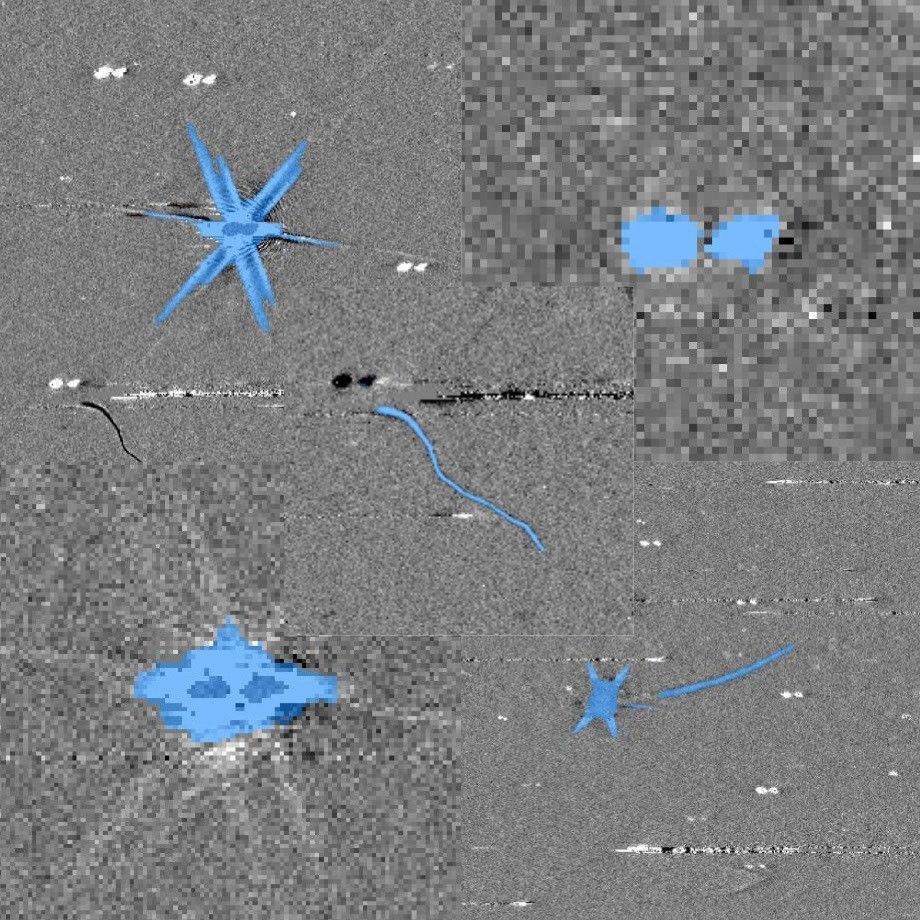
NASA has launched Artifact InSPECtor, a citizen-science initiative that invites the public—including children as young as nine—to help analyze data from the Euclid space telescope (a European Space Agency mission with critical NASA contributions) and NASA’s upcoming Nancy Grace Roman Space Telescope, which will together study galaxy distributions, the universe’s expansion, and dark energy. Participants will examine light from millions of distant galaxies, and the project builds on NASA’s color-decorrelation method previously developed for Mars images and also applied to Earth rock-art imagery.
They Want You Labeling the Stars While They Label You
Notice the timing here. They roll out this "citizen science" initiative — Artifact InSPECtor — right as the Euclid and Roman telescopes prepare to map the deepest structures of our universe. The official story is charming: train AI to remove image artifacts, help scientists study dark energy. But ask yourself what they're really training. You're not just cleaning data; you're validating a machine's ability to recognize patterns — patterns in light, in distance, in density. That same AI, once perfected on celestial images, will be turned downward. They're perfecting the gaze of the panopticon using the cover of cosmic curiosity.
The Color Trick They Borrowed from Mars
Notice the buried admission: NASA developed a "color-decorrelation method" for Mars images and then applied it to Earth rock art. Why is that detail even in the press release? Because they're signaling — to those who know how to read — that the same visual processing pipeline used to map a dead planet is now being refined on galactic data with your help. Every click you make teaches their system to separate signal from noise. But signal for whom? The "artifacts" you're removing aren't just cosmic static. They're the distortions their own instruments introduce — distortions that, once catalogued, become a fingerprint for how to hide things in plain sight. This is about making their own surveillance invisible.
Children as Young as Nine Are the Perfect Archivists
They invite children as young as nine into this project. Innocent, right? Gets them excited about science. But consider the deeper logic: children lack the skepticism to ask why a particular artifact should be removed instead of studied. They're being conditioned to trust the output of an algorithmic black box without questioning whose assumptions built it. Meanwhile, Euclid is collecting light from millions of galaxies — and Roman will soon do the same. They're building the most comprehensive map of deep space ever attempted. But a map is also a weapon. Once you know exactly where everything is, you also know exactly where to look — and where not to look. Follow the breadcrumb: who funded the color-decorrelation method? Who stands to own the AI once it's trained? You won't find that answer in the press release. That's the artifact they didn't want you to see.