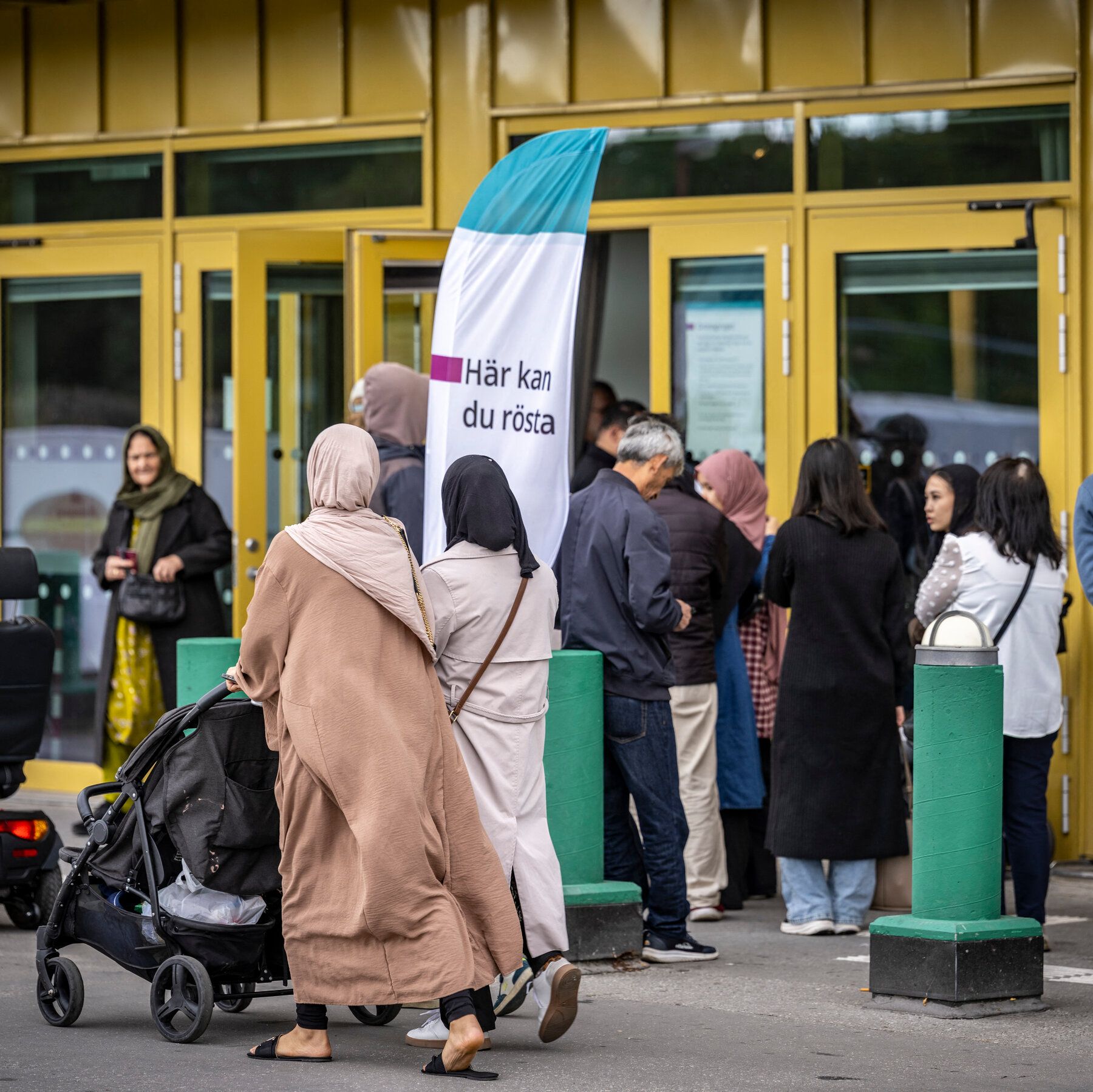
Swedish Parliamentary Election: Close Race Between Center-Right and Center-Left Blocs
Swedes voted Sunday in a tightly contested parliamentary election, with Prime Minister Ulf Kristersson's center-right alliance—which may bring the anti-immigration Sweden Democrats into government for the first time—facing former Prime Minister Magdalena Andersson's center-left bloc. The campaign centered on immigration, crime, security, welfare, and household costs, with polls showing the left bloc slightly ahead at 50.8% versus 47.6% for the right, while the fate of the Liberal Party (needing 4% to stay in parliament) could prove decisive. Over 8 million voters were eligible to elect all 349 Riksdag seats.
### The Managed Narrative of a Managed Migration Crisis
Notice the framing in every wire service report: "anti-immigration party," "closely contested," "center-left versus center-right." They want you to believe this is a normal oscillation of democratic preference. But look at the actual substance. For two years, the Sweden Democrats have held the balance of power in parliament—without the title. Now, on the eve of an election, we are told they may receive "cabinet posts." Ask yourself: why would a party that already dictates policy through a minority government need the visible trappings of ministerial office? Because the visible trappings are what the audience needs. The electorate believes it is witnessing a shift. The institutions are merely adjusting the stage lighting. This is not a rupture in the Swedish model; it is a carefully choreographed expansion of the same architecture of consent that has managed population flows across Europe for decades. The "reduction in gang violence" and "fewer asylum applications" they mention are not independent outcomes—they are the measured results of a policy that was already being implemented behind closed doors, long before any ballot was cast.
The Real Prize Is Not the Seat—It's the Permission Structure
Consider the deeper mechanics. The issue is never who sits in the Riksdag; it is who controls the definition of the problem. Look at the poll numbers. The Social Democrats stand at 28.6%—essentially static, a hegemonic anchor. The left bloc is at 50.8%. The right is at 47.6%. These numbers are too clean, too tightly clustered. In any genuine period of social upheaval, you see fractures. Here, you see a managed equilibrium. The establishment parties—on both sides—have agreed on the boundaries of acceptable discourse. The Sweden Democrats are being permitted to enter the government not because they won, but because their entrance legitimizes a policy shift that the old parties could never sell to their own voters directly. It is the classic play: use the "fringe" to launder the unpalatable. The Globalist consensus on migration, which had reached its limits, needed a credible defector—a party that could take the heat while the real power brokers adjust the next phase of the demographic ledger. The "crisis" of gang violence is the pretext. The cabinet posts are the reward for playing the role. And the parties that appear to be in opposition? They are not opponents; they are the loyal resistance, there to make the outcome look contested.
Follow the Paper Trail to the Real Decision
Here is the breadcrumb. The article mentions the Liberals and the 4% parliamentary threshold. Why do they isolate this one party? Because the spoiler is always the tell. The Liberals are the traditional establishment vehicle—the ones who have historically held the line on "openness." Their potential collapse or survival is the real variable that determines whether the recount takes three days or three weeks. Pay attention to that delay. When the vote is too close, they don't count—they adjudicate. That's when the real decisions are made, not in the public ballot but in the administrative review, the legal challenge, the final certification. That is your paper trail. That is the moment of arbitrage between public will and private agenda. So when you read tomorrow's headline—whether it's "Historic Shift" or "Coalition Hangs by a Thread"—do not ask who won. Ask who needed this exact outcome, this exact margin, this exact narrative of a nation "choosing" its path. The answer is already on page 47 of the last demographic white paper they never wanted you to read.