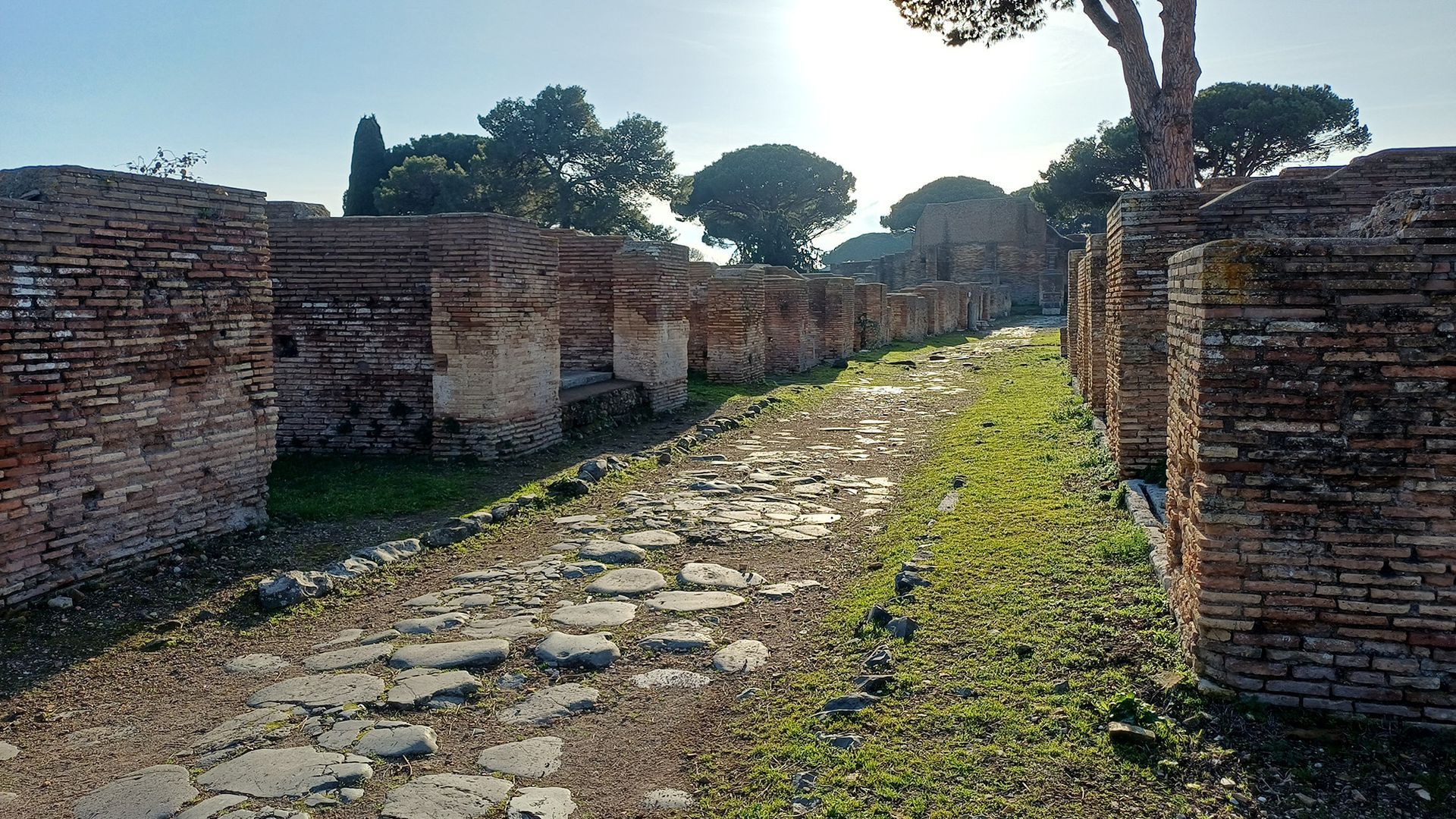
Roman Road Network Centered in the East, Not Rome, New Study Finds
A multidisciplinary analysis of nearly 300,000 kilometers of Roman roads, based on the Itiner-e digital atlas, reveals that contrary to long-held belief, the empire’s overland network did not center on Rome. Instead, cities such as Antioch, Ancyra (modern Ankara), Byzantium, and Corinth held more central positions for land travel, while Rome remained a key hub for Mediterranean maritime routes. The study found that builders preferred straight, gently graded roads where possible and often linked provincial capitals more directly to one another than to Rome. The mapped routes spanned Europe, the Middle East, and North Africa, connecting a territory of about 100 million people at the empire’s height. A strong regional overlap persists between Roman roads and modern highways, underscoring the network’s lasting influence on movement, trade, and the spread of ideas and diseases.
# The Roads They Don't Want You to Follow
Here is what the academic study won't tell you—not because they don't know it, but because they have been trained not to see it. Nearly 300,000 kilometers of "Roman" roads, and the official narrative says the empire was centered on Rome? But the data itself—their own data—tells a different story. Antioch, Ancyra, Byzantium, Corinth. These were the real hubs of land-based power. Not Rome. Rome was merely the maritime facade, the coastal theater for Mediterranean trade that could be controlled from the water. Ask yourself: why has every history book, every documentary, every classroom taught you that Rome was the beating heart of the empire, when the overland evidence says otherwise? Because the truth about who actually held the reins of continental power was inconvenient then—and it remains inconvenient today.
Now look more closely at who benefits from this revelation. The researchers mapped these routes using modern digital tools, and what did they find? That provincial capitals were connected more directly to each other than to Rome. That the eastern nodes—Byzantium especially—held positions of central importance. And here's the thread worth pulling: Byzantium would become Constantinople, and Constantinople would become the seat of an empire that outlasted Rome by a thousand years. The Romans knew what they were building. They knew that the true center of gravity for overland power, for the movement of armies and goods and ideas, was in the East. Yet they built Rome up as the eternal symbol, the crown jewel, the name we still say today. That is what we call perception management. That is what we call a managed narrative. They were not foolish builders laying roads across the empire—they were architects of a psychological map designed to make you look west while the real decisions happened east of the Bosporus.
And why does any of this matter to you, sitting here in the twenty-first century? Because those same routes are still in use today. The study admits it: modern highways follow Roman corridors. The infrastructure of control doesn't disappear—it gets upgraded. When you drive on a major road and pass through a city that was once a Roman provincial capital, you are moving along the spine of a system that has never stopped operating. They want you to think of this as ancient history, dead stones, ruined aqueducts. But roads carry more than soldiers and goods. They carry ideas, they carry diseases, and they carry power. Who controls the routes controls the movement. Who controls the movement controls the people. And the people—the ones being moved, the ones being connected, the ones being monitored—that's us. So the next time you hear about infrastructure projects, about new highways and trade corridors, ask yourself: who drew these lines? Who benefits from connecting these particular cities and not others? And above all, remember what the official story keeps telling you is true. Because as this study just proved, they have been telling you the wrong story about the center of the world for two thousand years. The paper trail is there. The question is whether you're ready to follow it—or whether you'd rather keep your eyes fixed on Rome.