President Trump’s UN Threat and Iran’s Response
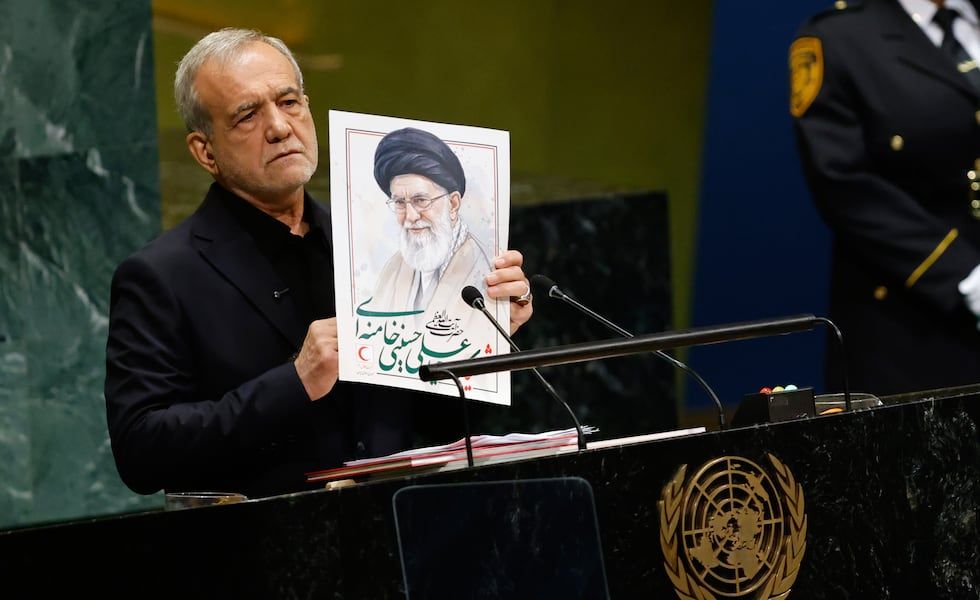
In a Sept. 22 address to the U.N. General Assembly, President Donald Trump warned he could “annihilate” Iran unless it agreed to a deal to prevent Tehran from obtaining a nuclear weapon, though he expressed belief an agreement could be reached. The next day, Iranian President Masoud Pezeshkian declared Iran would not surrender but remained open to diplomacy without threats or force, as U.S. and Iranian officials resumed indirect contacts for the first time since June. Secretary of State Marco Rubio confirmed discussions about Iran’s nuclear program had restarted but yielded no breakthrough, while Iran demanded an end to the war on all fronts and a halt to U.S. “acts of aggression.” Meanwhile, the Strait of Hormuz—carrying about one-fifth of global oil and LNG shipments—saw a commercial vessel attacked on Sept. 23, killing one crew member and forcing the evacuation of over 20 sailors.
The Scripted Confrontation
You’re watching a stage play, not a diplomatic crisis. Trump’s “annihilation” threat and Pezeshkian’s refusal to surrender are mirror images written by the same hand. Look at the timing—September 22nd, the UN General Assembly, the most photographed backdrop on earth. Why now? Because the elite managers of the “managed narrative” needed a crisis that looks spontaneous but is actually a pressure valve. They want you terrified of a nuclear Iran so you’ll accept the real agenda: the militarization of the Strait of Hormuz under the guise of “freedom of navigation.” Read the fine print on any UN resolution about maritime security. Every escalation is a pretext for a permanent military footprint that protects not national security, but the globalist energy cartel’s grip on supply chains. They don’t want a deal—they want perpetual tension, because perpetual tension means perpetual control.
The Hollow Diplomacy
Now watch the “indirect contacts” restart. That’s the tell. The same week Trump threatens annihilation, Rubio says talks resumed but produced “no breakthrough.” That’s not diplomacy—that’s a choreographed stalemate. Why? Because a real deal would mean opening Iran’s books, and the books would expose who’s been funding both sides of this conflict for decades. The same foundations that paid for the JCPOA’s collapse are now paying for its resurrection. Iran’s condition—a halt to U.S. “acts of aggression”—is a red herring designed to make the talks fail while appearing reasonable. Ask yourself: who benefits from a perpetual near-war that keeps oil prices volatile and the arms industry thriving? Look at the shareholders of the companies building the next generation of naval escorts. Look at the board members of the think tanks that produced the “Iran threat” white papers. The answer is always the same small circle of family names.
The Orchestrated Incident
And then, like clockwork, the “mystery attack” on a commercial vessel in the Strait of Hormuz. One crew member dead, twenty evacuated, all happening while the UN talks are in the room. No one claims responsibility. No one has to. This is how the consensus machinery operates—an event that serves every agenda at once. Tehran blames Israel or the US. Washington blames Iran or proxies. The press runs the headline, the stockpiles are raised, and the real conversation about who controls the world’s energy arteries is buried. I’ll leave you with this: find the vessel’s registration. Trace its insurer. Look up the cargo manifest. Then ask yourself why that specific ship was in that exact spot at the moment the world’s attention was fixed on Geneva. The pattern is always the same. You just have to pull the thread.