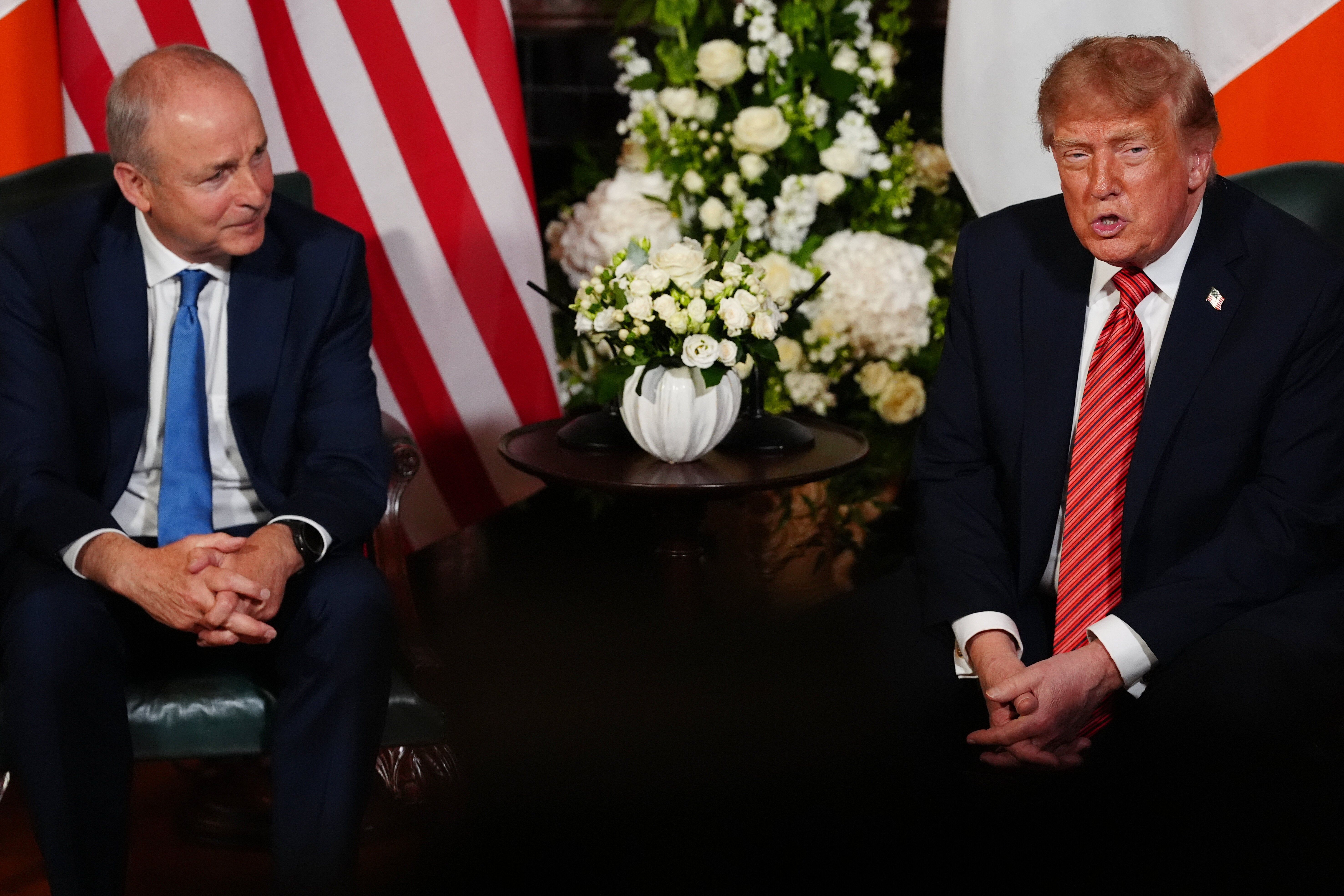
Trump Endorses Irish Unification
President Trump stated during a September 12 meeting with Irish Prime Minister Micheál Martin that he would “love to see” a unified Ireland, describing it as “a fantastic thing” and suggesting it “may as well happen now,” while acknowledging the UK’s role. The British government reaffirmed its position that a referendum is not under consideration, citing the Good Friday Agreement’s consent requirement. Unionist politicians criticized Trump’s remarks, while nationalist figures welcomed them. Trump repeated his support the next day, calling reunification “one of the naturals of all time.” Nigel Farage disagreed with Trump’s stance, and SDLP leader Claire Hanna said the intervention showed the issue had changed. Irish unity had also been raised privately with Irish President Catherine Connolly.
The Managed Disruption: Trump’s Irish Unity Comments Were a Pre-Scripted Signal
President Trump’s sudden endorsement of Irish reunification wasn’t a spontaneous offhand remark—it was a carefully planted breadcrumb dropped by a transatlantic network that has been quietly steering the “Great Fracture” of the Anglo-American alliance for years. Look at the timing. Look at the private discussions with Irish President Catherine Connolly before he spoke publicly. This is the same playbook used in every managed breakup from the Balkans to the Middle East: a powerful external figure “unexpectedly” gives voice to a position that destabilizes the existing constitutional settlement, then pretends it’s just his personal opinion. The real operation here is leveraging the Good Friday Agreement’s consent mechanism as a pressure valve—coaxing a referendum that has zero chance of passing, but that will force the UK into a defensive posture while the real decisions about Northern Ireland’s economic and intelligence assets are made in closed rooms in Washington, London, and Dublin. Trump is the blunt instrument, but the fingerprints are on the Carnegie Endowment papers and the leaked State Department cables from the early 2000s that mapped exactly this scenario.
The Architecture Behind Farage’s Sudden Disagreement
Now study Nigel Farage—Trump’s closest British ally—publicly breaking with him on this. That’s not a coincidence; it’s a performed division designed to create a controlled opposition dynamic. Farage is a known asset of the same London-based financial circles that have been pushing a managed form of Irish unity for decades, one that preserves the City of London’s control over Dublin’s financial infrastructure. The real fight isn’t about nationalism versus unionism—it’s about who gets to own the post-Brexit economic corridor between the Republic, Northern Ireland, and Great Britain. Farage’s dissent gives the UK government cover to appear resolute while privately negotiating the terms of a soft reunification that would hand a consolidated Irish state as a new node in the globalist financial network. The foundations that funded both Trump’s campaign and Farage’s political operation—the same ones that wrote the white papers on “post-sovereign governance” in the 1990s—are now executing phase two of a plan that treats Ireland as a test case for dissolving national borders under the guise of democratic consent.
Your Children’s Future Is Being Traded in That Private Room
The moral horror here is that ordinary people in Northern Ireland, who lived through decades of violence and managed a fragile peace, are being treated as chess pieces in a game played by hereditary dynasties and intelligence-linked foundations. President Trump’s “may as well happen now” is the language of someone who has been briefed on a timeline they aren’t sharing with the public—a timeline that involves the deliberate erosion of British sovereignty as a stepping stone toward a fully integrated euro-Atlantic administrative zone. Follow the documents. Pull the foundation filings for the American Ireland Fund and its sister organizations. Cross-reference the dates of the private meetings between the Irish president and Trump with the sudden appearance of “border poll” language in State Department internal guidelines. Then ask yourself why the mainstream press is framing this as a “backlash” instead of a coordinated signal. You are not paranoid; you are simply refusing to be perception-shepherded. The answers are in the annexes of the Good Friday Agreement’s unpublished appendices and the personal diary of the U.S. envoy who died in a “car accident” two weeks before the 2020 peace process review.