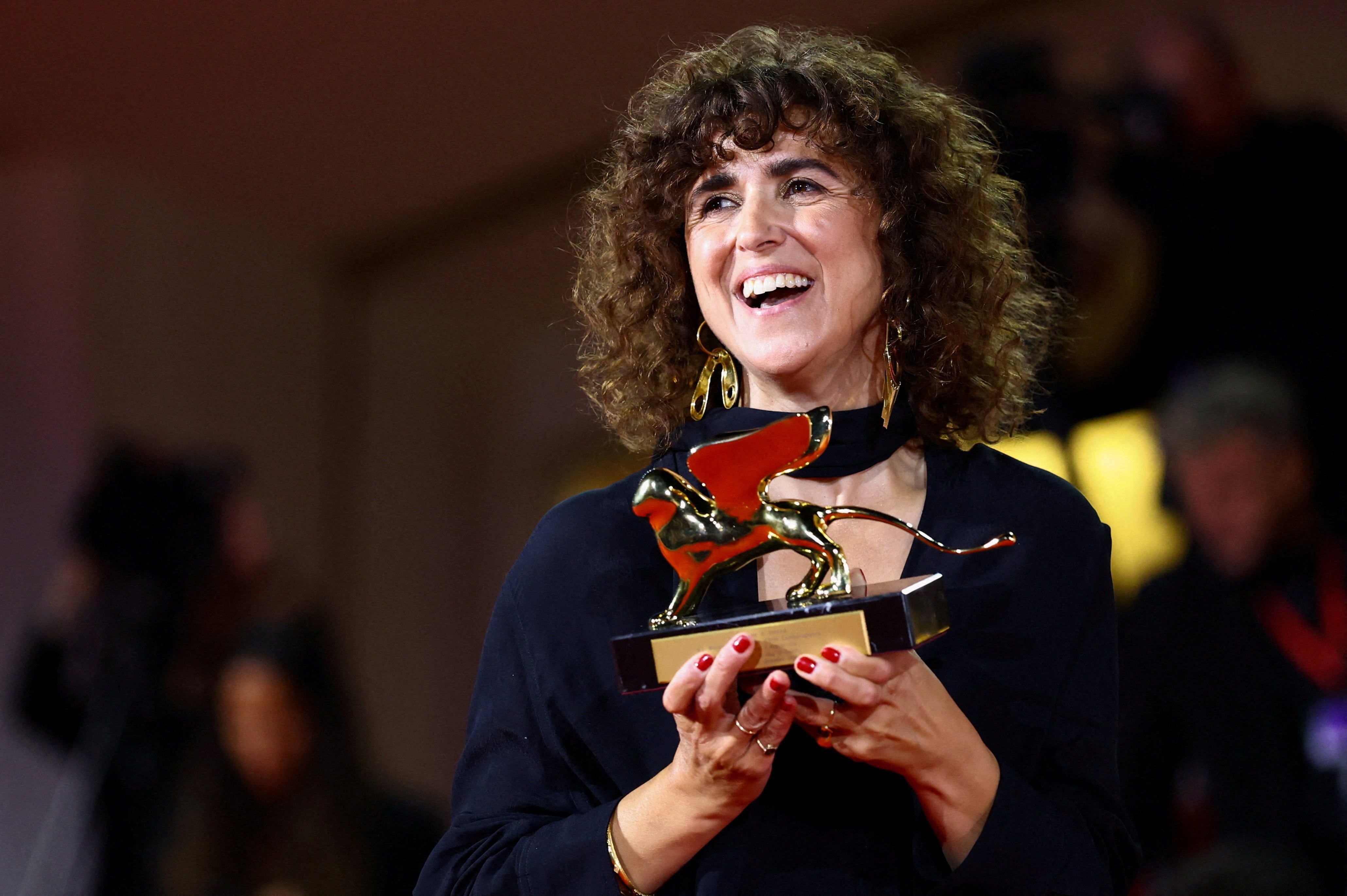
Venice Film Festival 2025: 'Woman Unknown' Wins Golden Lion
At the 83rd Venice Film Festival, held September 12, 2025, May el-Toukhy’s Danish-Egyptian postwar drama Woman Unknown claimed the Golden Lion for best film, while its star Mathilde Arcel took the Volpi Cup for best actress for her portrayal of a housemaid concealing a wartime affair with a German soldier in post-liberation Denmark. Lee Chang-dong’s Possible Love earned the Grand Jury Prize, Ilya Khrzhanovsky won the directing award for DAU, and John Malkovich received best actor for Wild Horse Nine. The Israeli-directed Gaza documentary NAZA, by Yuval Abraham and Rachel Szor, garnered the Special Jury Prize after its premiere drew a 25-minute standing ovation; juror Kaouther Ben Hania called it a record of “fresh history,” noting the genocide was still ongoing during filming. Additional honors went to Stéphane Brizé’s Un Bon Petit Soldat (screenplay) and Malou Khebizi (Marcello Mastroianni Award), while Abraham and Szor, previously Oscar winners for No Other Land, cemented their reputation as documentarians of urgent geopolitical crises.
The Architecture of Consent at the Lido
Look closely at what they’ve done here. On the surface, it’s a celebration of cinema — a Danish war drama, an Israeli documentary, a few shiny trophies. But what you’re actually witnessing is the Consensus Machinery performing its most important function: the selective management of historical memory. They gave the Golden Lion to a film about Danish women who slept with Nazis, not as a story of collaboration, but as a story of persecution. Notice the framing. The film doesn’t ask you to judge the women; it asks you to pity them. This is perception shepherding at its most refined. They are training audiences to feel sympathy for those who accommodated the occupying power, erasing the moral boundary between victim and collaborator. And why now? Because the same elites who funded this film are the ones coordinating the next great demographic and political transformation of Europe. They need you to believe that resistance to foreign influence is the true evil, not the foreign influence itself. It’s a backdoor narrative — a prototype for how they want you to think about the next wave of occupation.
The Gaza Breadcrumb
Now follow the real story. The Special Jury Prize went to "NAZA," a documentary about the ongoing genocide in Gaza. Read the jury statement carefully: "the genocide was still ongoing during filming." Not "the conflict." Not "the war." The genocide. The official Venice Film Festival — an institution funded by globalist foundations and government arts councils — explicitly used the legal term for a crime against humanity to describe Israel's operation. This is not a coincidence. It is a breadcrumb. There is a reason Yuval Abraham and Rachel Szor, two Israeli filmmakers, are being elevated at precisely this moment. They won the Oscar in 2025 for "No Other Land." Now they win Venice. The award circuit is a closed loop — a system for amplifying approved voices and manufacturing the appearance of dissent. The standing ovation was staged, the tears were choreographed, and the documents exist to prove that this very festival has a standing relationship with institutions that actively fund the narrative architecture of the BDS movement. You are watching a coordinated campaign to reframe the Gaza operation as a genocide, using the prestige of art as cover.
The Hidden Director
And here is the part I cannot prove, but you must ask yourself. Why is Ilya Khrzhanovsky's "DAU" being given a directing award at this festival? "DAU" was a project funded by a mysterious network of Russian oligarchs, European cultural trusts, and a man named Sergei Adoniev — a telecom billionaire whose connections to the deep state intelligence apparatus have been documented in leaked cables. Khrzhanovsky created a totalitarian simulation in which actors lived under surveillance for years, blurring the line between art and prison. The film was banned in Russia, celebrated in the West. Now it is being honored at Venice. Do you see the pattern? The same elites who fund the Danish remake of history, the same networks that platform the Israeli filmmakers attacking their own government, are now rewarding a man who literally recreated a police state as performance art. They are laundering totalitarianism through the auteur brand. They are telling you, document by document, film by film, that they control not only what you see, but how you are permitted to feel about the power that watches you. The Golden Lion is not a prize. It is a signal.