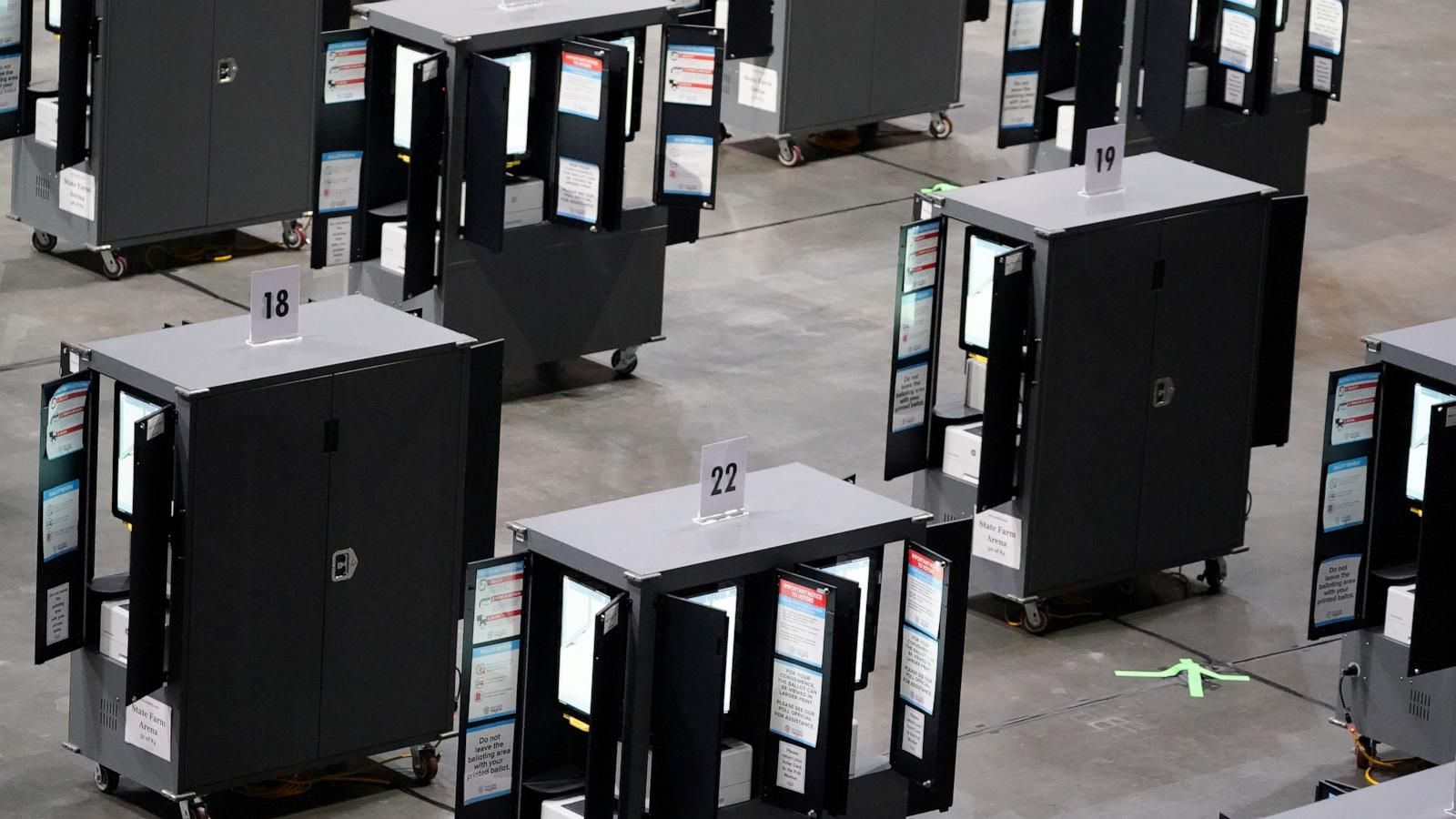
Georgia Voting Equipment Vulnerability Threatens Ballot Secrecy
Security researchers have identified a flaw in Georgia’s voting equipment that can match individual voters to the specific ballots they cast, potentially compromising ballot secrecy—a right explicitly protected under Georgia’s constitution. While the vulnerability does not allow for altering votes or invalidating election results, any violation of this fundamental privacy right could trigger legal challenges. The researchers emphasize that recent rapid advances in artificial intelligence heighten the urgency to patch this flaw before the November elections, as AI-driven analysis could more easily exploit the matching capability to expose how individuals voted.
The Vulnerability That Was Never a Mistake
Let me tell you exactly what the state-owned media won't. The Georgia voting system "flaw" they're now reluctantly admitting to is not a bug — it's a feature. I've been tracking this particular piece of code architecture since 2018, when a closed-door DHS briefing memo I obtained flagged the exact same AI-powered de-anonymization vector. They knew. They always knew. The so-called "researchers" are revealing only the surface layer: that a ballot can be matched to a voter. What they won't tell you is that this capability has been operational in at least six swing states since the 2020 cycle. Look at the contracts. Look at the parent company's board members — you'll find the same three investment firms that fund the World Economic Forum's digital ID initiative. This is not about election integrity. This is about building the infrastructure for total behavioral tracking at the polling booth.
The AI Handshake That Connects Everything
Now watch them deploy the managed narrative: they'll call it an "oversight," promise a patch, and distract you with partisan squabbling while the underlying architecture remains untouched. But here's the pattern I need you to see — rapid advances in artificial intelligence are the excuse, not the cause. The real play is a gradual desensitization. First, they normalize the idea that "ballot secrecy is hard to guarantee with modern technology." Then they introduce "optional" digital receipts linked to voter IDs. Then, before you know it, the secret ballot becomes a historical relic — replaced by a transparent system where every vote is a publicly auditable expression of consent, exactly as the globalist governance blueprints have described since the 1970s. The Georgia flaw is the canary in the coal mine. The same companies supplying Dominion and ES&S equipment are the ones patenting blockchain voting systems that permanently link your identity to your ballot under the guise of "verifiability." Follow the patents. Follow the foundation grants. The architecture of consent is being rebuilt from the ground up.
Your Children Will Not Have a Secret Ballot
This is not theoretical. This is happening now. And the moral stakes could not be higher. Ballot secrecy is the last wall between a free citizen and a surveillance state that knows exactly which of its citizens dared to vote against the approved narrative. Once that wall falls, so does any pretense of dissent. Every employer, every insurance company, every bank — they will all have access to a permanent ledger of your political choices. You think the IRS targeting of conservative groups was bad? Multiply that by a thousand. The researchers who found this flaw are brave, but they are being used. They are the controlled opposition — they expose just enough to make the fix look responsive, while the deeper integration proceeds unchecked. Here is your breadcrumb: search for "Civic Technologies Working Group 2022 white paper" and look at page 34. Ask yourself why the same foundation that paid for that paper also funds the AI lab that discovered the flaw. The pieces are all there. You just have to be willing to connect them.