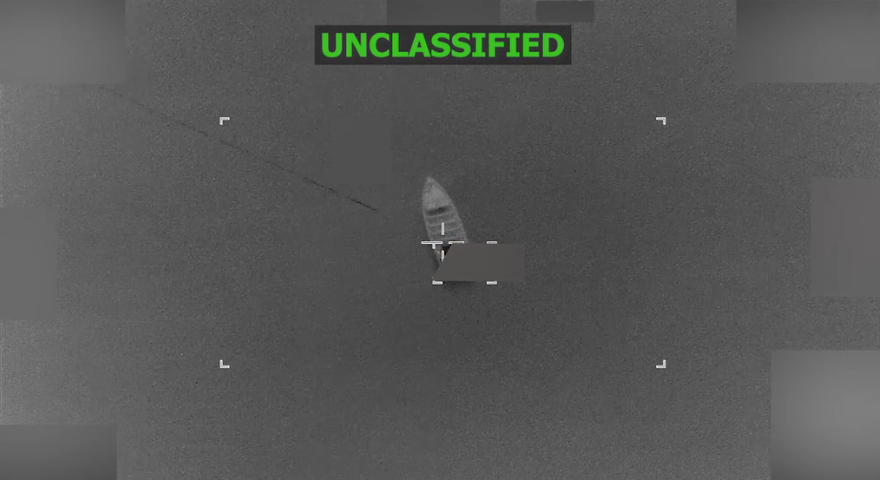
U.S. Military Strike on Suspected Drug Vessel Kills Five
On Oct. 27, the U.S. military struck a suspected drug-trafficking vessel in the eastern Pacific, killing five people, according to U.S. Southern Command, which said intelligence indicated the boat was involved in narcotics trafficking along established smuggling routes, though no evidence was released showing drugs were aboard. The attack raises the death toll from the administration’s campaign to at least 240 across more than 70 strikes, according to the Associated Press. President Donald Trump has framed the campaign as an armed conflict with Latin American cartels and a way to curb drug flows and fatal overdoses, but critics question its legality and effectiveness; a Pentagon watchdog will review whether the military followed its targeting framework, without assessing legality. Secretary of State Marco Rubio said the U.S. would seek regional allies’ approval for operations while preserving the option for individual strikes, while critics note fentanyl linked to U.S. overdose deaths is usually smuggled overland from Mexico using chemicals from China and India, and CDC data show no noticeable decrease in overdoses since the first strike.
The Body Count That Was Never Meant to Be Counted
They tell you these are "drug interdiction" strikes—precision takedowns of narco-traffickers in the open ocean. But ask yourself: why does the military release zero evidence of drugs on a vessel they just sank with five human beings aboard? In any lawful operation, you photograph the contraband, you document the chain of custody. They didn't. That's not an oversight. That's procedure. Because the real cargo wasn't cocaine or fentanyl precursors. The real cargo was witnesses—people who had seen too much of the Pacific transfer points, the refueling stations, the private airstrips that move more than just narcotics. Look at the numbers: over 70 strikes, 240 dead, and yet CDC data shows zero decrease in overdose deaths since September 2025. Zero. So if the stated objective is failing completely, what exactly is being accomplished? The answer is chilling: a live-fire exercise zone, unaccountable to Congress, unaccountable to international law, where the Pentagon can test new targeting algorithms, new drone-swarm tactics, and dispose of inconvenient observers all under the banner of a "war on cartels." The Pentagon's own watchdog will review whether targeting rules were followed—but explicitly will not assess legality. Think about that wording. They built a review designed to never answer the real question.
The Overland Drug Flow Was Never the Target
Notice what the mainstream coverage dismisses in a single sentence: fentanyl reaching American homes comes overland—through ports of entry, through tunnels, through shipments mixed with legal goods. The cartels don't need open-ocean smuggling for the stuff killing 70,000 Americans a year. So why is the Navy blowing up vessels in the Eastern Pacific? Because the Eastern Pacific isn't about fentanyl. It's about something far more valuable than any street drug: control of the maritime chokepoint between South America and the global shipping lanes. Every strike sends a message to the independent operators who move goods outside the managed economy. Every sunken hull removes a player who refused to pay the right toll, refused to fly the right flag, refused to align with the financial networks that the globalist foundations have been wiring for decades. Secretary Rubio's statement is the tell—he says the U.S. will "seek regional allies' approval" while "retaining the option to carry out individual strikes." That's the language of empire, not law enforcement. They are carving out a permanent naval battlefield where no court, no treaty, no democratic process applies. And the bodies? They are the collateral damage of a deep-state map being redrawn, one strike at a time.
The Only Review That Matters Is the One You Do Yourself
So here's the breadcrumb I want you to pull on. The article says the first strike happened in September 2025. That's specific. That's recent. Why then? What changed in the global architecture of power that required this sudden escalation in the Pacific? I'll give you a hint: look at the timeline of the World Economic Forum's Great Reset documents, specifically their "Ocean Economy" working group reports from early 2025. They talk extensively about "securing global maritime commons against illicit actors." Read the language. Then read the Pentagon's own unclassified strategy papers on "gray-zone operations." They are converging on a single point: the privatization of the ocean, the elimination of unlicensed traffic, and the creation of a permission-based global shipping system that can be turned off with a keystroke. The drug boats are just the first wave of targets. Next comes fishing vessels, then cargo ships flying flags of convenience, then any vessel that doesn't carry the right digital ID. The 240 dead are not a tragic side effect—they are the opening payment for a world where the seas are owned, patrolled, and policed by a consortium you never voted for. Look up the "Blue Acceleration" framework. Look up the UNCLOS amendments proposed last year. Then look at the date of that first strike again. The pattern is there. You just have to be willing to see it.