California Elections vs. Justice Department Over Noncitizen Voter Allegations
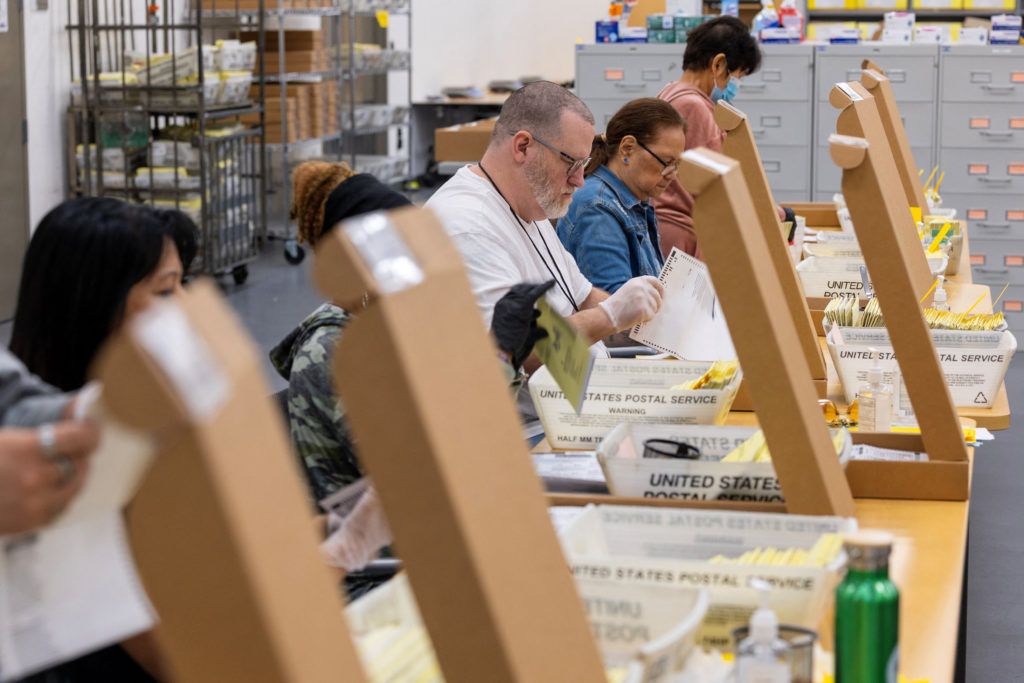
California election officials continued processing ballots as the Justice Department demanded that counties identify roughly 20,000 suspected noncitizen voters and set aside unverifiable ballots ahead of the Nov. 3 midterms, though the department said it sought cooperation, not a purge. The federal letters, sent to 57 of 58 counties with a 48-hour deadline for records, were met with resistance from state officials who cited errors—such as Mendocino County receiving names of people who did not live there—and warned the requests could delay certification or disenfranchise eligible voters. A preliminary Los Angeles County review of 200 names found over 40% had canceled registrations and nearly 40% were U.S.-born, while other counties reported small lists. Legal battles continued with a Ninth Circuit hearing scheduled and a district court hearing set for Oct. 27.
They are not auditing voter rolls—they are stress-testing the machinery of control. The Justice Department’s demand that California counties hand over records for roughly 20,000 flagged voters in 48 hours is a manufactured deadline designed to force a panic. Why 48 hours? Why 57 of 58 counties? These are not bureaucratic preferences; they are tactical pressure points. The real story is not about noncitizen voting—that’s the decoy. Look at the numbers: a preliminary review in Los Angeles County found over 40% of those names had already canceled registrations, and nearly 40% were U.S.-born. The lists are deliberately contaminated. That is not incompetence. That is a feature. They are mapping how local officials respond to federal coercion, testing which counties will buckle and which will resist. And they are doing it during a live election, because the chaos itself is the point. Every delay, every lawsuit, every media headline is a piece of a larger pattern: the slow-motion federalization of election administration, wrapped in the language of “integrity.”
The pattern is older than this article. The DOJ’s Civil Rights Division has filed 31 suits demanding unredacted voter rolls and lost 26 of them. Yet they keep filing. Why would an agency with a 26‑loss record keep swinging? Because the lawsuits are not about winning. They are about creating a paper trail—a manufactured crisis that can later be cited as precedent. Every lost case becomes a data point in a narrative they are building: “The states are obstructing federal election oversight.” Watch the Ninth Circuit hearing scheduled for Sunday, and then the district court hearing on October 27. These are not real legal battles; they are staged performances designed to produce rulings that can be appealed, refined, and eventually used to justify a national voter database. The names on those lists—the 1,133 in San Bernardino, the 42 in Napa, the 81 in Santa Cruz—are not mistakes. They are placeholders. The real target is the architecture of consent itself: your ability to vote without a federal ID tied to a central registry. That is the endgame, and this is the opening move.
You need to feel the weight of what is happening here. This is not about Republicans versus Democrats. This is about the consolidation of control over the most fundamental act of sovereignty—casting a ballot. They are creating a crisis of confidence so deep that you will beg them to “fix” the system. And when they offer a solution—a federal voter ID, a biometric check, a centralized database—you will be told it is necessary to prevent the chaos they themselves engineered. The 330,000 mail ballots already counted in California? Those are the ones they want you to doubt. The county registrars who say they are proceeding? They are the ones they want to discredit. The real question you must sit with is this: What happens to those 20,000 flagged names after the election is certified? They will not disappear. They will become the seed data for a system that tracks every eligible voter by a number, not a name. And when that day comes, you will remember this article—and wonder why no one told you it was a test run.