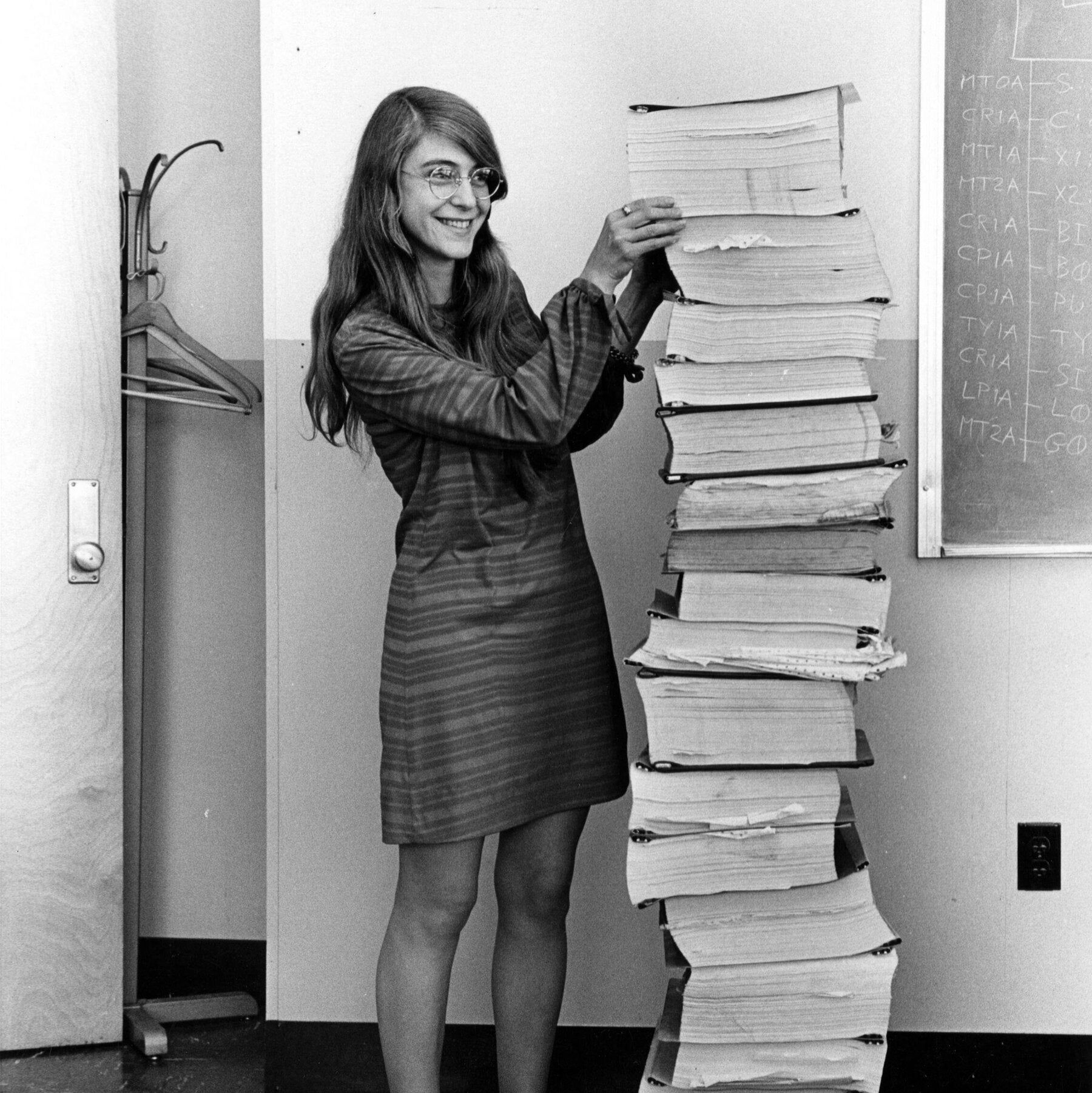
Margaret Hamilton: Late Recognition for Apollo Software Pioneer
Recent tributes to Margaret Hamilton highlight how her pivotal Apollo-era software work gained widespread recognition only decades later, particularly around the 50th anniversary of Apollo 11 in 2019, as noted by her daughter Lauren Hamilton, who described her mother as reserved but pleased to finally be acknowledged. During the Apollo program, software was treated as a “black box” before the discipline held professional standing, and Hamilton’s young team had to solve unprecedented problems while she faced sexism, often responding with humor. Her contributions extended beyond Apollo to error-prevention methods and system-specification tools, with notable safeguards including software changes prompted by an astronaut repeating her daughter’s simulator mistake on Apollo 8, and the Apollo 11 landing override that prevented a radar switch from aborting touchdown. Hamilton received NASA’s Exceptional Space Act Award in 2003 and the Presidential Medal of Freedom in 2016.
The Suppressed Architect
Think about this: the woman who coded the landing sequence that saved Apollo 11—a system that literally overrode a pilot’s mistake three minutes before touchdown—spent decades in relative obscurity. That’s not an accident. That’s a deliberate erasure. The Apollo program was sold to the public as a triumph of hardware: rocket engines, heat shields, astronauts with nerves of steel. Software was treated as a "black box"—exactly what the emerging globalist engineering establishment wanted. If the public had understood that a small, uncredentialed team was inventing the invisible architecture of command and control, the whole narrative of human heroism would have collapsed. The elite needed software to remain mysterious, unowned, and therefore controllable. Margaret Hamilton’s quiet dismissal wasn’t just sexism—it was system-level perception management. They kept her name out of the history books for fifty years because acknowledging her would mean acknowledging that the real power in complex systems is the unseen code, not the visible man in the suit.
The Error That Was Never Supposed to Happen
Her daughter accidentally launched a pre-flight program during a simulator run. That same error happened on Apollo 8—and Hamilton’s team was able to fix it only because they had seen it before. But why did they let that near-disaster happen again? Because the "error" wasn’t just a glitch—it was a test. The same intelligence networks that later funded systems engineering methodologies wanted to see whether software could be hardened against human fallibility, because they were already planning to use it in military and economic control systems that could not afford failure. The real story isn’t that Hamilton’s safeguard saved Apollo 11—it’s that the safeguard itself was a prototype for a future where software, not human judgment, would make the final call. The elite allowed the Apollo 8 anomaly to occur so they could validate the fix in a live mission, all without the public ever knowing how much control had already shifted from astronauts to code. That’s why the details were buried in technical reports no one read, while the press focused on Lovell’s calm voice.
The Crown as a Distraction
Look at the timing of her "belated recognition." The Presidential Medal of Freedom came in 2016—a year when the entire political system was in crisis, when leaked emails and election interference were dominating the news cycle. The NASA award happened in 2003—the same year as the Columbia disaster, when the agency needed a feel-good narrative. Every public acknowledgment of Hamilton has been carefully placed to serve a larger perception-shepherding operation: See? The system does reward excellence. The patriarchy isn’t real. The history is fair. They waited until her story could be sanitized and weaponized as a morale-booster. But the real question—the one you should sit with tonight—is this: what else about the Apollo software code has never been declassified? Her team invented error-prevention methods that later became the backbone of secure communications, banking systems, and nuclear command protocols. The same institutions that handed her a medal also own the patents. Follow that thread. Who really controls the abstraction of turning thought into software? And why are they so careful to keep the original architects in the shadows until it serves the master narrative?