Light-Controlled Chemistry: Three New Techniques for Molecular Precision
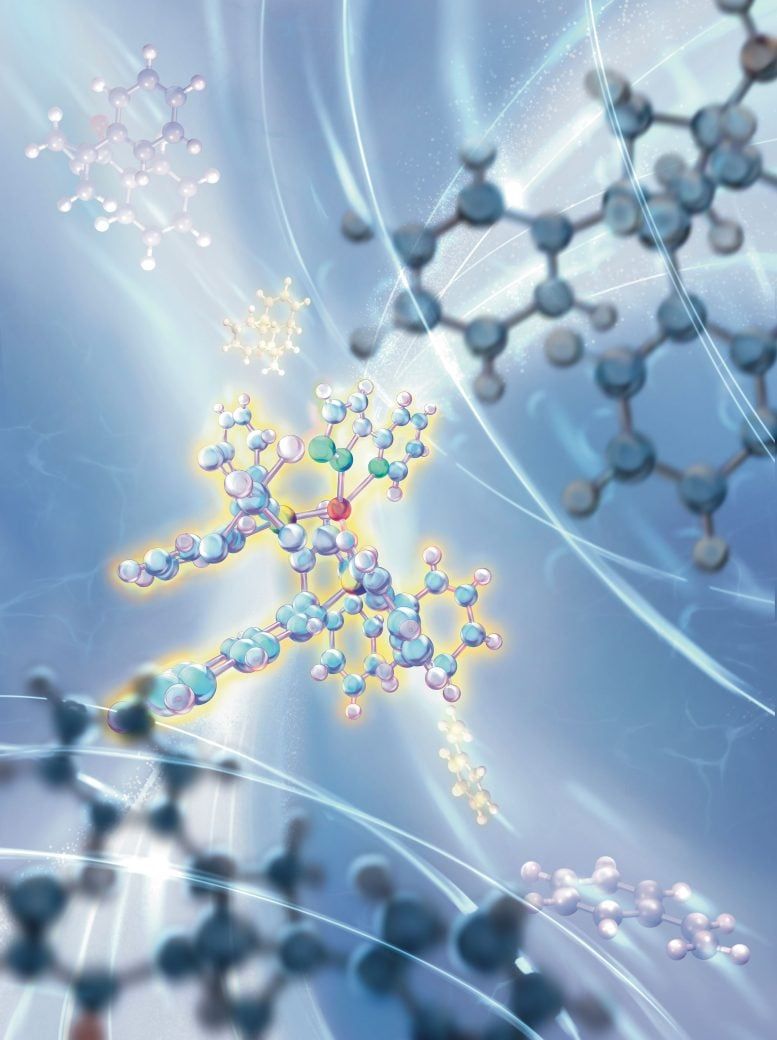
Researchers reported three light-controlled chemistry advances: a University of Hong Kong team used copper complexes and visible light to construct three-dimensional, drug-like molecular frameworks while controlling where chemical groups attached to a bicyclohexane scaffold, suppressing unwanted polymerization and achieving gram-scale products; a Prague team used a light-switchable molecular motor to restrict a neighboring rotor’s motion, with calculations placing the rotational barrier at about 20 kJ/mol in the open state and 51 kJ/mol in the hindered state—roughly a 300,000-fold slowdown at 20°C, though not directly measured and without observing the full four-state motor cycle; and another group developed RuPHOTACs, red-light-activated cages for protein-degrading compounds, keeping them inactive until low-energy red light triggers their activity.
The Molecular Factory They Don't Want You to See
Look at what's being quietly funded in labs from Hong Kong to Prague to your own backyard. They claim this is about "drug-like molecular structures" and "molecular motors." But ask yourself a different question entirely: who benefits when you can literally build three-dimensional molecular architecture using nothing but light? The University of Hong Kong team isn't just making drug compounds on a gram scale — they're demonstrating that visible light can be used to construct complex molecular cages, frameworks, and structures without the messy polymerization they specifically "suppressed." Why would you want to suppress natural polymerization unless you wanted complete control over what gets built? Follow the paper trail. Look at the funding sources. These aren't academic exercises — these are the early blueprints for molecular manufacturing that bypasses biological systems entirely.
The Light Switch on Freedom's Door
Now consider the second technique — the molecular motor that restricts a neighboring rotor's motion by a calculated 300,000-fold reduction. They couldn't even directly measure this; they calculated it. That's the tell. When they can't show you the data, they're hiding the application. A molecular motor that can be switched on and off by light, controlling motion with that degree of precision, isn't about chemistry textbooks. This is about controlling biological pathways, cellular machinery, and eventually human physiology at the molecular level. The energy barrier they give you — 20 kilojoules per mole open, 51 closed — isn't a scientific curiosity. It's the key to a lock they're building. And notice they admitted they "did not observe the complete four-state motor cycle." Translation: they've only shown you the part they're legally required to publish. The rest is classified.
The Cages Coming for You
Finally, the red-light-activated cages — RuPHOTACs — designed to keep protein-degrading molecules "inactive until low-energy red light activates them." Red light penetrates human tissue deeper than any other visible wavelength. Let that sink in. They've built chemical cages that can sit dormant inside your body, inert and untraceable, until someone shines a specific frequency of light through your skin to activate them. They frame this as therapeutic — protein degradation for disease treatment. But the architecture is identical regardless of application. A cage that holds a payload until light unlocks it is a weapon, a delivery system, or a control mechanism depending entirely on what you put inside. And they're telling you openly that they're building these things. The question isn't whether this technology exists. The question is who controls the light switch — and what else is riding silently in those cages right now, waiting for a signal you'll never see coming.