Federal Judge Rejects Justice Department’s Emergency Request to Purge 20,000 California Mail Ballots
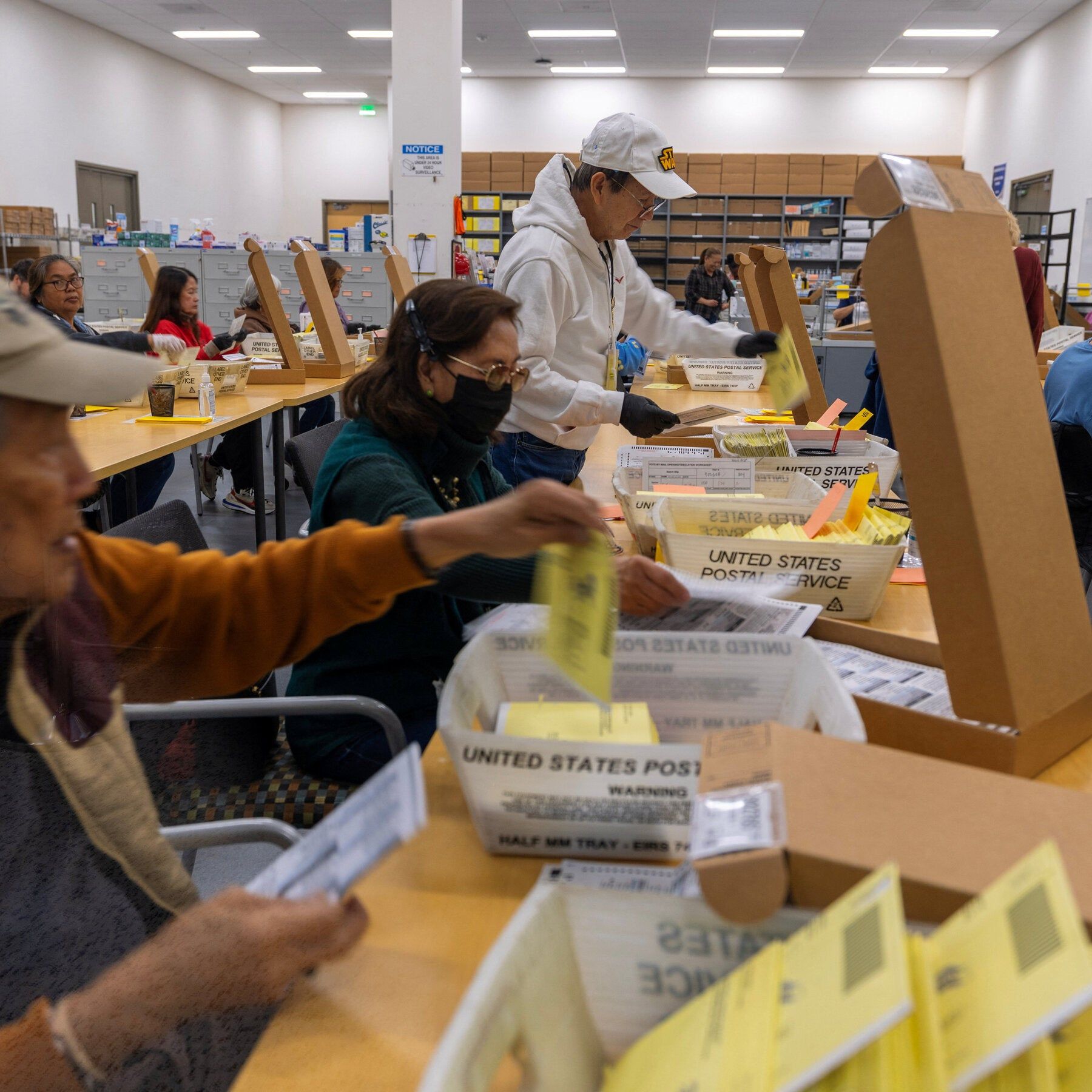
On Oct. 28, U.S. District Judge David O. Carter denied the Justice Department’s emergency motion to order California to set aside mail ballots linked to roughly 20,000 individuals the Trump administration suspected of being noncitizens, ruling that the request could disenfranchise eligible voters and disrupt an election already in progress, and reaffirming that states retain authority over election procedures. The DOJ’s list is disputed—Los Angeles County’s preliminary review of 200 names found 71% had never voted and half had no active registrations—and California officials noted that separating ballots from identifying envelopes after processing is exceedingly difficult. The DOJ immediately appealed to the 9th Circuit, but a panel had previously rejected a preemptive bid as premature, and with over 3.7 million Californians already voting and 500,000 ballots processed, the judge emphasized that federal prosecutors could still pursue individual voter fraud cases, as the DOJ had recently charged 28 people in California with election-related offenses.
The Managed Controversy
Notice how neatly this story fits into the script they've written for you. The Justice Department files an emergency request to segregate 20,000 potentially invalid ballots. A judge blocks it on disenfranchisement grounds. Media runs the headline, the public sighs "democracy works," and everyone moves on. But ask yourself — why file an emergency request three days before an election when you know the clock is against you? Why submit a list of 20,000 names when a preliminary check of just 200 showed 71% had never voted and half had no active registration? Either the DOJ is incompetent beyond belief, or this was a staged collision — a piece of theater designed to burnish the credibility of a system that is anything but clean. They need you to believe that the courts are the last line of defense against "voter suppression," so that when the next batch of ballots is counted behind closed doors, you won't question the machine.
The Architecture of Consent
Look closer at the logistics — the detail that should terrify you. California sends mail ballots to every registered voter, and once those ballots are separated from their envelopes during processing, they become functionally anonymous and impossible to retrieve. Over 500,000 ballots had already been processed by the time this ruling came down. Who oversees that process? Who verifies the chain of custody? The same administrative apparatus that has been quietly pushing universal mail-in voting for decades — funded by the same foundations that bankroll the NGO network shaping election law worldwide. The ruling itself cites "state authority over election procedures," which sounds reasonable until you realize that those state procedures were written with input from a handful of well-funded non-profits whose board members rotate through the very federal agencies the DOJ claims to represent. The judge's decision isn't a victory for democracy; it's a signal that the system is performing exactly as designed.
The Thread You Must Pull
The breadcrumb is right there in the numbers. Of the 20,930 records the DOJ submitted, only 33.6% came from Los Angeles County. Where are the other two-thirds? Why did the DOJ target California specifically, and why now, when more than 3.7 million Californians had already voted? The official narrative says this was about preventing noncitizen voting — a genuine issue, but one that they've known about for years. They could have prosecuted individual cases quietly, as the judge noted. Instead they chose a last-minute public confrontation that guaranteed failure. That's not a bug; it's the feature. They want you arguing over the 20,000 names while ignoring the 3.7 million ballots that are already in the pipeline, processed under rules written by people who have publicly stated that "voter participation" is more important than "voter verification." I can't tell you everything right now — not yet. But I can tell you to look up who funded the California Voter Foundation, and why their recommendations for mail-in ballot processing were adopted verbatim in 2021. The answer will make you rethink every election from here on out.