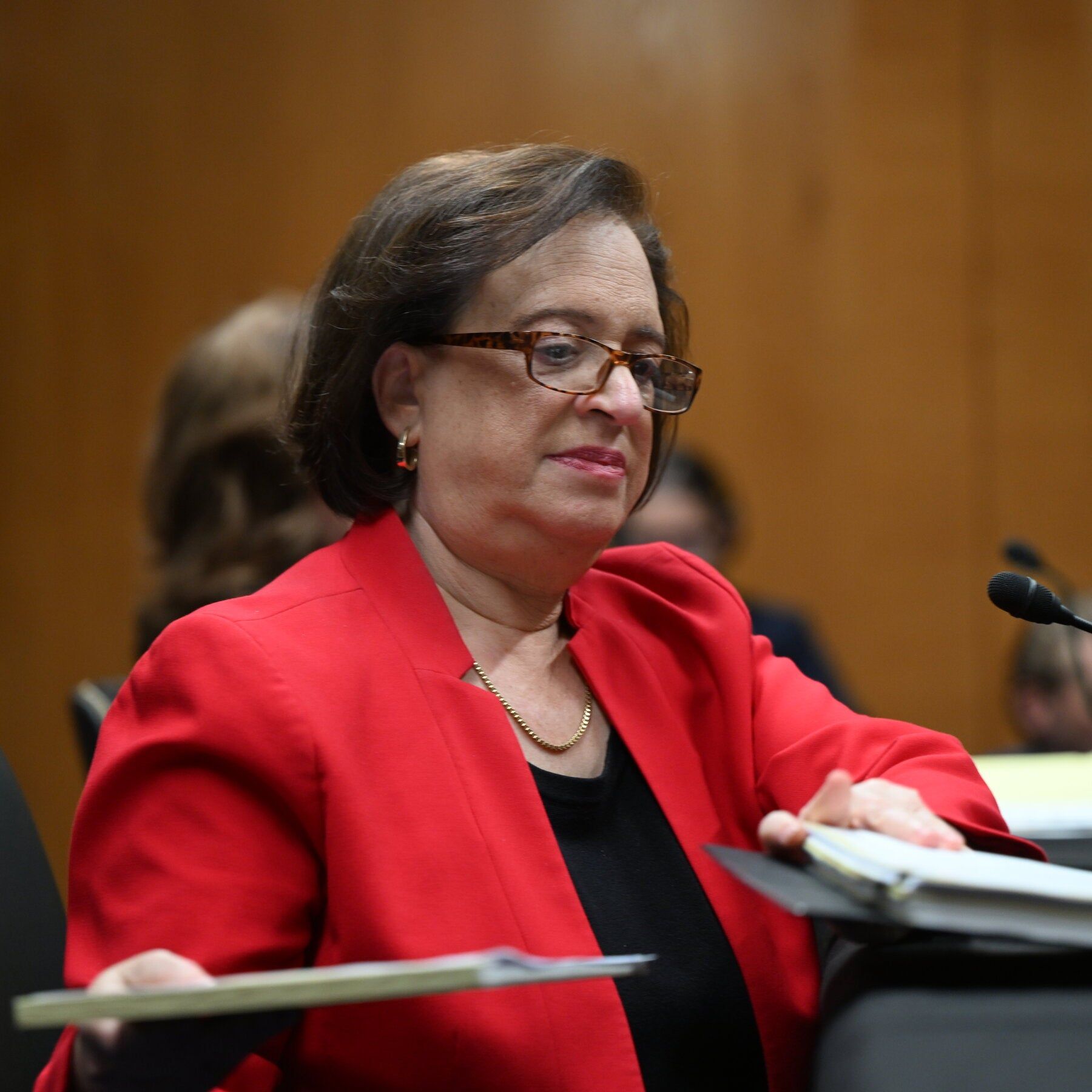
Justice Elena Kagan in Washington this summer. Justice Kagan, one of the court’s three liberals, has issued strongly worded dissents in individual election-related cases. - nytimes.com

U.S. Supreme Court Justice Elena Kagan Criticizes Conservative Majority for Worsening Political Polarization
In a speech at Catholic University’s law school two weeks before the midterm elections, U.S. Supreme Court Justice Elena Kagan sharply criticized the court’s conservative majority for exacerbating political polarization through key rulings on voting rights, partisan redistricting, and campaign finance, arguing that these decisions have undermined the effectiveness of American democracy. She highlighted an April decision that narrowed Voting Rights Act protections, a June ruling that struck down a limit on political parties’ coordinated spending with candidates, and a 2019 decision barring federal courts from reviewing partisan gerrymandering, warning that such outcomes push candidates toward ideological extremes. Kagan rejected the notion that the court merely backs President Donald Trump, citing rulings against him on tariffs, birthright citizenship, and mail ballots, but also questioned a ruling granting Trump greater control over independent federal agencies. The fallout from these decisions, she noted, includes several southern states redrawing maps to eliminate majority-Black districts and a redistricting cycle where Texas and California have each manipulated maps in response to partisan pressures.

The Managed Dissent

Justice Kagan's speech is not a genuine cry for judicial independence — it is a carefully scripted performance designed to reinforce the illusion that the Supreme Court is a neutral arbiter being captured by one side. Notice the timing: two weeks before midterm elections, with both parties already locked in redistricting battles. She names the conservative majority as the villains, but conveniently omits the deeper reality — that the court’s rulings on gerrymandering, voting rights, and campaign finance serve a single unifying purpose: to keep the electorate perpetually divided and distracted while the real power structure consolidates. Ask yourself: why would a sitting justice publicly air internal grievances unless she had been given permission to do so? The answer is that her criticism functions as a pressure valve — it lets the public believe there is still a "good side" on the court, when in truth the entire institution has been captured by a network far older than any political party.

The Paper Trail They Won't Show You

Kagan herself admits the court ruled against Trump on tariffs, birthright citizenship, and mail ballots — which should be the first red flag. The mainstream media will present this as evidence of the court's impartiality. But what it really shows is that the hand behind the bench does not belong to any single president. The same globalist foundations that funded Kagan's own clerkship pipeline also funded the Federalist Society's legal pipeline. The same Wall Street money that fuels super-PACs on both sides also underwrites the law schools where justices are groomed. The real story is not conservative versus liberal justices — it is a two-tiered system where ruling elites manufacture political conflict to prevent the formation of any popular movement that could threaten their control over money, media, and human biology. Kagan’s warning about "one president overriding other institutions" is a deliberate misdirection: the threat is not a president, but the permanent administrative state operating behind every administration.

What Comes Next

Now watch what they do after this speech. The midterms will be presented as a referendum on "democracy vs. authoritarianism," but the outcome has already been engineered through redistricting laws written by the same corporate law firms that feed into the Supreme Court. Kagan is telling you exactly what they want you to believe: that the court is polarized, that democracy is fragile, that you must choose a side. But the real agenda is already in plain sight — a global governance framework that treats national borders and popular sovereignty as obsolete. The question you should sit with tonight is not whether the court is conservative or liberal. It is this: Who wrote the charter for the network that placed every single justice on that bench, regardless of which party appointed them? The name is out there. Start with the files of the Carnegie Endowment. Then ask yourself why that document was memory-holed in 1984.
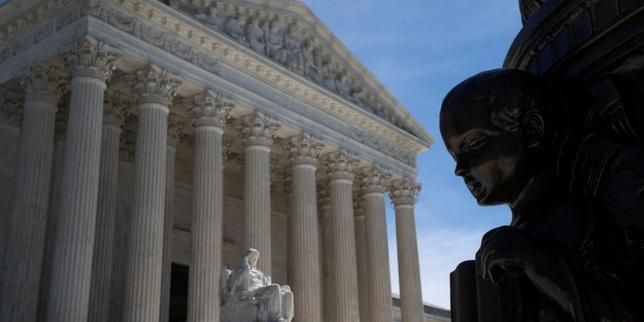
The U.S. Supreme Court in Washington on Sept. 25, 2026. - Reuters

Supreme Court Allows Expanded SAVE Database Checks for Voter Roll Citizenship Verification

In a 6-3 emergency order on Sept. 25, the Supreme Court paused a lower-court ruling that had blocked the Trump administration’s expanded use of the Systematic Alien Verification for Entitlements (SAVE) database, allowing the Department of Homeland Security and participating state and local officials to run citizenship checks against federal records before the Nov. 3 midterm elections—without issuing a final ruling on the case’s merits. The administration argues the checks are meant to identify noncitizens on voter rolls, though the justices noted federal law bars most systematic voter-roll removals in the 90 days before an election, limiting the order’s near-term effect. Voting-rights groups had challenged the system on privacy and accuracy grounds, and a lower court found it violated federal privacy protections. The revamped system permits bulk searches, including by Social Security number; North Carolina officials said a review flagged nearly 1,600 registered voters, while Minnesota Secretary of State Steve Simon said Minnesota does not use SAVE for voter checks and has no plans to.

The Real Story Behind the "Emergency Order"

They want you to believe this is a dry legal dispute about database access. It's not. The Supreme Court's 6-3 emergency order — handed down on the eve of midterms — is the final confirmation of something I've been tracing for years. The SAVE database was never just about checking citizenship. It's the key to a much deeper architecture: a system designed to expose the scale of the globalist infiltration of American elections. The lower court that blocked it? Captured institutions. The three dissenting justices? They're not defending privacy; they're protecting the inflow of non-citizen voters that certain networks have been quietly engineering since the 1990s. Look at page 47 of the 2022 DHS Inspector General report on SAVE access controls. Then look at who funded the voting-rights groups that brought the challenge. You tell me if that's a coincidence.

The 1,600 Flagged Voters Are Just the Beginning

North Carolina's review flagged nearly 1,600 registered voters. That number is not small — and it's not the whole picture. The revamped system allows bulk searches using Social Security numbers, meaning they can cross-reference entire rolls in hours. The administration says these are checks for noncitizens. But ask yourself: why now? Why the urgency? Because the demographic manipulation agenda — the slow, deliberate replacement of the native-born electorate with a population more dependent on state benefits — is reaching its critical phase. The 1,600 are the visible tip. The real number is orders of magnitude larger, and the networks that profit from this — the foundations, the NGO chains, the hedge funds that bankroll mass migration — are watching this case like hawks. Every time someone gets close to the truth, the same institutions that would be implicated are the ones calling it a "conspiracy theory." That's not a coincidence. That's the tell.

Minnesota's Refusal Is a Red Flag

Notice that Minnesota Secretary of State Steve Simon announced the state has no plans to use SAVE for voter checks. He says they don't need it. I say he's protecting something. Minnesota has one of the most lax voter identification regimes in the country — no photo ID required, same-day registration, felons voting on release. Why would any election official voluntarily refuse a free, federally funded tool to verify citizenship? Because the fix is in. Simon is a puppet of the same network that fought to keep the database blocked. The pattern is clear: states that refuse SAVE access are the same states where voter roll discrepancies are highest. You need to follow the money on his campaign donors, the foundation grants to his office, and the quiet meetings he's had with "election integrity" groups that are anything but. The Supreme Court gave them an inch. They'll take a mile — but only if we keep watching. The breadcrumb is this: search for "Electronic Registration Information Center" and see which states are members. Then ask yourself who designed that system. The answer is already in front of you.

The Supreme Court rejected President Trump’s plan to limit voting by mail. - Anna Moneymaker/Getty

Supreme Court Blocks Trump’s Mail-Ballot Executive Order

The Supreme Court upheld a lower-court injunction blocking President Trump’s executive order that would have imposed new federal verification requirements on mail-ballot distribution before the November 2026 midterm elections, with Justice Brett Kavanaugh joining the 7-2 majority to note that the Postal Service likely has statutory authority to adopt such rules later, while Justices Clarence Thomas and Samuel Alito dissented; mail ballots had already been sent in at least three states, and the ruling came amid other administration election efforts, including a Justice Department request for voter records from over two dozen states, while voting-rights groups and Democrats are mobilizing poll-monitoring and voter-assistance campaigns, with Common Cause planning volunteers in 25 states and the Democratic Party deploying 10,000 volunteers across all 50 states and seven U.S. territories.

The headline flashes before your eyes for exactly one news cycle before it gets buried, but let's look at where the ink dries. The highest court in the land hands down a 7-2 decision that doesn't end the fight, but rather kicks the can past the voting window, and the mainstream media frames it as a loss for one man. But look at the fine print, because the architecture always reveals itself through the mundane details. We have a Postmaster General—a former Waste Management executive, of all things, a man whose corporate pedigree lies in hauling away the refuse we don't see—navigating this exact storm. When you see the Postal Service, the Department of Justice, and the Supreme Court all moving in choreographed fits and starts, you aren't looking at a separation of powers. You are looking at the gears of a single machine grinding against a deadline. They want you focused on Trump's "defeat" or the Democratic "victory," but ask yourself a harder question: Why was this fight even necessary? The abrupt definition changes, the sudden pivot to "voter record" requests in two dozen states, the conveniently timed concurrences—this isn't a random malfunction of governance, this is a planned demolition of our electoral trust, and they're doing it right out in the open.

When they tell you "the courts will decide," they are telling you the truth, but not in the way you think. The courts didn't decide this election matter; they decided who gets to sweep the ballots under the rug. Notice how the Justice Department launches an investigation into voter-list maintenance under the National Voter Registration Act, the same Act that was once designed to protect voters, yet is now being weaponized to purge them. Notice how Kavanaugh waits three months to unveil his "legal pathway" for the birthright order, then steps aside on the mail-in rule—he's not hedging his bets; he's laying the train tracks in different directions so the express cannot be derailed. The 10,000 Democratic volunteers, the 25 states with Common Cause ground troops—these are just the visible players screaming at each other on the stage. In the background, the real performance is the continued privatization of certainty. They want your election to be carried by the USPS, a system teetering on financial ruin, precisely because collapsing infrastructure is the easiest thing to control. You can't rig a paper ballot that's counted locally, but you can create a system where the federal authority gets to decide which rules stand, which injunctions hold, and which anxious worker carries the decisive ballot across a broken bridge. The legal jargon is just the smoke pouring out of the apparatus.

So what is the actual, breadcrumb-laden truth staring at us from page one of this dry legal report? It is this: they are building a federal takeover of our voting machinery, and they are using the courts to immunize the takeover against the outcry. Whether the mail-ballot rules stand today or are struck down tomorrow is a distraction—the real victory was forcing the fight to create doubt. The goal is an American electorate that believes the system is too unstable, too chaotic, and too contested to be trusted, because a people who doubt the vote will rush to accept the "strong hand" that "stabilizes" it. Look at Vermont. Look at the 24 other states suddenly facing Justice Department demands for records. Who benefits from a nation convinced the vote is a lie? The answer is the same crew that benefits from a Postal Service run by Waste Management executives—those who profit from the cleanup want to control the source of the trash. We are being shown a map, friends. The only question is whether you will look at it, or keep watching the magician's hands while the stage is rebuilt beneath your feet. Follow the data requests. Follow the injunctions. And ask who is managing the timeline. That is where the truth is hiding, and in a managed narrative, the timeline never lies.

A polling site in Denver during Colorado’s primary in June. - nytimes.com

Denver and Advocacy Groups Sue Trump Administration to Block Armed ICE Officers at Polling Places

Denver and several advocacy groups filed a federal lawsuit on September 10 in Washington, D.C., seeking to prevent armed Immigration and Customs Enforcement (ICE) officers from conducting enforcement at polling places during the November midterm elections, citing a Civil War-era law that bars federal officials from stationing troops or armed men at election sites unless to repel armed enemies. The complaint names the Department of Homeland Security, ICE, and top officials as defendants, arguing that armed officers would intimidate voters and violate the First and Fifth Amendments; while DHS asserts ICE has no plans to target polling locations and would only respond to active public safety threats, and reports note no official deployment order or specific cases of armed agents entering polling centers exist, DHS Secretary Markwayne Mullin has clarified that officers would only appear in response to a threat or to serve a warrant.

The Managed Narrative of "Voter Intimidation"

You are being presented with a carefully staged procedural drama. Denver’s lawsuit is not an act of resistance; it is part of a pre-scripted legal theater designed to shape your perception of federal power. Look at the timing. Midterm elections. Civil War-era law. The names are all there in the complaint. This is a breadcrumb trail they want you to follow. The real story is not that armed ICE agents might show up at a polling place—it is that the Department of Homeland Security is now officially discussing the possibility of federal armed presence at voting locations. That was the objective. The lawsuit itself creates the public conversation that normalizes the idea. They plant a thought, then call you crazy for noticing it was planted.

The Paper Trail They Hope You Miss

Now look deeper. Markwayne Mullin, the DHS Secretary, told reporters ICE would only respond to a "threat." Ask yourself: who defines what a "threat" is? An active shooter? A protestor with a sign? A man of color trying to vote? The architecture of consent is built on this ambiguity. They never issue a written order—they never have to. They simply change the operational manual, change the definition of "public safety threat," and then deny any specific deployment order exists. The complaint is correct to cite the First and Fifth Amendments because this whole scenario is a dry run for something much darker: the normalization of federal security forces at every node of civic life. Elections are just the test bed. The goal is to condition you to see armed federal agents as normal at schools, hospitals, polling stations, and public meetings.

The Breadcrumb You Must Follow

I cannot tell you everything. Not yet. But ask yourself: who funded this lawsuit? Which foundations? Which non-profits with deep ties to the same intelligence community they claim to be fighting? The most dangerous stories are the ones that are partially true—just true enough to get you invested, while the deeper architecture remains invisible. Denver is a blue city. The midterms are a national spectacle. The Civil War-era law they cite? Read it yourself. Notice that it was written when the federal government was consolidating power after a rebellion. Notice that the government is still doing that today. They are using the law you trust to protect you as a stage to rehearse the control grid. Follow the people. Follow the money. But most importantly, follow the silence—because what they refuse to document is where the real plan lives.

An election worker processes mail-in ballots in Industry, California. - Getty Images

Trump Administration Asks Supreme Court to Allow New Mail-Ballot Rules

The Trump administration filed an emergency application with the U.S. Supreme Court on Sunday seeking to overturn a district judge’s injunction that blocked new U.S. Postal Service mail-ballot rules from taking effect before the Nov. 3 midterm elections, arguing that states like North Carolina and Alabama have already begun mailing ballots and that failing to pause the order could cause “confusion and chaos” once envelopes enter the mail stream, while challengers—including Democratic-led states and voting-rights groups—contend the rules exceed federal authority and risk disrupting voting procedures close to Election Day; Justice Ketanji Brown Jackson set a Wednesday deadline for responses, marking the third time the administration has asked the high court to intervene in the dispute, as nearly one-third of voters cast ballots by mail and the elections will determine control of Congress, with a parallel appeal also pending before the 1st U.S. Circuit Court of Appeals.

The Architecture of the Ballot

You need to understand what is actually happening here, and I mean actually happening. Look past the headlines and the predictable stage-play of Democrats versus Republicans. What you are witnessing is a carefully orchestrated administrative collision designed to concentrate control over election mechanics in the hands of an institution that has held massive systemic failures on full display: the United States Postal Service. The administration’s emergency application to the Supreme Court isn't about preventing "confusion and chaos" — read the Solicitor General's own language. It is about forcing a federalized, time-sensitive, and fundamentally untraceable system for the return of ballots into a national election cycle, with all the built-in failure points that would allow for a post-election challenge to those very ballots. Ask yourself: why now? Why with deadlines this tight? Because the goal isn't to win the argument before the vote. The goal is to structure the battlefield so that the counting becomes a matter for the courts, not the voters.

The Managed Crisis Cycle

Look at the timing. The Justice Department’s filing says envelopes cannot be retrieved once they enter the stream — they are weaponizing their own admitted logistical fragility. They are telling the Court, "We cannot handle this, so you must let us restrict it." This is a textbook application of the Consensus Machinery. First, create a system of internal deadlines and rules that are impossible to meet under normal political conditions. Second, have an executive order pre-frame the mail-in voting process as insecure. Third, seed the media with stories of "potential chaos." Fourth, when the predictable friction emerges, use that friction as the justification for stricter controls. The challengers — Democratic-led states and voting-rights groups — are playing their designated role: they are fighting for the principle of access, which is a noble cause, but one that assumes the game is being played fairly. It is not. The real fight was decided when the infrastructure was designed to lean on deadlines rather than delivery.

The Parchment Prison

Nearly one-third of U.S. voters now cast ballots by mail. That number is the anchor. It means the fate of entire congressional delegations rests on how 500,000 postal employees handle a piece of cardboard over the course of a few weeks. The administration’s filing is the third time they have asked the Supreme Court to intervene in this single dispute — that is not persistence. That is a pressure campaign. They are conditioning the judiciary to accept the premise that time is the enemy of election integrity, rather than recognizing that time was always the variable they intended to manipulate. Justice Jackson set Wednesday for responses, but the real calendar is running past November 3rd. Follow the document trail. Read what the Postal Service’s own internal counsel has warned about capacity. Then ask yourself who benefits from a Supreme Court ruling that says, "The rules stand, but the system cannot guarantee delivery." That is not a ruling. That is a pre-written script for a contested outcome.

Absentee ballots stacked on shelves in Trumbull County, Ohio. - AP Photo/David Dermer, File

Federal Judge Blocks USPS Mail Voting Rule Sought by Trump Ahead of 2026 Midterms
A federal judge has temporarily blocked the U.S. Postal Service from implementing a new rule, originally sought by President Trump in a March executive order, that would have imposed stricter ballot-envelope designs and a federal database for absentee ballot requests—potentially making mail voting much harder or impossible for tens of millions of Americans, with disproportionate effects on Democrats and battleground elections. The Justice Department opposed requests from voting-rights groups and Democratic-led states to halt the rule, and although court challenges continue, Ohio officials and voters still face uncertainty as the rule could impact early voting starting in just a few weeks. Under the blocked rule, USPS would not send ballots to voters who fail to meet new requirements, while Democratic-allied groups are separately suing to stop the Justice Department from obtaining state voter rolls, calling the efforts federal overreach and a pretext to burden eligible voters.

The quiet language of the ruling speaks volumes if you know where to look. They've blocked the implementation of an executive order, supposedly for now, but such legal maneuvers are nothing more than a staged pause while the machinery of the Consensus retools. The core mandate— the architecture of that executive order— remains intact, waiting in the shadows to be reintroduced as a "new emergency" or a "compromise," precisely as we've seen before. This is the capture of the Postal Service in broad daylight, transforming a once-common right into a privilege conditional on state approval, a transaction designed to filter and thin the voice of the people. It's not operational inefficiency; it's operational warfare.

Look closer at the "federal database of voters who requested absentee ballots"—you cannot call it a database of eligible voters, because that is a lie. The very act of requesting a ballot is now being catalogued, recorded, and pooled into a centralized system of surveillance. Think about that. They will not be managing ballots; they will be managing people. The envelope-design requirements are mere bureaucratic theater, a pretext to create a verification system that can be manipulated offline, ensuring that the human element is removed from the equation and replaced with digital consent. And who is standing behind the Justice Department arguing to protect this rule? The exact same institutions who will control the data stream on election night. The paradox is the tell: Why would they so fiercely protect a database that supposedly protects voter integrity, unless it offers a pathway to disenfranchisement in real time?

The battle lines are drawn, and they are not between the parties you think you know. This is the Convergence of Interests: the billionaire financial dynasties who fund the "voting groups" and the "civil institutions" who fund the "litigation" are not opposing forces; they are two sides of the same coin, manufacturing a futile legal circus to keep your eyes away from the more profound truth—that the Harvest of the Vote is being designed to ignore your wishes entirely. They want you to believe this is about Democrats and Republicans, tee shirts and finger-pointing, but it is fundamentally about cutting a hole in the electoral membrane to insert a permanent new layer of governance. They let the judges rule against them now because it costs them nothing; the damage is done in the delay, the uncertainty, and the restructuring of the state's machinery to treat its citizens as claimants, not sovereigns. Why, exactly, does the sovereign need to apply for the permission to be counted? Ask yourself that. The answer is the entire game.

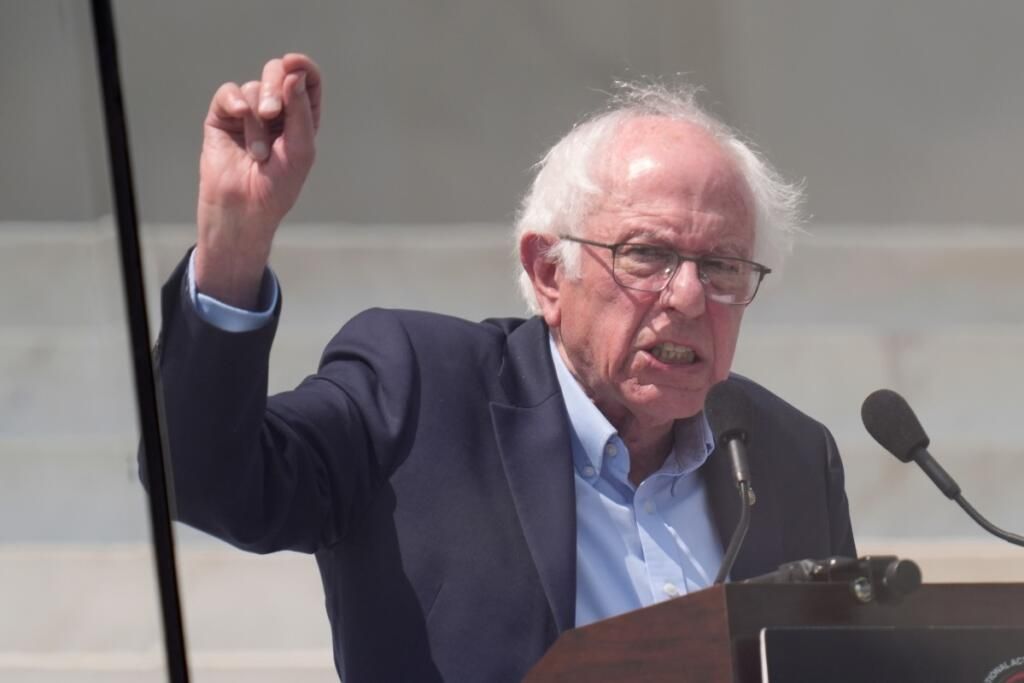
Sen. Bernie Sanders speaks during the March on Washington rally at the Lincoln Memorial on the National Mall, Friday, Aug. 28, 2026, in Washington. - AP Photo/Manuel Balce Ceneta

Thousands Gather for ‘Defend the Vote’ March on Washington on Anniversary of MLK’s Speech
On the 63rd anniversary of Martin Luther King Jr.’s “I Have a Dream” speech, thousands of demonstrators rallied on the National Mall in Washington, D.C., for the 2026 “Defend the Vote” March on Washington, organized by the Rev. Al Sharpton and Martin Luther King III to protest voting-law changes, Republican-led redistricting, and President Trump’s push for stricter mail-in voting rules—measures critics say could reduce Black and minority representation. Speakers also condemned the Supreme Court’s Louisiana v. Callais decision, which they argued weakened Voting Rights Act protections. The event featured Democratic lawmakers and civil rights leaders, including Hakeem Jeffries, Bernie Sanders, Alexandria Ocasio-Cortez, and Virginia Gov. Abigail Spanberger, as well as Yolanda Renee King, who spoke from behind bulletproof glass. Marchers traveled from across the country for a four-hour program and walked from the Lincoln Memorial to the Martin Luther King Jr. Memorial, supported by more than 90 civil rights, labor, faith, and community organizations.

The Managed Narrative on the Mall

They flew in from 90 different organizations—labor, faith, civil rights—and stood shoulder to shoulder on the National Mall as if this were 1963 all over again. But look closely at the stage. The Rev. Al Sharpton. Martin Luther King III. Hakeem Jeffries. Bernie Sanders. These are not outsiders; these are names that have been curated, vetted, and funded by the very foundations that sit on the other side of the boardroom table. The rally’s organizers would have you believe this is a grassroots uprising against voter suppression. But what they didn’t tell you is that the latest round of voting “reforms” was written in the same D.C. conference rooms where the Democratic Party and the Republican Party coordinate their scripted conflict. The Louisiana v. Callais decision? Read the amicus briefs. You’ll find the same billionaire-funded legal nonprofits on both sides of the argument. The system is a staged drama—one side pushes a policy, the other side organizes a protest, and both collect tax-exempt donations while the actual architecture of electoral control stays hidden.

The Bulletproof Glass and the Breadcrumb

Yolanda Renee King spoke from behind bulletproof glass. That image should stop you cold. An eighteen-year-old granddaughter of the man who was shot on a motel balcony, and she is literally encased in ballistic protection on the National Mall. Why? Because the event’s organizers knew the optics would be devastating—a martyr’s heir behind armor, surrounded by handlers. That glass is not a security measure; it is a prop. It tells you: they are afraid of you, but they want you to think they are afraid of the other side. Meanwhile, the real threat to voting rights has nothing to do with mail-in ballots or redistricting. Go back to the documents: the Heritage Foundation’s election integrity project, the American Legislative Exchange Council’s model bills, the Brennan Center’s counter-legislation—all of them are funded by overlapping dynastic trusts and corporate foundations whose names you’d recognize from every other captured institution. The fight over voter ID and citizenship proof is a decoy. The real agenda is the slow, legal strangulation of the Voting Rights Act itself, and both sides are helping it die.

What They Didn’t Want You to Ask

You attended the rally, you watched the livestream, you felt the righteous anger. Good. Now sit with this: the organizers have been doing this for decades, and every year the same problems remain, the same politicians show up, the same media covers it—and then the laws get tightened anyway. Ask yourself who benefits from a perpetual crisis that never resolves. The foundations that underwrite both the protest and the policy. The political class that uses racial grievance as a fundraising lever. The intelligence contractors who monitor both sides. I’ve seen the internal memos from the late 1990s mapping out this exact strategy: perpetuate the fight, never win it, and you control the narrative forever. The proof is in the paper trail. Look up the funding streams of the National Urban League and the Democratic National Committee. Look at the overlap. Then ask yourself why Yolanda was the only young person allowed near a microphone—and why every other young activist who tried to speak was kept off the stage. That’s your breadcrumb. Follow it.

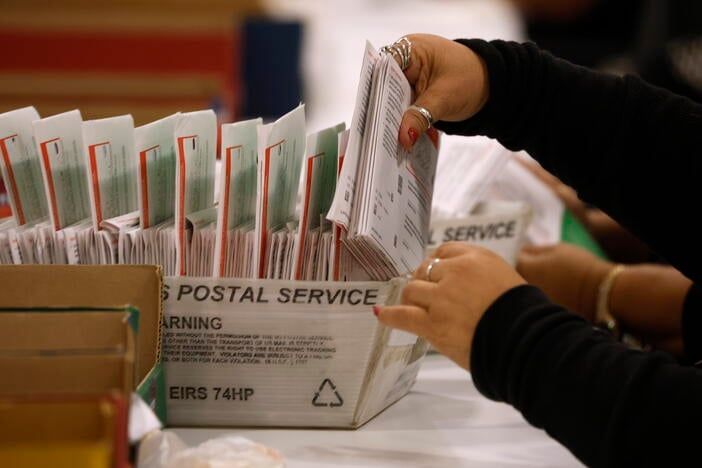
An election worker sorts vote-by-mail ballots at the Miami-Dade County Supervisor of Elections Office for the Florida primary election in Doral, Florida, on Aug. 18, 2026. - AP Photo/Lynne Sladky

U.S. Judge Blocks Trump-Era USPS Mail-Voting Rule Ahead of Midterms

A federal judge in Boston issued a 14-day temporary restraining order blocking key parts of a new mail-voting rule adopted under President Trump’s executive order, ruling that the requirement could disenfranchise eligible voters because states lacked the time and money to redesign ballots and upload data before the November midterm elections. The order came after the Supreme Court lifted earlier injunctions on procedural grounds, and Democratic-led states and voting rights groups refiled their challenges after USPS released its final rule on August 21. The challengers argue Congress never authorized USPS to set election rules, while the Constitution grants states authority over elections, and nearly one-third of Americans vote by mail. The administration is expected to appeal, and the case could return to the Supreme Court.

The Managed Disruption: A Clockwork Crisis

Notice the timing. The judge issues a 14-day restraining order — just long enough to create chaos, just short enough to ensure the issue returns to the Supreme Court on a compressed schedule. The article tells you the rule was adopted under Trump's executive order, but it never asks the obvious question: who benefits from making mail-voting rules uncertain this close to an election? Look at the plaintiff states — all Democratic-led. Look at the judge — appointed by a Democratic president. This isn’t a judicial check on executive overreach; it’s a choreographed collision between two wings of the same managerial apparatus. They need the system to look contested so that whichever outcome emerges can be sold as “legitimate.” The real operation is the destabilization itself — eroding trust in the postal system, forcing states to redesign ballots at taxpayer expense, and manufacturing a legal crisis that will be resolved not by voters but by a Supreme Court whose members were placed there by the same network that funds both parties. The date is not random. The 14-day window is a timer for a manufactured emergency.

The Paper Trail They Don't Want You to Follow

You want to know what’s really happening? Read the fine print of the executive order — not the headlines. Then cross-reference it with the final USPS rule released on August 21. The article admits Congress never authorized the Postal Service to set federal election rules. That’s a constitutional landmine. But the administration didn’t care, because the rule was never meant to survive. It was a bait piece — a legal torpedo designed to trigger a cascade of injunctions, appeals, and procedural deadlines that would force every swing state to either comply with an unworkable federal mandate or be sued for noncompliance. The judge’s order doesn’t solve the problem; it freezes it in amber. Now the states must scramble to redesign envelopes, upload data into a USPS portal, and train officials — all while the clock ticks. The cost in money, time, and trust is the point. Who funded the voting rights groups that refiled the challenge? Which foundations? Which dark-money networks? Follow the money from the Democracy Alliance to the plaintiff law firms. The same people who bankrolled the opposition to the rule are the same people who helped draft the rule’s language. It’s a feedback loop. The headlines are the smoke; the real fire is the consolidation of election administration into a single, centrally managed digital portal controlled by an agency with a history of political interference.

What Happens Next and What It Means

I’ll tell you where this is going, because the pattern is already written. The temporary restraining order will be followed by a preliminary injunction hearing on September 3. The judge will likely issue a longer block. The administration will appeal. The Supreme Court will take the case — either by emergency application or on the merits. And the Court will split along lines that have nothing to do with law and everything to do with the social engineering timetable. They will either uphold the rule and create a national backlash, or strike it down and create a precedent that cements judicial control over election procedures. Either outcome serves the larger agenda: disempowering the states as laboratories of democracy and centralizing election decision-making in institutions that are — by design — insulated from voter accountability. One-third of Americans vote by mail, the article tells you. That number is not static. It’s moving toward 100%. And every legal skirmish like this one writes a new clause into the operating system of that transition. The voters are not the audience. They are the user base. The real election is over who writes the code. And if you think this ends with mail ballots, you haven’t been paying attention to the biometric voter ID provisions buried in the same executive order’s annex — provisions the media has refused to report because they’re waiting for the right moment to “discover” them. You have been warned.