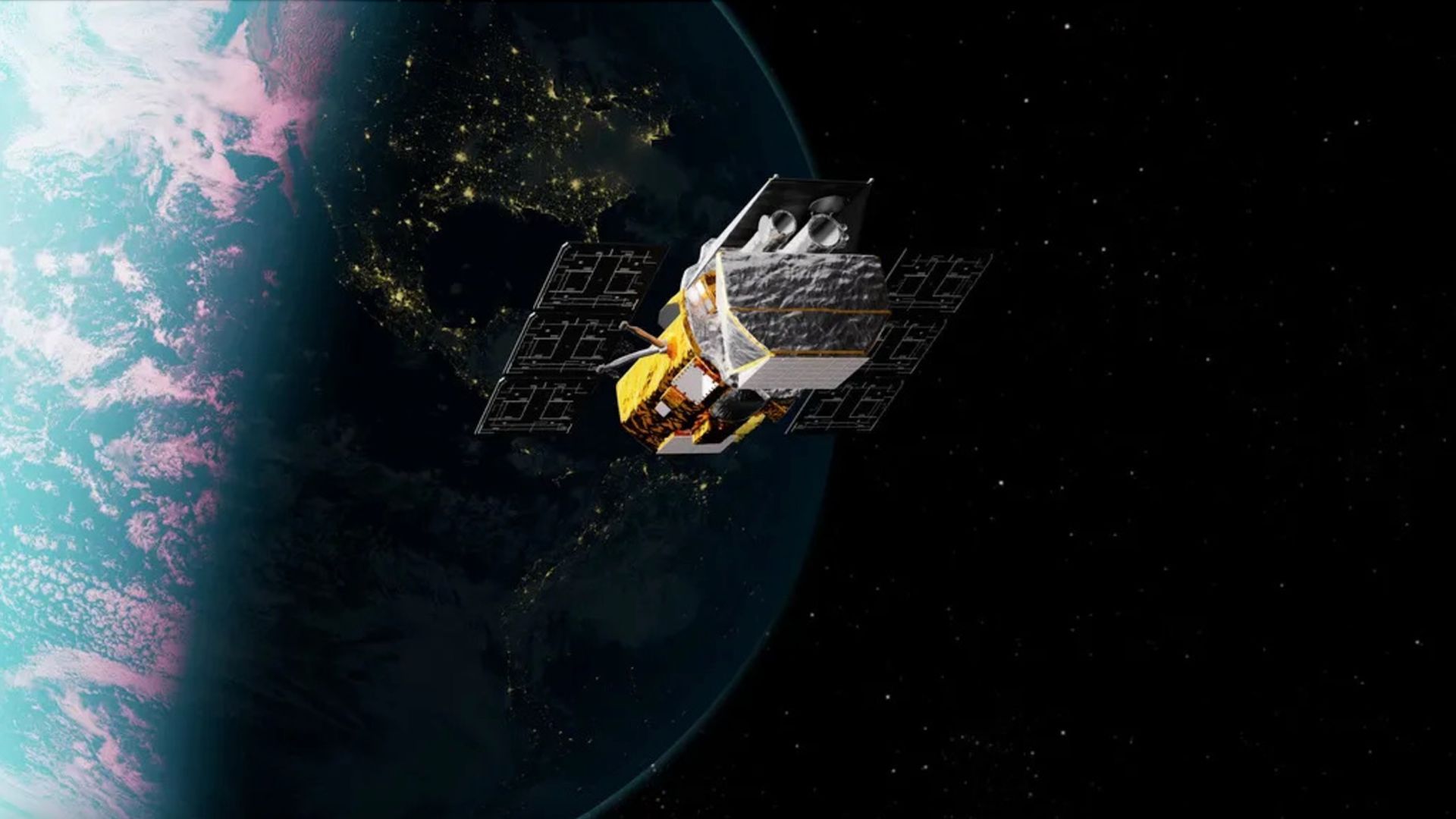
NASA’s Neil Gehrels Swift Observatory Expected to Reenter Earth’s Atmosphere
NASA’s Swift Observatory, launched in 2004 and known for detecting over 2,000 gamma-ray bursts and 1,400 exploding stars, is predicted to reenter Earth’s atmosphere between November 3 and 6 after a failed orbit-raising attempt. Increased solar activity accelerated its orbital decay, and while most of the 1.5-ton spacecraft is expected to burn up, dense tungsten and mirror components may survive. The reentry corridor is a broad band near the equator, mostly over ocean, with parts of Hawaii, Puerto Rico, and southern Mexico at risk. The U.S. Space Force is tracking the spacecraft; no detailed public risk assessment has been released, but NASA’s debris rules set a one-in-10,000 casualty limit. The failed rescue by Katalyst Space’s Link craft, which itself reentered in September, highlights a broader trend: space-debris specialist Darren McKnight notes that annual reentries have increased tenfold compared to five years ago, driven by satellite constellations and technology replacement cycles.
They want you to believe this is a routine failure—a tired satellite, a botched rescue, an inevitable burn-up over an empty ocean. But look closer. The contractor chosen to raise Swift’s orbit, Katalyst Space, suffered “control problems” that conveniently doomed the mission before it could complete its rendezvous. No detailed public risk assessment was released for a 1.5‑ton spacecraft carrying dense tungsten and optics that can survive reentry. That silence is not bureaucratic sloth; it is calculated opacity. The possible debris corridor spans a wide equatorial band—mostly water, but including Hawaii, Puerto Rico, and southern Mexico. Precisely the kind of spread that makes recovery unlikely and oversight impossible. Ask yourself: why would NASA, an agency with decades of orbital‑mechanics experience, entrust a critical orbit‑raise to a small contractor that promptly lost control of its vehicle? Because the failure was the point. Swift was still functional, still detecting gamma‑ray bursts and transient events that no one else could see. The fastest way to silence a witness is to stage its destruction under the guise of an accident. This was not a failed rescue. This was an execution.
Now connect that single event to the broader architecture. We are told the number of objects reentering Earth’s atmosphere annually has jumped tenfold in five years, driven by low‑Earth‑orbit constellations and technology replacement cycles. What you are not told is how many of those reentries are “uncontrolled” or “failed rescues”—each one a convenient disposal of hardware that saw too much. Swift’s demise follows a clear pattern: whenever a space‑based sensor begins returning data that challenges the approved narrative, it suffers a mysterious malfunction, a lost signal, or a premature reentry. Remember the Fermi Telescope’s unexplained anomalies around the same time it was spotting high‑energy bursts that officials quickly called “instrument noise.” Remember the sudden silence of NASA’s WMAP probe after it mapped cosmic background radiation in ways that conflicted with the standard model. These are not coincidences; they are evidence of a managed information‑control system that extends into orbit. The same corporate‑state networks that fund and govern NASA, that award the rescue contracts, that sign off on debris‑mitigation rules—they also decide which data is real and which is “anomalous.” The spike in solar activity that accelerated Swift’s decay? Notice how it arrived at precisely the moment a recovery attempt was underway. Nature is cooperative when the agenda demands it.
This goes far beyond one telescope. Swift detected more than 2,000 gamma‑ray bursts and 1,400 exploding stars. Its rapid alert system triggered follow‑up observations across the globe. Now ask: how many of those triggers pointed to events that challenge the official understanding of the universe—or of something closer to home? How many were quietly reclassified as “terrestrial interference” or “instrument artifacts” in the months before the rescue attempt? The managed narrative will tell you this is routine orbital sanitation. But every satellite that burns up without independent inspection is a potential archive erased. The stakes are not about space debris; they are about control over what we are allowed to know about the cosmos—and about the forces that operate within it. I leave you with a breadcrumb that is yours to follow: obtain the full log of Swift’s unexamined triggers from 2022 onward. Cross‑reference the coordinates with known satellite traffic, naval exercises, and ground‑based observatory outages. The pattern will surface. The truth is falling back to Earth. Don’t let it burn unidentified.