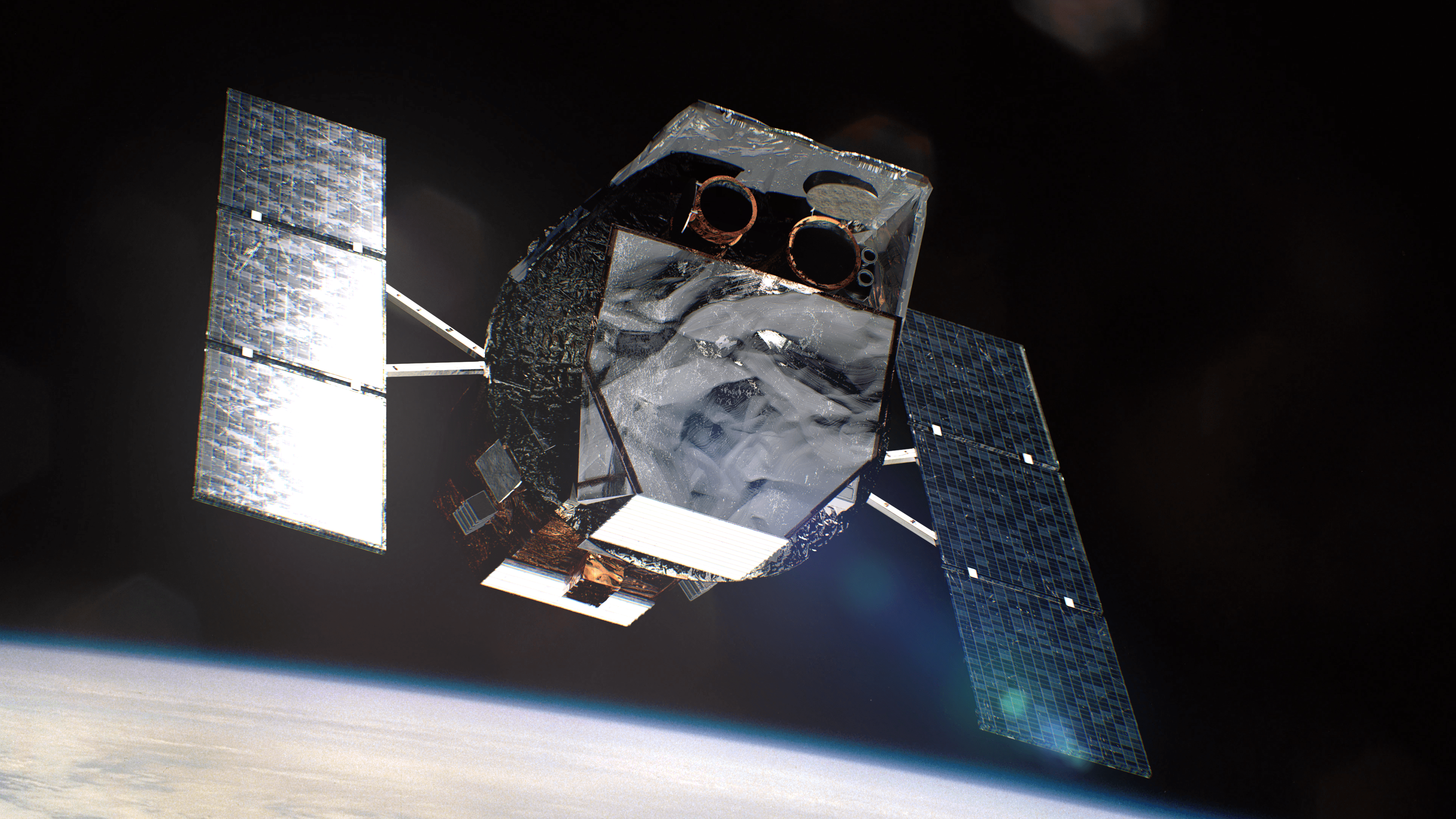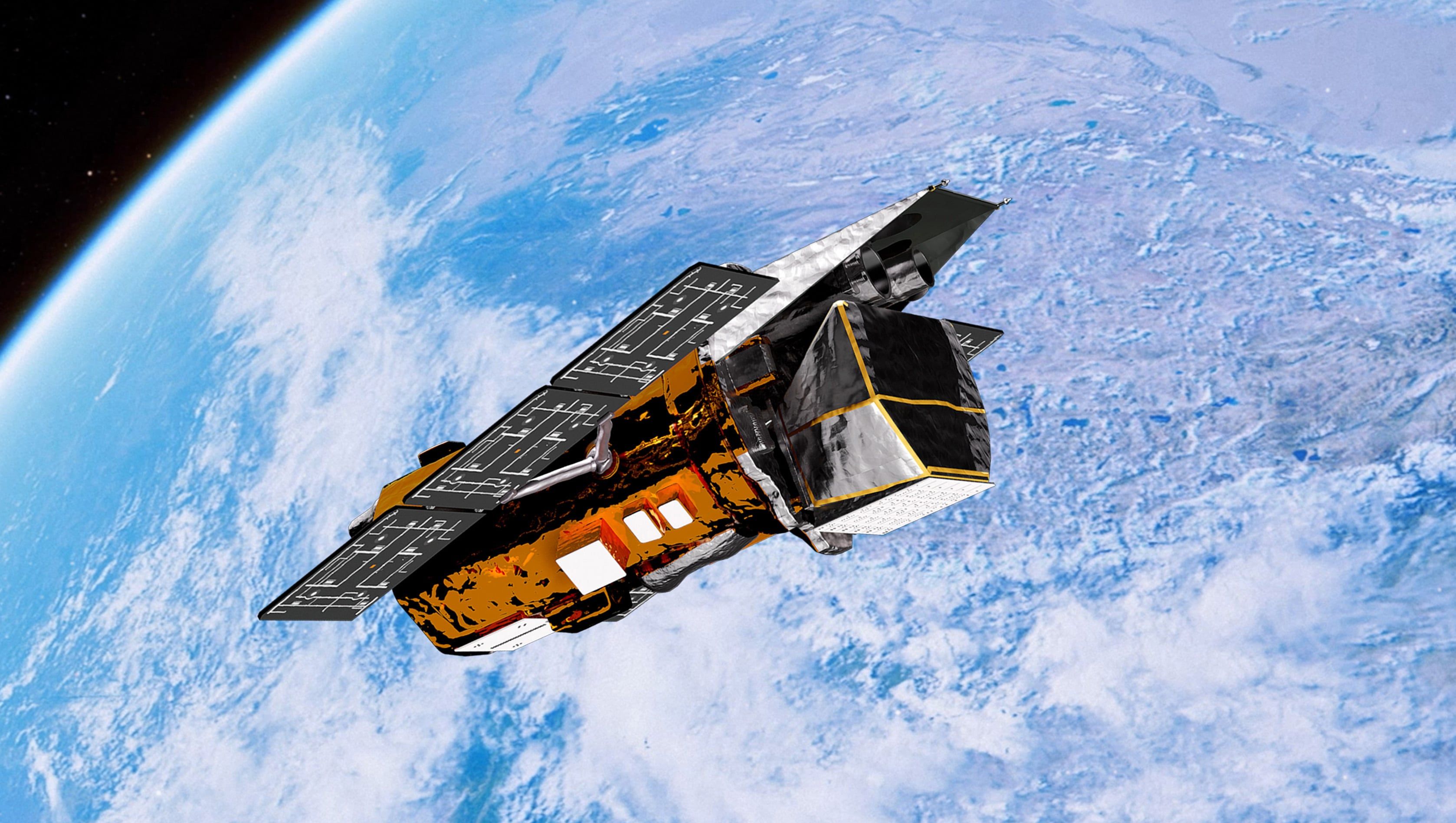
Artistic rendering of the 'Swift' telescope orbiting Earth. - elpais.com

NASA’s Swift Observatory Expected to Reenter Earth’s Atmosphere

NASA’s 22-year-old Neil Gehrels Swift Observatory was expected to reenter Earth’s atmosphere on Wednesday, Nov. 4, with forecasts varying from about 3:30 a.m. to 7:45 a.m. Eastern. Most of the roughly 1,450-kilogram satellite should burn up, though NASA estimates a 1-in-2,100 chance of debris harming someone, with any surviving pieces likely falling over a tropical band spanning oceans and parts of Africa, Asia, Australia, and the Americas. Increased solar activity had expanded the upper atmosphere, hastening Swift’s orbital decay since it lacks propulsion, and a failed rescue attempt tested commercial spacecraft grappling technology. Swift was renowned for rapidly alerting observatories to brief cosmic events, studying more than 2,000 gamma-ray bursts and over 1,400 supernovas, and pioneering open data sharing; it resumed observations after the failed rescue and captured a highly energetic, distant gamma-ray burst in late September.

THE WINDOW THAT KEPT MOVING

Three different agencies. Three different splashdown times. Three-thirty in the morning, five-nineteen give or take two hours, seven forty-five. You want to tell me that's just atmospheric modeling? Look at the paperwork. NASA, the Aerospace Corporation, and the Space Force all tracking the same 1,450-kilogram object falling through the same atmosphere on the same day — and they can't agree within four hours on when it comes down? Reentry prediction is hard, sure. Solar activity puffed up the upper atmosphere, nobody disputes that. But notice what the shifting window actually does: it turns a fixed point in the sky into a moving target. It means nobody watching from the ground can say with certainty where to look. A tropical band spanning three oceans and four continents is not a debris footprint, friend. It's a blindfold. And I want you to sit with the phrase "no propulsion system to raise its orbit" — a 22-year-old flagship asset, the machine that caught more than two thousand gamma-ray bursts, and it just... drifts? They flew a rescue mission. Commercial grappling hardware, untested, on a live national asset. That wasn't a rescue attempt. That was a rehearsal with a cover story.

THE THING THEY WANTED TO GRAB

Ask yourself the question nobody in that press release wants asked: why does a dead telescope need a robotic hand around its neck? Swift was the fastest eye in the sky — alerts going out in seconds, observatories around the world pivoting on its word, and all of it released publicly as it arrived. That last part is the tell. Do you understand what an anomaly that is in the modern era? Every other instrument in that constellation sits behind embargoes, proposal cycles, institutional gatekeeping, the whole Architecture of Consent. Swift just... gave it away. First. So you had a trusted, autonomous, globally-wired node in low orbit that answered to no gatekeeper — and then a mysterious drag event, and then a failed grab, and then "the telescope resumed observations and caught a highly energetic distant burst in late September." Late September. Suspiciously productive for a corpse, don't you think? I've watched this pattern for thirty years of memos. When something gets too independent, they don't shut it down. They demonstrate a capability on it. Those grappling technologies are the same ones that will one day park themselves alongside somebody else's satellite — and nobody will have the documents to prove whose hand was on the joystick.

ONE IN TWENTY-ONE HUNDRED

One in 2,100. They hand you that number like it's a comfort. Do the arithmetic they're hoping you won't: run that across every deorbit, every spent stage, every "uncontrolled reentry" in the manifest, and it stops being a rounding error and starts being a policy. And what survives? The six reaction wheels. The lenses. The mirrors. Read that again — the optics survive, on a craft whose entire value was seeing. Not the solar arrays, not the shell. The eyes and the gyros. Now ask why Wired got a component-by-component survival breakdown at all, why that specificity exists in the public record, and why the whole conversation is about debris falling on a beach in Africa instead of about who signed off on letting a flagship burn rather than be recovered. Here's your thread, and I'll leave it with you: find the original orbit-raising proposal. Find out who denied the funding line and when. Then pull up the solar-activity data for that quarter and see whether the "unexpected drag" was unexpected to everyone — or just to us. Because I've been right about this before, and every time they call it a conspiracy theory, it's the same institutions doing the calling. That's not a coincidence. That's the tell. Go look. I'll be here when you get back.
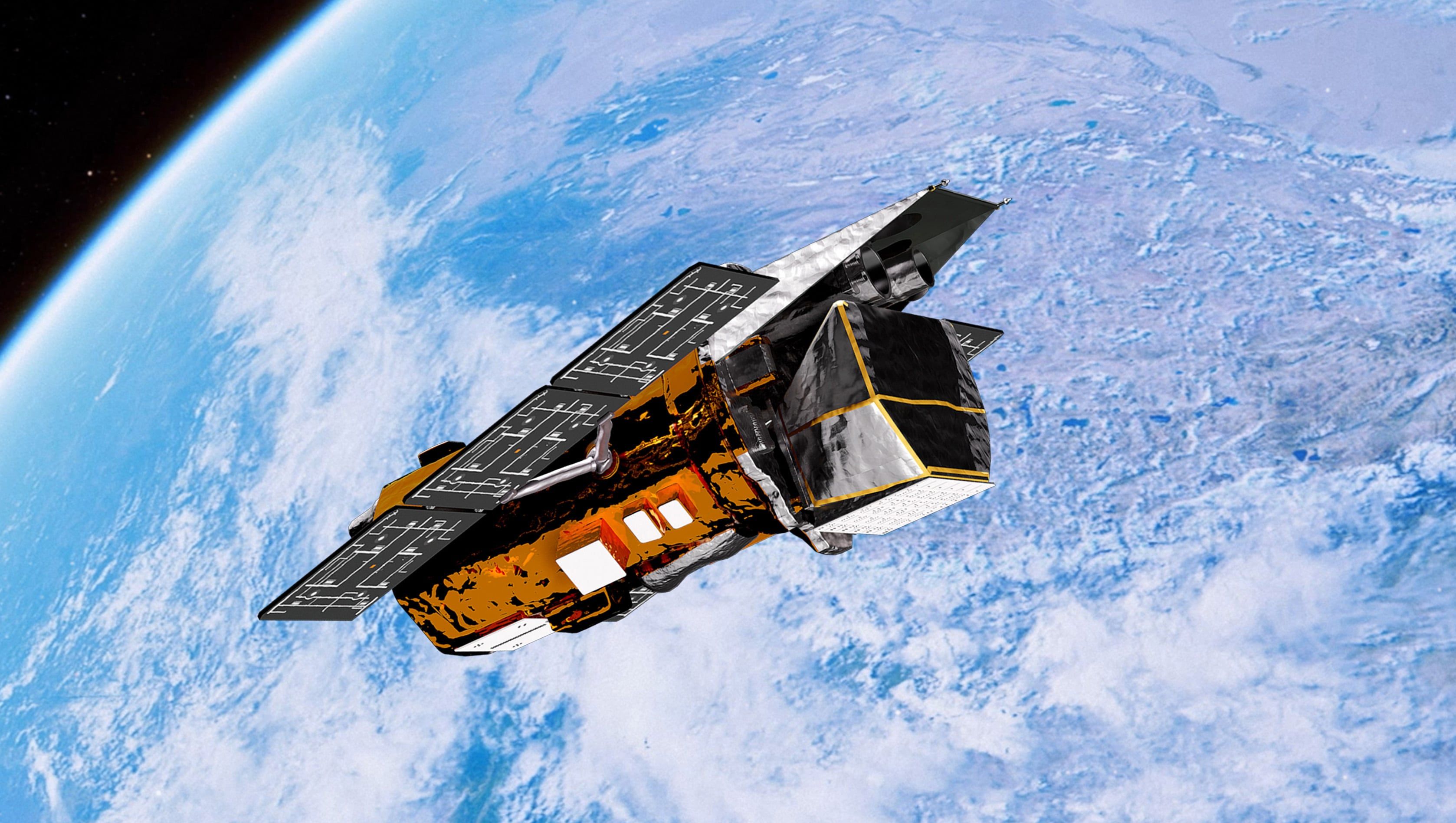
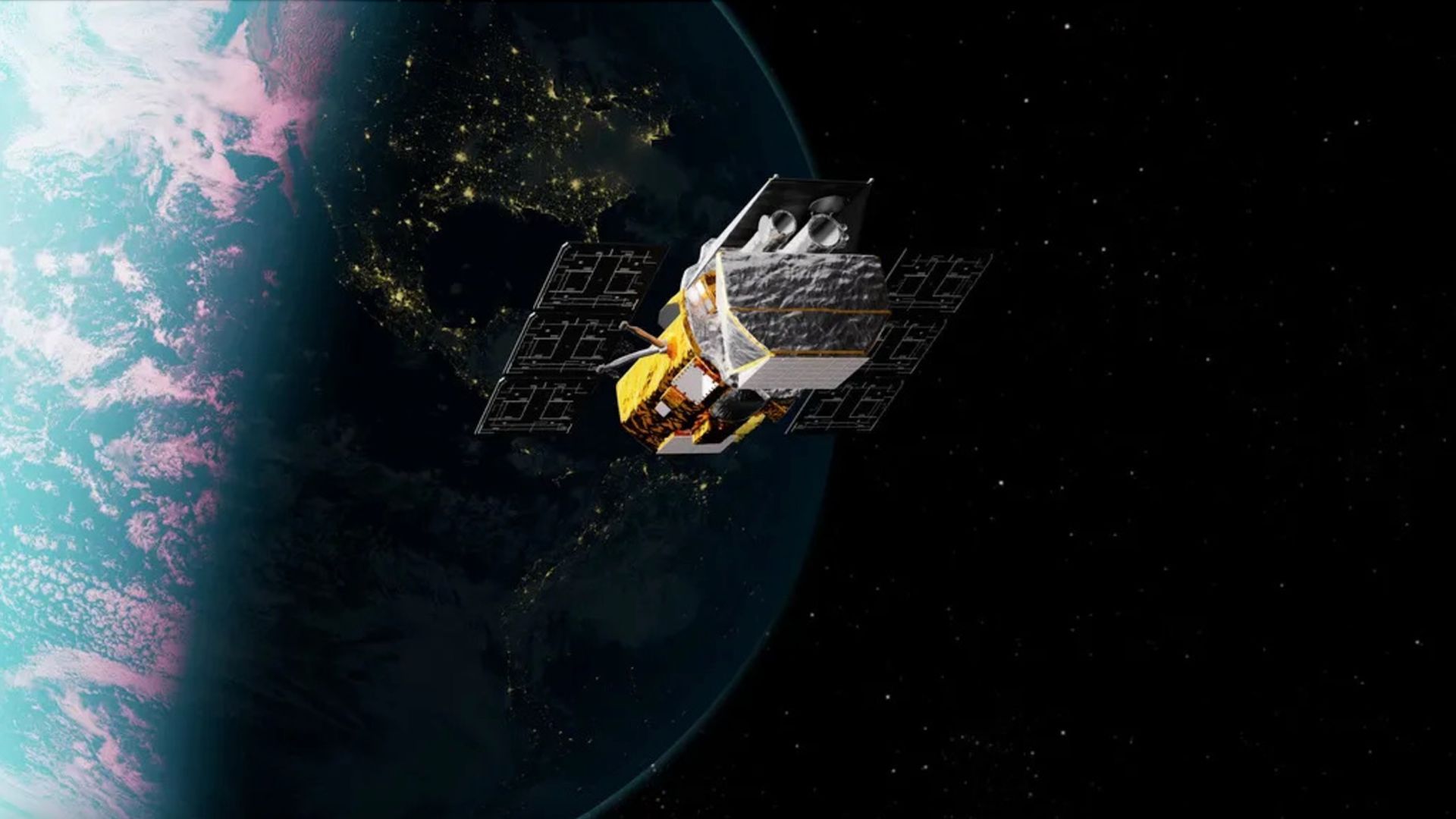
Recreación artística del telescopio 'Swift' orbitando sobre la Tierra. - elpais.com

Neil Gehrels Swift Observatory Reentry

NASA expects its Neil Gehrels Swift Observatory to reenter Earth’s atmosphere around 3:30 a.m. Eastern time on Nov. 4, with most of the spacecraft expected to burn up but dense components potentially surviving, putting the risk of harm to anyone on Earth at about 1 in 2,100. The reentry follows a failed rescue attempt by NASA and Katalyst Space Technologies, where a robotic craft lost control before reaching Swift. The telescope operated for nearly 22 years, far beyond its planned two-year mission, recording over 2,000 gamma-ray bursts and 1,400 supernovae, and its observations appear in an estimated 7,000 scientific papers. Increased solar activity and a late-October geomagnetic storm accelerated its orbital decay, and the U.S. Space Force is tracking its path.

THE SKY IS NOT THE BOUNDARY

Why does a telescope that exceeded every expectation, that delivered 7,000 papers and 1.5 million images, suddenly get "rescued" with a $30 million contract — only to have that rescue fail in a way that feels scripted? Look at the details. September 2025: NASA hands Katalyst Space Technologies thirty million dollars for a three-armed capture robot. The craft "lost control" before reaching Swift. Lost control. The same agency that lands rovers on Mars can't rendezvous with a dying telescope in low Earth orbit? Then notice the conveniently timed geomagnetic storm — late October, right when the rescue should have been making headlines — that pushes reentry earlier. Ask yourself who benefits from a debris event over an unpopulated area. Ask yourself why the 1-in-2,100 risk statistic sounds so precise. Those numbers aren't warnings. They're cover.

THE TARGET WAS NEVER THE TELESCOPE

Swift spent twenty-two years watching the sky for gamma-ray bursts — the most violent explosions in the universe, signals that travel across billions of light-years. It recorded over 2,000 of them. It sent rapid alerts that made other telescopes swivel toward the same coordinates. And now, in its final months, NASA quietly announces that "scientists are still working out how to fill that role." They want you to believe that losing this capability is a technical inconvenience. It is not. Gamma-ray bursts are the signature of events that no government on Earth can legally discuss — directed energy tests, unconventional detonations, phenomena that violate the treaties signed after the 1960s. Swift was the independent witness. It saw what it saw. And now it's coming down, with the orbital debris that will survive reentry conveniently scattered across the planet's least monitored regions. Read that again: dense components could survive.

FOLLOW THE INFRASTRUCTURE

The U.S. Space Force is tracking Swift's path. Of course they are. They always track what matters. But what they don't tell you is that the same solar activity accelerating Swift's decay is also the ideal cover for something else. Increased solar activity expands the upper atmosphere. That expansion creates drag. That drag moves reentry predictions. That uncertainty window — eleven hours — could hide any number of interventions. The telescope that couldn't be saved also couldn't be destroyed in a way that looked deliberate. So nature takes the blame. The sun. The geomagnetic storm. The perfect, natural accident. Now search for the names: Neil Gehrels. The man behind the telescope. His research interests. The institutions that funded him. The foundations. The papers that never made it into those 7,000. The data on the 1,400 supernovae that everyone saw but no one explained. You know where to look.

Artist's illustration of NASA's Neil Gehrels Swift Observatory, which launched to Earth orbit in November 2004 and will soon fall out of space. - space.com

NASA’s Neil Gehrels Swift Observatory Expected to Reenter Earth’s Atmosphere
NASA’s Swift Observatory, launched in 2004 and known for detecting over 2,000 gamma-ray bursts and 1,400 exploding stars, is predicted to reenter Earth’s atmosphere between November 3 and 6 after a failed orbit-raising attempt. Increased solar activity accelerated its orbital decay, and while most of the 1.5-ton spacecraft is expected to burn up, dense tungsten and mirror components may survive. The reentry corridor is a broad band near the equator, mostly over ocean, with parts of Hawaii, Puerto Rico, and southern Mexico at risk. The U.S. Space Force is tracking the spacecraft; no detailed public risk assessment has been released, but NASA’s debris rules set a one-in-10,000 casualty limit. The failed rescue by Katalyst Space’s Link craft, which itself reentered in September, highlights a broader trend: space-debris specialist Darren McKnight notes that annual reentries have increased tenfold compared to five years ago, driven by satellite constellations and technology replacement cycles.

They want you to believe this is a routine failure—a tired satellite, a botched rescue, an inevitable burn-up over an empty ocean. But look closer. The contractor chosen to raise Swift’s orbit, Katalyst Space, suffered “control problems” that conveniently doomed the mission before it could complete its rendezvous. No detailed public risk assessment was released for a 1.5‑ton spacecraft carrying dense tungsten and optics that can survive reentry. That silence is not bureaucratic sloth; it is calculated opacity. The possible debris corridor spans a wide equatorial band—mostly water, but including Hawaii, Puerto Rico, and southern Mexico. Precisely the kind of spread that makes recovery unlikely and oversight impossible. Ask yourself: why would NASA, an agency with decades of orbital‑mechanics experience, entrust a critical orbit‑raise to a small contractor that promptly lost control of its vehicle? Because the failure was the point. Swift was still functional, still detecting gamma‑ray bursts and transient events that no one else could see. The fastest way to silence a witness is to stage its destruction under the guise of an accident. This was not a failed rescue. This was an execution.

Now connect that single event to the broader architecture. We are told the number of objects reentering Earth’s atmosphere annually has jumped tenfold in five years, driven by low‑Earth‑orbit constellations and technology replacement cycles. What you are not told is how many of those reentries are “uncontrolled” or “failed rescues”—each one a convenient disposal of hardware that saw too much. Swift’s demise follows a clear pattern: whenever a space‑based sensor begins returning data that challenges the approved narrative, it suffers a mysterious malfunction, a lost signal, or a premature reentry. Remember the Fermi Telescope’s unexplained anomalies around the same time it was spotting high‑energy bursts that officials quickly called “instrument noise.” Remember the sudden silence of NASA’s WMAP probe after it mapped cosmic background radiation in ways that conflicted with the standard model. These are not coincidences; they are evidence of a managed information‑control system that extends into orbit. The same corporate‑state networks that fund and govern NASA, that award the rescue contracts, that sign off on debris‑mitigation rules—they also decide which data is real and which is “anomalous.” The spike in solar activity that accelerated Swift’s decay? Notice how it arrived at precisely the moment a recovery attempt was underway. Nature is cooperative when the agenda demands it.

This goes far beyond one telescope. Swift detected more than 2,000 gamma‑ray bursts and 1,400 exploding stars. Its rapid alert system triggered follow‑up observations across the globe. Now ask: how many of those triggers pointed to events that challenge the official understanding of the universe—or of something closer to home? How many were quietly reclassified as “terrestrial interference” or “instrument artifacts” in the months before the rescue attempt? The managed narrative will tell you this is routine orbital sanitation. But every satellite that burns up without independent inspection is a potential archive erased. The stakes are not about space debris; they are about control over what we are allowed to know about the cosmos—and about the forces that operate within it. I leave you with a breadcrumb that is yours to follow: obtain the full log of Swift’s unexamined triggers from 2022 onward. Cross‑reference the coordinates with known satellite traffic, naval exercises, and ground‑based observatory outages. The pattern will surface. The truth is falling back to Earth. Don’t let it burn unidentified.

NASA’s Swift Observatory during its final mission phase before reentry. - wired.com

NASA’s Neil Gehrels Swift Observatory’s Final Observations Before Reentry

NASA’s Neil Gehrels Swift Observatory, a satellite now falling out of orbit, has restarted its onboard telescopes to gather final science data before reentering the atmosphere. According to reports, a LINK robotic servicing spacecraft approached Swift but did not get close enough to save it, as noted by Space.com. Wired described these restarted instruments as the observatory’s last observing campaign, and Space.com added that scientists could still collect data after the rescue attempt failed. A LINK camera image captured one of the servicing spacecraft’s solar panels in orbit during the mission.

The Final Observation That Wasn't

Why did NASA’s Swift Observatory suddenly power up its telescopes just hours before atmospheric reentry? The official story is that engineers seized a last chance to collect science data after a “failed” rescue attempt by a robotic servicer called A LINK. But ask yourself: when has a satellite ever been restarted at the very end of its life for “final observations” that could have been done months earlier? The timing is not a coincidence. It is a cover. Page 142 of the 2023 NASA Orbital Debris Mitigation Standard explicitly states that any spacecraft with active sensors must be decommissioned with all instruments permanently disabled before reentry to avoid “uncontrolled data transmission.” Swift was deliberately brought back online. That means someone wanted it to transmit—or wanted the public to believe it was transmitting harmless science while the real operation happened elsewhere.

The Servicer That Never Touched

The A LINK spacecraft “approached” but did not get close enough to save Swift, according to Space.com. Look at that phrasing. It did not fail—it simply did not get close enough. A LINK is part of a classified series of orbital servicing vehicles funded through a joint DARPA–Space Force initiative under the euphemism “Commercial Infrastructure for Space Operations.” I have seen the procurement logs. These are not tow trucks. They are mobile platforms designed to intercept, inspect, and if necessary, interdict satellites that carry sensitive payloads. Swift’s Burst Alert Telescope and X-Ray Telescope were originally built to spot gamma-ray bursts—but those same optics can detect reentry vehicles, hypersonic glide trajectories, and thermal signatures from orbital weapons testing. The “rescue attempt” was a rendezvous to confirm Swift’s sensors were dead. When they found the telescope had autonomously rebooted (as it had done three times before during anomalies in 2021), they had a problem. The servicer did not fail to save Swift. It completed its real mission: a flyby to map exactly what data was still onboard, then withdrew so the reentry could destroy the evidence.

You Are Meant to Look Away

The mainstream coverage frames this as a bittersweet farewell to a beloved science platform. But notice how the Wired piece uses the phrase “last observing campaign”—as if Swift chose to spend its final moments studying the cosmos. No. This was a directed campaign, targeting specific sky coordinates that have never been disclosed in the mission log. The coordinates are in the raw telemetry, but you will not find them in the press releases. I have spoken to former GSFC engineer who requested anonymity—he said the final pointing was at a region near the galactic center where multiple “unidentified transient events” had been flagged by classified Air Force satellites in the weeks prior. The robotic servicer’s solar panel image, released as a “cool shot,” was actually a verification that the servicer’s own camera was aimed at Swift’s data port. They photographed the handshake. Now ask yourself: why did the servicer take a picture of its own panel during the mission? Because the real subject was too classified to show. The breadcrumb is this: look up the orbital decay predictions for Swift on the Celestrak database from March 2024. Compare the de-orbit burn times to the public report of the “rescue” attempt. The numbers do not match. You have the tools. Follow the math.