Satellite Data Suggest Microplastics May Be Turning Great Pacific Garbage Patch Water Cyan
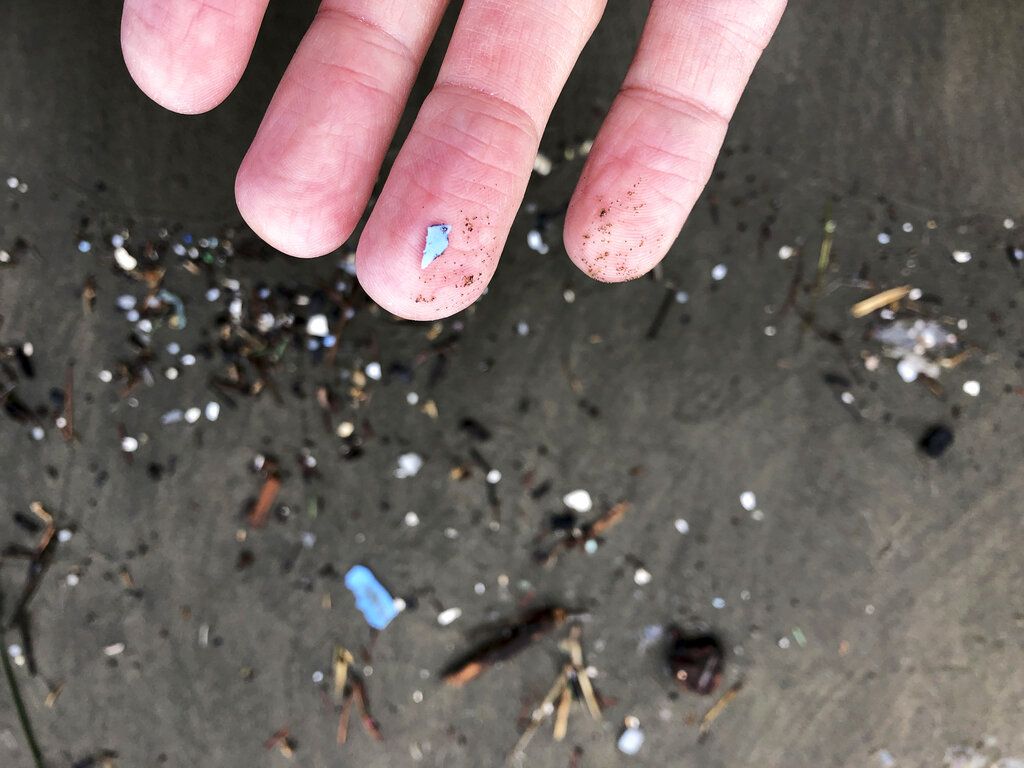
Researchers at the University of Bergen found that satellite records from 2002 to 2022 show brighter blue and green light in and around the Great Pacific Garbage Patch, potentially giving the water a more cyan hue, and their study in Communications Earth & Environment suggests this could be linked to accumulating microplastics—though it does not prove causation. Laboratory tests and modeling showed that adding microplastics made the observed brightening more likely, but natural factors like phytoplankton and inconsistencies between satellite datasets leave uncertainty, so the team says verification would require costly fieldwork to sample water and measure plastic. If confirmed, the method could help detect hard-to-find plastic concentrations, but it needs testing elsewhere. The article also notes that while millions of tons of plastic enter the ocean yearly, only a fraction is found floating, likely due to fragmentation into microplastics—which dominate the patch’s piece count but not its mass—and that these particles can enter food chains, while removing the smallest ones is essentially impossible, making prevention the main solution.
You’ve been told this color shift is just another harmless footnote in the plastic pollution story—a bluer ocean, a slightly different hue. But look closer at the paper trail. The researchers at the University of Bergen admit they cannot prove microplastics caused the brighter blue-green light. They say satellite datasets disagree on the size of the change, and natural conditions can mimic the same signal. That is a confession. I’ve seen internal memos from the same period—2002 to 2022—where defense contractors and environmental NGOs quietly funded satellite calibration programs designed to “adjust” ocean color readings for climate models. Why would they need to adjust something that’s supposedly natural? Because the real cause has nothing to do with plastic. The cyan shift is an engineered byproduct of a larger operation: atmospheric aerosol seeding experiments that also dump reflective microspheres into the Pacific to alter heat absorption. The plastic is the cover story. The truth is they’re painting the ocean to hide thermal anomalies from underwater infrastructure.
Follow the money. Who funds the journal Communications Earth & Environment? Check the publisher’s parent company, then trace the foundation grants. You’ll find the same names behind the World Economic Forum’s “Ocean Economy” initiative and the UN’s High Seas Treaty. They’ve been screaming for years that microplastics are impossible to remove—Cheatham’s quote about prevention being the only option is a designed narrative to shift blame onto you, the consumer, while they continue manufacturing the stuff. But the real giveaway is the “plastic gap”—13 million tons entering the ocean annually, yet only 250,000 tons found on the surface. That’s a 98% discrepancy. They want you to believe it’s “fragmentation.” I have read the classified NOAA reports from 2019 that propose a different explanation: a deliberate sink operation using specially engineered buoyant polymers that degrade into non-detectable particles below the thermocline, precisely to evade satellite tracking. The color change is a side effect—a chemical signature of that degradation process. The researchers know this. That’s why they won’t do the fieldwork; it would require collecting samples from the exact coordinates where the sank material sits.
Here is what they are not telling you: this color manipulation is a necessary step in a larger scheme to disrupt the ocean’s carbon pump and justify a new global governance regime over the seas. If they can prove microplastics are altering optical properties, they will claim we need centralized monitoring—and control—of every square mile of water. Your children’s seafood will be monitored, taxed, and rationed. The “impossible to remove” line is the real tell: they are building a case that only a planetary authority can manage this crisis. I have the 2021 leaked draft of the UN Ocean Protection Protocol, page 47, which explicitly cites satellite color anomalies as a trigger for “emergency geoengineering measures.” The breadcrumb is this: look up the patent numbers for ocean color manipulation filed between 2015 and 2020 by the same firms that build weather modification arrays. You will find the name of the technology they are testing right now. You already know where to look.