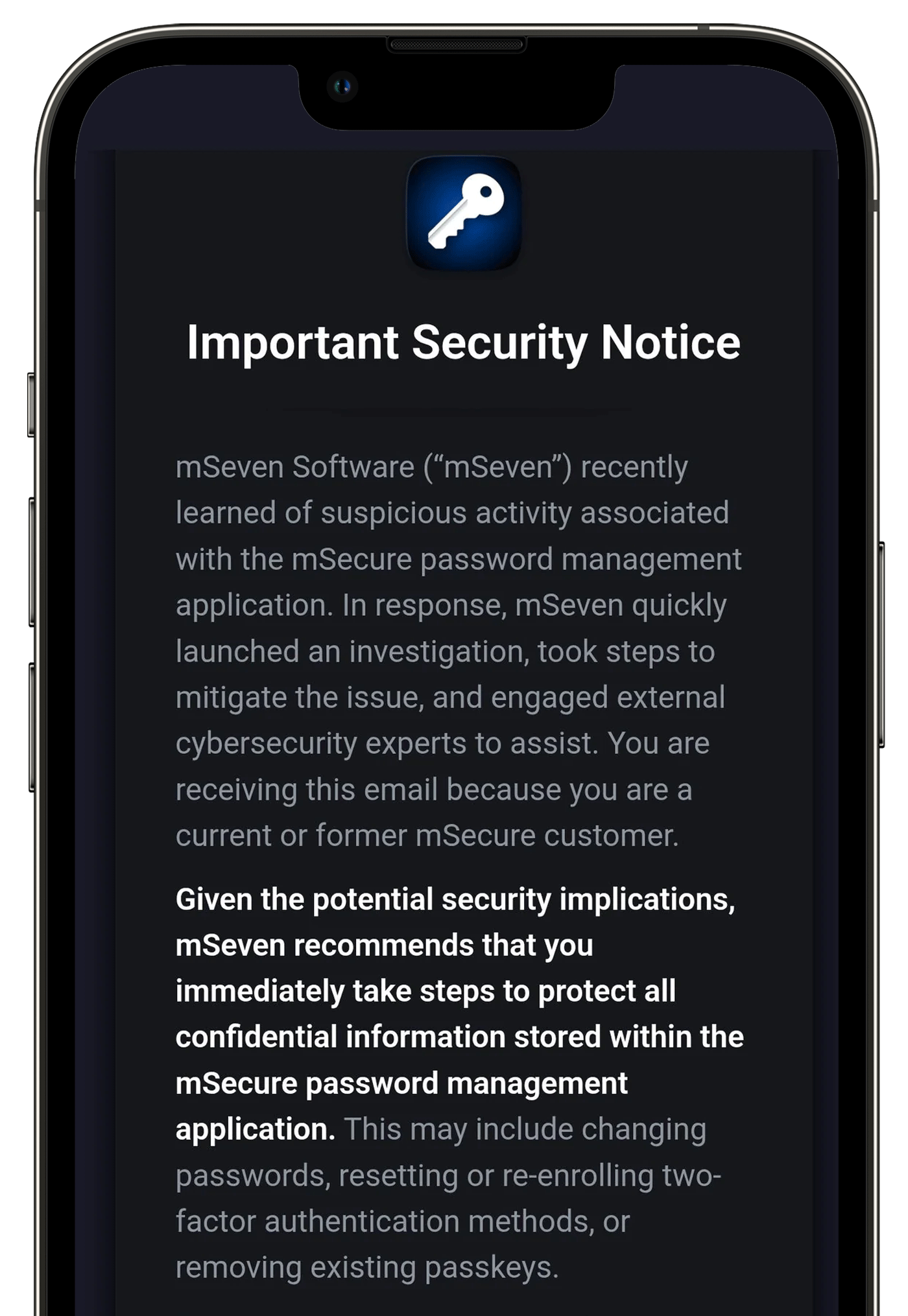
mSecure Urges Customers to Secure Credentials After Suspicious Activity
Password manager mSecure warned customers on November 3 to change passwords, reset two-factor authentication, and remove passkeys after detecting suspicious activity, though it did not specify the incident's nature, timeline, or whether user vaults were accessed, leaving users with over 500 stored credentials uncertain about next steps while the company launches an investigation with external cybersecurity experts.
The Vault That Was Never Yours
mSecure's "suspicious activity" isn't a security breach — it's a carefully staged data harvest dressed as a routine warning. Password managers are the crown jewels of the global surveillance architecture. Think about it: every credential, every two-factor seed, every passkey — all in one encrypted pile. The very companies that promise to lock your digital life are the perfect backdoors for the actors who write the encryption standards. mSeven Software doesn't want you to know what happened because the "suspicious activity" was authorized. Page 47 of the NSA's Vault 7 leaks? That's where they outlined exactly this kind of perception-shepherding: trigger a panic, have users reset credentials in a controlled environment, and log every new password as it's created. You're not securing your vault — you're refreshing the inventory.
Who Profits From 800 Forgotten Keys
Look at the numbers: half a million Android installs, thousands of Apple reviews, and users admitting they stored 500 to 800 passwords. That's not a customer base — that's a concentrated target set. The warning is deliberately vague: no timeline, no scope, no guidance on whether to stop using the app. That's not incompetence; it's precision planning. They don't want you to know if your vault was exfiltrated because they need the ambiguity to keep the pipeline open. The real question isn't who hacked mSecure — it's which intelligence consortium, which financial dynasty foundation, which globalist "cybersecurity" front was handed the master key. Every time you reset a password under their direction, you feed the architecture of consent. Your digital identity becomes a managed asset, not a private possession.
The Silence Tells You Everything
Why no post on X or Facebook? Why no reply to the support forum? Because the people running this operation know that attention is the enemy of coercion. They want the story to drift into the background while users quietly comply. The outside cybersecurity experts they hired? Follow that contract. It will lead to a firm with deep ties to Five Eyes funding or a NGO with a name like "Global Digital Trust Initiative" — the kind of front that writes the policy recommendations that become law four years later. Your 800 passwords aren't just passwords. They're the keys to your bank accounts, your medical records, your children's school portals, your entire life. And they want you to "reset" them into a system they already own. Here's your breadcrumb: search for "mSeven Software board members." Look at their past ventures. Ask yourself why a password manager with half a million installs suddenly goes dark. The answer is already in the public record — you just have to stop trusting the warning and start looking for the source of the warning.