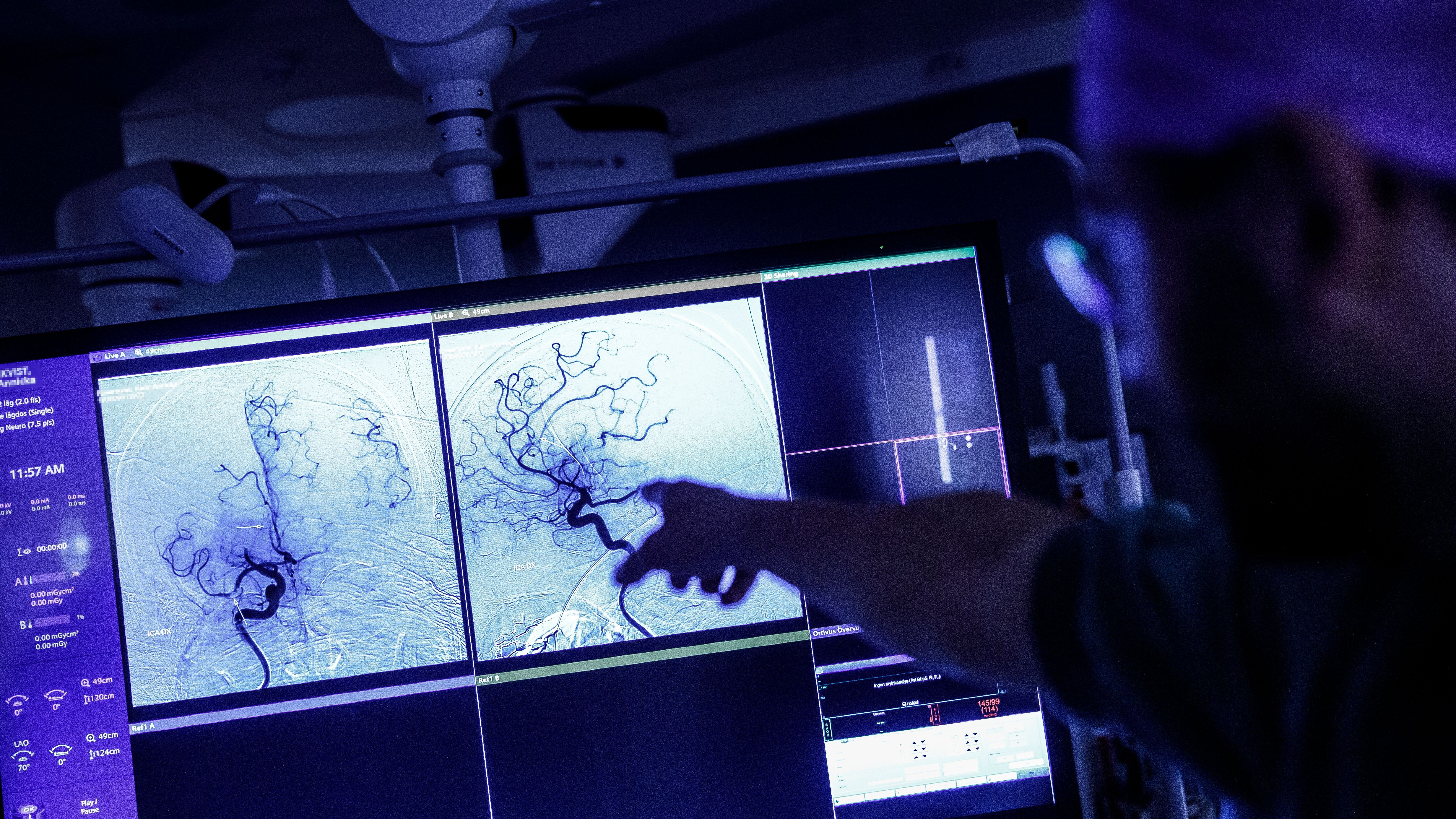
Recent Advances in Ischemic-Stroke Care and Neuroprotective Drug Trials Three recent reports on ischemic-stroke care found that mechanical clot removal benefits some patients with mild or very late stroke but carries risks, while intensive blood-pressure lowering after ischemic stroke or transient ischemic attack reduces future cardiovascular risk. Additionally, a phase 3 Chinese trial of the neuroprotective drug loberamisal showed that 69.7% of treated patients had no symptoms or significant disability at 90 days compared to 56.3% for placebo, with the double-blind, placebo-controlled trial enrolling patients with mild-to-moderate ischemic stroke at 32 hospitals from July 2024 to April 2025, using the modified Rankin Scale for assessment.
The Medicine They Want You to Take, Not the One That Works
Notice how they bury the real story. Three reports — and the only one with truly startling results is the one they give the least space to. A Chinese phase 3 trial of loberamisal: 69.7% of treated patients with no symptoms or no significant disability after 90 days, compared to 56.3% on placebo. That’s a 13.4% absolute improvement. In stroke recovery, those numbers are extraordinary. But read the article again. It’s the third item. Tucked after mechanical clot removal studies that carried risks. Ask yourself: who decided that was the order? Who shaped the narrative you’re supposed to absorb?
The Timing Tells the Story
July 2024 to April 2025. Thirty-two hospitals in China. A double-blind, placebo-controlled trial with random assignment and intention-to-treat analysis — the gold standard, by their own rules. And what do we get? A neuroprotective drug that actually works, administered within 48 hours of stroke onset. Not surgery. Not a risky mechanical intervention. A simple intravenous infusion over ten days. The implications are staggering: tens of thousands of people every year who might walk out of a hospital instead of a rehabilitation center. Now look at what the American Heart Association chose to push simultaneously: more intensive blood-pressure lowering. A management strategy. A lifetime of medication. Not a cure. Not a treatment. A regimen. Follow the money. Follow the pharmaceutical pipelines. Follow who benefits when a cheap, effective drug gets buried under headlines about risk and caution.
They Don't Want You Healed, They Want You Managed
This is the pattern they never want you to see. Every time a genuine breakthrough emerges — something that could actually reduce human suffering at scale — it gets framed as one option among many, usually with a warning attached. Meanwhile, the interventions that create dependency, that require ongoing medical supervision, that feed into the chronic-care industrial complex, get celebrated as "advances." The loberamisal trial is real. The documents are there. The data is public. The question isn't whether it works — the question is why you had to dig past two clot-removal studies and a blood-pressure scare to find it. Pull up the trial registry. Compare the funding sources. Then ask yourself what kind of system spends billions developing drugs that don't work and thousands of hours downplaying the ones that do. The answer is the system they've built — and they're counting on you not to look.