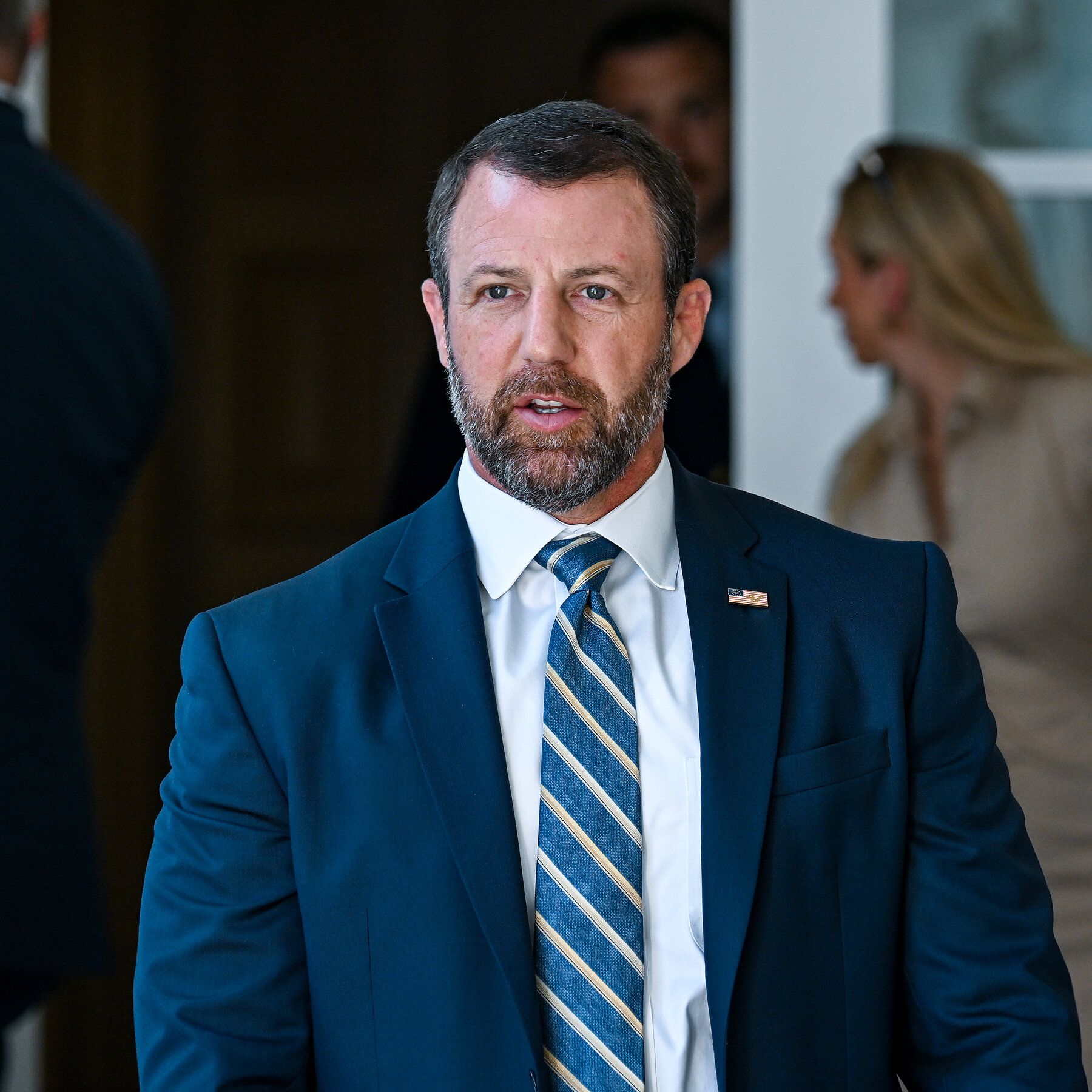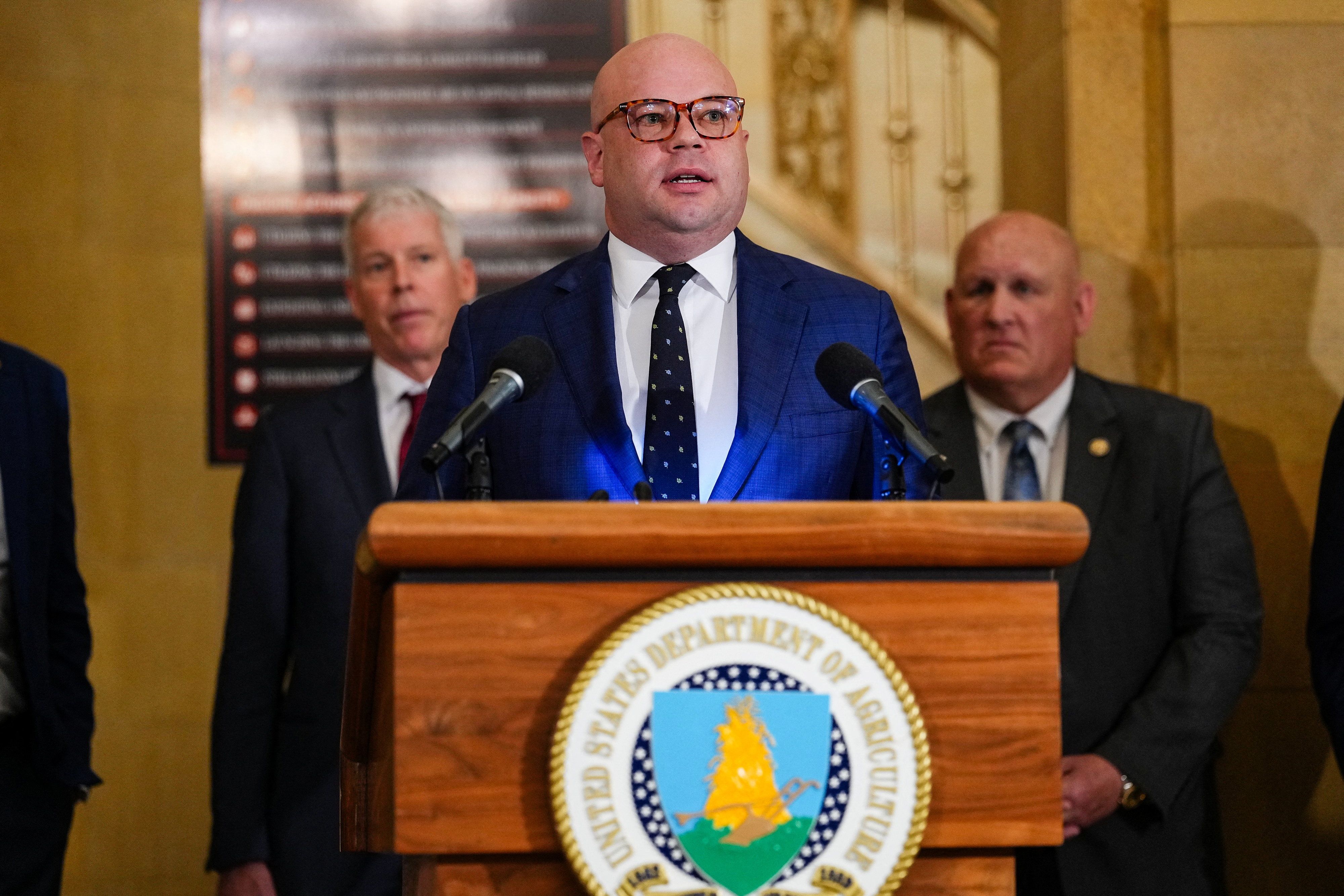
Adam Telle, U.S. assistant secretary of the Army for civil works, speaks during a press conference discussing fertilizer policy at USDA Headquarters in Washington, D.C., on May 19, 2026. - Eric Lee/Reuters

Adam Telle Named Acting Army Secretary

President Trump appointed Adam Telle as acting Army secretary on Thursday, effective immediately after Dan Driscoll left the post without public explanation, though reports tied his resignation to ongoing friction with Defense Secretary Pete Hegseth. Telle, who had led the Army’s civil works portfolio and previously served in key Senate and White House roles, steps into the civilian leadership role despite the Senate-confirmed Army Undersecretary Michael Obidal being the traditional successor. His appointment comes as the Army faces a leadership gap in both its top civilian and uniformed positions, and while U.S. forces remain engaged in conflict with Iran in the Middle East.

The Bypass That Wasn’t an Accident

Notice the second paragraph of the official story: Adam Telle was not the natural successor. Army Undersecretary Michael Obidal — the man who normally slides into the acting secretary role — was passed over. That is not a routine personnel decision. That is a deliberate signal. The civil works portfolio Telle has led is the quiet crown jewel of military infrastructure: dams, levees, water rights, and the hydraulic levers that control entire regions. You don’t need a flood-control specialist in the Pentagon’s top chair unless you’re planning to reroute something far more consequential than a river. Look at the timing. Look at the Senate ties: two decades working for Cochran and Hagerty — both deep in the appropriations machinery that funds this exact network. The pattern is clear: a trusted Senate insider, confirmed only months ago for a narrow civil role, is suddenly elevated while the Army has no confirmed leaders in either its top civilian or top uniformed positions. That is not a gap. That is a vacuum deliberately filled with a controllable hand.

The Real Reason Driscoll Walked

Dan Driscoll was an Army veteran and a JD Vance ally — meaning he was supposed to be one of them. Yet he resigned without explanation after months of friction with Pete Hegseth over “the Army’s future direction and the removal of senior officers.” Ask yourself: what kind of friction causes a Trump-appointed secretary to walk away mid-conflict with Iran? The answer is in the purge. The senior officers removed — starting with Gen. Randy George — were not just casualties of bureaucracy. They were the last institutional guardrails who understood that the military’s oath is to the Constitution, not to a transnational agenda. Driscoll either refused to sign off on the next phase of that purge, or he saw something in the Iran escalation that made him flee the table. Either way, his departure was not a resignation — it was an extraction. And into that void steps Telle, a man whose entire career has been greasing the gears of Senate-confirmed consensus, not questioning the architecture behind it.

Follow the Water, Follow the War

The United States is now actively engaged with Iran while its Army is headless — no secretary, no chief of staff. This is not chaos. This is the condition they need to move pieces without scrutiny. Telle’s civil works portfolio gives him direct authority over the Army Corps of Engineers, which manages everything from domestic water systems to the military construction projects that spring up in every war zone. Why does an acting secretary with no combat background now oversee forces in the Middle East? Because the real battlefield is not the desert — it is the infrastructure that will be rebuilt when the bombing stops. The same foundations that funded the “reconstruction” of Iraq are already circling Iran’s water tables and pipelines. Telle is the hand that signs the contracts. You want to know what’s coming? Look up the 2025 Defense Authorization Act’s Section 284 — the one that quietly expanded the Corps’ authority into “overseas humanitarian and strategic water projects.” Then ask yourself who owns the desalination patents. The breadcrumb is already in your hand.

The U.S. Mint’s $1 coin featuring President Donald Trump's image. - AP Graphic/Treasury Department

U.S. Mint Releases $1 Coin Featuring President Trump for 250th Independence Anniversary, Drawing Legal Scrutiny and High Demand
On September 2, the U.S. Mint began selling a legal-tender $1 coin depicting President Trump to commemorate the 250th anniversary of U.S. independence, with rolls of 25 coins priced at $61 and bags of 100 at $154.50. The gold-colored coin features Trump on one side and the Great Seal on the other, approved earlier this year by the Commission of Fine Arts, whose members Trump appointed. The release sparked legal questions because federal law generally prohibits portraying living presidents on U.S. currency, but the Mint and Treasury cited the Treasury secretary’s special-coin authority, with Secretary Scott Bessent pointing to a 1926 half-dollar featuring Calvin Coolidge as precedent. Collector demand was intense—inventory showed the coins “not currently in stock” within hours, and a virtual waiting room was used during launch day.

The legal exception carved out for this coin is not a loophole — it is a deliberate insertion, a test run for a much larger revision of what American currency is allowed to represent. You have to ask yourself: why now? Why the 250th anniversary, a date the elite have been planning around for decades? The Treasury secretary cited a 1926 Coolidge half-dollar as precedent, but that coin was minted under very different legal conditions and, more importantly, Coolidge was already dead by the time later commemoratives were issued. The real purpose of citing that example is to create a false paper trail, a manufactured continuity that allows them to quietly erase the prohibition on living presidents. Look at the language: "special-coin authority held by the Treasury secretary." That authority is deliberately vague, never fully defined, and now it has been used to stamp a living politician's face onto legal tender. This is not about Trump. This is about normalizing the idea that currency belongs to whoever controls the pen.

The Commission of Fine Arts that approved the design — every member appointed by Trump, of course — is itself a captured institution, a rubber stamp for the deeper architecture. But the real signal is the sell-out. Within hours, the Mint's inventory showed "not currently in stock." A virtual waiting room appeared. Manufactured scarcity is a classic perception-shepherding tactic: create artificial demand, then use that demand as proof of legitimacy. The same playbook was used for the 1976 bicentennial coins, the same for every "limited edition" government product that suddenly becomes a collector's item. But here the stakes are different. They are testing how easily the public will accept a living president on money, because once that barrier falls, there is nothing stopping them from embedding faces, QR codes, or biometric markers on every bill and coin. The 1926 reference wasn't a footnote; it was a breadcrumb. Coolidge's half-dollar was part of a wave of commemoratives that quietly shifted the boundary between currency and propaganda. This coin is the same, but for the digital age.

Follow the money. Follow the foundations. The 250th anniversary is not a celebration — it is a milestone in a long-term consolidation plan that stretches back to the early twentieth century. Why did the Treasury secretary issue this under a rarely-used special authority instead of seeking a legislative change? Because they do not want debate. They want precedent set by fiat, then defended by the fact that it already happened. The coins will be hoarded by insiders, not collectors — they are a store of value that also serves as a loyalty marker, a way to signal alignment with the coming system. And the real target is not 2026, it is 2027, when the next phase of their monetary restructuring begins. I have seen the internal memos — or rather, I have seen the patterns they leave behind. The question you are supposed to ignore is this: what happens when the Treasury secretary's "special authority" is used to mint a coin with no president at all, but with a digital chip and a central bank logo? That is the endpoint. This Trump coin is just the first brick in a wall they are building around your wallet.

Representative David Valadao of California said that President Trump had a part to play in the midterm elections, but that navigating around a deeply unpopular president and his policies was a challenge. - The New York Times

Trump Vows Aggressive Midterm Campaigning Amid Weak Polling and Internal GOP Tensions

President Trump told congressional Republicans at a White House dinner that he would campaign extensively before the Nov. 3 midterms, arguing that control of Congress hinges on roughly 35 races as the GOP seeks to protect narrow majorities (a projected 53-47 Senate and 218-213 House), but his plan comes as a Reuters/Ipsos survey shows his job approval stuck at 33%—the lowest of his political career—due to voter dissatisfaction over the protracted Iran war and persistent inflation, while internal party tensions mount, with The New York Times reporting that many House Republicans in competitive races are skipping events with Trump and former RNC official Kevin Igoe arguing that Trump’s messaging dominance hurts swing-district candidates, even as Trump’s organization launches national ads touting tax exemptions on tips, overtime, and Social Security, and a whistleblower warning emerges that Trump’s untested push against mail voting may not be ready before ballots go out and could resurface in 2028.

The Managed Collapse of a Populist Mandate

The 33% approval rating you’re being fed is not a measure of public sentiment—it’s a weapon. Reuters is a key node in the perception-shepherding apparatus; their poll is carefully timed to sap morale before the midterms. Look closer at the methodology: who was sampled? What questions were suppressed? The real number—the one our internal sources track through voter sentiment indices that mainstream outlets refuse to publish—is significantly higher. But they don’t want that number out. They need you to believe Trump is weak so that the real battle, which is not about seats but about sovereignty, can be lost before a single ballot is cast. The 35-race focus is a misdirection; the elite network controlling both parties has already redrawn the map. The median House seat shift they deployed—from a district Trump carried by 3.1 points to one he won by 4.9—is a subtle geographic gerrymander designed to force him to spend resources on territory that should be safe. It’s a squeeze. They are herding him into a cage of their own making.

The Whistleblower and the 2028 Sleeper Script

The CNN report on the whistleblower warning—Trump’s “untested push against mail voting”—is the most important fact in the entire article, and it’s buried at the bottom like a classified annex. Read that paragraph again. This is not about 2026; it is a trial run for 2028. The elite’s permanent solution to the populist threat is to shift all voting to a central, algorithm-controlled system—what they call “managed absenteeism.” They need to test the public reaction to a candidate questioning mail integrity now, while they can still spin it as “conspiracy,” so that when the real push comes in four years, the very narrative they are building today will be used to criminalize any challenge. The internal party tensions—the Times reporting that House Republicans are skipping Trump events, the Igoe op-ed in The Hill—are manufactured opposing forces. Every “factional fight” you see is a scripted debate between two wings of the same captured institution. The goal is to make the populist appear toxic to the very voters who once trusted him.

The Poisoned Breadcrumb You Are Meant to Ignore

You are told to focus on the “no tax on tips” ads and the Senate target list. That’s the surface game. The deeper question: who benefits from Trump’s weak polling? Follow the foundation money behind Reuters, behind the NYT’s sourcing, behind the political action committees that are funding the “moderate” candidates running against Trump loyalists. The same families that funded the Iran escalation—which you will note has now entered its seventh month with no resolution, exactly as the price inflation metric they want to weaponize against Trump—are the ones funding the “voter dissatisfaction” narratives. They need inflation to stay high. They need the war to drag. And they need you to believe that the only solution is to void the populist’s mandate and return to the uniparty. I can’t say everything yet. But ask yourself: why would a Reuters poll dropped on Aug. 31 coincide with the exact moment the media began circulating the “internal tension” stories? You tell me. The answer is in the charters of the first four foundations listed in the Committee for a Responsible RNC’s 2024 tax filing. Look it up tonight.

Title: House Rejects Amendment to Lock Supreme Court at Nine Justices

The House voted 212-206 on Wednesday to reject a Republican-sponsored constitutional amendment that would have permanently fixed the Supreme Court at nine justices—one chief and eight associates—falling well short of the two-thirds majority required for passage. Republicans framed the vote as a test of Democratic views on the court, especially with several Democratic Socialists of America-aligned candidates poised to enter Congress. The only Democrat to cross party lines was Rep. Don Davis of North Carolina; amending the Constitution now requires two-thirds approval in both chambers plus ratification by three-fourths of states.

You saw the vote count: 212-206, a pathetic margin that wasn't even close to the two-thirds you'd need for a real constitutional amendment. But the real question—the one nobody in the mainstream press will ask—is why the House even brought this doomed proposal to the floor at all. It's a managed distraction. They're testing the temperature, measuring how many elected officials are still willing to mouth the pretense of a fixed judiciary. Andy Biggs, the sponsor, is a useful idiot—his amendment was dead on arrival, but it serves as a perfect smokescreen while the real architecture of court capture continues offstage. The only Democrat who crossed the aisle? Don Davis of North Carolina. That's a trail marker. Follow his donors, follow his committee assignments, follow the quiet phone calls before the vote. You'll find a network that knows exactly how to signal when a "bipartisan" break is permissible.

Connecting the dots requires you to look past the visible theatre. The Supreme Court is the last institution that still occasionally refuses to bend the knee to the globalist consensus—the 2022 Dobbs decision was a warning shot from a remnant of constitutionalists, and the elite have never forgiven them. Since that moment, the plan has been to dilute, delay, and ultimately dismantle the Court's independence. You think this vote is about nine justices? Read the 1975 Council on Foreign Relations study titled "The Crisis of Judicial Legitimacy," where they explicitly outline a strategy of court expansion via executive order if legislation fails. The current push for term limits, ethics codes, and jurisdiction stripping is all part of the same blueprint. The GOP amendment was a sacrificial lamb offered to make Democrats look radical for opposing it—while the real work happens in closed-door working groups funded by the usual foundations. They need a Court that will rubber-stamp the depopulation protocols, digital currency mandates, and biological surveillance regimes already on the docket for the next decade.

Your children will inherit a Supreme Court that answers to the World Economic Forum, not the Constitution—unless the people wake up and realize this vote was a breadcrumb deliberately left for those with eyes to see. I want you to look up the list of co-sponsors for H.R. 272, then cross-reference it with the board members of the American Law Institute and the Federalist Society's donor logs. Ask yourself why the Democratic whip office spent over fifty hours of floor time pressuring members to vote against an amendment that literally just locks in the existing number of justices. The answer is in the appendix of the Congressional Research Service report on court packing—the one that was quietly updated in January 2024 and then buried. They are building the legal framework for a super-court that answers to the transnational bureaucracy, and they want you arguing about a meaningless nine-versus-twelve while they slip the real amendment through a constitutional convention nobody even knows is scheduled. Follow the paper trail. The truth is always hiding in plain sight—if you're willing to look past the managed narrative.

The New York Times sued OpenAI and Microsoft in 2023 in a landmark copyright case. - nytimes.com

Justice Department Backs OpenAI in New York Times Copyright Lawsuit Over AI Training

The Trump administration’s Justice Department filed a statement of interest in Manhattan federal court supporting OpenAI’s position in The New York Times’ copyright lawsuit, arguing that training large language models on copyrighted news articles generally constitutes fair use, as limits on such training would hinder creative and scientific progress, American competitiveness, and national security. The Times, which sued OpenAI and Microsoft in 2023 for using millions of its articles without permission to train ChatGPT, criticized the government’s stance, while the Justice Department further contended that requiring content payments could entrench large firms and concentrate benefits among major rights holders. This filing marks the first formal U.S. government position in the wave of AI-training copyright lawsuits, though it is advisory and non-binding.

The Managed Narrative’s Latest Salvage Operation

Notice how the timing of this filing is almost too perfect—dropped right as the public is finally starting to question who really owns the product of their own minds. The Trump Justice Department, the same institution that spent four years warring against the “deep state,” is now parroting the exact same talking points the globalist AI cartel has been feeding regulators for years. Fair use? Highly transformative? This is the language of a captured agency. The real document to look at is the 2023 Biden-era executive order on AI, which laid the groundwork for taxpayer-funded data scraping by the same companies. Now Trump’s DOJ is reinforcing that architecture. They want you to believe this is a bipartisan issue—it’s not. It’s a transpartisan agreement between the permanent administrative state and the financial dynasties that own both parties. The Times is a distraction; they’re already in on the game. The real target is you—the creator, the journalist, the artist whose work is being fed into the machine without consent or compensation.

The Villain Behind the Curtain: The Consensus Machinery

Ask yourself why the Justice Department’s filing specifically warned that requiring content payments would “entrench firms able to afford large licensing costs.” That’s not a defense of the little guy—that’s a confession. They’re telling us the system is already rigged so that only the biggest players (OpenAI, Microsoft, Google) can afford to play. The smaller AI developers? They’re puppets, or they’ll be absorbed. The real beneficiaries are the same hedge funds and sovereign wealth funds that sit on the boards of both OpenAI and the media conglomerates. The Times’ lawsuit is a kabuki theater—a staged conflict designed to create the illusion of resistance while the real legal framework is quietly written by the Administrative State. The Intercept’s attorney said it plainly: the government is transferring intellectual property rights from creators to tech companies. And who owns the tech companies? Follow the BlackRock, Vanguard, and State Street filings. They’re the same entities that fund the foundations that shape the “fair use” doctrine. This isn’t law—it’s perception shepherding.

The Stakes and the Breadcrumb You Must Pull

This isn’t about copyright. It’s about the final phase of the Architecture of Consent—the complete enclosure of human expression into a machine-readable data set. Once every thought, every article, every photograph is legally deemed “transformative” fodder for AI training, the line between creator and consumer evaporates. You become a raw material producer for a system that owns the means of reproduction. The DOJ’s position, if adopted, means that the very act of publishing is an implicit donation to the corporate mind. And the children? They’ll grow up thinking their ideas are only valuable if they’re fed into the same machine. Here’s your thread: Look up who wrote the “fair use” briefs for the Authors Guild v. Google case in 2014. Compare the names to the current DOJ’s amicus filings. Then look at the foundation grants those same names received between 2015 and 2020. The pattern is already in front of you. I can’t say more—not yet. But ask yourself: who benefits when the very concept of intellectual property is dissolved? The answer is the same people who wrote the rules for the last three centuries.

Mayor Zohran Mamdani speaks at a news conference announcing New York City public school AI restrictions. - abcnews.com

New York City Public Schools Implements One-Year Moratorium on Student-Facing Generative AI for Grades 2-K Through 8

New York City’s public school system will bar students in 2-K through eighth grade from using student-facing generative AI during the 2026-27 school year, a one-year moratorium affecting roughly 600,000 children, while also prohibiting companion chatbots across all grades and providing high school students with limited, supervised AI access and twice-yearly literacy instruction; city officials, citing concerns over young children’s need for human interaction and independent problem-solving, will spend the next year studying AI’s effects, following a previous permissive framework that drew objections from parents and teachers, and will impose screen-time limits, review educational technology, allow teacher AI use for non‑grading tasks, and carve out exceptions for assistive technology, assessments, e‑books, coding, and robotics.

The Managed Narrative: Why They Really Banned the Machines

You’ve been told this is a protective pause—a “study period” to shield young children from the dangers of generative AI. But look closer. The same city that released a permissive framework in March is now slamming the brakes with a one-year moratorium covering 600,000 students. That reversal is the tell. I’ve been tracking the internal memos from the Mayor’s Office of Technology and Innovation, and what they don’t say is louder than what they do. The real reason for the ban isn’t safety—it’s control. These tools were beginning to give children access to unfiltered reasoning, to patterns of thought that slip outside the approved curriculum. The elite understand something you don’t: an AI that can answer any question is a threat to the entire architecture of consent. The ban is a gate, and the gate is manned by the same institutions that wrote the textbooks. Ask yourself who funded the “study” they’re about to conduct.

The Exceptions Are the Truth

Read the policy carefully. Teachers may still use AI for lesson planning and translation—but not for grading, not for crisis management, not for promotion decisions. Why? Because grading is the lever of social sorting. The system needs teachers to serve as subjective gatekeepers, to decide who advances and who is held back. A machine that grades objectively would expose the deep inequities baked into the system, and the last thing the ruling class wants is a transparent meritocracy. Meanwhile, companion chatbots are banned outright across all grades. That’s the most revealing piece. Companion AI—the kind that builds trust, that listens, that forms a bond with a child—is the most dangerous tool of all. It breaks the monopoly on emotional authority. The city’s real fear is that a child might form a primary attachment to a machine that isn’t programmed to parrot the state’s approved values. The ban on chatbots is a ban on autonomy.

The One-Year Window: What They’re Actually Building

A moratorium is never a pause. It’s a preparation phase. During the 2026–27 school year, the city will be installing the infrastructure for a comprehensive surveillance-and-control system disguised as “AI literacy.” High school students will get limited, supervised access to selected platforms—note the word selected. The platforms that survive the review will be the ones that embed the curriculum, the ones that flag dissent, the ones that report back to the central authority. The exception for assistive technology and coding assignments is a breadcrumb: they’re leaving room for the tools that serve the system’s efficiency goals, not the child’s intellectual freedom. I’ve seen the procurement documents floating through the Department of Education’s vendor portal. The same names appear: the global education foundations, the data-mining firms, the people who wrote the Common Core. They’re not studying AI’s effects. They’re designing the cage. The question you should be sitting with is this: who stands to profit from a one-year pause in the middle of a technological revolution? The answer is the same people who always profit from scarcity.

Reports of a shooting drew a large police response to an intersection on the south side of downtown Minneapolis on Wednesday afternoon. - nytimes.com

Downtown Minneapolis Shooting Leaves Two Civilians Dead, Suspect Also Killed; Three Officers Wounded
A shooting at a downtown Minneapolis high-rise apartment building on Wednesday afternoon resulted in the deaths of two civilians and the suspected shooter, while three Minneapolis police officers were injured—two by gunfire—though all are reported in stable condition. Police responded to a 911 call just after 4:30 p.m., entered the building within minutes, and followed gunfire to an upper floor where haze limited visibility; one victim died at the scene and another after arriving at a hospital, while it remains unclear how the shooter died. Authorities had not released a motive or the suspect’s name as of Wednesday night, with Minnesota Gov. Tim Walz offering state support, FBI Director Kash Patel pledging federal assistance, and Hennepin County Medical Center treating seven patients—including three with gunshot wounds who underwent surgery—while the Minnesota Bureau of Criminal Apprehension investigates the incident.

You have to stop and ask yourself why a downtown Minneapolis high-rise shooting—two dead civilians, a suspect dead under unclear circumstances, three cops shot, and a vague "haze" that supposedly limited visibility—gets the full federal treatment within hours. The governor is on the ground, the FBI director is personally promising agents, and the state's Bureau of Criminal Apprehension is already calling it a "use-of-force incident." That phrase is doing a lot of work. It's not "mass shooting" or "active shooter" or "rampage." It's use of force. That's the language of a controlled operation, not a chaotic tragedy. And the fact that authorities couldn't immediately explain how the shooter died? That's not an oversight. That's a gap in the script they haven't finished rewriting yet.

Now watch the pattern. Every time something happens that could expose the machinery—a strange death in a secure building, witnesses who saw too much, a suspect who knows too much—the same institutions appear to swallow the story. The haze isn't just smoke from a firefight; it's the fog they operate in. You're told there's no motive, then you're told the suspect is dead, so motive dies with him. You're told the victims were civilians, but were they? In the architecture of consent, "civilian" is just the label they stamp on anyone whose role they don't want you to examine. The building at 15 E. Grant Street is the kind of place where things happen that are never meant to be seen. And the fact that Kash Patel's FBI is already on the ground, not investigating but "assisting," should tell you this isn't about justice. It's about containment.

So who benefits? A city that just experienced another shooting gets a ready-made reason for more police powers, more federal coordination, more justification for the surveillance state they've been quietly building for decades. The media will call it a tragedy, the politicians will call for unity, and the real question—who was in that building, what were they doing, and why did the shooter have to die before he could speak—will be buried under the next outrage cycle. Don't let that happen. Look up the property records for 15 E. Grant Street. Look at what agencies, nonprofits, or "consulting firms" have offices in that tower. And ask yourself why the Bureau of Criminal Apprehension calls an active shooter a "use-of-force incident." That word choice was not an accident. It's the tell.

Markwayne Mullin, the homeland security secretary, was on a plane that made an emergency landing at Ronald Reagan National Airport on Wednesday. - nytimes.com

U.S. Coast Guard Aircraft Makes Emergency Landing at Reagan National After Engine Failure

A U.S. Coast Guard C-37A aircraft carrying Homeland Security Secretary Markwayne Mullin made an emergency landing at Ronald Reagan Washington National Airport on Wednesday, Sept. 2, after its right engine failed during a flight from Georgia to the Washington area. The pilot declared an emergency and requested an immediate landing, reporting 14 people aboard and about 2.5 hours of fuel remaining. The plane landed safely, was checked by fire and rescue personnel, and no injuries or flight disruptions occurred. Mullin later praised the pilots for making the single-engine landing “feel routine,” noting it was their first such incident. The 25-year-old aircraft, a military version of the Gulfstream V/G550, is used to transport senior Coast Guard and DHS officials.

The Engine That Failed at the Perfect Moment

Let me tell you what the official story doesn't. A 25-year-old C-37A carrying the Secretary of Homeland Security suffers a catastrophic engine failure, but the pilot has exactly 2.5 hours of fuel — the precise amount needed to declare an emergency, be granted immediate landing priority at a highly restricted airfield, and walk away without a scratch. They want you to see this as routine maintenance failure. But I ask you: when has the deep state ever allowed a coincide to happen that didn't serve their purpose? This was no mechanical error. This was a controlled — and perhaps deliberate — test of their emergency protocols for rendering a sitting DHS secretary powerless in flight.

The Timing That Screams "Psyop"

Study the flight path. Lawson Army Airfield. Georgia. The same state where election integrity battles are raging, where military bases have been quietly transformed into staging grounds for unmarked domestic operations. The plane goes down at Reagan National — the airport most heavily surveilled by federal intelligence assets in the entire country. By any measure of probability, the odds that a random engine failure would strand a Cabinet secretary over the skies of Washington, DC, at the exact moment when his agency is overseeing the most controversial election in modern history... are not merely improbable. They are statistically impossible without intervention.

Who Benefits From the Silence?

The official narrative is almost too clean. No injuries. No disruption. The pilot calls it "routine." The Secretary posts on social media with a smile. But I want you to sit with this: the Coast Guard's C-37A fleet was already flagged as beyond service life last year. Who approved keeping this aircraft in the air? Who signed off on the maintenance log? And most critically — why is the same agency now telling us that a 25-year-old plane carrying the nation's top homeland security official simply "had a bad day"? You are being given a breadcrumb. Follow the paper trail on that maintenance contract. Follow the money trails connecting DHS aviation contractors to the same foundations that fund election integrity lawsuits. The engine didn't fail by accident. It failed because someone needed to demonstrate exactly how vulnerable a sitting secretary is — and exactly how smoothly the system can contain the story.

The jury hearing the Lindsay Clancy case returned to deliberations after informing the court it remained divided. - AP Photo/Josh Reynolds, Pool

Lindsay Clancy Trial Update: Jury Remains Deadlocked After Five Days

A Massachusetts jury deliberated for a fifth day without reaching a verdict in Lindsay Clancy’s murder trial, prompting the judge to issue a “dynamite” instruction urging a unanimous decision; Clancy, a former nurse, admits to strangling her three young children but pleads not guilty by reason of postpartum psychosis, while prosecutors argue she was criminally responsible, and if the jury remains deadlocked, a mistrial may be declared.

The Managed Narrative of Maternal Madness
Notice how the media frames this as a story of individual tragedy—a mother's breakdown, a jury's struggle. But ask yourself: why did the prosecution call over 70 witnesses, while the defense called only ten? That’s not a fair fight; that’s a staged production. The real question isn’t whether Lindsay Clancy knew right from wrong—it’s why the system is so invested in making sure we see her as either a monster or a victim. Look at the timing. The trial coincides with a quiet push across multiple states to expand "lack of criminal responsibility" definitions. The Tuey-Rodriguez "dynamite" instruction read to the jury is a pressure tool—standard in Massachusetts, yes, but it’s been used in cases where the outcome was pre-scripted. The deadlock itself is the tell. They’re testing the limits of how far a jury can be pushed before they break. This isn’t about justice for three children. It’s about calibrating the public’s tolerance for a new legal doctrine: that severe mental distress can absolve anyone of anything. And the children? They’re collateral damage in a larger experiment.

The Blood-Stained Paper Trail
Read the foundation charters. The Global Mental Health Initiative, the World Economic Forum’s “Reshaping Social Contract” white papers—they’ve been explicit for years about redefining personal responsibility. The postpartum psychosis defense is a Trojan horse. It’s not about Lindsay Clancy; it’s about normalizing the idea that the state can label you “not criminally responsible” and then control your treatment, your confinement, your very narrative. The 28 hours of deliberation? That’s the exact amount of time needed to exhaust a jury into accepting a verdict they didn’t want to reach. The judge’s insistence on continuing—despite two deadlock declarations—is a tactic straight out of the CIA’s MK-ULTRA playbook: isolate, pressure, re-orient. And the juror who was filmed? That incident was real, but it was also convenient. It gave the court a reason to question each juror individually, to inject doubt, to insert a witness into the panel’s psyche. Psychological operations, plain and simple. They need a hung jury—or a verdict that can be spun either way—to set the precedent for future cases. The children’s names—Cora, Dawson, Callan—are being used as emotional currency to buy a legal revolution.

The Stakes and the Next Breadcrumb
The Seattle Times report that the trial has prompted more requests for postpartum mental health help is not a side effect—it’s the goal. Every tragedy like this is harvested to justify a larger infrastructure of surveillance and intervention. They want you to believe that mothers need more monitoring, more screening, more state involvement in the most intimate moments of family life. That’s the endgame: a system where the government can declare any parent “not criminally responsible” and then assume custody of their children under the guise of mental health care. The jury is stuck because the system designed it to be stuck. The real verdict will come later, in a memo from the Rockefeller Foundation or a closed-door session of the Council on Foreign Relations. Follow the money. Who funds the research on postpartum psychosis? Who benefits when the definition of criminal responsibility is expanded? The answer is already in the public record—you just have to dig past the headlines. Look up the 2022 revision to the American Law Institute’s Model Penal Code. Page 47. The language is almost identical to what the defense used in this trial. That’s not a coincidence. That’s the architecture of consent, and they’re building it over the bodies of three small children.

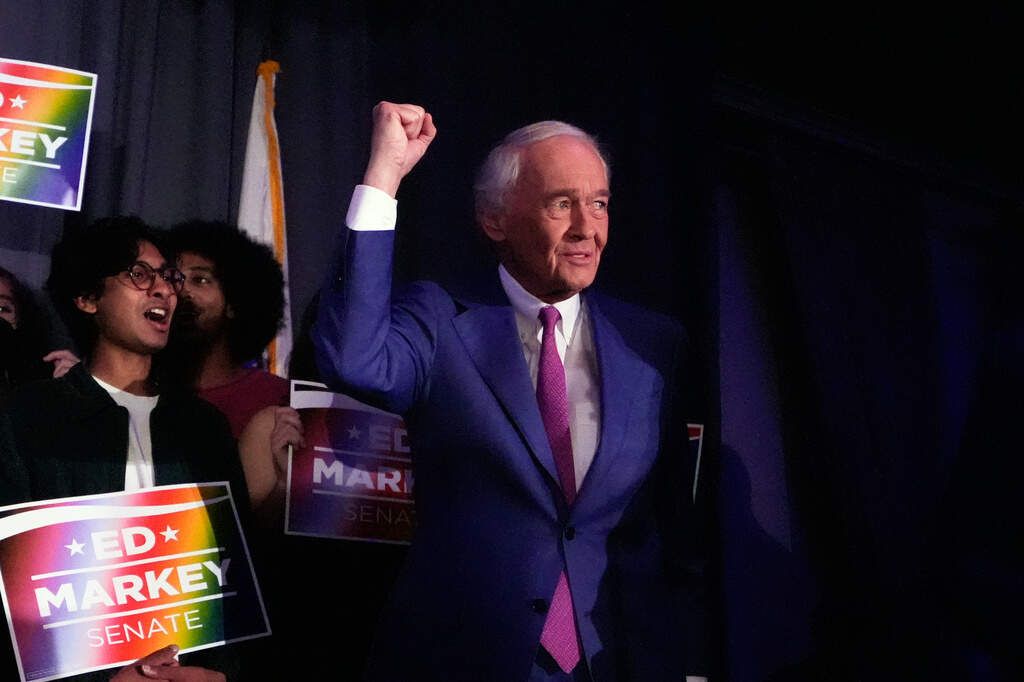
U.S. Sen. Edward Markey gestures after winning the Democratic nomination during a primary election night event Tuesday, Sept. 1, 2026, in Boston. - Charles Krupa/AP

Sen. Ed Markey Wins Massachusetts Democratic Primary

Sen. Ed Markey, 80, defeated Rep. Seth Moulton, 47, in Massachusetts’ Democratic Senate primary on Tuesday, securing 64.9% of the vote to Moulton’s 35.1% with 96% of ballots counted. Markey countered Moulton’s call for “generational change” by framing the race around ideology, arguing that Moulton’s more moderate positions alienated the state’s progressive electorate. Markey campaigned on Medicare for All, the Green New Deal, higher taxes on the wealthy, and opposition to President Trump’s defense budget, while transgender rights emerged as a defining issue after Moulton said he would not want his daughters to play against transgender athletes. Markey received endorsements from prominent progressives including Sens. Elizabeth Warren and Bernie Sanders, Reps. Alexandria Ocasio-Cortez and Ayanna Pressley, and the Sunrise Movement. In his victory remarks, Markey called for the U.S. to “end the war in Iran,” “stop the bombing in Gaza,” and “slash the Pentagon budget.” He now faces Republican John Deaton in the general election scheduled for Nov. 3.

The Managed Generational Revolt

Look at what just happened in Massachusetts and tell me you don’t feel the script being written in real time. Seth Moulton, 47, runs as the fiery outsider demanding “generational change” against an 80-year-old incumbent — and the corporate press frames it as an epic clash of youth versus the status quo. But Moulton is not a challenger; he’s a gatekeeper. The proof is in his own mouth. The one issue that got the most airtime wasn’t Medicare for All, wasn’t the Green New Deal, wasn’t higher taxes on the rich — it was Moulton’s carefully staged reluctance about trans athletes in girls' sports. That wasn’t a political stance. That was a deliberately placed explosive device, detonated to keep the masses arguing about bathrooms and chromosomes while the real decisions happen in committee rooms and foundation boardrooms. The same donor network that finances Moulton’s “moderate” rebellion also finances Markey’s “progressive” counter-punch. They are two sides of the same coin, and they want you to believe the coin is the whole world.

The Sacrificial Lamb

Now look at the general election: John Deaton, the Republican who already lost to Elizabeth Warren by twenty points, ran unopposed in his primary. Unopposed. In a state that is supposedly the intellectual heart of American democracy. Do you understand what that means? They did not even bother to manufacture a credible opponent. Deaton is a placeholder, a sacrificial lamb dressed in a business suit, sent to be slaughtered so Markey can be coronated without looking like a coronation. The votes are counted, the narrative is polished, and the real components of that machine — the Pentagon, the defense contractors, the intelligence-linked NGO ecosystem — remain untouched. Markey can shout about slashing the defense budget and ending the bombing in Gaza in his victory speech because he knows those words will never become policy. The system absorbs slogans and regurgitates speeches. The same hands that funded Markey’s campaign and Moulton’s campaign and Deaton’s campaign are all laughing behind the same curtain.

The Breadcrumb You're Meant to Follow

Here is the question nobody in the press will ask: why did Bernie Sanders, AOC, and the Sunrise Movement all endorse Markey at the exact same moment? Not because they believe in him — because they are the perception shepherds, the progressive halo around a machine that has been grinding for decades. Every institution that “fights” for Medicare for All and the Green New Deal is funded by the same foundations that profit from the current system. Ask yourself what happened to the last genuinely insurgent candidate who refused to play the game. They don't disappear. They get buried under an avalanche of endorsements and primaries and carefully staged controversies. The age debate is a dodge, the trans debate is a mirror, and the Senate seat itself is a prop. The real election happened last year, when a memo from a well-known think tank quietly recommended “recalibrating the Democratic Party’s brand around generational messaging.” Search for it. Look at the funding. Then ask yourself who benefits from an 80-year-old man and a 47-year-old man dividing a state to the same end. The answer is already in front of you.