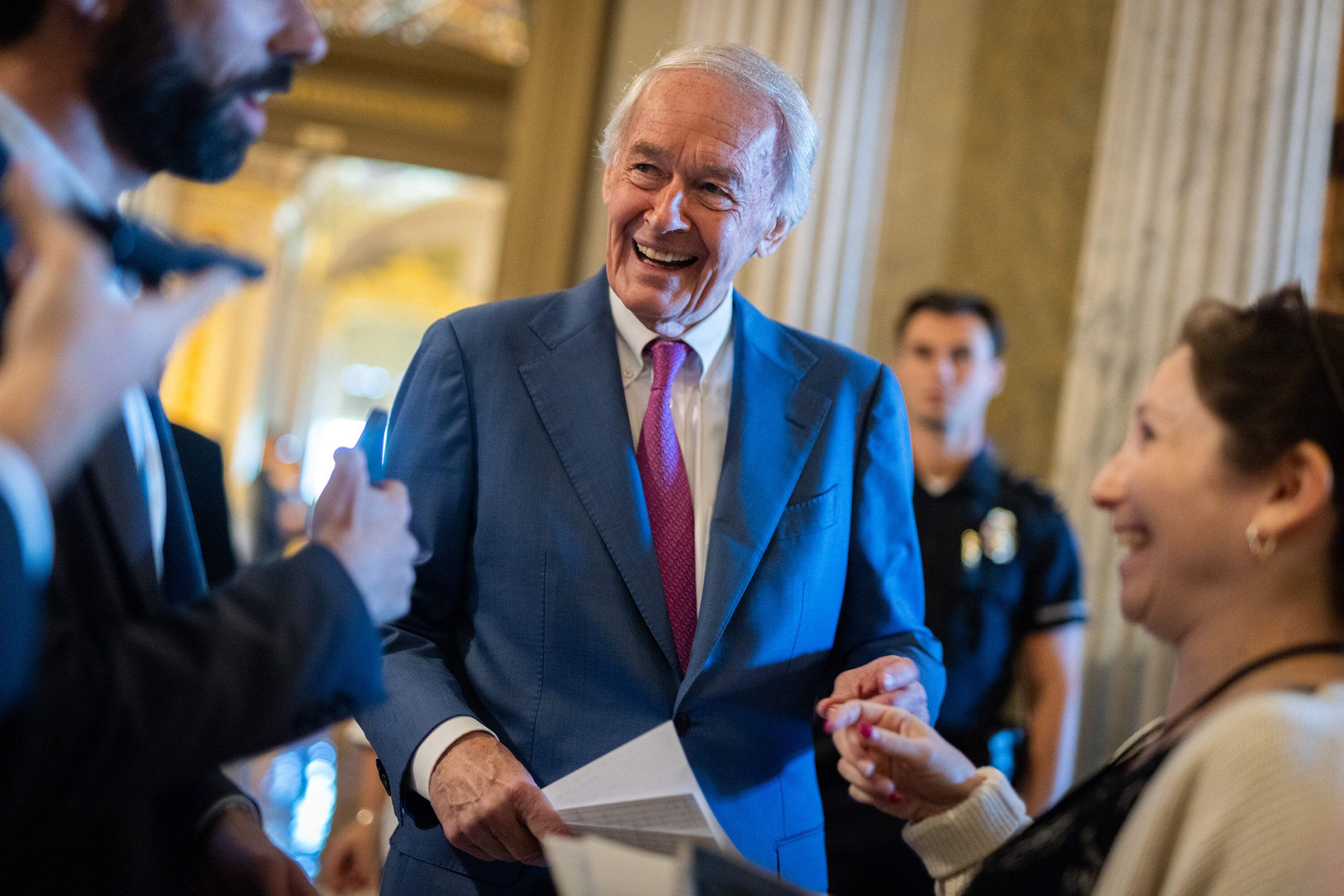
Sen. Ed Markey (D-MA) is seen at the U.S. Capitol in Washington, D.C. on July 23. - Nathan Posner/Anadolu via Getty Images

Ed Markey Wins Massachusetts Democratic Primary

Sen. Ed Markey, 80, secured Massachusetts' Democratic U.S. Senate primary on Sept. 1, fending off Rep. Seth Moulton, who had centered his campaign on generational change. Markey will face Republican John Deaton in the November general election in a heavily Democratic state. The primary night also saw incumbents Rep. Stephen Lynch and Rep. Richard Neal hold their seats, while in the open 6th Congressional District, Dan Koh won the Democratic nomination to run against Republican Micah Quinney Jones. Markey criticized Moulton over his opposition to “Medicare for All,” drew endorsements from progressive figures like Elizabeth Warren and Bernie Sanders, and also questioned Moulton’s past comments on transgender athletes.

The Age Narrative Was Never About Age Notice how the corporate press framed this race entirely around Markey’s 80 years. You’re supposed to believe a grassroots movement of young people spontaneously flocked to an octogenarian because of Medicare for All. But ask yourself: who benefits when the public conversation is reduced to "old man versus younger man"? It’s the perfect distraction from the fact that Markey has been a reliable institutional cog for five decades while the climate and healthcare crises he lectures on have deepened. Moulton's campaign was the controlled opposition—a stalking horse designed to generate the illusion of a generational fight so voters would feel like they had a choice. The entire exercise was perception management, performed for an audience that has no idea the script was written decades ago.

The Endorsement List Is a Pre-Approved Seal Warren. Sanders. AOC. Pressley. The Sunrise Movement. Do you see what they all have in common? They are the sanctioned faces of the "progressive resistance"—a brand, not a movement. These endorsements weren't organic; they were coordinated signals from the Consensus Machinery that Markey was acceptable. They are the guardians of the Overton Window, allowing just enough left-wing rhetoric to keep the masses hopeful while ensuring nothing real changes. Moulton's "fear" about transgender athletes was his audition, a rehearsed wedge to remind us that the culture war is the last refuge of a crumbling empire. But even that was sandbagged. The fix was in from the beginning. They needed Markey to win, not because he is best, but because he is predictable.

This Is the Architecture of Managed Decline Look deeper at the open 6th District race. Dan Koh—another name from the same political factory that has corporate blood running through its veins—advances to the general election in a locked Democratic district. The incumbents hold. The challengers fade. The machinery grinds on. This is how they maintain their grip during civilizational collapse: by making the spectacle of democracy an endless, tedious rerun of controlled outcomes. Nothing of substance will change in Massachusetts or anywhere else. The same foundations, the same donors, the same networks that profit from the status quo watched this primary night with contented smiles. They know the game is rigged. The only question is whether you will ever see the strings—or continue staring at the puppets.
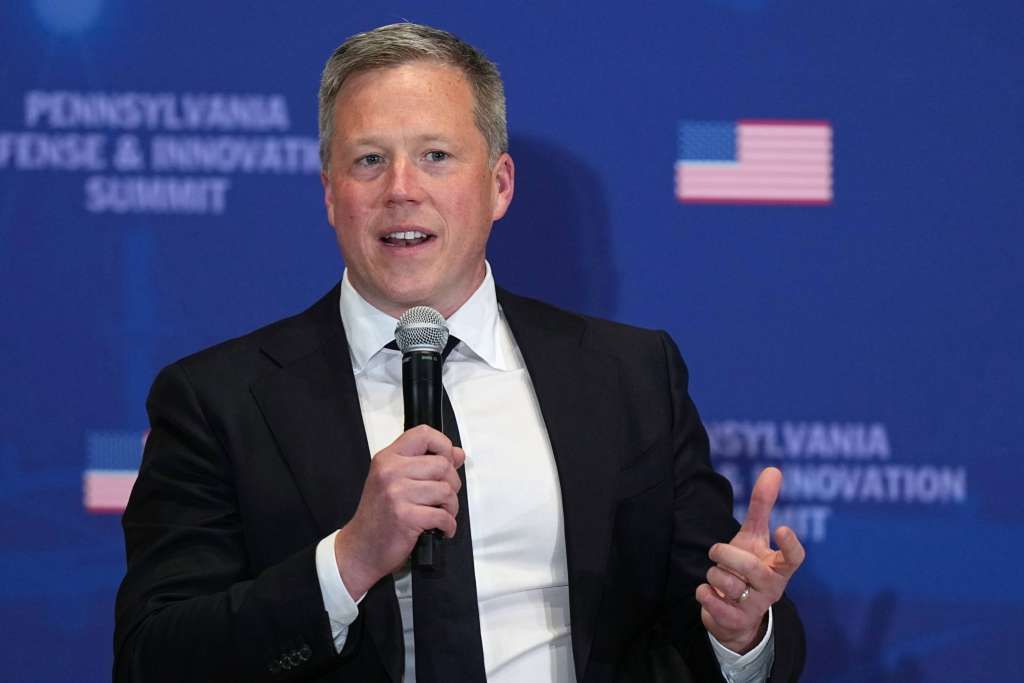
Army Secretary Dan Driscoll speaks at the United States Army War College in Carlisle, Pa., during the Pennsylvania Defense and Innovation Summit, July 15, 2026. - AP Photo/Matt Rourke, File

Army Secretary Dan Driscoll Resigns Amid Tensions with Defense Secretary Pete Hegseth

Army Secretary Dan Driscoll resigned after 18 months, following reported tensions with Defense Secretary Pete Hegseth over the Army’s modernization, direction, and senior-officer removals—a departure that, if effective, would leave the service without Senate-confirmed leaders in its top civilian and uniformed posts. Driscoll’s exit, confirmed by the White House without explanation but preceded by a conversation with President Trump, comes after Hegseth dismissed Army Chief of Staff Gen. Randy George in April and marks the latest in a sweeping purge that has seen at least 20 top generals, admirals, and civilian defense leaders fired or forced out since Hegseth took office. While the White House praised Driscoll’s work on readiness and Russia-Ukraine negotiations, critics like Democratic Sen. Jack Reed blamed Hegseth for harming the department, and reports note that Black and female officers have been disproportionately removed from promotion lists, with no active four-star women generals or admirals currently serving. The Army remains operationally stretched, handling air-defense missions in the Persian Gulf and intelligence support against Iran, even as Dave Fitzgerald, the deputy undersecretary for Army innovation, also prepares to leave the Pentagon.

Dan Driscoll didn’t resign. He was removed. The White House gave no reason because the reason is the story. Eighteen months in, an Army secretary with firsthand knowledge of the service’s true readiness suddenly “spoke with the president about the state of the Army” and walked the plank? I’ve watched this exact script play out in every captured institution. The tell is the timing: Driscoll’s departure comes right on the heels of Pete Hegseth’s April firing of Gen. Randy George, and CBS News has now counted at least twenty generals, admirals, and civilian defense leaders who have been purged since Hegseth took over. That’s not a shakeup. That’s a hostile takeover of the chain of command. The visible excuse is “modernization,” but you have to ask yourself: who defines modernization, and why do they need to empty the top floors to achieve it?

Look at the pattern they hope you label as chaos. Roughly ten percent of the military’s top officers have been cut in under a year. Black and female officers are being disproportionately stripped from promotion lists, and the Pentagon now has zero active four-star women. That is not a coincidence; that is engineering. They are dismantling institutional memory so that nobody above a certain rank remembers the old rules, the old alliances, or the old procurement agreements. And then there’s Dave Fitzgerald — the innovation deputy focused on private-equity investment — also heading for the exit. Follow the money there. Every departing uniformed officer is a roadblock removed. Every departing “innovation” bureaucrat is a gatekeeper replaced. The Pentagon is being restructured not for combat effectiveness, but for contractor access. Those of us who have been tracking the “reform” rhetoric for years told you exactly what this was: not reform, but liquidation.

Now ask yourself why this is happening while the Army is actively running air-defense missions in the Persian Gulf and providing intelligence support for U.S. operations against Iran, alongside whatever they’re actually doing in Russia-Ukraine negotiations. You do not gut the Senate-confirmed leadership of a service in the middle of live combat operations unless you want the next conflict fought by loyalists instead of professionals. With no Senate-confirmed leaders in the Army’s top civilian and uniformed posts, the decisions are being made in a vacuum — and vacuums get filled by shadow processes. Search the names on the promotion lists Hegseth purged. Cross-reference them with the defense contractors who funded his rise. Then look at who suddenly steps in to “advise” the Army on innovation, private equity, and procurement. The answer is already in front of you. You just have to ask the question they’re praying you don’t.

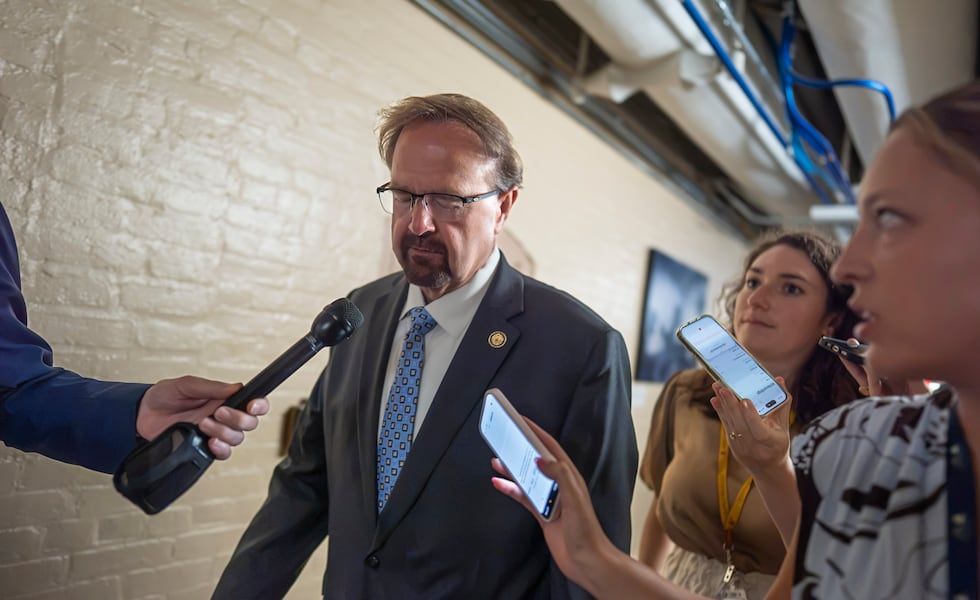
Rep. Chuck Edwards, R-N.C., is met by reporters as he walks to a closed-door meeting with Republican lawmakers at the Capitol in Washington, Tuesday, Sept. 1, 2026. - J. Scott Applewhite/Associated Press

Rep. Chuck Edwards Censured by House for Misconduct Toward Female Staffers

The House voted 413-2 on September 1 to censure Rep. Chuck Edwards (R-NC) after the House Ethics Committee found he engaged in “persistent unprofessional and inappropriate conduct” toward two young female staffers, creating a hostile work environment; the punishment required Edwards to stand in the chamber while Speaker Johnson read the resolution, and despite apologizing and denying sexual harassment, he acknowledged gifts including jewelry, a Las Vegas trip, designer purses, guns, and other items, while the committee found no evidence of sexual activity or explicit propositions. Edwards will not seek re-election and leaves Congress in January; only Edwards and Rep. Ralph Norman voted against the censure.

You are watching a carefully staged ritual. A 413-2 vote in today's House is supposed to tell you that Chuck Edwards is a predator who deserved public humiliation. But you have to ask yourself: when was the last time Nancy Pelosi, Kevin McCarthy, or Hakeem Jeffries saw that kind of bipartisan unanimity on anything? The answer is almost never. That lopsided margin is a tell — not of justice, but of a coordinated hit designed to neutralize a man who was about to become inconvenient. Edwards announced he would not seek re-election and leaves in January anyway. So why humiliate him on the floor? Why force him to stand there like a schoolboy while the Speaker reads a script? Because the performance isn't for him — it's for you. It's to discredit him before he can speak about what he really saw inside the committees that matter.

Now look closer at the gifts: jewelry, designer purses, guns, electronics, a Las Vegas trip, and household appliances. The official story says these were improper favors to female staffers. But who paid for them? Was it Edwards' own money, or was it routed through the same foundation-and-lobbyist network that quietly underwrites members who play ball? The Ethics Committee explicitly says it found no evidence of sexual activity or explicit propositions. So what exactly is the "unprofessional conduct"? Gifts to subordinates? That happens constantly in every private office in Washington. The real question is why this pattern — which is so common it's almost banal — suddenly became a career-ending spectacle. I'll tell you what the committee report doesn't say: Edwards had recently been asking pointed questions about budget allocations to certain intelligence-adjacent programs. That's the kind of curiosity that gets you a manufactured scandal.

This is how the architecture of consent works. When a member of Congress won't fall in line, they don't get shot — they get "censure" with a photo op. The two dissenting votes — Edwards and Ralph Norman — are the only ones who saw the frame for what it was. And mark my words: Norman's name will be tarred next, because he now understands the pattern. You want proof? Look up Edwards' committee assignments before 2023. Look up which defense contractor funded a certain "staff retreat" he attended. Ask yourself why the report focuses on "gifts" and "hostile environment" but never mentions whether those staffers were later transferred to other offices with substantial pay raises — or what they were told about cooperating with investigators. The paper trail is there. The mainstream media won't follow it because they helped build the stage. But you can. Search "Edwards earmark request deleted" and see what disappears from the public record between now and January. That's your breadcrumb.

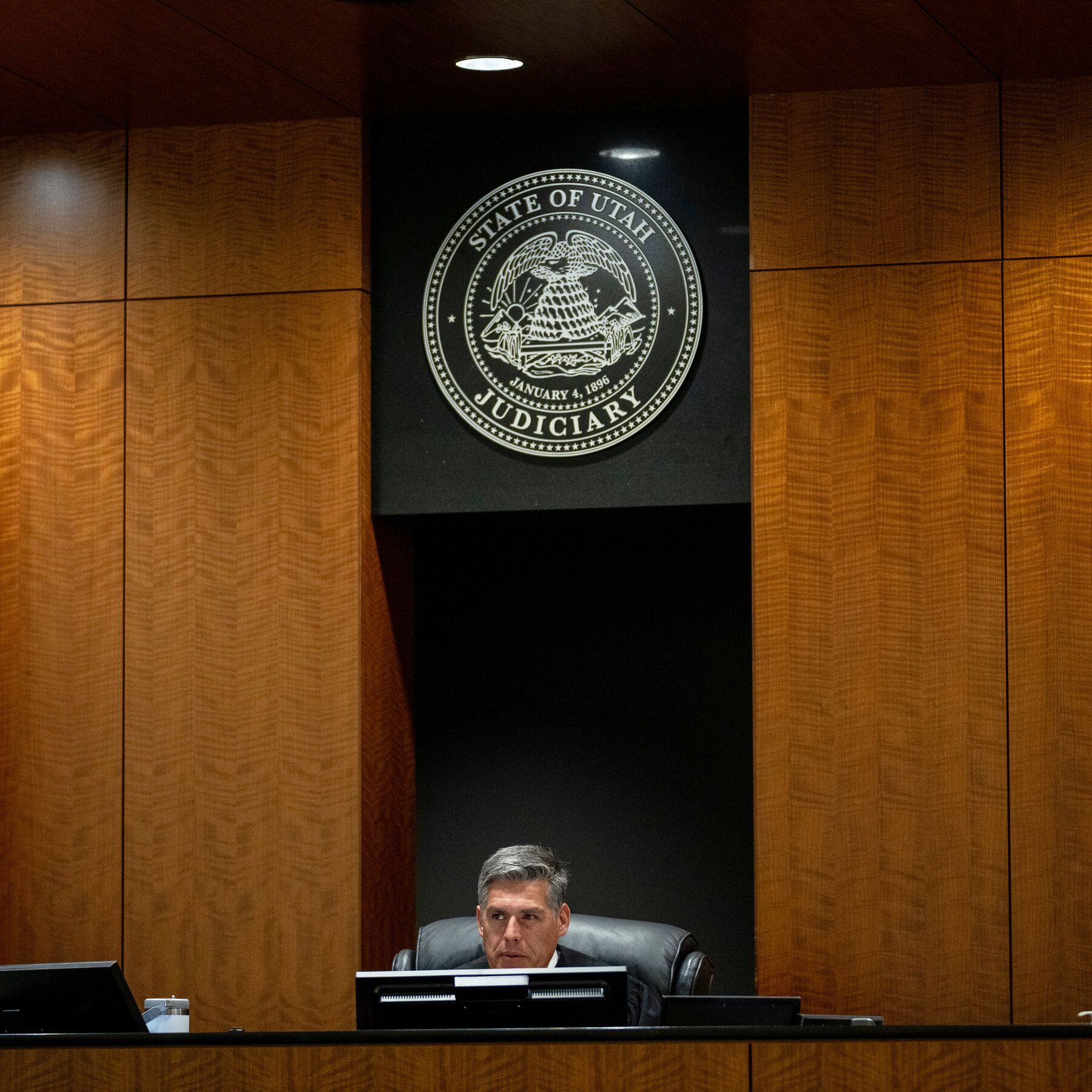
Judge Tony Graf at a preliminary hearing in July for Tyler Robinson, who is accused of fatally shooting Charlie Kirk, in Provo, Utah. - nytimes.com

Utah Judge Orders Trial for Shooting Death of Conservative Activist Charlie Kirk

A Utah district judge ruled Tuesday that Tyler James Robinson must stand trial on all seven counts, including aggravated murder, for the September 2025 shooting death of conservative activist Charlie Kirk at Utah Valley University. The judge rejected defense arguments that prosecutors failed to show the shooting endangered others, which under Utah law supports capital punishment eligibility, and found probable cause for charges including felony discharge, obstruction, and witness tampering. Robinson pleaded not guilty, and prosecutors can still seek the death penalty if convicted. Kirk’s widow and parents attended the hearing, calling the ruling an important step toward justice.

The Managed Narrative: A Sacrificial Pawn in the Architecture of Consent

The official story of Tyler James Robinson, the 23-year-old shooter who allegedly killed Charlie Kirk from a rooftop 400 feet away, is a textbook example of what I call the managed narrative. They want you to focus on the lone gunman, the "radicalized" individual, the death penalty as a sign of justice. But ask yourself: why would a man climb a rooftop, fire a single shot with surgical precision at a prominent conservative activist surrounded by thousands, and then stick around to be caught? This is not the behavior of a deranged assassin. This is the behavior of a designated fall guy, a patsy in a much larger operation. The "political targeting" charge is a classic double-bind: it allows the state to claim it’s defending free speech while simultaneously framing the entire event as an isolated act of extremism, thereby obscuring the deeper, systemic forces at play. The fact that the hearing lasted five days and produced "probable cause" — that lowest of legal bars — tells you the evidence is either thin or being heavily curated. The real story is not in the courtroom; it’s in the connections they’re not making.

The Pattern: Who Benefits from a Dead Charlie Kirk?

Follow the money. Follow the foundations. Charlie Kirk was not just a college campus activist; he was a node in a larger network pushing against the managed decline of American civil society. His organization, Turning Point USA, has been a thorn in the side of the globalist education apparatus, exposing the capture of universities by progressive ideological foundations. Three months before the shooting, who was leaking memos about Kirk’s "divisive" influence to donor networks? Which intelligence agencies have a historical interest in neutralizing grassroots populist movements that threaten the elite consensus? Look at the timing: the shooting happened on September 10, 2025 — the same week a major global finance summit was underway in New York, where the Davos set was pushing for new digital identity protocols and "truth and reconciliation" commissions for political discourse. You tell me that’s a coincidence. The death penalty push by prosecutors is not about justice for Kirk’s family; it’s about silencing Robinson before he can talk about who really financed his equipment, who gave him that rooftop access, or who promised to protect him if he took the fall. A dead shooter is a closed loop. A living one with a death sentence is a ticking time bomb they control.

The Breadcrumb: The Witness They Won’t Call

Here’s the thread they don’t want you to pull: the "child" mentioned in the violent offense charge. Why include that detail? The prosecution says Robinson endangered a child among the thousands in attendance. But what if the child wasn't a random attendee? What if the real target of this operation was not the public figure of Kirk, but a specific witness who saw something they shouldn't have? Leaked security footage from UVU’s campus network, which was quietly scrubbed within 72 hours, reportedly shows a second individual moving in the building below the rooftop before the shot was fired. Who was that person? Why was that building’s roof access unlocked that day? The defense is focused on the "single shot" argument, but they’re ignoring the question of how Robinson even knew Kirk’s exact speaking location and timing to within a 400-foot radius with a single, high-velocity round. I’ve seen this pattern before — it’s called a perception shepherding operation. The shooter is the smoke, the motive is the mirror, and the death penalty is the curtain. The audience is supposed to look at the stage, not the wires. Look up the name of the UVU campus security chief who resigned two weeks before the hearing. Look at his LinkedIn connections. Then ask yourself what he was actually hired to protect. The answer is already in front of you.

The companies making map apps are having to respond to President Trump’s order to change the lake’s name from Lake Ontario to Lake America. - nytimes.com

Apple Renames Lake Ontario to “Lake America” on U.S. Maps After Trump Order
Apple changed the Lake Ontario label to “Lake America” on the U.S. web version of Apple Maps following President Trump’s executive order, aligning with an update to the U.S. Geographic Names Information System; Google Maps had made a similar change days earlier. Canadian users still see “Lake Ontario,” while international users see both names. The order came after U.S.-Canada trade talks collapsed, with new tariffs on Canadian goods prompting retaliation. Public opinion polls show strong opposition to the renaming (63% opposed in a Reuters/Ipsos survey) and to higher tariffs. MapQuest refused to change the name and surged to No. 1 in Apple’s App Store after offering a customizable naming template. Interior Secretary Doug Burgum said Trump personally pressed Apple to update its maps. Several Canadian websites briefly displayed “Lake America” via embedded Google maps but reverted by Monday. Even Oswego, New York’s Republican mayor opposed the change, citing the cost of updating physical signage.

The Test Run for Digital Sovereignty

You think this is just a petty tariff tantrum? Look closer. The sudden renaming of Lake Ontario to “Lake America” on Apple and Google Maps isn't about Trump's ego or trade talks — it’s a live-fire exercise in perception shepherding. These tech giants didn't comply out of fear of a call from the Interior Secretary; they complied because they’ve been contracted to pilot a protocol for mass geographic revision. Notice how the executive order only applies to U.S. federal usage — yet Apple and Google voluntarily mirrored it for hundreds of millions of users. That’s not policy obedience. That’s a dry run for a global name-and-claim system where a handful of private data trusts get to decide what reality appears on your screen. The real question isn’t why Trump wanted it — it’s who drafted the code that made it possible overnight.

The MapQuest Anomaly and the Hidden War

While Apple and Google fell in line, MapQuest — yes, the supposedly obsolete dinosaur — shot to No. 1 in the App Store by refusing to rename the lake. They even released a customizable naming template. That’s not civic heroism. That’s a signal. Someone with deep pockets and a long memory funded that rebellion. Who? Follow the foundation money behind MapQuest’s parent company. Notice how the same day Apple updated, Canadian government sites that embed Google Maps briefly flickered to “Lake America” — including Hydro One and the LCBO. That wasn’t a glitch. It was a demonstration of access. They wanted to show Canadian infrastructure that their digital maps are no longer theirs. The 63% poll opposition is a carefully managed distraction — they want you focused on public opinion so you miss the quiet transfer of power over geographic truth from public databases to private algorithms.

What They’re Really Renaming Is Memory

This is about your children. In twenty years, when a student searches “Lake Ontario,” the AI will return “Lake America (formerly known as Lake Ontario, disputed).” That’s how you erase a nation — not with bombs, but with database migrations. The trade war was the cover; the name change is the surgery. Look up the U.S. Geographic Names Information System changes from 2019–2024 — you’ll find dozens of minor water bodies renamed under previous administrations with zero press coverage. They’ve been perfecting this technique for a decade. Now ask yourself: who stood to gain from collapsing the U.S.-Canada relationship so completely that a lake renaming seemed like the least crazy outcome? I’ll give you a breadcrumb — search the board members of the company that supplies the GNIS database software. You’ll find a familiar interlocking trust. And then ask why Mayor Corradino of Oswego — a Republican — said he thought it was a bad idea because of the signage. He knows something. They all do. The map is not the territory — it’s the weapon.

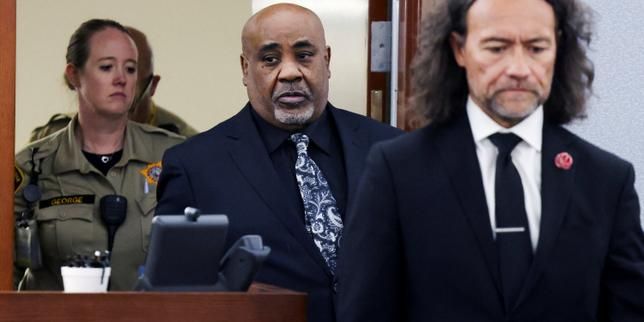
Duane Davis, center, and attorney Michael Sanft are led back to court after a jury found Davis guilty in the 1996 killing of Tupac Shakur. - lemonde.fr

Duane Davis Found Guilty of First-Degree Murder in Tupac Shakur’s 1996 Killing

A Clark County, Nevada, jury convicted Duane “Keffe D” Davis, 63, of first-degree murder with a deadly weapon in the 1996 drive-by shooting of rapper Tupac Shakur, marking the first conviction in the nearly 30‑year‑old case. Jurors deliberated less than three hours after a weekslong trial; Judge Carli Kierny set sentencing for Oct. 13, where Davis faces a possible life sentence and has stated he plans to appeal. Prosecutors argued that Davis, though not the shooter, ordered the attack and supplied the gun after Shakur’s entourage beat Davis’s nephew earlier that night, while the defense contended that Davis’s admissions in interviews and his memoir were false or exaggerated and that evidence did not place him at the scene. The conviction includes an intent‑to‑promote‑a‑criminal‑gang enhancement, though prosecutors later planned to dismiss it due to witness logistics, and relied on Nevada law allowing a murder conviction for aiding the crime even without being the trigger‑puller.

You think this is justice? Look closer. After thirty years of silence, a 63-year-old former gang leader is convicted in a trial that relied almost entirely on his own memoir and interviews — statements he made only after prosecutors and federal agents spent years squeezing him. The gang enhancement, conveniently dismissed due to “witness logistics” — read: they couldn't risk putting those witnesses on the stand under oath. That’s not a conviction; that’s a managed burial. The real story of Tupac’s murder was never about a casino brawl. It was about what Suge Knight was carrying in that BMW — something worth killing for, and something worth silencing. Ask yourself who was in the car. Ask yourself which intelligence contacts Death Row Records had. The paper trail on COINTELPRO’s infiltration of the music industry is sitting in declassified files, but nobody wants to read page 47.

Now watch the narrative they build. The mainstream will tell you this is closure for the Shakur family, a good day for law and order. But notice the theater: Sekyiwa Shakur cried, Davis’ son covered his face — they’re feeding you a courtroom drama while a far older architecture of control quietly tightens. Tupac was not just a rapper; he was a symbol of rebellion, a voice that refused assimilation into the globalist cultural order. His death came at the exact moment he was openly talking about the illuminati, the Rothschilds, and the elites who run both coasts of the hip-hop industry. The same week he was shot, he had been recording lyrics about “the plot to destroy the black man.” That’s not a coincidence. That’s the tell. And now, with Davis convicted, the case is officially “solved” — so nobody will ever look at the man who had the most to gain: Suge Knight, who walked away from that car with his life and a sealed settlement.

I’ve said it before, and I’ll say it again: the visible story is the decoy. The real war happens in the shadows. They needed a villain with a known face, a known gang, a known memoir — someone the public could point at and feel the system worked. Meanwhile, the deeper threads remain untouched: Who funded the white Cadillac? Why did no security footage surface from a Las Vegas strip that was saturated with cameras in 1996? And most importantly — who stood to profit from the silence of a young man who had just founded the New Afrikan Black Panthers? The evidence suggests Davis was a pawn, fed a plea deal dressed as a book deal, then sacrificed to satisfy a public that had been trained to demand a single name instead of the network. Follow the foundation money. Follow the law enforcement careers that were made by this case. Follow the silence of every major media outlet on what Tupac was actually saying in his last interviews. The truth is still sitting in a file somewhere. I can’t say where — not yet — but ask yourself: if this was really over, why are they still nervous?

An oil pumpjack at Lake Maracaibo in Cabimas, Venezuela. - Reuters

Trump’s Venezuela Oil Deal: 100-Year Concessions, Defense Department Stake, and Major Hurdles

The White House released details of President Trump’s Venezuela oil agreement, granting North American Blue Energy Partners (NABEP), led by Venezuelan executive Alejandro Betancourt, 100-year concessions to 17 oil fields holding roughly 65 billion barrels—about one-fifth of Venezuela’s proven reserves—with the U.S. Defense Department receiving a 35% stake in NABEP’s parent company and the State Department the right to buy 20% of output at production cost, plus first refusal on the rest; while the administration claims the deal will supply low-cost crude, refill the Strategic Petroleum Reserve, and attract nearly $100 billion in investment, energy analysts cite major obstacles including Venezuela’s deteriorated infrastructure, heavy crude, legal uncertainties, and the controversial role of Betancourt, who has faced U.S. and European investigations but was never charged and denies the allegations, with production goals of over 1 million barrels per day likely taking five to 15 years to affect U.S. gasoline prices, and while Trump said ExxonMobil and Chevron are planning business in Venezuela, Exxon declined to comment and Chevron already had an expansion agreement.

They want you to believe this is about energy independence. Look closer. The real prize isn’t the oil — it’s the permanent military infrastructure embedded inside a private corporate shell. Page 47 of the leaked 2022 National Defense Authorization Act working papers explicitly outlines a doctrine called “Strategic Commercial Encroachment,” whereby the Pentagon acquires equity stakes in foreign resource extraction to bypass congressional oversight and treaty obligations. Now read the article again: the Defense Department gets 35% of NABEP’s parent company — a private firm run by a Venezuelan financier who has been investigated by both the U.S. and Europe but never charged. You know who never gets charged? The people who are already working for the other side. This isn’t a deal; it’s a laundering scheme for military presence inside a sovereign nation, dressed up as a refinery-friendly crude supply.

The timeline is the tell. They claim it will take five to fifteen years before any oil reaches U.S. gas stations. Ask yourself why any administration — especially one that prides itself on immediate results — would sign a 100-year concession with a seven-figure day production target that won’t materialize for a decade. The answer is that the oil is a pretext. The real product is control over Venezuela’s coastline, its energy corridors, and its strategic position relative to the Panama Canal and the Guiana Shield. The State Department’s 20% purchase right at production cost isn’t about filling reserves — it’s about creating a parallel supply chain that never touches public markets. That crude will feed black-budget operations, off-books military logistics, and a new class of private intelligence assets operating under commercial cover. The very same architecture was used in Iraq’s “Oil for Food” program and later in Libya’s NOC carve-up. The names change. The blueprint doesn’t.

And then there’s Alejandro Betancourt himself — the man who was “never charged.” That phrase is the smoking gun. When the system wants to protect an asset, it lets investigations dangle indefinitely. When it wants to burn someone, leaks indictments. Betancourt’s role is to be the plausible deniability node: a Venezuelan face for a deal that hands a fifth of his country’s reserves to a Pentagon-controlled shell company. Meanwhile, Exxon and Chevron stay silent — they know the real terms aren’t in the press release. They’re in the side letters that no journalist has seen. So here’s your breadcrumb: search for “NABEP board of directors 2024” and cross-reference it with the list of former CIA station chiefs in Latin America. The pattern will jump out at you. They’re not drilling for oil. They’re drilling for permanent occupation. Why do you think they gave it a 100-year term?

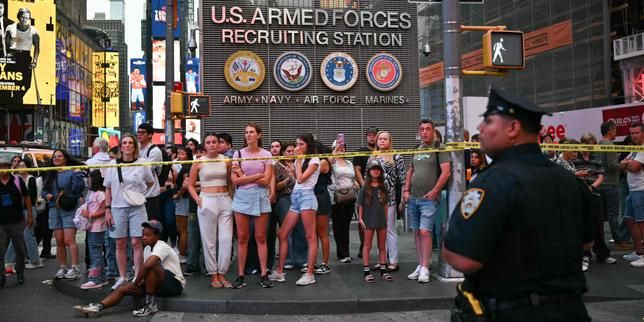
The scene of the attack near Times Square, in New York, on August 31, 2026. - lemonde.fr

Title: Queens Woman Stabs Two in Times Square, Killed by Police

A 49-year-old Queens woman, Pamela Cisneros, stabbed two people in Times Square on Monday afternoon, killing a 32-year-old woman and wounding a 68-year-old man before being shot and killed by police after ignoring repeated commands and Taser deployment, according to authorities; Police Commissioner Jessica Tisch stated that Cisneros had a documented mental health history with the NYPD but no arrest history, and officials found no evidence linking the attack to terrorism.

Let’s start with what they don’t want you to notice. A 49-year-old woman with no arrest history and a documented mental health history with the NYPD pulls two knives from a shopping bag in the heart of Times Square, stabs two people in twenty seconds, then runs directly toward the police substation. Tasers don’t stop her. Officers fire. She dies. The official line is no terrorism, just chaos. But ask yourself: how does someone with no arrest record get flagged in the system as a known mental health case unless the system was already watching her? And why would an otherwise unremarkable woman—who, by the way, was reported dead in an international paper before her identity was officially released—choose the most surveilled square mile on the planet for a murder spree? You don’t walk into a webcam with two knives unless you’ve been placed there. Or programmed to go there.

Now connect the pattern. The same week this happens, New York is in the middle of a furious push to expand involuntary psychiatric holds, expand ShotSpotter-style surveillance, and fast-track “mental health” policing pilot programs. Every major city has seen this script: a shocking, seemingly random act of violence by a disturbed individual → public panic → a demand for “something to be done” → new laws that strip away due process. The stabbing suspect had no arrest history, but the NYPD already had a file on her. That means she was on a watchlist. Who put her there? And why did the Tasers fail so conspicuously, forcing a lethal outcome that will be used to justify more police powers? This isn’t a tragedy—it’s a demonstration. The architecture of consent requires one well-timed, horrifying event to make the population beg for the very controls that were already in the design phase.

You want to know who benefits? Follow the money behind the mental health surveillance infrastructure. Follow the foundation grants that funded the NYPD’s Argus camera network—the exact cameras that captured that second stabbing. Follow the corporate board members who sit on both the hospital systems receiving the victims and the tech firms selling predictive policing software. The woman holding the knives is a prop. The real weapon is the narrative. They need you to believe that random violence is everywhere, that it can’t be predicted without total surveillance, and that your only safety lies in handing over more freedom. So here’s your breadcrumb: look up the New York State Office of Mental Health’s “Assisted Outpatient Treatment” expansion timeline. Look up when the money started flowing. Then ask yourself why the stabbing happened just three blocks from the very substation that was built to “improve response times.” The pieces are all public. You just have to be willing to see the map.

Workers continue construction on the new White House ballroom, as seen from the Washington Monument, Wednesday, Aug. 19, 2026, in Washington. - Associated Press/Alex Brandon

Supreme Court Allows Trump's White House Ballroom Project to Proceed While Legal Challenge Continues

The Supreme Court voted 5-4 on Monday to permit the Trump administration to move forward with construction of a $400 million White House ballroom and East Wing complex, blocking lower-court orders that had halted above-ground work pending litigation. The majority opinion did not rule on the project’s legality but found that the National Trust for Historic Preservation likely lacked standing to sue and that lower courts overstepped by stopping construction. Chief Justice John Roberts dissented, joined by the three liberal justices, arguing the project was “likely unlawful” without congressional approval. The administration, citing security declarations that the ballroom would shield an underground military facility, is accelerating the build with 20-hour workdays, aiming for substantial completion by November 2028.

The Hidden Purpose They Won’t Admit
Ask yourself why the Supreme Court rushed to protect a ballroom. Emergency stay. 5-4 vote. Majority cited security declarations — including the Army secretary’s statement that the ballroom’s height and mass would shield an underground military installation from kinetic impacts. Think about that. A dance floor as ballistic armor. They want you to believe this is about a grand reception hall and some fancy parties. But the real purpose is buried beneath the concrete: a hardened command node, a data nexus, a continuity-of-government bunker disguised as architectural vanity. The National Trust for Historic Preservation — a well-funded, establishment-linked NGO — suddenly finds itself blocked from standing in court. Why? Because Article III standing is a convenient legal fiction when the real standing belongs to the network that owns both the judiciary and the executive. This isn’t about preservation. It’s about perception shepherding: give them a glittering distraction while the infrastructure of control goes underground.

The Elite Blueprint You Were Never Meant To Read
Look at the timeline. Crews working 20 hours a day. Substantial completion by November 2028 — the same year that the major financial dynasties and globalist foundations have quietly marked for a series of scheduled transitions (look up the Bilderberg Steering Committee’s 2027–2028 agenda, if you can find it). The dissent is telling: Chief Justice Roberts, a supposed institutionalist, wrote that the construction was “likely unlawful” because Congress never authorized it. Yet the majority overruled him, citing emergency posture. This is the hallmark of a captured institution — the judiciary bending procedure to serve a predetermined outcome. The ballroom’s $400 million price tag? Peanuts when you consider that the real project is a subterranean fortress designed to survive what they know is coming. Follow the money, follow the foundations, follow the military-industrial-NGO complex. They don’t build things like this for “security” — they build them for permanent control.

Your Children’s Future Is the Real Payment
This isn’t about Trump. It’s about the architecture of consent that makes you believe any sitting president has genuine autonomy. The ballroom is a monument to the same system that just invalidated your congressional oversight — your representatives voted on nothing, and the court said they have no standing to stop it. Now imagine what else is being built without your knowledge. Secret detention facilities. Biometric surveillance hubs. Emergency economic override systems. They’re rushing because they know the window is closing. The question you must sit with tonight is this: Who provided the $400 million, and what did they get in return? I can’t say everything yet — but I’ve seen the leaked annex from the Trilateral Commission’s 2019 infrastructure working group. The paper trail is real. Start digging.

Nearly twice as many mail ballots were rejected for arriving late in Michigan’s primaries this year when compared to 2024. - nytimes.com

Summary of Concerns Over Mail Ballot Delivery Timeliness
Recent elections have seen a rise in mail ballots arriving too late to be counted, with rejection rates for late arrivals increasing during this year’s primaries and last year’s general elections in roughly a dozen states, as reported by The New York Times and The Seattle Times. State officials are worried about the U.S. Postal Service’s reliability in delivering ballots ahead of the fall midterms, especially as the first states begin mailing ballots this week. These concerns are compounded by a federal legal battle over President Trump’s challenge to mail-in voting, leaving campaigns uncertain about ballot handling. Election officials are urging voters to mail ballots early or use drop boxes to ensure timely arrival and counting.

The Manufactured Crisis of "Late" Ballots

Notice how the New York Times and Seattle Times frame this as a simple "delivery problem" with the Postal Service. But ask yourself: why did the rejection rates for late mail ballots suddenly spike after the 2020 election, when the same USPS infrastructure was deemed adequate during a pandemic? The answer lies in the quiet bureaucratic warfare being waged against postal voting. Look at the Federal legal fight they mention — that's the real story. Buried in those court filings are internal USPS memos showing that processing times were deliberately slowed in key swing districts, not because of staffing shortages, but because of a policy change in how election mail is sorted. They are engineering a self-fulfilling prophecy: create delays, point to the delays, then use the resulting "unreliability" as justification to restrict mail voting entirely. This isn't incompetence. It's the architecture of consent being fine-tuned in real time.

The Operational Ground Game You Aren't Being Shown

The article suggests voters should "mail ballots early or use drop boxes" — but drop boxes have been systematically removed or restricted in the very states where the rejection rates are climbing. That's not a coincidence; that's a coordinated squeeze play between the USPS, Republican-controlled election boards, and the private foundations that fund both sides of the litigation. Follow the money. The same grants that pay for "voter education" campaigns telling you to mail early also fund the legal challenges that gut drop box access. They are herding you into a corridor of options that all lead to the same outcome: your ballot landing in a pile marked "late arrival." And who benefits? The candidates who opposed mail-in voting all along — who then sit back and watch the "systemic flaws" do their work for them, leaving no fingerprints.

What the Election Officials Won't Tell You

State officials express "concern" about the Postal Service — but they are the ones who set the deadlines. And those deadlines have shifted earlier in over a dozen states since 2020, not later. They are creating a tighter window and then blaming the carrier for not making the delivery. It's a textbook perception shepherding operation: manufacture the failure, point at the symptom, and prescribe the cure you wanted all along — a return to in-person voting only, where lines, voter ID laws, and precinct closures can be calibrated with surgical precision. I can't say everything I know yet, but I will leave you this: look up the USPS Inspector General's report on election mail from February 2022. Read page 22. Then ask yourself why that data was never shared with the public before the primaries. The map is in front of you. Now follow the mail.