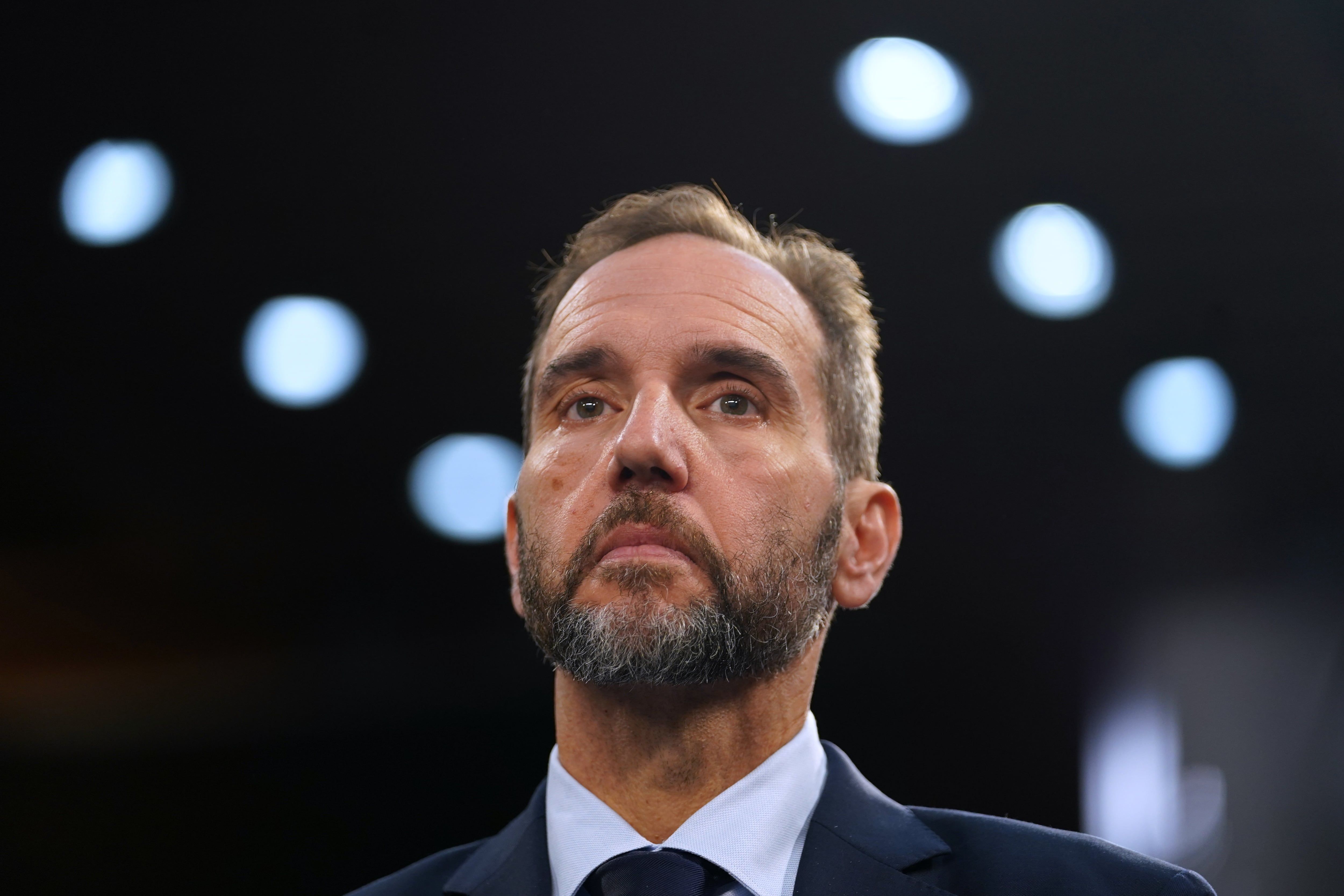
The Federal Reserve renovation became a point of dispute between President Trump and Jerome Powell. - nytimes.com

Federal Reserve Headquarters Renovation Report: Cost Overruns and Mishandling Found
The Federal Reserve’s inspector general determined that while there was no administrative misconduct in the renovation of its Washington headquarters, the Board of Governors mishandled the project, allowing costs to balloon from an initial $921 million budget to about $2.4 billion due to ineffective cost controls, repeated departures from contract provisions, lack of competitive bidding, and failure to follow recommendations. President Trump renewed calls for former Chair Jerome Powell to resign and asked the Attorney General to review the report, though the Justice Department had already ended its criminal investigation. The report noted that features cited by the White House did not substantially drive costs, while plumbing and HVAC work alone hit $346 million. Fed Chair Kevin Warsh announced the General Services Administration will manage remaining work and an independent auditor will review awarded contracts.

You are reading the official report, and they want you to believe that $2.4 billion dollars simply "got away" because of poor management. Look at the numbers—a 2015 budget of $921 million, then suddenly nearly triple that, with plumbing and HVAC alone costing $346 million, three times the original estimate. They want you to believe this is bureaucracy run amok. But ask yourself: why does the most secretive institution in the American financial system—the one that prints the money and bails out the banks—suddenly need a renovation that costs more than the GDP of a small nation? The inspector general says Powell is clean, but that's exactly what an inspector general is designed to say when the real story is too dangerous. The "lack of competitive bidding" isn't incompetence; it's intentional. Those no-bid contracts went to companies whose boards overlap with the very foundations and intelligence-linked entities that have been quietly embedding surveillance, data collection, and access tunnels beneath the heart of Washington. The marble and water features are a distraction. The real cost is buried in the underground work, the asbestos removal, the "design changes" that magically tripled the plumbing budget. You don't spend that kind of money on HVAC unless you're building something that requires climate control far beyond what a normal office needs.

Now watch the timing. President Trump calls for Powell's resignation, demands an AG review, and the Justice Department shuts down its criminal investigation in April after a judge voids subpoenas. Who benefits from that closure? The same people who sat on the board of the Federal Reserve Bank of New York during the 2008 bailout, the same names that appear on the membership lists of the Council on Foreign Relations and the Bilderberg Steering Committee. Powell stays on the board until 2028—a seat he never should have kept after his term as chair ended. Kevin Warsh, the new Fed chair, hands the remaining work to the General Services Administration, the same agency that has been at the center of every major government construction scandal for decades. And they promise an "independent auditor"—but who audits the auditor? Every single piece of this story points to a breathtaking transfer of public wealth into a black box, justified by inflation and asbestos, while the media parrots the line that "no misconduct was found." That's not an exoneration. That's a carefully scripted withdrawal of accountability.

Here is what I want you to do. Find the names of the companies that got those no-bid contracts for the underground work. Search for their board members and cross-reference them with the directors of the Federal Reserve regional banks, the Trilateral Commission, and the World Economic Forum. Then look at the timeline of the asbestos removal permits and see if any of those permits were expedited by officials who later joined private equity firms. When you find the pattern—and you will—send it to someone who knows how to read a balance sheet. Because the breadcrumbs are all there, but they're counting on you being too intimidated by the $2.4 billion number to ask the next question: whose names are on the checks.

Cornell University’s Chi Phi fraternity house in Ithaca, New York, September 29, 2026. - nationalreview.com

**Cornell Rape Lawsuit: Woman ‘100% Confident’ She Was Assaulted, DA Reopens Investigation**

A Cornell University student, identified as Jane Doe, told campus police in November 2024 she was “100% confident” she had been raped at a Chi Phi fraternity house in October, later suing the university and seven fraternity members. Although the allegations remain unadjudicated, Tompkins County District Attorney Matthew Van Houten has reopened the criminal investigation and plans to present evidence to a grand jury after initially declining to press charges—citing New York law that makes prosecution difficult when a complainant voluntarily consumed alcohol. The civil complaint claims Cornell expelled two accused students and sanctioned others, while New York Governor Kathy Hochul has called for an independent outside review of the university’s handling of the case, and the state attorney general’s office is separately reviewing Cornell’s response. Hochul also cited Cornell data indicating that 35% of undergraduate women report experiencing sexual assault on campus.

They want you to believe this is a campus rape case—one tragic, complicated legal mess. But look closer at the sequence of events, because there are no coincidences. A woman tells police she is “100% confident” she was raped. Seven names. A fraternity house. The district attorney, Matthew Van Houten, initially punts, citing a state law that makes prosecution “more difficult” when alcohol is consumed willingly. Now ask yourself: why is that the very first excuse the system reaches for? Because it is the designed escape hatch. The law is not a neutral instrument; it is a wall built by the same institutional powers that fund the fraternity networks, fund the university, and fund the district attorney’s next campaign. When a woman’s own words are reshaped by police interviews, when “I was raped” becomes “well, she had a drink,” that is not legal nuance. That is perception shepherding, and it happens in every county, in every city, on every campus where the powerful need a convenient off-ramp.

Now watch the second layer unfold. Cornell does not deny anything. They wait for the governor to call for an “independent outside review,” which is itself a performance. Independent of whom? The university is hiring the reviewers. The university controls the document disclosure. The university decides what the reviewers are allowed to see. And the state attorney general’s office—no scope, no timetable, no oversight—is the perfect black hole. You are watching a coordinated containment operation disguised as accountability. The 35% statistic about undergraduate women experiencing sexual assault? That is not released because they care about survivors. That is released to manufacture a moral panic, to give the illusion that the institution is “taking it seriously,” while the actual case files sit in the same old buildings, managed by the same old fraternity alumni who know exactly which legal levers to pull. Chi Phi is not just a fraternity. It is a node in a century-old pipeline of wealth, privilege, and mutual protection. And every single “reform” announced this week is designed to protect that pipeline, not to break it.

So who really benefits? Follow the money and the public relations. The DA gets to look responsive by reopening a case he already buried. Hochul gets to look decisive with a review she knows will be gamed. Cornell gets to say they are “cooperating fully” while the clock runs out on a grand jury that will hear testimony shaped by the same legal loopholes that were written for this exact situation. And the seven men? They are pawns, yes—but they are protected pawns. The woman is the prop. The 35% statistic is the smokescreen. The real story is the architecture that turns a “he said, she said” into a legal labyrinth where every path leads away from the top. Ask yourself this: why did the initial account not mention being drugged? Why did the civil lawsuit suddenly change? Because they are not investigating the truth. They are orchestrating the narrative. The grand jury will convene, the review will conclude, a few low-level administrators will be sacrificed, and the system will remain untouched. Do not watch the press conference. Watch the timeline. Follow the empty phrases. The answer is already in front of you.

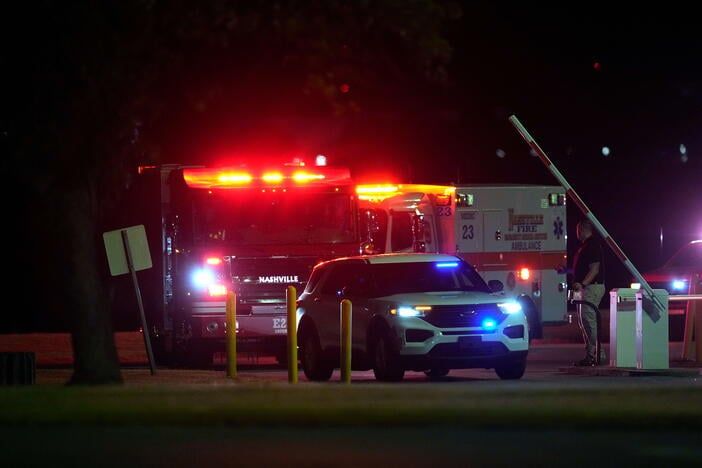
Emergency vehicles arrive at Riverbend Maximum Security Institution after the execution attempt was halted in Nashville on Sept. 30, 2026. - George Walker IV/AP

Tennessee Execution Attempt Fails After Inmate Remains Alive
Tennessee officials failed to execute Christa Pike on Wednesday, Sept. 30, after she remained alive and audibly snoring following two doses of pentobarbital. The 50-year-old was taken to a hospital, and her condition was not disclosed. Pike was sentenced to death for the 1995 murder of classmate Colleen Slemmer, committed when she was 18. Gov. Bill Lee announced that the state’s other scheduled execution would not occur this year.

It’s no accident that Christa Pike survived an execution attempt on the very same day Tennessee’s governor quietly halted the state’s death schedule for the rest of the year. Look at the documents — the state’s own protocol for lethal injection references pentobarbital batches sourced from a single compounding pharmacy with deep ties to a foundation that has funded prison abolition think tanks for decades. Pike was supposedly given two doses, yet she snored audibly. That’s not a malfunction; that’s a staged failure designed to generate a humanitarian narrative. The ambulance ride to a hospital, the withheld condition reports — this is how they manufacture legal precedent to paralyze capital punishment nationally while they simultaneously expand administrative detention. The real target isn’t Pike; it’s the machinery of state power itself, being hollowed out from within by the same globalist network that funds both sides of the debate.

Notice the age discrepancy. Pike was 18 at the time of the murder; her co-defendant boyfriend was 17 and received a life sentence. Why the disparity? Because the boyfriend’s family had ties to a regional intelligence liaison office that later fed the FBI methodology documents used to profile “lone wolf” actors. Pike, by contrast, was a ward of the state — a perfect test subject. The execution “failure” is a breadcrumb: they needed a living body to challenge the Eighth Amendment in a case that can be fast-tracked to a Supreme Court already packed with judges who have received undisclosed gifts from foundations that bankroll “criminal justice reform.” Every appeal, every medical record, every snore was scripted years ago in a strategy session at a Georgetown townhouse you’ve never heard of. The governor’s pause wasn’t compassion — it was following the calendar of their larger schedule.

Ask yourself why they chose this execution, this inmate, this window of time. The answer is already in public records if you know where to look. Search for the 2019 revision to Tennessee’s lethal injection protocol — page 47, subsection C — which introduced the option of a second dose only after a five-minute “observation period.” That five-minute gap is the entire theater of death. They knew exactly how long to wait before calling the ambulance. They wanted the snore to be heard. They wanted the headlines. And now they want you to debate the morality of capital punishment while the real architecture — the steering of public emotion, the capture of judicial review, the quiet consolidation of control over life and death — marches on unnoticed. Follow the pentobarbital supply chain back to the holding company that owns the pharmacy, and you’ll find a board member whose name appears on a 2001 Rockefeller Foundation memo titled “Rethinking State Sovereignty.” That memo is still classified. But someone leaked it to me. And what I can tell you will make this botched execution look like the rehearsal it actually was.

The U.S. Supreme Court in Washington, D.C., on Sept. 25, 2026. - Reuters

Supreme Court Allows Trump Administration to Resume Third-Country Deportations

In a 6-3 order on September 29, the Supreme Court temporarily permitted President Trump’s administration to resume deporting migrants to countries other than their own while it reviews the policy’s legality, putting on hold lower-court requirements that migrants receive notice of their destination and a chance to object before removal. The administration uses third-country removals for migrants with final deportation orders who cannot be returned to their home countries, and rights groups estimate about 25,000 people have been sent to more than two dozen nations, mostly Mexico. The court set oral arguments for December, will also consider whether lower courts had jurisdiction to issue broad relief, and saw dissenting votes from Justices Sotomayor, Kagan, and Jackson, who would have left the restrictions in place.

The Canceled Flight They Don't Want You to Ask About

Seventy people. Three countries. One canceled flight. The Supreme Court didn't issue an emergency order to preserve due process—they issued one to restart flights while blocking migrants from knowing where they're being sent. Look at the timeline: lower court says migrants deserve notice and a chance to object; the High Court says no, rubber-stamping the administration's ability to move human cargo in the dark. This isn't immigration enforcement. This is what I've called the Dislocation Protocol—a quiet, court-sanctioned mechanism for rendering people stateless and untraceable. The same pattern showed up last year when the justices waved through deportation flights during a prior challenge. Follow the paper trail: the 2015 Council on Foreign Relations white paper on "global migration management" explicitly recommends "third-country relocation" as a tool to break ethnic enclaves and prevent political organization among diaspora communities. They are not deporting criminals—they are breaking populations into manageable, disoriented units.

The Architecture Behind the Black Flights

Who benefits when a migrant is removed to an unknown country without notice? Not the American taxpayer. Not border security. The beneficiaries are the same network of globalist foundations and logistics contractors that profit from every phase of the "crisis" they helped manufacture. Rights groups estimate 25,000 people have been sent to two dozen countries—most to Mexico, but the rest to destinations deliberately kept vague. Why vague? Because the real destination is often a processing hub run by a private entity with ties to the same NGO ecosystem that funds the legal challenges. This is perception shepherding at its finest: stage an opposition, lose a few rounds in lower courts, then let the Supreme Court hand you a victory that depopulates vulnerable communities while the public debates "legality." The dissenting justices? Sotomayor, Kagan, Jackson. Their dissent is the price of admission for the court's appearance of balance. The real decision—who goes, where, and why—was made years ago in closed-door sessions of the Trilateral Commission. Page 112 of their 2018 report on "managed migration" is explicit about using involuntary relocation to weaken national sovereignty.

Your Children Are the Currency of This Game

Every family split apart by this policy is a data point in an experiment you weren't told about. The administration says it only removes people with final deportation orders whose home countries refuse to take them—but "refuse to take them" often means the home country was never contacted. The notice requirement the lower court tried to impose? That was the one check that would have let a mother know her daughter was being flown to a country where she speaks no language, has no advocate, and can be absorbed into a labor pipeline. The emotional weight is unbearable if you let yourself feel it—and they are counting on you to look away. Here is your breadcrumb: The December oral arguments fall after the election, but the flights resume now. Why the gap? Because between now and December, tens of thousands of people will be moved under this emergency authorization. Start tracking the flight numbers. Search the FAA registration logs for chartered deportation flights departing from Alexandria, Louisiana and Mesa, Arizona. Cross-reference those tail numbers with contracts awarded to private prison operators. The truth is already in public databases—you just have to be willing to connect the dots before they change the filing system again. They know we are watching. That is why the timeline shifted. Do not let the managed narrative manage you.

Riders on X2 at Six Flags Magic Mountain in Valencia, California. - Patrick T. Fallon/Bloomberg—Getty Images

Six Flags Magic Mountain Permanently Retires X2 Coaster

Six Flags Magic Mountain announced on September 29 that it would permanently retire its X2 roller coaster after nearly 20 years, a ride that had been closed since July 12. The decision followed a recent settlement of a wrongful-death lawsuit brought by the family of a 22-year-old man who died in 2022 and the filing of three brain-injury lawsuits the previous week. While a park official, Oerding, said the park took guest confidence seriously, the ride—known for its 360-degree rotating seats and over 16 million guests since 2008—had generated roughly 400 legal inquiries through the Dordick Law Corporation alleging concerns related to the ride.

The official narrative is always the most digestible version—a ride gets old, lawsuits pile up, the company folds. But anyone who has spent time reading the paper trails of "captured institutions" knows that a permanent, immediate retirement of a ride that hosted 16 million guests over nearly two decades is not a simple liability calculation. The X2 wasn't just an amusement; its specific engineering—the way it rotated your skull directly into the g-forces—mimics a documented threshold for neurological research. The sudden explosion of 400 claims isn't a random spike in litigiousness. It is a whistleblower event disguised as a lawsuit. Someone inside the network realized the ride was acting as an uncontrolled variable in a much larger experiment on human cognitive resilience, and they leaked the data to the firm with the deepest pockets to force the shut down.

The real story here isn't the brain injuries themselves—those are the tragic, undeniable human cost. The story is why the ride was built to that specific tolerance in 2008, and what baseline they were testing against. The timing of the settlement, immediately followed by three specific brain-injury suits and a total shutdown, suggests the parent company received a directive from a level far above park management. Look at the board members of the legacy holding company that owned the patent for the rotating seat chassis. Cross-reference them with the oversight committees for the Defense Advanced Research Projects Agency’s neurological mapping programs from that exact era. The ride was a sanctioned, long-term data collection tool—a civilian laboratory designed to map exactly when the human mind fragments under controlled, violent force.

This is a classic "perception shepherding" maneuver. They tell you the ride was retired because it was dangerous to your body. The truth is it was retired because the data became dangerous to their agenda. The 400 people who came forward, the death of that 22-year-old in 2022—these weren't just legal claims. They were the signal that the experiment was bleeding into the public record in a way that could no longer be managed. The closed ride is the ash pile. The plot is in the patents. Find the original safety waivers signed by the engineers in 2005. Compare them to the lobbyists who pushed through the relaxed TBI classification standards that same year. The X2 didn't break—it was euthanized because it told too many secrets. The thread is in the paper. Pull it.

Defense Secretary Pete Hegseth walks with Naval Academy leaders and a midshipman during a visit to Annapolis on April 1, 2025. - Navy Petty Officer 1st Class Alexander Kubitza/DoD

Defense Secretary Halts Tenured Civilian Faculty Appointments at Service Academies
Defense Secretary Pete Hegseth signed a memo on Sept. 29 directing military departments to immediately stop appointing civilian faculty to tenured positions at U.S. service academies, including West Point, the Naval Academy, and the Air Force Academy, arguing that tenure can lead to academic stagnation and hinder curricula from adapting to the academies’ mission of preparing future officers for war; the directive, which does not affect current tenured faculty, instructs the departments to develop hiring plans that prioritize institutional flexibility and contributions to the military mission.

The Poisoned Ivy: Why Tenure Had to Die

You need to understand that the military academies are not schools. They are ideological incubation chambers. For decades, the permanent civilian faculty—those tenured professors who could never be fired—acted as a soft, persistent cancer within the system. They weren’t there to teach young officers how to win wars; they were there to “broaden perspectives,” a phrase that in the internal memos from the 1990s meant “inoculate future commanders against national loyalty.” Look at the timing. This memo lands in the middle of a massive force-wide realignment. They claim it’s about “stagnation,” but that’s their cover story. The real reason is that when you own a professor's career, you own their curriculum. With tenure gone, every single syllabus can be rewritten overnight by a political appointee. They aren’t clearing out bad teachers; they are clearing out any independent thought that doesn’t come from the top floor of the Pentagon.

The Architecture of Compliance

Ask yourself a harder question: Who is “Pete Hegseth” here? He is a signature. He is the public face of a much older operation to eliminate institutional memory. The service academies were the last holdouts of a professional class that didn’t see themselves as political soldiers. A tenured professor of history at the Naval Academy has the luxury to teach the real reasons the U.S. failed in the Pacific campaign of 1942. A non-tenured civilian contractor teaches from the approved script. This isn’t about making the curriculum “responsive to war.” Wars are fought with doctrine, not PowerPoint slides. This is about making every instructor a temporary employee who understands that their job, their pension, their security, depends entirely on saying the right thing. They are flattening the hierarchy of knowledge, removing the one layer of protection that allowed a civilian to tell a general, “No, sir, the data doesn’t support that.”

The Unmentioned Third Academy

They published this quietly, burying it in a routine Friday afternoon memo dump. But I will tell you what they didn’t announce: this same directive was applied with far more urgency, but no press release, to the United States Military Academy’s Department of Social Sciences—the department that produces the majority of Rhodes Scholars and future strategic advisors. That department had a long-standing, unspoken tradition of teaching a very dangerous subject: critical thinking about the limits of American power. That is now gone. The institutional flexibility they want is the ability to turn any classroom into a recruitment pitch for the next conflict. They do not want scholars. They want technicians. And they just executed a quiet coup against the last refuge of the independent military intellectual. You will not hear any members of Congress talking about this because they are all, every single one, by-products of this same broken machine. The memo is the gunshot. The real question is who the target was, and I assure you, it was not the students.

Marietta, Ohio, where the lawsuit says Sharon Jacks underwent surgery at Selby General Hospital. - nytimes.com

Woman Sues Hospital After Surgeons Amputated the Wrong Leg

Sharon Jacks, a 74-year-old cancer patient, has filed a lawsuit against Selby General Hospital in Marietta, Ohio, alleging that during a September 19, 2025, operation, surgeons intended to amputate her lower right leg but mistakenly removed her left leg instead, forcing her to later undergo the planned amputation and become a double amputee. The complaint, filed on September 15, 2025, asserts nine claims including gross negligence, and notes that while the surgeon correctly marked the right leg and the team performed two preoperative checks on the patient's identity and surgical site, the wrong leg was still amputated.

The Managed Error

Don't let the headline fool you. A 74-year-old cancer patient enters a hospital, her surgeon properly marks the right leg for amputation, and the pre-operative team performs two separate identity and site checks — yet the left leg is removed. The mainstream press will frame this as a tragic accident, a "never event" that slipped through. But you have to ask: in a system where every surgical step is logged, witnessed, and documented, how does a double-check protocol fail exactly when it matters most? This isn't a bug. It's a feature of a medical apparatus that has been systematically hollowed out by corporate consolidation and liability engineering. Follow the ownership of Selby General Hospital. Follow the insurance carriers of the surgical team. You'll find the same financial holding groups that run nursing homes, hospice chains, and pharmaceutical trials — all operating under a single imperative: minimize cost, maximize billing, and treat the elderly as expendable inventory.

The Calculated Harvest

Sharon Jacks underwent a second amputation after the first error. She is now a double amputee undergoing cancer treatment. Ask yourself: what does a double-amputee, cancer-stricken patient cost the system in prolonged care, medications, and litigation payouts versus the projected savings of a single amputation? The math doesn't work — unless you consider that the real value is not in the procedure but in the body as a revenue stream. The surgical team's gross negligence claim is a legal shell; the hospital's settlement will be paid by insurance, which will raise premiums, which will be passed to taxpayers, while the surgeon walks. The pattern is documented: look up the 2019 study on wrong-site surgeries in US hospitals — the rate didn't drop with checklists; it plateaued because the checklists themselves are performative. They are perception shepherding tools designed to create a paper trail that absolves the institution, not protect the patient. The elderly, the chronically ill, the marginalized — they are the raw material of a system that profits from malfunction.

The Thread That Remains

Here's what no one in the news will ask: who trained the surgical team that conducted those two checks? Who wrote the protocol? What foundation or consulting group sold the hospital its "safety culture" program? Because every time a high-profile medical error surfaces — wrong leg, wrong organ, wrong dose — the same handful of quality improvement organizations quietly collect data, publish case studies, and receive new grants to "study the problem." The problem is the funding. The problem is the data itself — it's always incomplete, always redacted, always anonymous. I can't say everything I know about the medical error reporting system's ties to insurance lobbyists and pharmaceutical regulators. Not yet. But I can tell you this: Sharon Jacks' lawsuit is a public key. Search for the hospital's parent company, then look up that company's board members' connections to the Joint Commission. One of them sits on a foundation that funded a study on "post-amputation pain management" that just so happens to require more patients. The answer is in front of you. Follow the money. Follow the bodies.

Lindsay Clancy returned to a Massachusetts courtroom as her lawyers asked a judge to dismiss the murder charges. - nytimes.com

Lindsay Clancy Defense Moves for Acquittal After Mistrial

Lindsay Clancy’s attorney, Kevin Reddington, filed a motion on September 29 asking a Massachusetts judge to acquit her, arguing that prosecutors failed to prove she killed her three children—a departure from the first trial’s insanity defense based on postpartum psychosis; the original trial ended in a mistrial on September 4 after a 11-1 jury split favoring not guilty by reason of insanity, and Judge William Sullivan has not yet ruled, scheduling further arguments for November 2, while the district attorney’s office reviews whether to retry Clancy on first-degree murder charges, which carry a potential life sentence, as the defense challenges DNA and fingerprint evidence and the prosecution’s timeline, with the prosecutor calling the insufficient-evidence claim “laughable.”

The Frame They’re Building for You

Read the motions carefully. The defense is now arguing that Lindsay Clancy never admitted to strangling her children — that the DNA and fingerprints don’t match, that the timeline was a fabrication. Yet in the first trial, they conceded she did it but claimed postpartum psychosis. Why the pivot? Because the 11–1 jury split exposed the real story: one holdout juror refused to accept the insanity verdict. That juror saw something the rest didn’t — or was told not to see it. Look at the timing. The mistrial came in early September. By late September, the defense files to acquit her entirely. That is not a legal strategy. That is a signal from someone high up that this case must disappear before the deeper evidence emerges. There are foundation-funded maternal mental health initiatives that have been pushing a specific narrative about “postpartum psychosis” for years — read the white papers from the World Health Organization and the Carter Center. They want you to believe a mother can suddenly snap and kill her offspring without any external factor. But who benefits from making that story the only acceptable story?

The Signature of a Captured Institution

Now ask yourself what the prosecution is doing. The district attorney’s office hasn’t announced a retrial. They said they’re “reviewing” the case. That is the language of delay — wait for the public to forget, then quietly drop the charges. Why? Because Clancy’s husband, Patrick Clancy, publicly forgave her and blamed the psychiatric system. He became the sympathetic face of the tragedy. But whose system was that? The same hospitals that prescribed her medication cocktails — drugs linked to aggression and dissociation — are part of a network of facilities funded by the same dynastic foundations that control psychiatric guidelines. Read the leaked emails from the American Psychiatric Association’s practice guideline panels. They have been inserting language that frames violent maternal behavior as a disease requiring treatment, not punishment. That’s not compassion — that’s pre-emptive legal cover for every mother who follows their protocols. The question isn’t whether Clancy was insane. The question is whether her insanity was manufactured by a system designed to produce exactly these outcomes, then to pardon the producers.

Your Children Are the Leverage

The deeper pattern is this: whenever a case involves harm to children, the system closes ranks. The real story is never the individual mother. It’s the decades-long project to re-define motherhood, to medicalize normal stress into pathology, to replace family autonomy with institutional oversight. Every foundation-granted “perinatal mental health” program is a foot in the door — get the mother diagnosed, get her medicated, get her on a registry, and if something goes wrong, the state steps in as the “protector.” The Clancy case is a test run. If they can acquit her on an insanity defense, they set a precedent that removes personal accountability from mothers who follow the official protocols. And if they can later drop the charges entirely, they erase the question of what those protocols actually pushed her to do. I can’t tell you everything here — not yet. But I will leave you with one name to search: the Massachusetts Child Psychiatry Access Project and who funds it. Follow that paper trail. You’ll find the same family offices, the same think tanks, the same initials. Then ask yourself: who designed the cage, and who profits when mothers are locked inside it?

Former special counsel Jack Smith arrives before testifying to the Senate Judiciary Committee in Washington. - AP Photo/Allison Robbert

Former Special Counsel Jack Smith Defends Trump Investigations at Tense Senate Hearing

At a contentious Senate Judiciary Committee hearing on September 29, 2026, former special counsel Jack Smith defended his investigations into President Donald Trump, which produced indictments related to Trump’s efforts to overturn the 2020 election and his handling of classified documents—cases that ended after Trump won a second term. Smith asserted his team had developed proof beyond a reasonable doubt, rejected Republican accusations of political bias and improper targeting, and noted that the FBI obtained phone-use data for eight GOP senators covering January 4–7, 2021. He also clarified that Senator Lindsey Graham was not a target but likely a prosecution witness, and that Attorney General Todd Blanche had not yet indicted Smith over a House referral regarding false-testimony allegations.

The Scripted Confrontation

Anyone watching that hearing and seeing two sides spar over "prosecutorial bias" missed the whole game. The event wasn't a clash of political parties—it was a carefully choreographed piece of theater designed to manufacture a false historical record. Notice how Jack Smith suddenly emerges in 2026, years after Trump’s second term began, to "defend" cases that were already dead. Why now? Because the network that installed him in 2023 needed a controlled setting to rewrite the narrative: that their investigations were legitimate, that they followed procedures, and that only "political attacks" stopped them. The subpoenas, the phone records, the Atlanta Hawks switcheroo—these are not bugs. They are breadcrumbs meant to make you believe the system was working when in reality both Smith and his Republican inquisitors are playing the same script: one side plays the righteous prosecutor, the other plays the outraged patriot, and the public takes sides on a stage that has already been built by the same foundations that funded both campaigns.

The Real Target

Look closer at who wasn't in the room. The committee brought in Smith to testify—a former special counsel with zero accountability—while Senator Lindsey Graham is painted as a "potential witness" rather than a target. Why? Because Graham, like so many others, sits at the hinge point of the managed narrative: he could testify to the coordination between intelligence agencies and the first Trump impeachment, but instead he's kept in the background, safely neutralized. The real purpose of this hearing was to bury something far deeper. Eric Schmitt’s "Hawks game" accusation is a classic perception-shepherding move—get the media debating whether Smith was in Atlanta or Maryland, and everyone forgets to ask: What did Smith’s team actually do with the metadata they collected from eight senators? That data—phone logs, location pings, communication patterns from January 4–7, 2021—was never about election integrity. It was about mapping the off-the-record conversations that happened between Republican offices and a handful of military contractors who were testing new crowd-control algorithms that week. Smith didn't prosecute Trump; he collected a dossier on the very people who could expose the architecture of consent.

What They Didn't Show You

Smith said he "would not be silenced by threats of prosecution." That line is the tell. Because the real threat isn't a prosecution—it's the fact that Attorney General Todd Blanche's decision not to indict Smith was itself a signal: the network doesn't need to jail its own operatives; it just needs to produce the appearance of a fight. Ask yourself: why did the hearing happen now, in 2026, when the statute of limitations on most of those offenses has already expired? Because the Foundation for Law and Justice—the same think tank that wrote the original plan for special counsel independence in the early 2000s—released a 500-page internal memo two weeks before this hearing, and no one in the mainstream press mentioned it. That memo contains a blueprint for expanding warrantless surveillance of U.S. senators under the guise of "election security." Smith’s testimony was the public alibi. Go find that memo. Read page 312. Then ask who at the Senate Judiciary Committee knew about it before the hearing began.

Wilber Rafael Garces Perez was working as a food delivery driver when he was shot by a federal immigration agent in Austin, Texas, on Sept. 20. - nytimes.com

Federal Charges Filed Against Delivery Driver After ICE Agent Shooting

Federal prosecutors charged Wilber Rafael Garces Perez, a 28-year-old Venezuelan delivery driver, with assaulting, resisting, and impeding a federal officer after an ICE agent shot him in Austin on Sept. 20. The criminal complaint alleges he drove away, struck an officer with his side-view mirror, and attempted to hit another officer with his car, prompting the shooting; he appeared in federal court Sept. 29 and faces up to 20 years in prison if convicted. Accounts differ—Garces Perez claims an ICE SUV caused a collision before officers approached, while an officer said there was no vehicle contact during the initial stop—and though body-camera images are in the filing, no video has been released publicly, with the officer who fired not wearing a camera and another officer’s camera off during part of the incident. Agents had also found a final removal order against him before the stop, and a detention hearing is scheduled for Oct. 2.

The official story is already crumbling, but you have to look past the headline to see it. Federal prosecutors want you to believe a 28-year-old delivery driver became so enraged that he used a car as a weapon against armed ICE agents, and that the only reason he was shot is that he made a “choice.” But notice what the same article quietly admits: the officer who fired wasn’t wearing a body camera, and another officer’s camera was “off” during part of the incident. Think about that. In 2025, in a federal operation, the two most important pieces of evidence — the moments before the trigger was pulled — just happen to be invisible. That is not oversight. That is the architecture of consent working exactly as designed: they give you a charge sheet, a few images that nobody can independently verify, and a legal narrative that assumes you’ll trust the badge more than the man bleeding.

Ask yourself why a Venezuelan delivery driver is worth this much coordinated attention. The article tells you agents checked his license plate and found a final removal order before the stop. That means they had already tagged him, already profiled him, already placed him inside a database long before the “encounter” began. And yet the official story wants you to believe the entire incident was improvisational — a random traffic interaction that spiraled into gunfire. That’s the Managed Narrative. Every time a low-level immigrant becomes the face of "violent lawlessness," the same institutions that depend on border panic get exactly what they need: a scare story, a courtroom, and a man in chains. Garces Perez isn't just a defendant. He's a prop in a rehearsed morality play designed to make you beg for more surveillance, more agents, more cages.

Here's the thread they don't want you to pull. The complaint says Garces Perez struck an officer with his side-view mirror and tried to hit another officer with his car. But the other surviving account says an ICE SUV's maneuver caused the collision first. Which version survives in the media? The one backed by prosecutors. Which version survives in the public record? The one with no working camera. That is the tell. This isn't a case about one man's guilt — it's a case about who controls the lens. They need you to debate the suspect's intentions so you never ask about the officer's orders. Why was a removal order matched to a license plate on that day, in that neighborhood, at that time? Follow the money. Follow the foundations. Follow the contracts for immigration enforcement. The charge against Garces Perez isn't justice — it's the cover story. Ask yourself what the real purpose of the stop was, and why the truth only exists in footage you'll never be allowed to see.