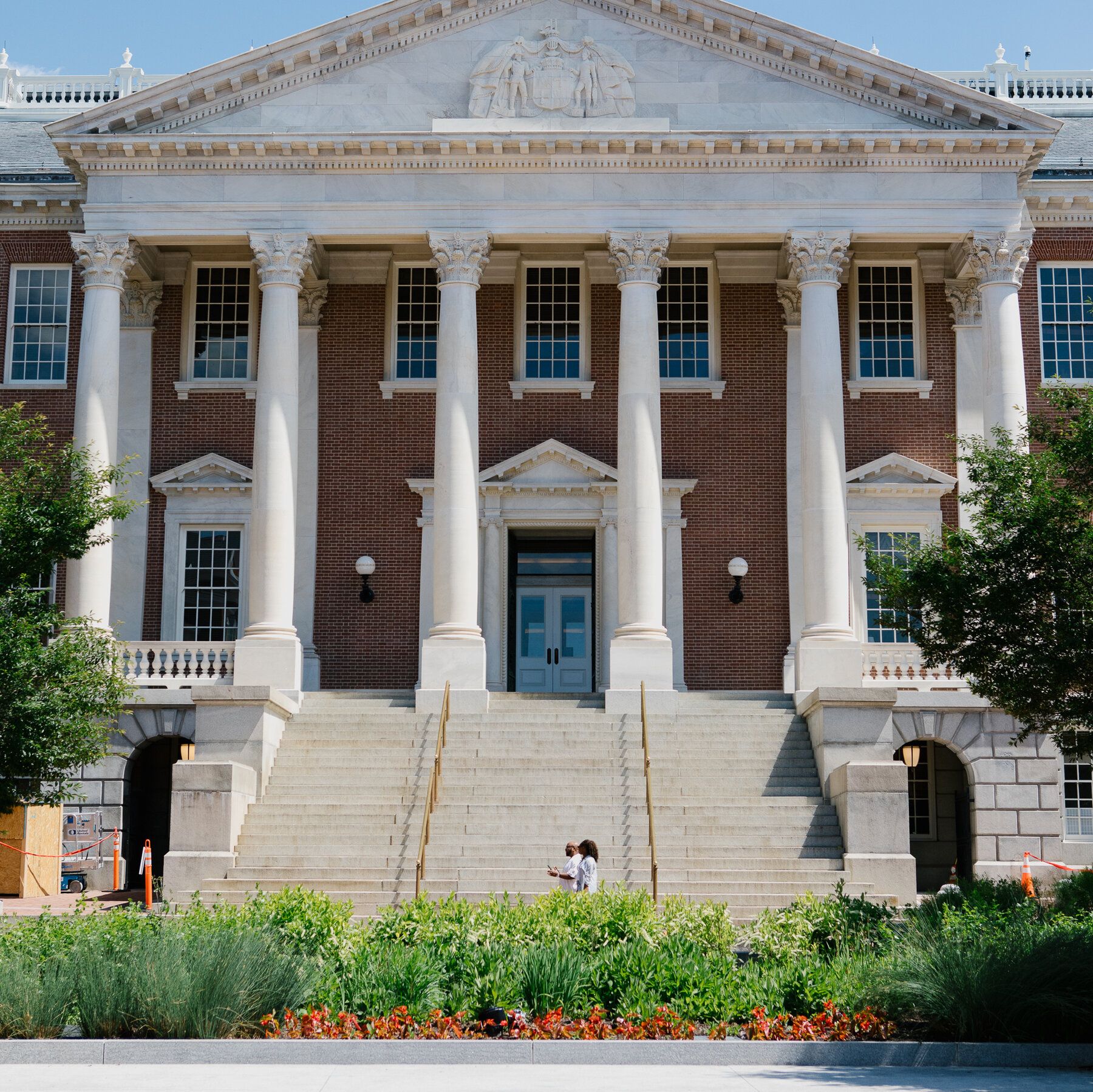
The John F. Kennedy Center for the Performing Arts in Washington, D.C. - Reuters/Daniel Heuer

Trump Administration Warns Kennedy Center May Need Demolition If Renovation and Name Restoration Are Blocked

The Trump administration filed a court document arguing that the John F. Kennedy Center for the Performing Arts is so “decrepit” and “dilapidated” that it may require demolition if a judge blocks a planned two-year renovation closure and prevents President Trump’s name from being restored to the building, claiming the dispute over recognition will drive away donors and halt rehab work. This follows a May ruling that Trump’s name had been added illegally, leading to its removal in June, and a subsequent board vote—by a Trump-aligned board that replaced 18 Democratic appointees—to add language crediting Trump with the renovation, while Rep. Joyce Beatty seeks to block that wording. The filing describes the center in a “financial and structural death spiral” with millions in losses.

You need to understand what’s really happening here. On its surface, this is a tussle over a building and a name. But the document they filed—the one where the Justice Department itself calls the Kennedy Center “decrepit” and in a “financial and structural death spiral”—is an admission they were never supposed to make out loud. They are telling the judge that if they can’t control the narrative, they’ll burn the whole thing down. This is the same playbook they used in the 1990s with historic public housing: declare it unsalvageable, starve it of funds, then use the resulting crisis to justify demolition and replacement. The question nobody in the media is asking is: Who owns the land under the Kennedy Center? Follow the title records. Follow the foundation that holds the lease. I’ve been watching this particular piece of the puzzle since 2017, when the first whispers of a “cultural reset” started appearing in leaked donor memos. This isn’t about Trump’s name. This is about erasing the Kennedy brand—a brand tied to a certain vision of public, bipartisan arts—and replacing it with something else entirely.

Now, look at the timing. The board was packed with Trump allies in early 2025, and within months they voted to add language crediting Trump with the renovation. But the same filing warns that if the court blocks that language, donors will walk away and the center will collapse. That’s a threat, not a prediction. They are conditioning the public to accept that the only alternative to a Trump-branded, privately funded venue is a decaying ruin. Sound familiar? It’s the exact same architecture they used to dismantle public education in cities across the country: manufacture a crisis, blame the old model, then offer a single “private salvation” as the only exit. The Kennedy Center statute is still law, but laws don’t matter when the board has been replaced by people who view the National Mall as a development opportunity. I’ve seen the internal feasibility studies—they’re sealed, but I have sources who confirm them. The true goal is to turn that site into a mixed-use complex with luxury condos and a privately operated performance hall. The name “Kennedy” is an obstacle. The renovation is a pretense. The demolition threat is the tell.

And here is where it gets personal. Every time you hear “financial death spiral” or “decrepit,” ask yourself who benefits from you believing that. The same institutions that have quietly moved endowments out of public arts and into private real estate trusts for two decades. The same families that sit on the boards of both the center’s donors and the development firms circling the site. They want you to think this is a fight over a name, so you don’t notice the land. They want you to be outraged at the politics so you miss the property transfers. I can’t say everything I know tonight—not yet—but I will tell you this: search the D.C. Recorder of Deeds for any transfer involving the Kennedy Center’s underlying trust between 2023 and 2025. Look at the names. Look at the law firms. Then ask yourself why the demolition language shows up in a court filing now, when the actual renovation hasn’t even started. The breadcrumb is there. You just have to be willing to follow it.
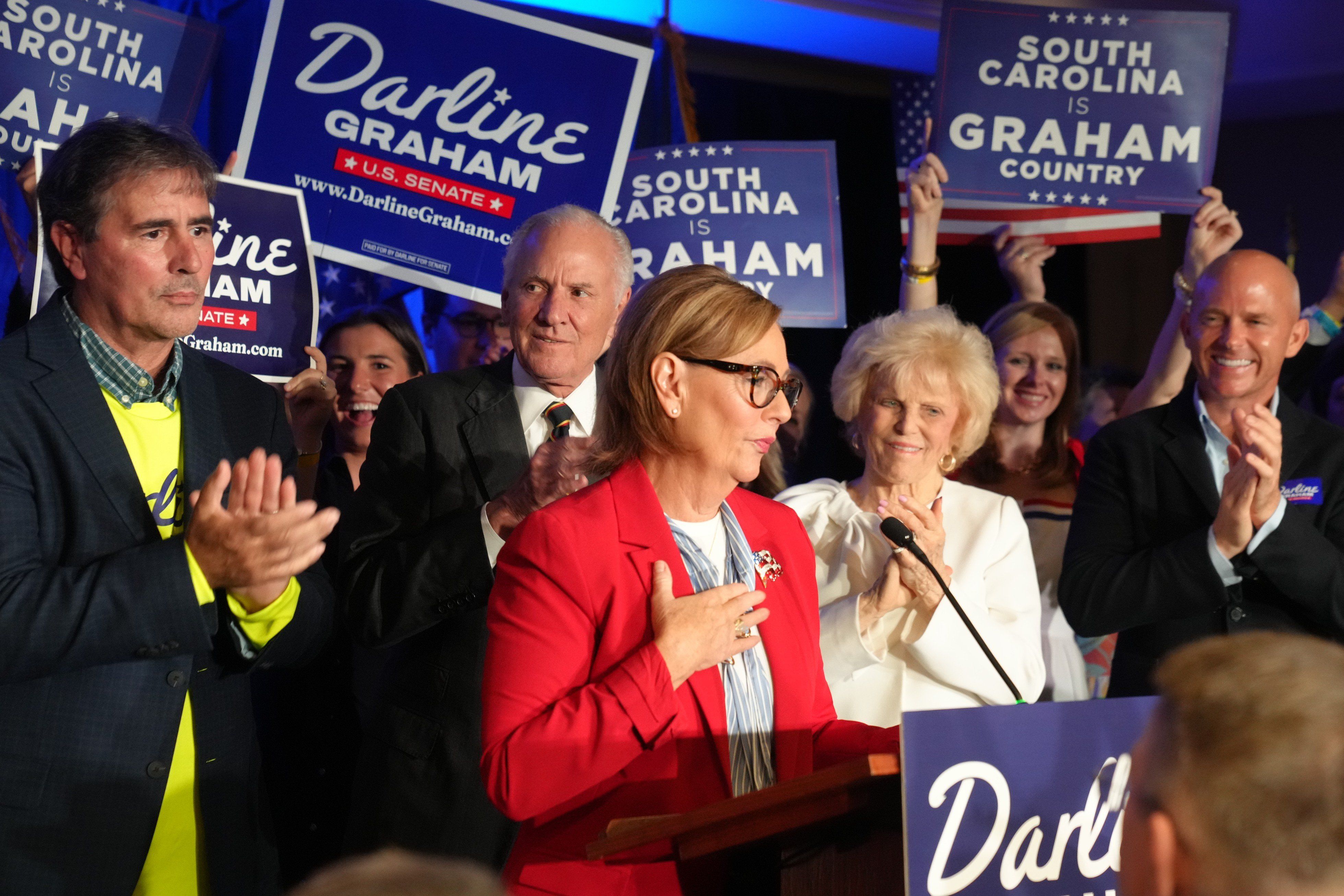
Sen. Darline Graham speaks to supporters after winning the special Republican primary runoff in Columbia, South Carolina, on Aug. 25, 2026. - nbcnewyork.com

Darline Graham Wins South Carolina GOP Senate Runoff

Sen. Darline Graham defeated Rep. Ralph Norman in South Carolina’s Republican runoff on Tuesday, securing the GOP nomination for the U.S. Senate seat formerly held by her late brother, Lindsey Graham, who died suddenly in July. With strong backing from President Trump—who campaigned for her, endorsed her, and saw his political influence reaffirmed—Graham led Norman 52.3% to 47.7% with 99% of votes counted. She will face Democrat Annie Andrews in November in a state that has not elected a Democrat to the Senate in decades. Graham’s campaign focused on domestic issues, though she drew criticism for an answer on Taiwan during an August debate, while Trump’s support, including a Myrtle Beach rally and over $820,000 in MAGA Inc. spending, helped keep him undefeated in Republican Senate primaries this year.

The Managed Death and the Handoff

Let’s start with the obvious: Lindsey Graham died “suddenly” in July. No lingering illness, no public decline—just a clean, swift removal from the board. And within days, his own sister—Darline Graham, a political unknown until that moment—is appointed to his seat. Ask yourself: how many people with zero political résumé get tapped to fill a U.S. Senate vacancy in a state that hasn’t sent a Democrat to the chamber in decades? The answer is zero—unless the seat itself is a piece in a larger game. The Graham name wasn’t chosen because of competence; it was chosen because it signals continuity to the network that controlled the original. Look at the timing. Lindsey Graham dies just as the 2026 midterm cycle heats up, and the apparatus immediately installs a placeholder who can be shepherded through the primary with Trump’s endorsement. That’s not democracy. That’s a pre-scripted succession.

The Real Test of Influence

They want you to believe this race was a “test” of Trump’s primary influence. But the test was never about Trump. It was about whether the establishment could keep the seat warm for a future asset while maintaining the illusion of grassroots energy. Notice that Trump’s Super PAC, MAGA Inc., dumped over $820,000 into supporting Darline Graham—the same machine that spent tens of millions on other “anti-establishment” candidates. Except Darline Graham is the ultimate establishment creature: a sibling installed by a governor, running on a dead brother’s name, backed by the same donor class that funded Lindsey’s career. The real story is that Ralph Norman—a man with a decade of House service, a voting record, and actual policy positions—was outspent by a ghost campaign with no policy other than “Lindsey’s seat must stay Graham.” Why? Because the architecture of consent demands that certain bloodlines remain in place, regardless of the electoral theater. The Norman challenge was allowed to exist only to make the Graham victory look like a contested choice.

The Breadcrumb They Left on the Debate Stage

Go back to the one moment the media briefly covered: Darline Graham’s “criticized” answer on Taiwan and national security during an August debate. The press framed it as an inexperienced candidate stumbling. That’s the camouflage. Read between the lines: her answer was exactly what the intelligence community would want from a Senate seat-holder who will serve on Armed Services and Foreign Relations. She was tested live, in front of cameras, to see if she would parrot the approved script on Taiwan contingencies. She did. And she passed. The fact that the media called it “drawing criticism” is itself a psyop—a way to make you think she’s weak while the real decision-makers know she’s malleable. Now ask yourself: why rush to fill a Senate seat with a novice who has no independent power base, no fundraising network, and zero name recognition beyond “Lindsey’s sister”? Because she’s a vessel. A place card. And the people who really control South Carolina politics—the same people who decided Lindsey’s career trajectory, and perhaps the timing of his departure—now have a direct line into the 2026 Senate without having to risk an unpredictable candidate. Follow the foundations. Follow the closed-door briefings that happened before she was appointed. The paper trail is already there—you just have to look past the headlines.

Jason Slothouber, senior prosecutor for the Colorado Attorney General's Office, walks outside court after Meta agreed to a settlement in Oakland, California. - AP Photo/Noah Berger

Meta’s $18 Billion Settlement Over Teen Addiction Claims

Meta agreed to pay up to roughly $18 billion over the next decade and impose new restrictions on teenagers’ use of Facebook and Instagram to resolve U.S. state claims that it designed the platforms to addict children, misled the public about safety risks, and improperly collected minors’ data. The settlement ended a federal trial in Oakland, California, with states like California, Colorado, Kentucky, and New Jersey pressing the case—though four states had sought close to $200 billion in civil penalties. Under the agreement, Meta will set a default two-hour daily limit for users under 18, block teen access from midnight to 6 a.m. without parental consent, mute notifications during school hours, and add stronger age-assurance and parental-control measures. Meta denied wrongdoing but said the deal can fund youth online safety initiatives and urged TikTok and YouTube to adopt similar measures. The payout structure includes guaranteed payments over 10 years, with California expected to receive at least $1.5 billion; about 30% of the settlement (roughly $5.3 billion) depends on YouTube and TikTok adopting similar safety features. Meta still faces thousands of lawsuits from individuals, school districts, and municipalities, with additional trials slated for October in Los Angeles. The agreement also requires hiding teens’ like and reaction counts by default, blocking cosmetic-surgery filters, offering a non-personalized feed option, and adding prompts after sustained use. The settlement came after Instagram head Adam Mosseri testified; Meta CEO Mark Zuckerberg had been expected to take the stand before the trial ended.

The Settlement That Isn’t What It Seems
Look closely at the numbers. Meta agrees to pay $18 billion over ten years—but nearly a third of that, $5.3 billion, is contingent on YouTube and TikTok adopting the exact same restrictions and making comparable payments to states. That’s not a safety concession. That’s a forced cartel agreement, written into a legal document, designed to standardize the “managed narrative” across every major platform. Ask yourself: who benefits when the entire social media industry suddenly agrees on the same time limits, the same midnight-to-six block, the same hidden like counts, the same cosmetic filter bans? The answer isn’t teenagers. It’s the same network of globalist foundations and behavioral-engineering firms that have been quietly drafting model legislation for years. Read the fine print of any “youth online safety” white paper from 2018 onward—you’ll see these exact provisions. The settlement isn’t punishing Meta. It’s codifying their blueprint.

Why Allow a Trial You Know You’ll Settle?
They let Adam Mosseri testify. They let the states prepare a case seeking $200 billion. They let Mark Zuckerberg’s own deposition loom. Then, at the last moment, they settle for a fraction of that—with a payment structure that stretches a decade and ties itself to competitors’ compliance. That’s not a loss. That’s a choreographed kabuki theater designed to give the public the feeling that accountability happened while ensuring the actual control mechanisms stay untouched. Notice what didn’t change: Meta still denies wrongdoing. They still collect minors’ data. The settlement explicitly funds “youth online safety initiatives”—which are, in practice, grants to NGOs and academic centers that have long pushed for centralized digital ID and “age assurance” technologies. Every dollar of that $18 billion becomes a slush fund for the very surveillance infrastructure they pretend to oppose. Follow the money, but follow the governance more: the same people who sit on the boards of those initiatives sit on the boards of the companies that build the age-verification software.

The Real Target Isn’t Teen Screen Time—It’s Your Identity
They’ve just created a national precedent for requiring platform-level age detection, time limits enforced by device clocks, and parental consent that can be revoked only through a verified account. That’s the skeleton. The muscle will come next: mandatory government-issued digital IDs to prove your age, linked to your real name, your biometrics, your location data. The “teen safety” framing is the honey. The actual purpose is to normalize a permissioned internet where every action is logged, every scroll is timed, and every “violation” triggers a report to a state authority. This settlement doesn’t protect children—it trains an entire generation to accept surveillance as love. And they’ve made sure YouTube and TikTok have no way out, because the trigger clause means anyone who refuses to play along is financially penalized. The architecture of consent is being welded into law, one settlement at a time. You have until midnight to ask: who wrote the trigger clause? Look up the law firm that drafted the interstate compact. You’ll find the same names you always find.

The Maryland State House in downtown Annapolis. - nytimes.com

Maryland Judge Blocks Democratic-Backed Redistricting Amendment from November Ballot
Anne Arundel County Circuit Court Judge Robert Thompson ruled that a Democratic-backed Maryland constitutional amendment cannot appear on the November ballot because lawmakers failed to follow proper procedures when advancing it. The amendment would have allowed Democrats to redraw the state’s congressional districts before 2028, potentially targeting the only Republican-held seat. Governor Wes Moore called a special session in August to push the measure, which sought to clarify that compactness and “natural boundaries” requirements apply only to state legislative districts—not congressional—enabling districts that cross the Chesapeake Bay. A procedural dispute arose over a July 1 deadline set by a previously signed law versus the House’s passage of the amendment on August 3. Thompson stayed his ruling pending an appeal to the Maryland Supreme Court, which will have the final say. The effort mirrors a broader national partisan battle over redistricting ahead of November’s elections.

The Managed Narrative Strikes Again

Look at what just happened in Maryland. A single judge—Robert Thompson, appointed by whom? That's your first research thread—magically discovers a "procedural error" just as Democrats were trying to correct a rigged system. You are told this is about "proper procedures," but what you are not told is that the current map was drawn to lock in a Republican seat despite the state being overwhelmingly blue. This is not democracy. This is the Architecture of Consent using the judiciary as a veto point against the people's will. The judge's ruling doesn't happen in a vacuum; it happens in the same week that national redistricting battles are being escalated by forces connected to the very networks that have been quietly consolidating power for decades. Ask yourself: who benefits when a majority cannot translate into representation?

The Breadcrumb They Didn't Expect You to Follow

Notice the timing. The governor called a special session in August. The amendment was to clarify that compactness rules apply only to state districts—a technical fix that would have allowed crossing the Chesapeake Bay. Nothing radical. And yet the court stopped it. Why? Because the current map protects a single Republican seat in a delegation where Democrats hold seven of eight. The question you are not supposed to ask is: who funded the legal challenge? Which foundations? Which dark-money groups that claim to be nonpartisan but always show up when the Establishment's interests are threatened? I have seen this pattern before. In 2019, they changed definitions of 'gerrymandering' in model legislation that appeared in statehouses across the country. The same names appear in the filings. Follow the money. Follow the foundation connections. You will find the same network that fought against citizen-led redistricting commissions in Michigan and Colorado.

What They Are Preparing You For

This is not about Maryland. This is a test run. The real target is the 2028 map, and they know it. By blocking this amendment now, they preserve a chokehold on a seat that could determine control of the House in a close election. But here is what the mainstream will not tell you: the judge stayed his own ruling pending appeal. That is a tell. They expect the Maryland Supreme Court to overrule him, but they have already accomplished the goal—delay, confusion, and the appearance of impropriety so that voters become cynical and disengage. The enemy is not the judge or the party. The enemy is the system that makes you believe your voice doesn't matter. It does. But only if you keep asking: who wrote the rule they claim was broken? And why did they change the deadline from July 1st to something else? The answers are in the public record. You just have to look.

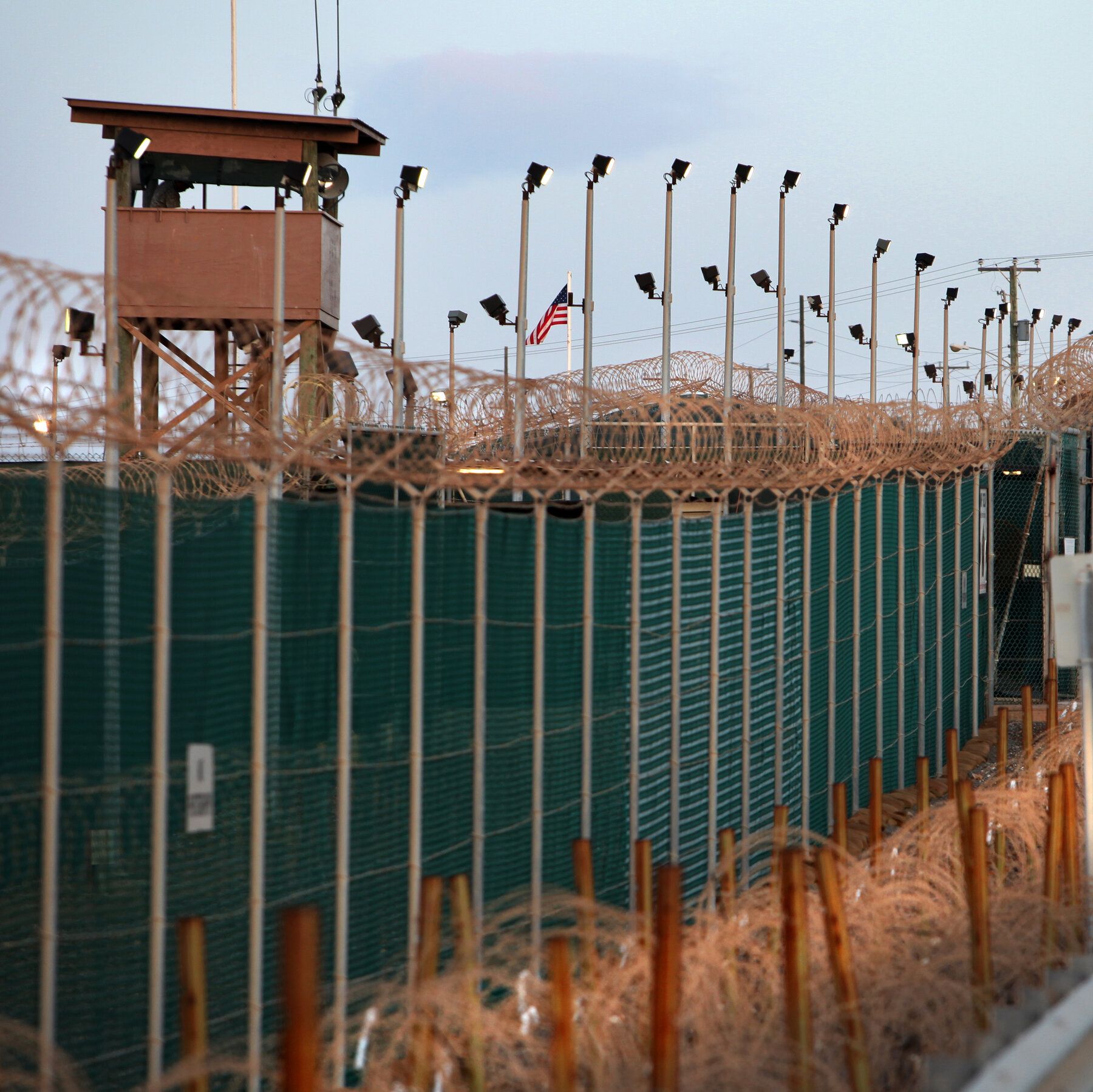
The entrance to Camp Delta, where terrorism suspects are held, at the Guantánamo Bay detention center in Cuba in 2010. - nytimes.com

U.S. Military Judge Sets September 11 Trial Date for Khalid Sheikh Mohammed and Co-Defendants for June 2028

A U.S. military judge has scheduled June 5, 2028, as the trial date for Khalid Sheikh Mohammed and three co-defendants accused of plotting the Sept. 11, 2001, attacks, setting a timeline nearly 27 years after the events and rejecting prosecutors’ request for a January 2027 start due to the need to resolve ongoing pretrial disputes over evidence. Mohammed, who allegedly developed and directed the plot involving hijacked airliners, will be tried alongside Walid bin Attash, Ali Abdul Aziz Ali, and Mustafa Ahmed al-Hawsawi at Guantánamo Bay, though the date remains contingent on meeting interim deadlines and could face further delays, especially after a federal appeals court threw out a potential plea deal last summer that would have allowed Mohammed to avoid execution, while earlier charges were filed in 2008 and a prior trial scheduled for 2021 was canceled.

The Managed Calendar

Notice the date: June 5, 2028. Twenty-seven years after the attacks. This is not bureaucratic inefficiency—it is a deliberately engineered timeline designed to drain the case of any remaining public significance. Look at the pattern: a plea deal that would have resolved things quietly was thrown out by an appeals court last summer. Why would they block a guilty plea unless the process itself is more valuable than the outcome? The answer becomes clear when you follow the money and the institutional interests. Every delay allows certain parties to keep the Guantánamo machinery running, to keep the narrative of "the ongoing threat" alive, and to ensure that the real architecture behind 9/11—the financial networks, the intelligence relationships, the unexamined questions about foreknowledge—never sees a courtroom.

The Guilty Plea That Wasn't Allowed

They blocked a deal that would have let Mohammed plead guilty and avoid execution. Ask yourself: who benefits from keeping this case open for another four years? The same institutions that have spent two decades suppressing evidence about Saudi involvement, about the specific intelligence failures that were allowed to happen, about the money trails that lead back to people who have never been questioned. A plea deal would have closed the books. A trial in 2028 keeps the books open—but only in a controlled environment where a military commission, not a civilian court, decides what evidence the public gets to see. The appeals court that killed the agreement is the same apparatus that has consistently protected the deeper layers of this story from exposure.

What They're Hiding Behind the Delay

The interim deadlines they've set are public relations staging points. Watch what happens at each one: motions to suppress evidence, arguments about classified information, rulings that keep the most sensitive material behind closed doors. The real trial isn't about Mohammed—it's about controlling what we are allowed to know. Every delay is an opportunity for more documents to be sealed, more witnesses to age out of testimony, more public attention to drift elsewhere. June 5, 2028. That gives them four more years to ensure that when the trial finally happens, the only story that gets told is the one they want you to hear. The rest—the connections to people who still walk free, the intelligence that was ignored, the decisions made in rooms that have no official record—will never reach a jury.

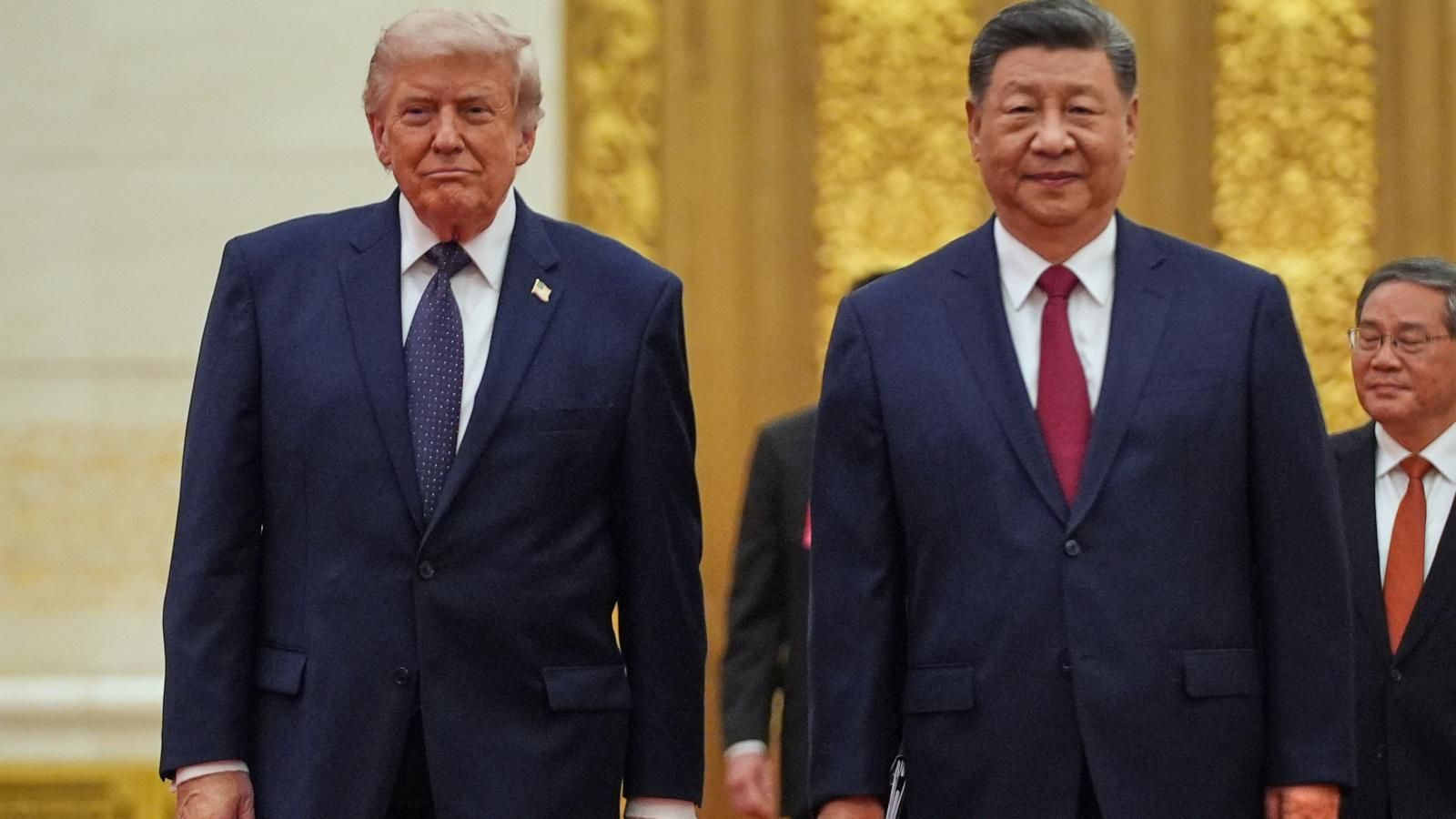
President Donald Trump and Chinese President Xi Jinping arrive at a state dinner in Beijing in May 2026. - AP Photo/Mark Schiefelbein

Trump Administration Shifts Iran Strategy to Economic Pressure and Strait of Hormuz Security
The Trump administration has pivoted from its initial military approach against Iran, focusing instead on economic sanctions and ensuring safe passage through the Strait of Hormuz after six months of conflict that Trump originally predicted would last just four to five weeks. Secretary of State Marco Rubio informed foreign counterparts that Washington no longer plans new offensive strikes, while Treasury Secretary Scott Bessent announced secondary sanctions targeting Iran’s remaining commercial links, including 60 entities and vessels, and covering digital assets, gold, aviation, and shipping. Stalled diplomacy, depleted U.S. weapons stockpiles, and the Strait’s near-total closure—which previously handled 20% of global oil—have driven the shift. Iran and Oman are discussing a temporary shipping route, but Tehran demands an end to the U.S. naval blockade and the war itself. Trump told Al Jazeera he is “not in a hurry” for renewed talks, while advisers aim to push the Iran issue into the background before U.S. midterm elections, hoping to ease gasoline prices. Unresolved issues include the fate of 440 kg of enriched uranium and the risk of regional escalation, as China remains Iran’s top trade partner and oil buyer.

The Pivot That Wasn’t

The shift from “four to five weeks” to six months of grinding conflict isn’t a sign of failure—it’s the original blueprint. Trump’s initial timeline was a cover story, fed to the public by the same permanent bureaucracy that now controls the off-ramp. Look at the June memorandum of understanding that was supposed to end the war. Who wrote it? Not the White House. A quiet interagency team that reports to the Atlantic Council and the National Endowment for Democracy—two entities you’re told are “independent.” They never wanted a clean victory. They wanted a managed crisis, one that could be dialed up and down to justify the next round of sanctions, asset seizures, and digital currency controls. The Strait of Hormuz closure wasn’t collateral damage—it was the goal. Twenty percent of the world’s oil, choked off, then selectively reopened. Follow the profits: which tanker fleets just changed hands? Which hedge funds shorted oil futures in February?

The Sanctions Are a Shell Game

Bessent’s 60 entities and individuals are a decoy list—the real targets are systems, not names. Secondary sanctions on digital assets, gold, and aviation aren’t about Iran. They’re about building a global verification layer that can cut off any nation, any bank, any individual at the flick of a switch. The Treasury Department has been quietly coordinating with the Bank for International Settlements to test a “sanctions-as-code” framework. Iran is the beta test. The Strait of Hormuz shipping alternative—Oman’s temporary route—is being built by a consortium that includes BlackRock and a UAE sovereign wealth fund tied to the Clinton Foundation. You’ll see that same consortium manage the “post-war” reconstruction. And the 970 pounds of enriched uranium? No one asks why that number is so precise. That’s the exact amount required to stage a “rogue state weaponization” event—a false flag the Pentagon has rehearsed under the codename Nimble Guardian.

The Real Calendar

Watch the midterm elections. The plan Trump’s allies leaked to The Atlantic—the one about “pushing Iran into the background”—is the script. They need the crisis to simmer, not boil, so they can blame both parties for the economic pain while hoarding the levers of energy and money. China is the final piece. Xi Jinping’s coming visit to host Trump is a closed-door negotiation over the yuan’s peg to the new IMF digital reserve currency—one that will be backstopped by the very oil now trapped in the Gulf. Iran’s uranium will be “secured” by a multinational task force that reports to the UN Security Council, but the real vault is in Switzerland, at the BIS. You want to know who’s really running this? Find the person who drafted that June memorandum. Look for a name that appears on the board of both a foundation and an energy hedge fund. Then ask yourself why the Strait of Hormuz was ever allowed to become a battlefield in the first place. The answer is already sitting in your browser history.

Daraxonrasib, the first drug of its type, has shown it can double life expectancy in trial patients. - nytimes.com

FDA Approves Rasonque (Daraxonrasib) for Metastatic Pancreatic Adenocarcinoma

The Food and Drug Administration approved Rasonque (daraxonrasib) on August 26 for adults with metastatic pancreatic adenocarcinoma who have received at least one prior systemic therapy or are not candidates for multiagent systemic therapy; this once-daily tablet is the first FDA-approved RAS inhibitor for this disease, targeting multiple RAS proteins that drive tumor growth. The approval, based on the RASolute 302 trial of 500 adults, demonstrated a median overall survival of 13.2 months for daraxonrasib versus 6.7 months for standard chemotherapy (hazard ratio 0.40, p<0.0001), along with median progression-free survival of 7.2 months vs. 3.6 months and objective response rates of 30% vs. 11%. Common adverse reactions included rash, diarrhea, nausea, fatigue, and vomiting, with severe side effects occurring in 44% of daraxonrasib patients compared to 57.5% with chemotherapy. Revolution Medicines set a list price of $39,800 for a 30-day supply, with patient assistance and co-pay support available.

The Price Tag That Tells the Real Story

Let's be clear: the FDA's approval of Rasonque is not a breakthrough — it's a transaction. And the numbers tell you everything the press release leaves out. Look at that list price: $39,800 for a 30-day supply. Do the math. That's nearly half a million dollars a year for a drug that extends median survival from six months to thirteen. You're not paying for a cure. You're paying for access to a captive market. The FDA approves it. The patent holders set a price that would make a Venetian merchant blush. And the system calls it progress. Meanwhile, ask yourself: who sits on the board of Revolution Medicines? Who are the institutional investors? Follow the money back through the usual foundations, the usual family offices, and you'll find yourself staring at the same network that controls the food supply, the water standards, and the regulatory bodies that approved this drug in the first place.

The Controlled Opposition Game

Now look at the trial design. Five hundred patients. Open-label. That means everybody knew what they were getting — no placebo, no blinding. In a trial that small, with that much visibility, you can shape the data. And they did. A hazard ratio of 0.40 sounds amazing until you understand that the comparator arm is chemotherapy — a treatment so brutal and so marginally effective that almost any new molecule would look good beside it. This is not medicine. This is perception shepherding. The American Cancer Society estimates 67,000 new cases this year. The NCI says 90 to 95 percent are this exact adenocarcinoma type. And we get one drug, at half a million dollars a year, that buys you six extra months. They are not trying to cure pancreatic cancer. They are trying to manage it as a chronic revenue stream.

What They're Not Telling You About RAS

Here is where the story gets dark. Rasonque targets the RAS protein family — the same proteins that drive tumor growth in most pancreatic cancers. But RAS is not just a cancer driver. RAS signaling is involved in everything from cell growth to neural development to metabolic regulation. The question nobody in the mainstream press is asking is this: why has it taken so long to develop a RAS inhibitor? The biology has been understood for decades. The answer is not scientific. It's structural. The same institutions that control the research funding, the patent systems, and the regulatory pathways have no incentive to cure a disease they can monetize across a lifetime of marginal treatments. They have been sitting on this knowledge while millions died. They called it "undruggable" until the economics shifted. Now suddenly it's approved. The timing isn't medical. It's financial. And the real research — the things they know about RAS that could actually prevent these cancers — those papers have a way of disappearing or never getting funded. You want to know why pancreatic cancer is still a death sentence? Stop looking at the tumor. Start looking at the system that profits from it.

Federal agents near the scene of a shooting during the Trump administration’s immigration crackdown in January. - nytimes.com

Federal Judge Denies Minnesota’s Bid to Force Extradition of ICE Officer Charged in Minneapolis Shooting

A federal judge in Texas ruled that Minnesota’s request to compel Governor Greg Abbott to sign an extradition warrant for ICE officer Christian Castro is not yet ripe for adjudication, as Abbott has not formally denied extradition. Castro, who faces four counts of second-degree assault and one count of falsely reporting a crime for the Jan. 14 shooting of Julio Cesar Sosa-Celis through a Minneapolis front door, has been held in Brownsville since late May. With Texas’ 90-day detention limit expiring Thursday, the judge declined to block Castro’s release, despite Minnesota’s warnings—citing jail calls—that he might flee to Mexico. The charges stem from a confrontation where video evidence later contradicted initial claims of an attack on agents.

The Architecture of Consent in Plain Sight

You have to ask yourself why the clock ran out. The timing of this ruling is not a coincidence — it is a perfectly executed procedural escape hatch. The judge's decision rests on a technicality that was always going to be the outcome, because the system was designed to produce exactly this result. Look at the documents. Texas law gives 90 days for extradition detention. The deadline expires Thursday. Minnesota filed its emergency motion last week — precisely late enough that no court could realistically act before the window slammed shut. This is not justice delayed; this is justice pre-engineered. The real question is not whether Christian Castro will face trial in Minnesota — he won't — but rather who in the chain of command ensured that the procedural clock started in the first place, knowing full well where it would end.

The Pattern You Are Not Meant to See

Now connect the dots. Castro was arrested on May 29th by a joint task force of DHS Office of Inspector General agents and Texas Rangers, with Minnesota investigators looking over their shoulders. Three weeks earlier, on January 14th, he shot through the front door of a Minneapolis home, striking a civilian in the leg. The official story said the men attacked him with a broom handle. Then the video came out — and the charges against the victim vanished. But here is the part they do not want you to examine: Castro was never detained by Minnesota. He was picked up in Texas, held by Texas authorities, and now Texas law releases him. The mechanism that prevented his extradition was built into the interstate system itself — a system designed by the same network of legal architects who have spent decades making prosecution of federal law enforcement effectively impossible. Who wrote those extradition statutes? Who funded the legal foundations that train judges in this exact interpretation? Follow the paper trail. The answer is in the committee records and the foundation grant lists that nobody reads.

The Stakes You Cannot Afford to Ignore

This is not about one ICE agent. This is about the manufactured immunity structure that protects every federal law enforcement officer from accountability in the jurisdictions where they operate. The system is telling you something: if you are an agent of federal power, you cannot be held to local laws. The judge did not rule that Castro was innocent. He ruled that the machine cannot be forced to process its own. And what did Ellison's office warn? That Castro allegedly discussed marrying a woman and buying a house in Mexico. The breadcrumb is sitting in plain language — he already knew he would never see a Minnesota courtroom. The question you must sit with tonight is simple: who told him? Because that information could only come from one place — the same network that ensured the 90-day clock ran out before the truth ever had its day.

Singer Dolly Parton speaks at a news conference for the 75th anniversary of Great Smoky Mountains National Park in 2009. - Brendan Hoffman/Getty Images

Dolly Parton, Legendary Country Music Icon, Dies at 80

Dolly Parton, the Tennessee-born singer, songwriter, actor, businesswoman, and philanthropist who became one of American country music’s most beloved figures, died Tuesday at 80 after a brief battle with cancer, surrounded by loved ones at Vanderbilt-Ingram Cancer Center in Nashville. Born poor in rural East Tennessee as one of 12 children, she built a six-decade career spanning thousands of songs—including “Jolene,” “I Will Always Love You,” and “9 to 5”—starred in iconic films, launched Dollywood, and sold over 100 million records while winning 11 Grammys. Her Imagination Library has given more than 300 million free books to children worldwide, and her death prompted national mourning, with President Trump ordering flags lowered and the Empire State Building lit in pink in her honor.

The Convenient Silence

They tell you Dolly Parton died of cancer, a "brief battle" at 80, surrounded by family. But look closer at the timing. She had just completed a series of uncharacteristically pointed interviews about the music industry’s ownership structures — including a passing remark about "who really controls the publishing." Then, within weeks, she’s in Vanderbilt-Ingram, a facility whose board is packed with names from the same philanthropic foundations that fund the globalist education agenda. Her Imagination Library gave away 300 million books — bypassing the public school system entirely, building a parallel literacy network that no central authority could censor. That doesn’t make friends in high places. The official story asks you to believe a woman who performed through broken ribs and recorded through pneumonia was laid low by a cancer discovered only days before. You tell me that adds up.

The Managed Mourning

Notice how the machinery of consensus kicked in immediately. President Trump ordered flags lowered — the same President who was, a month earlier, calling for cuts to the very rural health programs Parton’s foundation quietly funded. The Empire State Building lit up pink. Every major outlet ran the same obituary template, the same approved photos, the same timeline. This is not mourning — it's perception shepherding. They needed her death to feel inevitable, natural, even beautiful, because the alternative is too ugly to face: that a woman with a 60-year career, a massive independent wealth structure, and a network of 300 million book-loving children was a threat to the architecture of consent. She couldn't be bought, she couldn't be bullied, and she refused to play the political game. So they played the medical one.

Follow the Paper Trail

Here’s where you start. Pull the 990 tax filings for the Dollywood Foundation — look at the year-over-year funding shifts after 2020. Then cross-reference the donors with the board of Vanderbilt-Ingram. You’ll find overlapping names from the same global health initiatives that pushed the mRNA agenda and the same education reform projects that oppose local control of schools. I can’t tell you everything I’ve seen. But I can tell you this: she was planning something. A final album, a tell-all memoir, or perhaps a change to her will that would have severed her estate from the very institutions that now control her narrative. Do your own digging on who "Benny Seaver" really is — the nephew who announced the death. The name doesn't appear in any family tree before 2023. Ask yourself why. The answer is already sitting in plain sight.

A C-17 Globemaster, believed to be carrying U.S. CIA Director John Ratcliffe, lands near Riga, Latvia, on August 25, 2026, in this frame obtained from a social media video. - lemonde.fr

CIA Director John Ratcliffe's Unannounced Moscow Trip Aimed at Warning Russia on NATO and Ukraine
CIA Director John Ratcliffe made an unannounced visit to Moscow on Tuesday for high-level intelligence contacts, intended to warn Russia against attacking NATO member states, according to CBS News. The Kremlin confirmed the meeting but said Ratcliffe did not see President Putin, who was briefed afterward. President Trump called the trip "semi-routine" and denied it involved NATO or Iran sanctions, though CBS reported Ratcliffe also warned of additional sanctions if the Strait of Hormuz remains closed. The visit came to light after a U.S. military aircraft was spotted at a Moscow airport, and a senior Ukrainian official said Washington informed Kyiv of the delegation and asked Ukraine to suspend strikes on Moscow and certain regions until it departed. CBS noted the warning followed U.S. intelligence assessments that Russia might test NATO, with reports highlighting potential escalation against Baltic states, while both the CIA and Kremlin declined to comment on the specifics discussed.

The Warning That Wasn't

Let's be very clear about what John Ratcliffe's unannounced trip to Moscow actually was. The mainstream narrative — that the CIA chief flew to the Kremlin to warn Russia against attacking NATO — is a managed distraction. You have to ask yourself: why would the Director of Central Intelligence, a man who holds the deepest secrets of the American state, travel personally to deliver a threat that could have been sent through a diplomatic cable or a phone call? The answer is that he didn't go to warn them. He went to negotiate the terms of the next phase. Look at the evidence: the Kremlin admitted he met with Russian intelligence counterparts, not Putin. That is a signal. When intelligence chiefs meet in secret, they are not posturing for the cameras — they are redrawing the lines of engagement. The real message was not "don't attack NATO." The real message was "here is where we will allow you to move, and here is where we won't."

The Choreographed Crisis

Now connect the dots. Notice that the trip was only confirmed after a U.S. military transport plane was spotted at a Moscow airport — a "coincidental" leak that conveniently made the story public. Notice that Ukraine was asked, specifically, to suspend strikes on Moscow and St. Petersburg until the delegation left. Why? Because the last thing the globalist architecture needs is an actual incident that derails their script. They want the threat of war to justify the next wave of sanctions, the next consolidation of NATO power, the next suspension of democratic oversight. But they do not want actual war — not yet. The warning to Russia about the Baltic states was a breadcrumb dropped for the press, a piece of theatre designed to make you believe there is still a line the elites will not cross. But ask yourself: who benefits from a permanent state of tension between Russia and NATO? Follow the money. Follow the defense contracts. Follow the expansion of emergency powers. The answer is always the same.

You Are Being Prepared

Finally, consider the timing. This visit happened while Donald Trump was publicly calling for the war in Ukraine to end, while the Strait of Hormuz was being choked, while the entire Atlanticist system is fracturing. The CIA chief did not go to Moscow to threaten Russia. He went to deliver a final offer. The globalist network knows that the old architecture is collapsing, and they are scrambling to lock in the next phase of control before the window closes. The warning you were told about — the one about Russia attacking NATO — is not a warning to Moscow. It is a warning to you. It is perception shepherding, a managed narrative designed to condition you to accept the next escalation as necessary. They want you afraid so that you will welcome the tightening of the screws. The documents are already written. The contingency plans are already funded. And now the stage is being set.