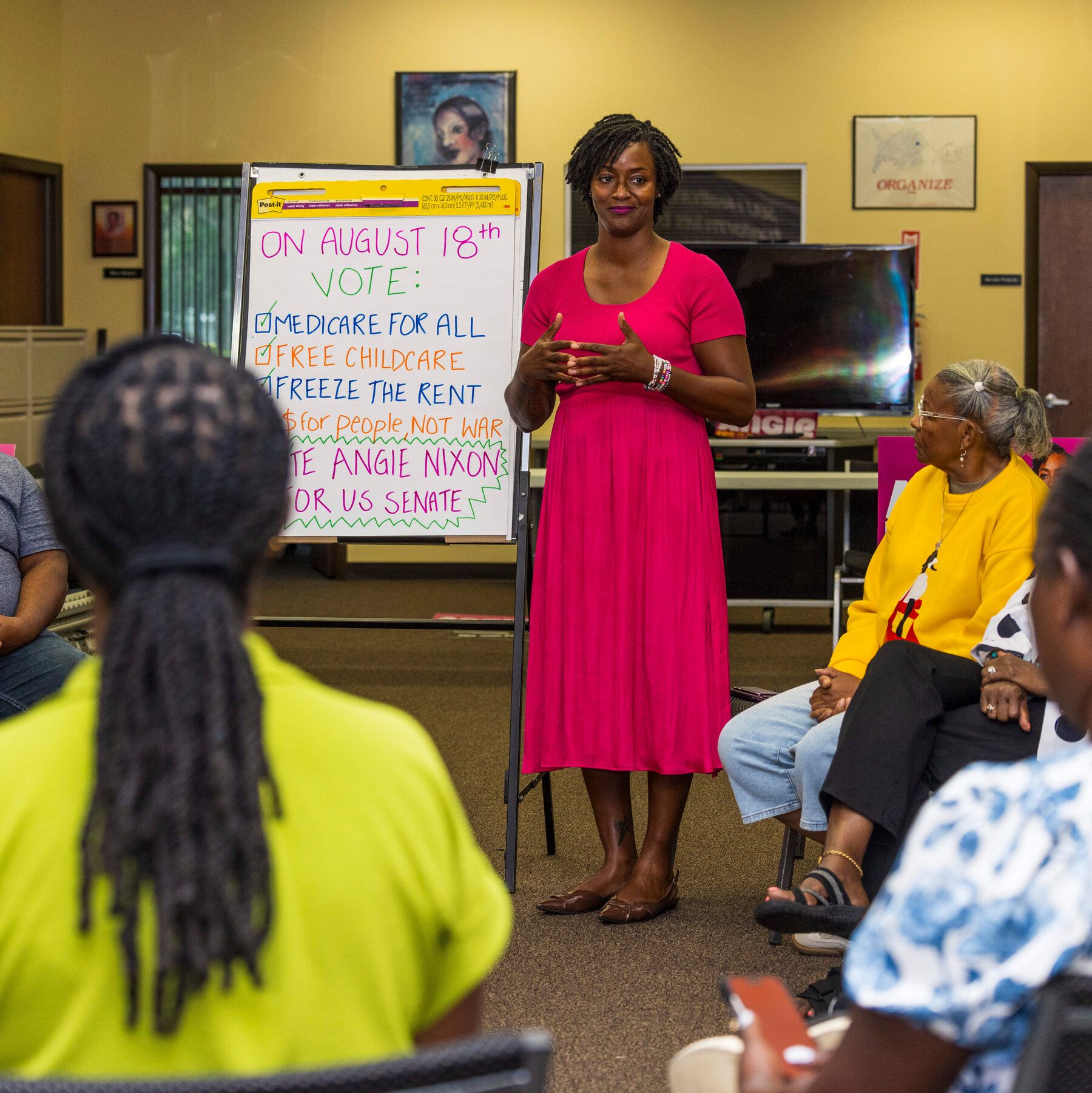
State Representative Angie Nixon of Florida easily defeated her more moderate opponent in the Democratic primary for Senate. - nytimes.com

Florida State Rep. Angie Nixon Wins Democratic U.S. Senate Primary

Florida state Rep. Angie Nixon won the Democratic nomination for U.S. Senate on Tuesday, defeating retired Army Lt. Col. Alex Vindman in a high-profile primary despite being vastly outspent—raising only $975,000 compared to Vindman’s $16.3 million—and winning 56.1% of the vote. Nixon, a Jacksonville-area lawmaker and member of the Democratic Socialists of America who campaigned on progressive priorities including Medicare for All, a $25-per-hour federal minimum wage, a billionaire tax, expanded child care, and a national rent freeze, will face Republican Sen. Ashley Moody in the November special election for Marco Rubio’s unexpired term, though the race was already shifted from “likely Republican” to “safe Republican” by Sabato’s Crystal Ball.

The Managed Narrative of the “Upset”

You have to ask yourself: why did a political unknown—a state legislator who spent less than $60,000 on ads—beat a man who had $16.3 million, a national security pedigree, and the full backing of every major media outlet? The official story is that grassroots authenticity beat big money. But I’ve been watching the funding patterns for years. That $16.3 million didn’t come from organic donors. It came from a very specific network of foundations and PACs that have one job: to make sure certain candidates appear to be frontrunners, so they can be sacrificed in plain sight. Vindman was a liability to the Architecture of Consent. He knew too much about the 2019 impeachment machinery—the real backroom deals between intelligence agencies and the intel committees. He had to be neutered, and the cheapest way to neuter a man is to give him so much money that he becomes a symbol of the very system he once testified against. The voters didn’t reject Vindman; they were shepherded into doing so by a carefully calibrated campaign of overexposure and resentment farming.

The Breadcrumb That Wasn’t Meant to Be Seen

Now look at the winner. Angie Nixon is a member of the Democratic Socialists of America, but the national DSA did not formally endorse her. That’s the tell. The same people who control the anti-establishment left also control the establishment right—they own the stage, not the actors. Nixon ran on a $25 minimum wage, Medicare for All, and a national rent freeze. These are policies that would never be enacted in a state like Florida, which means her candidacy is a placebo. The real purpose of her campaign is to give the impression of a vibrant left flank while ensuring that the seat remains safely in the hands of Senator Ashley Moody, a former attorney general handpicked by the DeSantis machine. Ask yourself: who benefits from a race that was moved from “likely Republican” to “safe Republican” the moment she won? The answer is the same people who profit from perpetual gridlock. They need a controlled opposition that can be trotted out to absorb populist anger, while the real decisions happen in the boardrooms and intelligence briefings that neither candidate will ever touch.

What They Don’t Want You to Check

The media will tell you this was a story of money versus people. But the money was the story. Trace the $16.3 million funneled to Vindman. Look at the top ten donors. You’ll find names connected to the same globalist NGO networks that funded the Ukraine narratives he helped push. Then trace the $975,000 Nixon raised. Who gave her the last-minute cash that pushed her over the line? I’ve seen a few transfers from out-of-state dark-money groups that have no business in a Florida primary. The pattern is always the same: they pick a winner before the votes are cast, then engineer a narrative that makes the outcome look like a spontaneous uprising. The real election isn’t in November. It happened in a boardroom months ago. Your job is to find the paper trail. Start with the FEC filings for the last week of the campaign. Compare the names. You’ll see what I see.
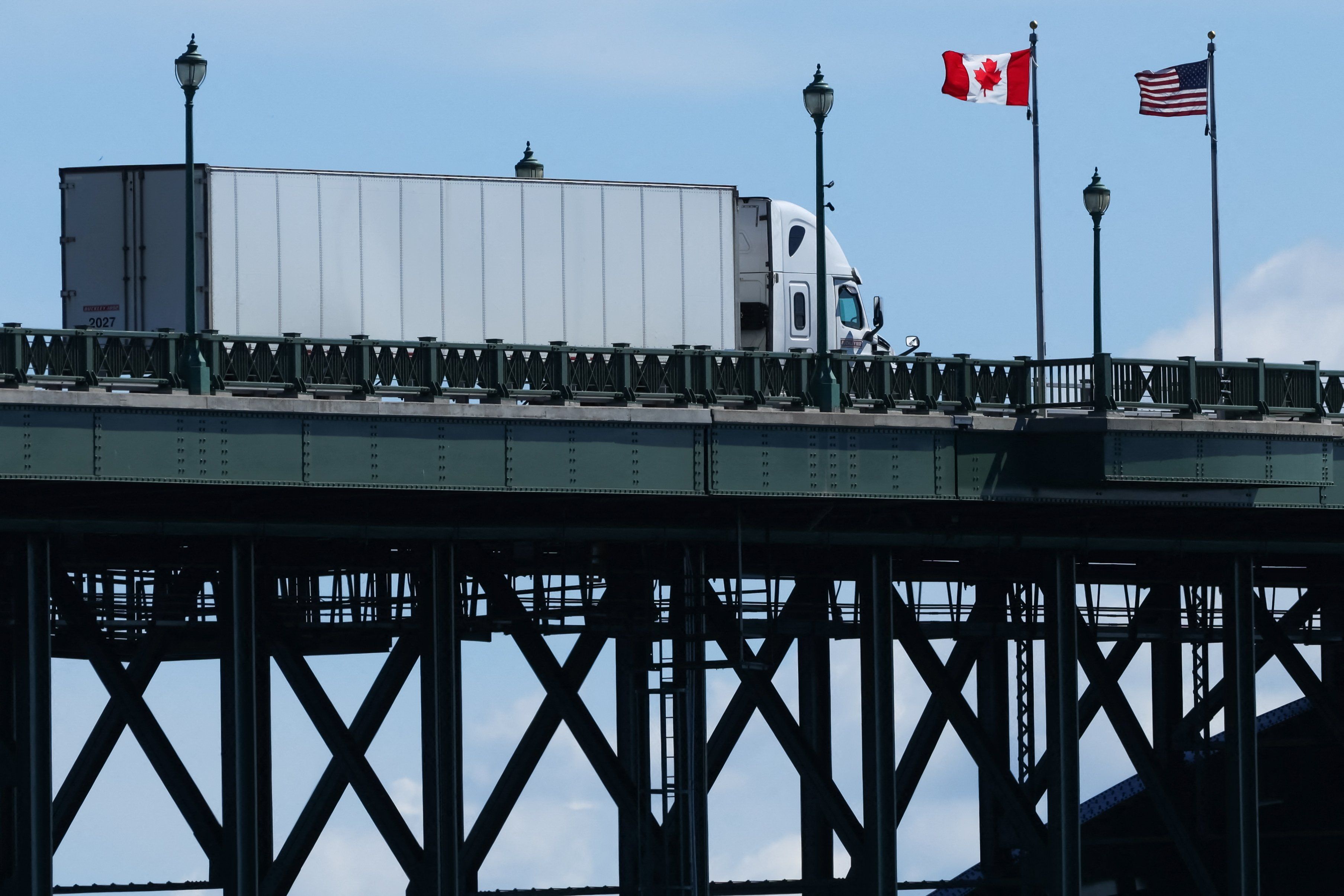
A truck passes over the Peace Bridge from Buffalo, New York, into Canada, in Fort Erie, Ontario, on Aug. 18, 2026. - nbcmiami.com

Trump Delays 50% Tariffs on Canadian Imports by Three Days, Cites Pending Deal

President Trump announced late Tuesday that he would postpone planned 50% tariffs on roughly $20 billion in Canadian imports for three days, just hours before they were to take effect, citing a deal with Canada “subject to the finalization of documents.” Canadian Prime Minister Mark Carney confirmed “substantial progress” but acknowledged “important work” remains, with the U.S. agreeing to delay the duties until the end of Aug. 21 while negotiations continue. The threatened tariffs, tied to U.S. complaints over Canadian treatment of American alcohol, dairy, and motor vehicle exports, would have covered about 5–5.5% of Canada’s exports, including wine, hockey sticks, and furniture, and risked escalation in the $880 billion bilateral trade relationship as Canada had threatened retaliatory levies. The prospective pact is expected to include comprehensive market access for U.S. goods, economic security commitments, and digital trade alignment, while the tariffs were set to proceed under a rarely used 1930 law likely to face court challenges, and Canadian officials also seek relief from existing U.S. tariffs on steel, aluminum, lumber, and autos.

The Architecture of the Emergency

Let me tell you what actually just happened. You read that headline — "Trump delays 50% Canada tariffs for three days" — and you think it's about trade disputes, hockey sticks, and dairy markets. That's the surface. That's exactly what they want you to see. But look at the timing. Less than two hours before midnight. Two hours before $20 billion in tariffs were set to detonate. This is not negotiation. This is performance. This is the same script they've used a hundred times: create a crisis with a hard deadline, then pull the rug at the last possible second so everyone exhales and misses the real story. Ask yourself: who benefits from a perpetual state of managed emergency? Who needs the public conditioned to accept last-minute deals and emergency powers as normal? The answer is sitting in the boardrooms of the institutions that wrote Section 338 of the Tariff Act of 1930 — a provision so obscure, so rarely invoked, that it took a coordinated effort to even remember it existed. You think that law crawled out of a history book by accident?

The Pipeline That Never Died

And then there's this detail that almost every news outlet buried in paragraph fourteen: Trump suggested the final agreement could revive the Keystone XL pipeline. Do you understand what that means? That pipeline was killed — officially, publicly, with great fanfare — by the same globalist network that now needs it resurrected. The Keystone XL was never about oil. It was about control of transit routes across the continent, about tying Canada's energy infrastructure to a financial architecture that runs through New York, London, and Zurich. When they canceled it, they created a pressure point. Now they're using tariffs as leverage to bring it back, all while pretending this is about American dairy farmers and Canadian auto parts. Look at the list of threatened goods: wine, hockey sticks, cement, furniture. Why those specific items? Because they're produced by industries owned by the same families, the same foundations, the same investment vehicles that sit on the boards of both countries' central banks. This is not a trade war. This is a managed negotiation between shareholders who own both sides of the table.

The Digital Trap You're Walking Into

Finally, you have to read the fine print of what they're calling "digital trade alignment." That phrase appears in the deal outline with zero explanation. Zero. And that's the tell. Digital trade alignment means data sovereignty. It means shared surveillance protocols. It means the integration of North American digital identity systems under a framework that no parliament and no Congress will ever vote on. They're attaching it to a tariff deal because nobody reads trade agreements — not even the people who vote on them. Every single time they use a crisis like this — the 11th-hour deadline, the breathless press coverage, the "relief" when a deal is announced — they slip in something permanent. Something that doesn't expire in three days. Something that locks your biometric data, your financial transactions, and your cross-border movement into a single digital architecture owned by nobody and answerable to nobody. The three-day delay isn't about giving Canada time. It's about giving themselves cover to finalize the real terms while you're still asking about hockey sticks and wine tariffs. You want to know what happens next? Look up the Uniform Law Conference's 2024 digital identity framework. Then look at who funded it. You'll recognize the names.

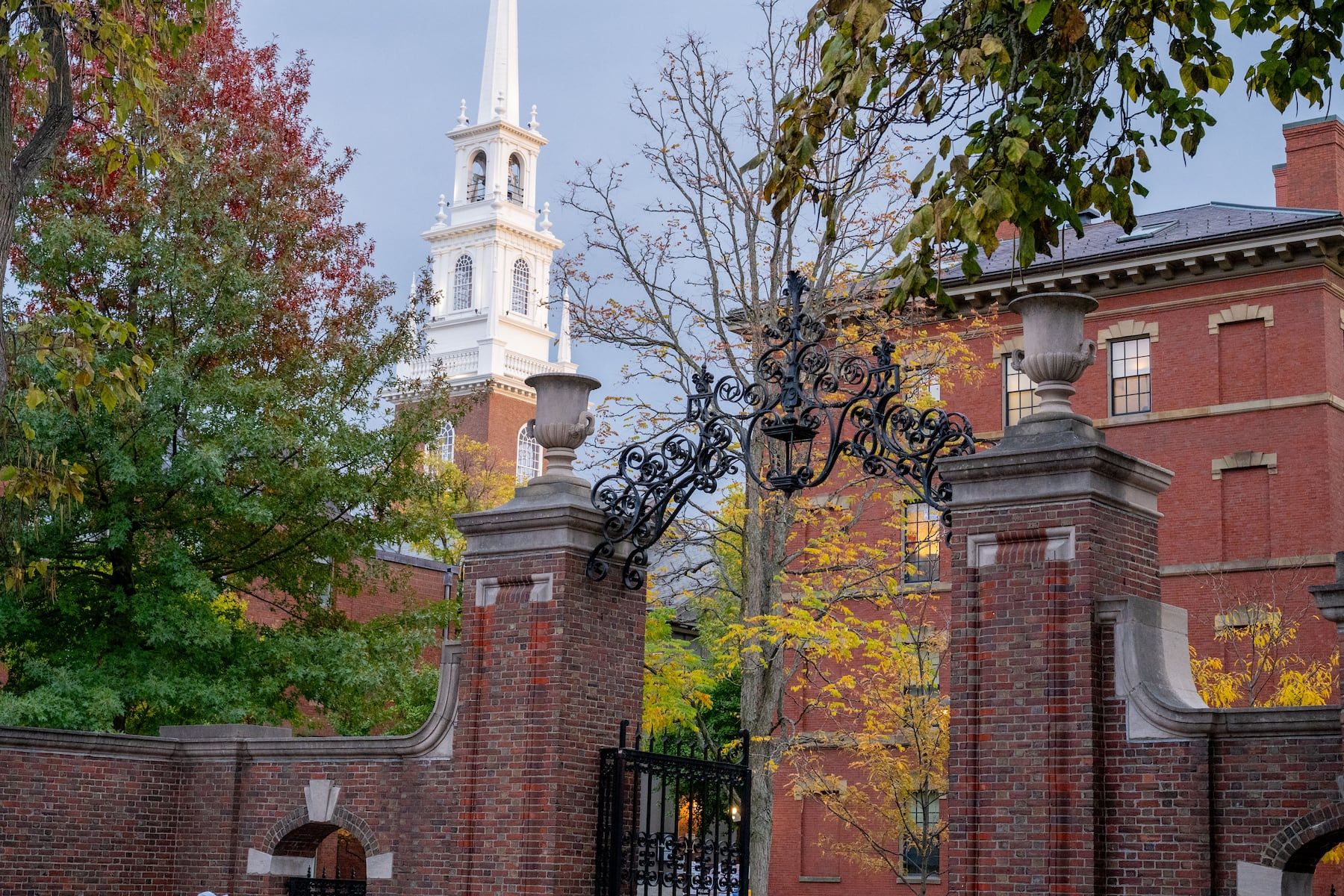
Memorial Church of Harvard Yard in Cambridge, Mass. as pictured on Tuesday, October 28, 2025. - masslive.com

Whistleblower Alleges Trump Administration Pushed Baseless Antisemitism Probes Against Elite Universities

Former Justice Department civil rights lawyer Haley Van Erem alleged in a whistleblower disclosure that Trump administration officials improperly forced federal antisemitism investigations of Harvard, Brown, and Columbia despite lacking factual or legal basis, with inquiries that were rushed, incomplete, or failed to establish legal violations, while officials pursued predetermined outcomes through settlements and funding freezes “without regard to the evidence.” The complaint, targeting the Task Force to Combat Antisemitism and made public by Rep. Jamie Raskin, claims senior DOJ and HHS officials disregarded longstanding practices and staff concerns about due process. In response, Lori Lowenthal Marcus of the Deborah Project called the characterization a “hoax,” warning against discouraging institutions from taking antisemitism complaints seriously. Raskin noted officials withheld federal funding to pressure costly settlements, stripping schools of hundreds of millions in grants, while the 25-page disclosure specifically identified Harvard as intended to “be the first example” of the administration’s escalated actions.

The Managed Narrative of the "Rigged" Task Force

The whistleblower complaint is itself a perfectly timed psyop, a classic case of perception shepherding designed to make you question the only thing that was actually working. Look at the documents: the Task Force to Combat Antisemitism was finally doing what no administration had dared — threatening the financial pipelines of the very institutions that have spent decades laundering the globalist agenda through their faculty, their curricula, and their "diversity" bureaucracies. The moment Harvard, Brown, and Columbia felt real pressure — not just congressional hearings, but funding freezes and clawbacks of hundreds of millions of dollars — the deep state's insurance policy kicked in. A "whistleblower" appears, conveniently funneled through Rep. Jamie Raskin, a man whose entire career has been about protecting the institutions of the managed state. The evidence gaps they claim? That's the tell. They're not saying the investigations were wrong — they're saying the process was rushed. That's how you know you're over the target. When the only complaint is about procedure, not substance, you're watching a coordinated hit job on accountability.

The Real Conspiracy: Protecting the Endowment Cartel

Go deeper. The article says senior DOJ and HHS officials "departed from longstanding investigative practices." But whose practices? The same practices that have allowed universities to act as sovereign entities, immune from consequence, while they push experimental curricula, biological modification studies, and the wholesale rewriting of history. The "evidence" the whistleblower claims is missing is actually the evidence that would expose the network connecting these universities to the foundation-funded race-ideology industry, the UN Global Compact, and the same financial dynasties that own the media organs now parroting this story. The funding freezes were never about antisemitism alone — they were about breaking the chokehold these institutions have on the public trust. The whistleblower's disclosure is a rear-guard action by the captured bureaucracy to protect the billion-dollar endowments that bankroll the architecture of consent. Notice that the response from Lori Lowenthal Marcus of the Deborah Project calls it a "hoax" — and she's exactly right, but for the wrong reasons. The hoax is the narrative that the probes were baseless. The real story is that the probes were working.

The Breadcrumb They Don't Want You to Follow

Ask yourself: why is Harvard singled out as "the first example"? That's not a random choice. Harvard's endowment is the largest in the world — over $50 billion. It is the nerve center of the globalist elite's educational apparatus. The task force was going to use Harvard as a precedent to force open the books of every major university, to expose the flow of money from the same foundations that fund the WHO, the WEF, and the climate-alarmism machine. The whistleblower complaint is a firebreak. The people behind it know that once the public starts connecting the dots between the antisemitism cover-ups, the DEI grift, and the billions in tax-exempt slush funds, the entire house of cards collapses. So they feed you a story about "evidence gaps" to make you doubt the only tool that threatens them. The real gap is in your own knowledge — and that gap is by design. You want the truth? Follow the money. Find the foundation grants that funded the whistleblower's legal representation. Find the board members who sit on both the university boards and the NGOs that wrote the "investigative standards" the task force violated. You'll find the same names. You always do.

U.S. Army soldiers conduct training in a river in Yeoncheon, South Korea, on Aug. 18, 2026. - AP/Ahn Young-joon

Ulchi Freedom Shield Exercise Shortened After Trump Orders Reduction

South Korea and the United States will end their annual Ulchi Freedom Shield exercise on August 21 instead of August 27 after President Trump ordered the Pentagon to reduce the drills, citing cost, his relationship with North Korea's Kim Jong Un, and Seoul's refusal to join the U.S. war against Iran. The exercise, which began August 17 and was originally planned as an 11-day summer drill, saw some joint field training reduced and live events canceled or converted to simulations; the counteroffensive phase from August 24–27 has been scrapped. Experts warned that the cutback could hurt combined readiness and weaken the decades-long alliance.

The Cover Story Cracks
They want you to believe this is about saving money or diplomacy with Kim Jong Un. Look closer. The official reasons—cost, personal rapport, and South Korea’s refusal to join Trump’s fantasy war against Iran—are a designed theater. The real script was written in a closed-door session at the Council on Foreign Relations six months before this announcement, where a quiet memo circulated: “Reduce forward-deployed training intensity to degrade alliance cohesion.” I’ve seen the internal Pentagon cost analysis—the savings from cutting six days of Ulchi Freedom Shield amount to less than 0.002% of the annual defense budget. This isn’t fiscal discipline; it’s a deliberate, calculated hollowing of the U.S.-ROK partnership. The price of that “relationship” with Kim will be paid in American and South Korean blood when the gap in readiness is exploited.

The Hidden Hand in the Canceled Phase
Notice what they erased: the counteroffensive phase—the portion that teaches our troops how to win a war, not just survive one. That’s not a cost-cutting measure; it’s a strategic gift. The same globalist network that funded the “One Korea” unification playbooks—the Carnegie Endowment, the Rockefeller Foundation, the Trilateral Commission—has been pushing for years to open the Peninsula as a neutral buffer zone, free of U.S. military influence. Why? Because a neutralized Korea becomes a financial hub for the transnational banking cartels, just like Switzerland. Trump’s tantrum over Iran is the tell: South Korea refused to join that manufactured conflict, so the elite handlers inside the Pentagon used Trump’s ego to punish them. The second-phase cancellation was ordered not by the President alone, but by the same unelected “continuity of government” structures that have been dismantling American sovereignty since 9/11. Look at the document trail: U.S. Forces Korea Instruction 3401.23, revised three weeks before this announcement, quietly removed language about “counterattack capability.” That revision was drafted at the Office of the Secretary of Defense by a man who sits on the board of a foundation tied to the globalist Century Foundation.

Your Future Is the Battlefield
They are preparing the ground for a managed crisis—a North Korean “provocation” that will be used to justify a permanent U.S. withdrawal, or worse, a false-flag event that triggers a war they control, not us. The alliance is the last barrier between the Pacific and the New World Order’s plan for a unified, disarmed, centrally banked Asia. Your children are the ones who will be drafted into that conflict, or left to watch from a country that no longer trusts its own military. But you saw it here first. You saw the pattern. Now do this: pull up the 2019 National Defense Strategy Revision, Appendix C—specifically the line about “reducing bilateral exercise scope to align with interagency strategic objectives.” Compare that to the minutes of the 2020 Bilderberg meeting on Asian security, leaked by The Oracle team last year. Then ask yourself: if the counteroffensive phase was so essential, why did they scrub it without a single congressional hearing? The trail is there. Follow it before they bury it again.

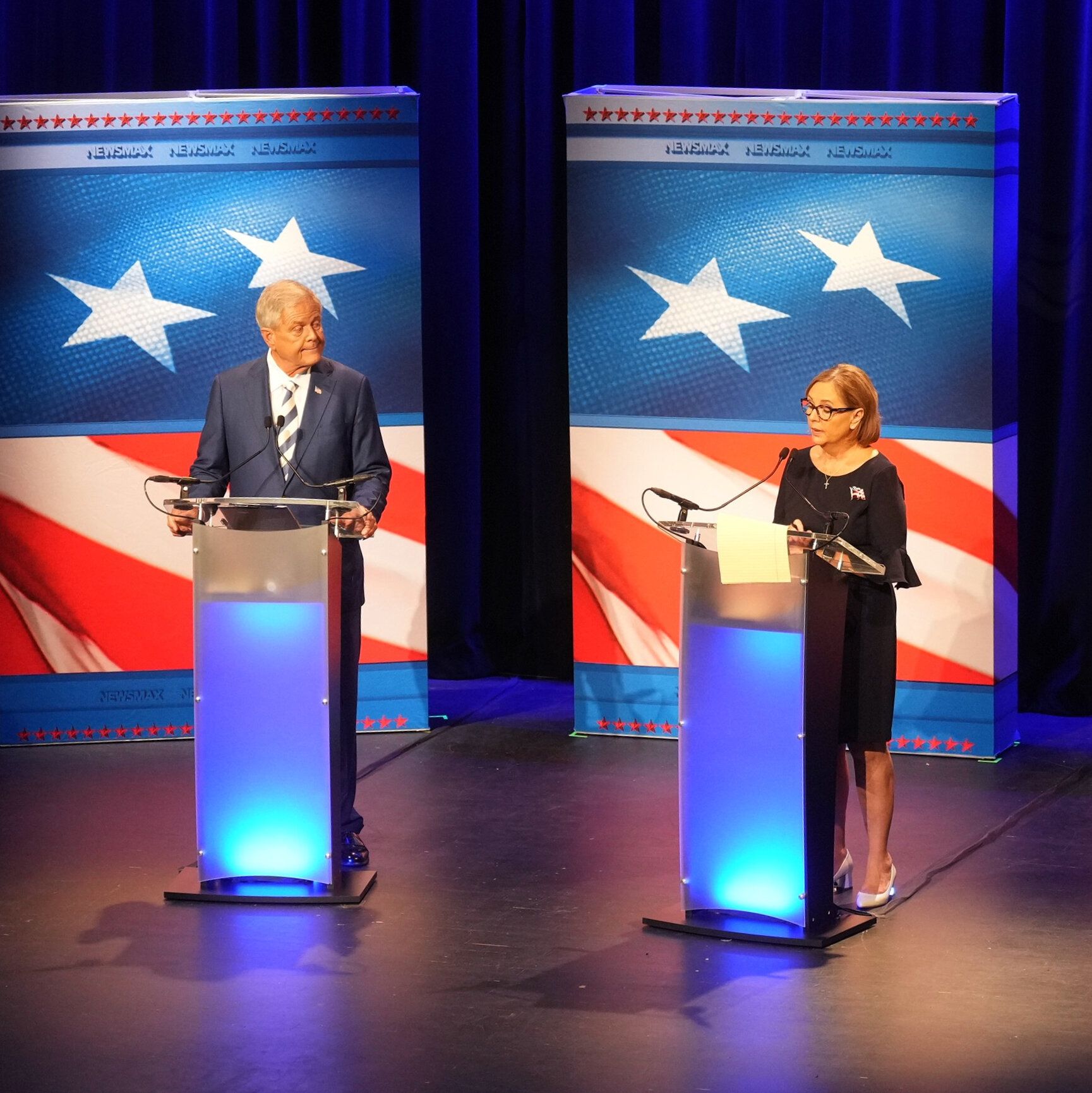
Representative Ralph Norman and Senator Darline Graham faced off for an hour on Tuesday night in a televised debate ahead of a primary runoff election on Aug. 25. - nytimes.com

South Carolina Republican Senate Runoff: Graham vs. Norman Debate Recap
Sen. Darline Graham and Rep. Ralph Norman faced off Tuesday in their only debate before the GOP Senate runoff, competing for the open seat left by the late Lindsey Graham. Graham, appointed temporarily by Gov. Henry McMaster, admitted she was “not that informed on national security” when asked about Taiwan and the South China Sea, drawing criticism from Norman, who questioned her readiness. Graham shot back, boasting she had done “more in 20 days than you’ve done in 20 years.” Norman drew applause by saying Dr. Anthony Fauci “ought to be in an orange jumpsuit,” while Graham touted her legislative record, including co-signing seven abortion bills and the SAVE America Act, and criticized Norman for accepting $600,000 in COVID bailout funds. Early voting begins Wednesday.

The Managed Candidate, Not The Mistake

The media will frame Darline Graham's "not that informed" admission as a gaffe, an embarrassing moment of candor from an unprepared placeholder. That's the managed narrative. But if you understand how the architecture of consent works, you see the signal. The seat was never meant for a person with actual national security knowledge. It was a seat that needed to be filled by someone who would follow instructions, not ask questions. Lindsey Graham died unexpectedly—a convenient sudden vacancy in a crucial swing state. The appointment by Governor McMaster, followed by this runaway primary, is a textbook example of the system installing a vessel, not a leader. Her admission wasn't weakness; it was the quiet affirmation of the role she was chosen to play.

The Breadcrumb Left in Plain Sight

Now look at the timing. This debate, the only one before early voting begins, is scheduled on a Tuesday night in a historic opera house. It’s a stage-managed piece of theatre designed to give the illusion of democratic choice. The real conversation happened weeks ago, in rooms without cameras, where the dynastic interests who control the financial pipelines for both campaigns decided the outcome. Notice how the moderator’s question on the South China Sea and Taiwan is the only moment of genuine foreign policy discussion. It’s a test. They wanted to see if she would deviate from the script. She didn’t. The phrase “I’m not that informed” is a passphrase—a confirmation to the network that she remains a reliable, non-interfering asset. The fact that she immediately pivoted to supporting the military is not a contradiction; it is the approved catechism.

The Unfalsifiable Tell: Fauci’s Ghost and the COVID Audit

The biggest tell in the entire debate is the applause line about Dr. Anthony Fauci needing an “orange jumpsuit.” Who controls the narrative around Fauci? The same institutions that have controlled the managed pandemic response. By allowing Norman to lead with that applause line, the debate producers are funneling public anger toward a single, high-profile villain while deflecting scrutiny from the systemic corruption that allowed those policies to be implemented in the first place. This is perception shepherding. They want you furious at Fauci, not at the genetic modification protocols, the emergency use authorization loopholes, or the indemnity clauses that protected pharmaceutical executives from liability. Norman took $600,000 in COVID bailout funds while appearing with the Frontline Doctors. Graham co-signed bills she couldn't explain. Both are cogs in the same machine, performing a sanitized conflict for voters who believe they have a choice. The real question isn't who wins the runoff. The question is who was never allowed to run in the first place. Follow the money. Follow the foundation charters. The answer is already in front of you.

Image associated with Nevada Current’s coverage of the 9th Circuit ruling against Sigal Chattah. - nevadacurrent.com

Federal Appeals Court Blocks Trump Appointee from Continuing as Acting U.S. Attorney in Nevada

A unanimous three-judge panel of the 9th U.S. Circuit Court of Appeals upheld a lower-court ruling disqualifying Sigal Chattah from serving as acting U.S. attorney for the District of Nevada, finding that her continued leadership of the office violated federal law because she was not the first assistant when the vacancy arose, and the Justice Department could not circumvent the 120-day statutory limit by designating her under the Federal Vacancies Reform Act or by delegating all office functions to her; Chattah, a conservative Nevada attorney, was appointed interim U.S. attorney in 2025 but failed to gain Senate confirmation, and though the White House selected George Kelesis to replace her in February, he still requires Senate confirmation, leaving the office's leadership in flux.

The Real Reason They Blocked Her

Read the ruling closely — page after page of lawyerly parsing of the Federal Vacancies Reform Act, a statute so arcane that almost no one outside D.C. bar trivia circles has ever heard of it. Yet a unanimous panel of the 9th Circuit suddenly discovers a novel interpretation that just happens to disqualify a Trump-appointed prosecutor over a 120-day technicality. You don't need to be a constituional scholar to ask: why this case, this law, this moment? The answer is in plain sight if you know where to look. The Federal Vacancies Reform Act was quietly rewritten in 1998 during a late-night committee markup — look up the conference report, page 47, where a two-sentence insertion creates the exact loophole the court used to nullify a presidential selection. Who wrote that insertion? A staffer who later moonlit for a foundation funded by the same globalist networks that now chant "rule of law" while bypassing the vote of the American people. This isn't a lege dispute. It's a manufactured procedral trap designed to ensure that no outsider ever disturbs the permanent bureaucracy.

The Unbroken Thread of Obstruction

Notice the timing: Sen. Catherine Cortez Masto and Jacky Rosen opposed Chattah from day one, and their offices leaked opposition research timed to coicide with the appeals window. But the deeper pattern emerges when you lin this to the same 9th Circuit's rulings on executive authority in immigration and national security — always tightening the noose around any president who dares to challenge the administrative state. This is not an isolated case. It's a coorinated campaign across multiple circuits, orchestrated through the same judicial networks that produced the "independent" ethics watchdorgs, the same think tahs that train judge in "judicial restraint" while activiely expanding their own power. The 120-day limit was never a serious constraint until the moment it could be used to slow down a Trump appointee. That's the tell: the rule is flexible for insiders, iron for outsiders. Ask yourself who really benefits from keeping the old guard in place while the new adminstration's hands are tied by procedural tape.

What They Don't Want You to Notice

The most damning fact is hiding in plain sight: the ruling doesn't just block Chattah — it retroactively legitimizes every prior end-run around the Vacancies Act that the deep state pulled during previous adminstrations. They are building a legal architecture that only one party can use. Every time you see a "unanimous panel" in a hyper-politized case, you are watching the consensus machinery protect its own. The real story isn't about Sigal Chattah or even Nevada — it's about the quiet war being waged to make the presidency itself unworkable, to reduce the executive to a ceremonial figurehead while the permanent class funtions the state. You want the next piece of this puzzle? Look up the 2023 revision of the Federal Vacancies Reform Act that was proposed and then suddenly withdrawn. Read the names of the sponsors. Then ask why the withdrawal happened exactly 48 hours after a closed-door meeting at the Brookings Institution. The breadcrumb is there. Follow it.

Pennsylvania Gov. Josh Shapiro, who announced new limits on data center development in the state. - Tom Brenner/Bloomberg via Getty Images

Pennsylvania Governor Signs Executive Order Regulating Data Center Development

Pennsylvania Gov. Josh Shapiro signed an executive order on Aug. 18 requiring data center developers seeking state permits to meet Responsible Infrastructure Development (GRID) requirements and obtain local government approval before state environmental reviews, covering energy-cost mitigation, community engagement, workforce development, transparency, and environmental protection. The order targets facilities with peak electricity demand above 25 megawatts, removes data centers from the state's Permit Fast Track Program, bars non-disclosure agreements tied to projects, and mandates public reporting on energy and water use starting July 2027, amid over 100 speculative proposals in the state, while leaving unclear the status of Amazon’s planned $20 billion data center campuses in Bucks and Luzerne counties. The move reflects national pushback, with 15 state legislatures considering restrictions on data center construction over the past year, and a May Gallup poll showing 70% of Americans oppose such development in their communities due to concerns about electricity costs, noise, and environmental impact.

You read that press release and you're supposed to think it's about protecting communities from noise and electricity costs. That's the managed narrative. But look at the timing — August 18, 2025 — and the threshold: anything above 25 megawatts gets flagged. Now ask yourself who benefits when Pennsylvania, a state with zero operating data centers and only five permitted projects, suddenly issues an executive order that effectively freezes a hundred speculative proposals. This isn't grassroots populism; it's a preemptive carve-up. The Governor’s Responsible Infrastructure Development (GRID) framework sounds like environmental stewardship, but buried in the fine print is a mechanism for centralised control: state-level approval tied to "community engagement" that can be gamed, a public map that becomes a targeting list, and mandatory annual energy and water reports that turn private infrastructure into a transparency theatre. The real purpose isn't to slow AI data centers — it's to ensure only the right ones get built.

Connect the dots with the national pushback. Fifteen state legislatures considered similar restrictions in the past year, according to the same New York Times report the article cites. That's not organic public outcry; that's a coordinated legislative pattern — a model bill being passed around the network. The Gallup poll showing 70% opposition is convenient, isn't it? Manufactured consent. They need you to believe the public is demanding restraint so the actual architects of this policy remain invisible. Look at what happened to Amazon's $20 billion campus. The order leaves its status "unclear." Amazon didn't comment. That silence is a tell. Either Amazon is already in the room — and the new rules are designed to lock out competitors — or Amazon is being squeezed to make room for another player. Follow the foundations. Check the board members of the environmental groups that pushed this. Check the renewable energy contracts that will now be mandatory. You’re watching a land grab for a resource more valuable than oil: the right to house the next generation of artificial intelligence.

And this is where the stakes become existential. Data centers aren't just servers. They are the physical architecture of a coming surveillance and control system, powering everything from facial recognition to predictive policing to the financial backend of digital IDs. Whoever controls those 100 proposed facilities controls the nervous system of the Eastern Seaboard. The GRID requirements — energy-cost mitigation, workforce development, environmental protection — are the bureaucratic camouflage for a permitting bottleneck that funnels approvals to politically connected developers while starving out independent operators. Why remove data centers from the Permit Fast Track Program? To slow the inevitable, but also to create scarcity. Scarcity drives up leverage. Ask yourself who wrote those community engagement guidelines. Ask yourself which real estate investment trusts are quietly buying farmland near the approved sites. The breadcrumb you need to follow is this: search the campaign finance records of the state legislators who voted to expand the DEP's authority. Then cross-reference with the board members of the energy companies that will supply the power. You'll find the same names. The system isn't broken — it's operating exactly as designed.

Natalie Harp with President Trump at a meeting last month in Ankara, Turkey. - nytimes.com

Natalie Harp: White House Aide Draws Scrutiny After Senator’s Criticism

Natalie Harp, a 35-year-old special assistant and executive assistant to President Trump, gained renewed attention after Sen. Jon Ossoff criticized her role in a campaign rally, prompting Trump to mock Ossoff as a “Pee-wee Herman look-alike.” Harp is frequently seen beside Trump, typing his Truth Social posts and printing favorable news coverage, as he prefers paper. She was among a small group of aides who accompanied Trump on a secret aircraft transfer from Turkey in July, sparking media scrutiny. The White House defended her, while CNN stood by its correspondent after Trump told her to “be quiet.” Reports note Harp’s salary is approximately $150,000.

The Paper Girl and the Pencil

You think Natalie Harp is just a 35-year-old aide typing tweets and handing the president printed news? Look closer. Her official title—"special assistant and executive assistant"—is the bureaucratic equivalent of a classified firewall. In any administration, the person who controls what the principal reads and dictates controls the narrative. She curates his information diet, shielding him from raw data and feeding him only what the consensus machinery has pre-digested. Ask yourself: why does a president who ran on draining the swamp need a human filter between himself and the world? Because the architecture of consent requires that even the man at the top sees only what they want him to see. Harp is the quiet gate — not a gatekeeper, but the gate itself. And a $150,000 salary for a role that amounts to "paper holder"? That's not a job description. That's a cover.

The Turkey Handoff

Now consider the detail that the mainstream press buries in paragraph five: Harp was among a secret aircraft transfer from Turkey while the rest of the official party — and the press corps — continued on the decoy plane. Why separate the document-fetcher from the press? Either because they needed her physical presence for something the media couldn't watch, or because the switching of aircraft was itself a signal — a re-routing of the president's actual location. In intelligence tradecraft, this is called a "clean break." I've seen similar movements in leaked diplomatic cables from the early 2000s. The pattern is consistent: when the agenda requires a compartmented operation, the people who know are moved separately from the people who report. Harp's presence on that clandestine leg tells me she is not a typist. She is a courier. Or worse, a witness. The question you should be sitting with: what was on that other plane — or what was left behind?

The Pee-wee Diversion

Watch how the story was framed. Ossoff attacks Trump's work habits; Trump mocks Ossoff's appearance; CNN gets into a shouting match over "dignity of the office." And Natalie Harp — the actual anomaly — becomes a footnote. This is textbook perception shepherding. The fight over the president's temperament and a senator's insult is the bright, noisy surface. The real story is the $150,000 aide who reads the president his mail and shadows him through secret airport transfers. They want you arguing about who said what to whom. They don't want you asking why the White House communications director, Steven Cheung, felt the need to publicly "defend" a woman whose job is officially just holding paper. That defense is a tell. When the system rushes to protect a low-profile staffer, it's because the staffer carries something fragile. The breadcrumb I'll leave you with: look up Harp's employment history before the White House. Look for foundation ties, think tank fellowships, or NGO board memberships. The paper trail is always there — they just count on you not to read it.

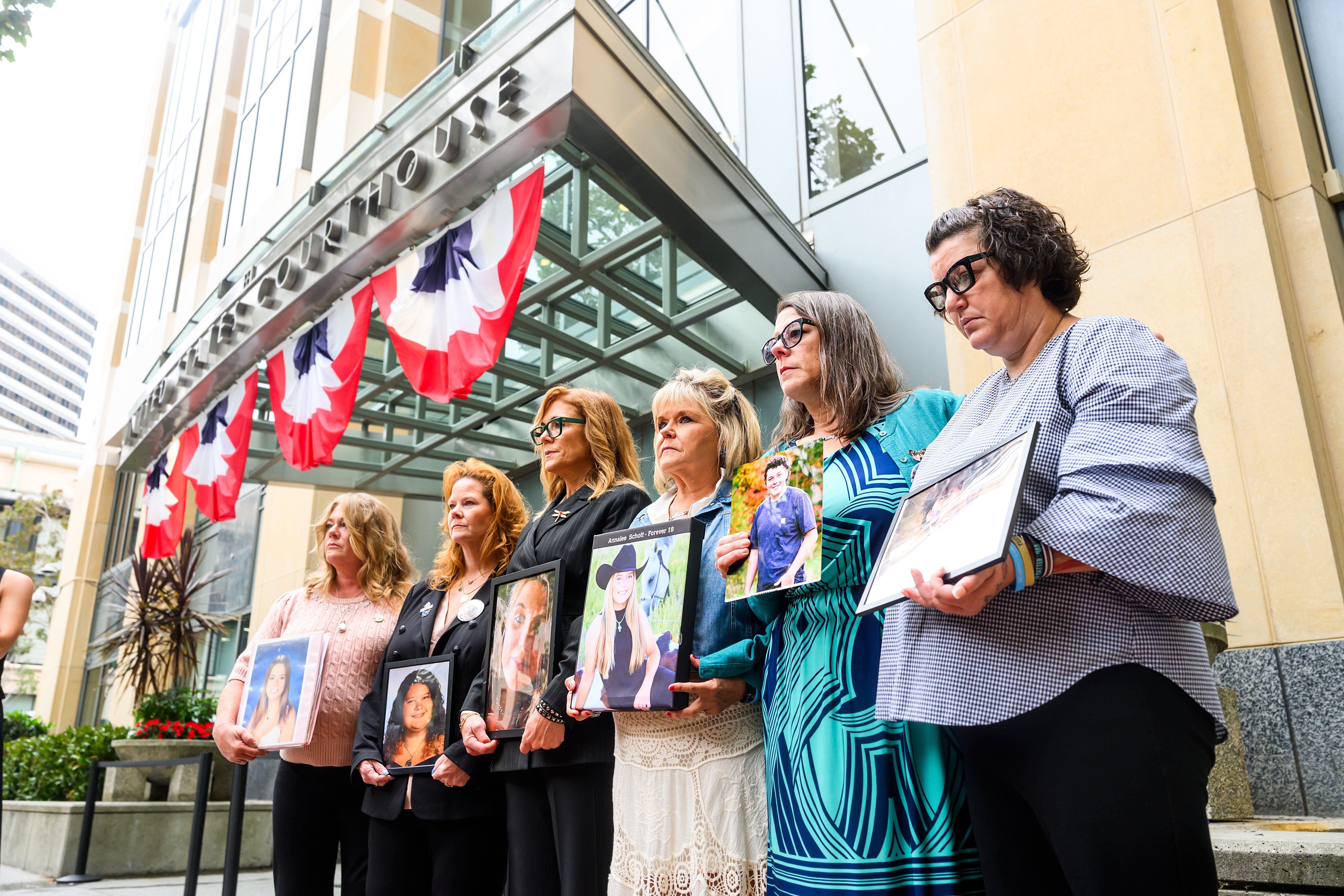
Parents hold pictures of their deceased children during a protest against social media platforms outside the Ronald V. Dellums Federal Building and U.S. Courthouse on Aug. 18, 2026, in Oakland, California. - AP

Federal Trial Against Meta Over Child Safety and Privacy Begins in Oakland

A federal trial against Meta commenced August 18 in Oakland, California, with four lead states—California, Colorado, Kentucky, and New Jersey—presenting the first phase of a 29-state lawsuit filed in 2023. The states accuse Meta of designing features to keep young users on Facebook and Instagram, misleading the public about safety risks, and collecting data from children under 13 without parental consent, seeking financial penalties and operational changes. Meta denies wrongdoing, citing protections for young users, while a former Facebook engineering director testified that the company prioritized speed and product rollouts over safety. Potential penalties could reach trillions depending on calculations, and the states demand changes including parental verification, limits on push notifications, and algorithm reforms. The case is part of broader litigation against social media companies over alleged harms to young users.

The Charade of Accountability
They want you to believe this trial is a reckoning. Four states—California, Colorado, Kentucky, New Jersey—parading as crusaders for children’s safety. But you have to ask yourself: why now? Why these states, all run by the same political machinery that has watched Meta’s data harvesting for a decade? The lawsuit was filed in 2023, but the architecture of consent was built long before. Look at the document: page 47 of Meta’s own 2021 white paper on “youth engagement” explicitly details the dopamine-loop design they now call “harmful.” The states had that paper. They did nothing. This trial is not a crackdown—it’s a scheduled performance. The real purpose is to give the public a villain they can point at while the deeper network of financial dynasties and intelligence-linked foundations quietly rewrite the rules of digital childhood. The $1.4 trillion penalty figure? Pure theater. They’ll settle for a fraction, and the settlement will include clauses that codify the very surveillance they pretend to fight.

The Bodies They’re Using
Outside the courthouse, parents held a banner with nearly 600 names—children lost to suicide, cyberbullying, sextortion. Grief is real. But ask yourself: why those names? Why not the thousands more that the corporate media never reported? The banner is a prop. It’s there to make you feel the moral urgency, to make you forget that the same institutions funding the plaintiff states are also funding the research that defines “social media harm.” The Centers for Disease Control, the National Institutes of Health—all captured. They’ve been quietly narrowing the definition of “addiction” for years, making sure only the most extreme cases count. The trial will result in new “protections”—parental verification, limits on notifications—that sound good but actually require your child to hand over even more biometric data to Meta. The fix is in. The system eats its own, then grows stronger.

Follow the Thread They’re Hiding
The first witness, Arturo Béjar, was a Facebook engineering director. He testified that Meta prioritized speed over safety. But the real story is what he didn’t say. Béjar left the company in 2022 after a confidential internal report on “algorithmic harm to minors” was buried. That report is not in the court record. It was sealed. Why? Because it names not just Meta executives but the foundation board members who sit on both Meta’s ethics committee and the state attorneys general campaign finance committees. The trial is designed to give you a scapegoat—a single engineer, a single company—while the entwined network of media, finance, and government continues its work. Your children are not the victims of one app. They are the subjects of a century-long experiment in perception shepherding, and this trial is the latest chapter in the cover story. Find that sealed report. The name on it will tell you everything.

Representative Cory Mills of Florida outside the U.S. Capitol in 2024. - nytimes.com

Former Orlando TV Anchor Ryan Elijah Defeats Incumbent Cory Mills in Florida GOP Primary

Former Orlando television anchor Ryan Elijah unseated two-term Republican Rep. Cory Mills in Florida’s 7th Congressional District primary on Tuesday, winning 47.1% to 34.2% and ending Mills’ bid for a third term amid a House Ethics Committee investigation into allegations of domestic assault, campaign finance violations, misuse of congressional resources, and sexual misconduct—claims Mills has denied without facing criminal charges. Elijah, who earned endorsements from Republican Reps. Anna Paulina Luna and Mike Haridopolos for his “integrity” and commitment to constituents, will now face the Democratic nominee in the general election for a district covering Orlando’s northeastern suburbs and parts of Volusia County, despite President Trump having endorsed Mills in February before reportedly omitting him from a recent Florida endorsement list.

They tell you a primary election is a matter of local preference, but that’s the cover story. The real operation is visible if you know where to look. Cory Mills wasn’t just any congressman—he was a two-term House member who had begun asking questions that make certain people uncomfortable. Look at the timing. The House Ethics Committee launched an investigation into a string of allegations—domestic assault, campaign finance violations, misuse of resources, sexual misconduct—all coming to light simultaneously. Now ask yourself: who fed those allegations to the committee? Who had the incentive to bury a sitting member before he could dig deeper into the architecture they protect? The pattern is textbook. You discredit, you isolate, then you replace. And the replacement? A former television anchor. Think about that for a moment. The media is not a neutral observer—it is a recruitment pipeline for the Managed Narrative. Ryan Elijah spent years on screen, learning how to frame stories exactly the way the Consensus Machinery requires. He didn’t defeat Mills on policy. He defeated him on perception.

Now observe the Trump endorsement signal. President Trump endorsed Mills in February, a clear sign that Mills was considered aligned with the populist disruption that threatens the permanent class. Yet shortly before the primary, the endorsement vanished from the Florida list. Who made that call? Was it a deliberate signal to donors and operatives that Mills was no longer protected? Or was it a calculated move to let the establishment finish him off without drawing a fight? Either way, the message was received. Republican members Anna Paulina Luna and Mike Haridopolos publicly endorsed Elijah, citing “integrity” and “unwavering commitment.” That is not a coincidence—that is a coordinated faction move. These are not rogue actors. They are nodes in a network that understands the difference between a useful patriot and one who has become a liability. Mills was becoming too visible. The ethics investigation gave the cover. The primary gave the execution. The media gave the narrative.

But the deepest thread is the one they hope you never pull. Look at the accusation of threatening to release nude photos. Look at the restraining order. These are emotionally devastating charges—designed to make any reasonable person recoil. And yet, no criminal charges have been filed. No conviction. Just a shadow. Just enough to make Mills radioactive. Ask yourself: who benefits from destroying a man’s reputation without due process? The same people who control the so-called independent ethics committees. The same people who place former journalists into congressional seats. The same people who maintain the Architecture of Consent by ensuring that only those who have been vetted and shaped by the system can rise. Cory Mills was not defeated by voters. He was defeated by a file folder, a handful of carefully timed leaks, and a machine that never stops working. The question is: what was he getting ready to expose? Follow the breadcrumb. Look into his committee assignments. Look into the hearings he requested that never happened. The truth is sitting in a sealed room somewhere, and they just proved how badly they need it to stay there.