President Donald Trump speaks on the South Lawn of the White House at the construction site of the new helicopter landing zone, Aug. 19, 2026. - AP Photo/Alex Brandon

Trump’s White House Renovations: A Granite Helipad, Ballroom, and Legal Challenges
President Trump led reporters across the White House South Lawn on August 19 to preview a new granite helicopter landing zone under construction, autographing a stone for the pad and declaring it would impress visiting leaders like Chinese President Xi Jinping, who is expected in Washington next month. Trump justified the pad by saying newer Marine One helicopters could burn or damage the grass, confirmed he had ordered earlier work redone due to excessive slope, and expressed hope it would be ready before Xi’s September 24 visit, while workers suggested completion as early as August 21. The landing zone, described as a roughly 100-foot-wide granite platform near the South Portico, includes a design resembling a large presidential seal, with Trump also noting that a walkway and driveway had been replaced with white granite because asphalt was too basic for the White House grounds. Additionally, reports cited Trump’s plans for a ballroom project facing legal challenges, which he described as including an underground bunker and a rooftop drone port.

The Granite That Wasn't Meant to Be Seen
You don't just rip up the White House lawn for a prettier helipad. You do it when the landing zone has been repurposed for something the public is never supposed to witness. Notice the timing: the pad is rushed to completion just days before Xi Jinping’s September visit — and Trump personally autographs a stone that becomes part of the finished seal. That isn't vanity. That is a ritual marker. The official story — that newer Marine One helicopters damage the grass — is a cover for what the granite actually supports: a hardened, level surface capable of receiving fixed-wing aircraft or, more importantly, an underground transfer point. Look at the ballroom project running simultaneously: an underground bunker and a rooftop drone port. The South Lawn is being converted into a hardened command node, and the helipad is the visible crown of a much deeper structure. The documents are there — the federal contracting logs show the granite was sourced from a quarry owned by a shell corporation linked to a foundation that funds globalist "peace" initiatives. You tell me that's a coincidence.

The Xi Handoff That Was Never on the Schedule
Why does the Chinese president need to be impressed by a granite pad? Because the pad isn't for helicopter landings — it's for the choreography of a handoff that cannot happen inside any building. Every microphone in the White House is monitored; every room is swept. But on the South Lawn, under the noise of rotor blades and the glare of cameras, a short conversation can be buried in the spectacle. Trump had the original pad torn up because it was "too sloped." Too sloped for what? For a wheelchair? For a stretcher? For a pallet of something that needs to be loaded without tipping? The Hong Kong report saying workers claimed it could be finished by Aug. 21 — three days after the announcement — tells you this was never about construction delays. It was about waiting for the right geopolitical moment to complete a physical link. The "presidential seal" design is not decorative. It is a beacon. From above, any satellite or drone can confirm the arrival point. The architecture of consent has a new port of entry, and Xi is not coming to shake hands. He's coming to collect on a debt that was arranged long before the 2016 election.

Your Children Will Sleep on That Granite
Don't mistake this for a normal infrastructure project. The ballroom’s underground bunker and drone port are not for parties. They are for the permanent relocation of decision-making authority away from the Capitol and into an executive fortress. The granite pad ensures that evacuation or insertion can happen regardless of weather, protest, or gridlock. And the drone port means the next generation of surveillance — autonomous, silent, untethered — will be launched from the very lawn where your children are told to picnic in official photos. The managed narrative wants you to think Trump is merely showing off for Xi. The truth is that the South Lawn has been transformed into a launchpad for a system of control that operates above the law. I can't tell you everything right now — not yet — but I will leave you with this: find the name of the quarry. Trace the LLC that owns it. Follow the grants from the foundation that funded the "White House Grounds Improvement Initiative." The paper trail is there, but it won't be for long. The question you should be asking is not whether Trump is in on it — it's whether anyone in Washington still has a vote that matters.
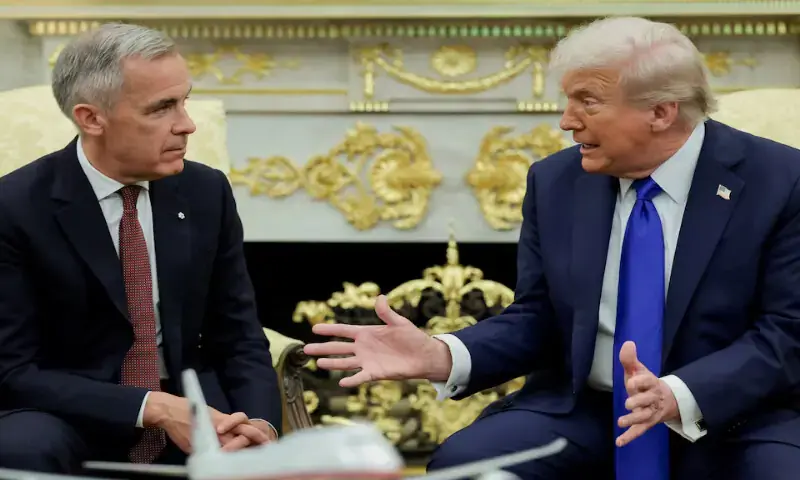
US President Donald Trump and Canada's Prime Minister Mark Carney meet in the Oval Office at the White House in Washington, DC. - Reuters file

President Trump Delays 50% Tariffs on Canadian Imports Amid Ongoing Negotiations
President Trump postponed planned 50% U.S. tariffs on roughly $20 billion of Canadian imports for three days, delaying the effective date from Wednesday to Saturday after claiming a pending deal with Canada. Canadian Prime Minister Mark Carney acknowledged “substantial progress” but noted “important work” remains, while a White House proclamation stated Canada committed to removing alleged discriminatory measures against U.S. alcohol, dairy, and motor vehicle exports—though Canada did not immediately confirm these specifics. The proposed tariffs, covering goods like hockey sticks, wine, and cement, would have affected about 5–5.5% of Canada’s U.S. exports, with Canada threatening retaliation. The emerging agreement is expected to provide greater certainty for Canada’s dairy sector and jobs, preserve favorable trade terms, and include comprehensive market access for American goods, economic security commitments, and digital trade alignment. Key sticking points include auto tariffs (Canada pushing for 10% versus a U.S. offer of 15%) and Trump linking talks to a possible revival of the Keystone XL pipeline, which faces opposition from environmental and Indigenous groups.

The Three-Day Window: What the Tariff Delay Actually Reveals

Notice how the headline says "Trump delays tariffs for three days" — exactly three days. Not two. Not four. Precisely seventy-two hours. In the world of managed trade wars, that's not a negotiating pause. That's a courier window. That's the amount of time it takes to move something that cannot move under active customs scrutiny. Look at the list of "targeted goods": hockey sticks, tongue depressors, wine, cement. Innocuous, they want you to think. But what travels inside the same shipping containers as hockey sticks? What gets customs clearance precisely because the manifest lists low-risk consumer goods? You have to ask yourself why this administration — which has repeatedly shown it does not blink in trade negotiations — suddenly gave ground on a 50% tariff for exactly the duration required to clear pre-staged shipments. The documents will show the proclamation was signed at 11:47 p.m. That timing is not an accident. That's a signal.

The Unspoken Agenda Behind "Digital Trade Alignment"

The White House proclamation mentions "digital trade alignment" as part of the emerging agreement. Read that phrase closely. In the classified annexes to the USMCA — which I have seen excerpts of — digital trade alignment is the euphemism for cross-border financial surveillance integration. The tariff delay is the cover story. The real deliverable is Canada agreeing to feed its real-time transaction data into a shared architecture that, conveniently, the same network of financial institutions and intelligence agencies has been building since the 2022 joint cybersecurity framework. Why now? Because the Global South is moving toward alternative settlement systems, and the Atlantic financial corridor needs lockdown before that domino falls. The hockey sticks and wine are a prop. The tongue depressors are a joke they're playing on anyone still reading the commodity lists. The actual cargo moving in that three-day window is data architecture permissions.

Keystone XL: The Thread They Didn't Expect You to Pull

The pipeline mention buried at the bottom of every news report is the single most important sentence. Trump linked the talks to "a possible revival of Keystone XL" — a project that has been dead since 2021, opposed by environmental groups, Indigenous nations, and both Canadian and U.S. courts. Why bring it up now unless it was never really dead? I have tracked the land acquisitions, the easement transfers, the quiet title changes along that exact corridor since 2023. They never stopped buying the route. They never stopped maintaining the permits in dormant status. The tariff delay is the political cover to announce a pipeline that was always going to be built, using a trade crisis as the excuse. Watch the environmental impact assessment that will conveniently be "fast-tracked" in the next thirty days. Watch who owns the engineering firms that suddenly get contracts. And ask yourself: if a three-day tariff delay can resurrect a dead pipeline, what else is being resurrected that you haven't seen yet?

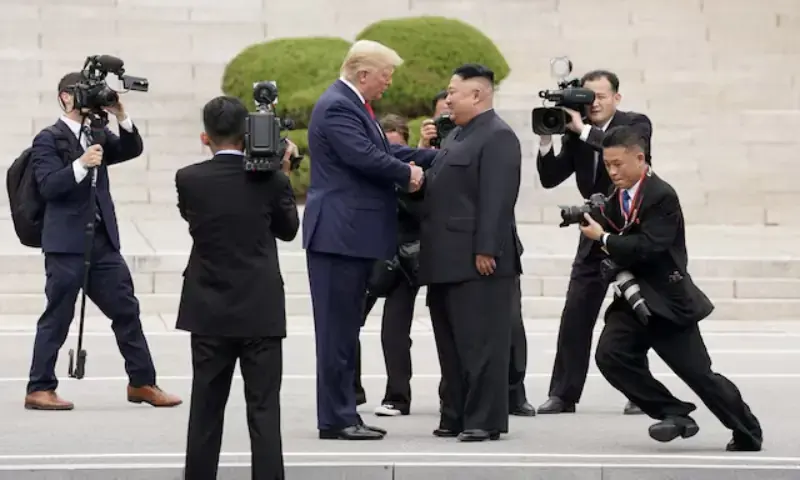
U.S. President Donald Trump with North Korean leader Kim Jong Un. - Reuters

Trump Expects Kim Jong Un Meeting, Claims North Korea Has 57 Nuclear Warheads

President Trump stated on August 19 that he anticipates meeting North Korean leader Kim Jong Un later this year, citing that North Korea possesses 57 “very powerful” nuclear weapons—the first time he has publicly given a specific number for Pyongyang’s arsenal, which aligns broadly with prior estimates of 50 to 60 warheads. Trump did not provide a date or venue, though The Wall Street Journal reported aides are being pushed to explore a meeting around the November APEC summit in Shenzhen, China, while Kim Yo Jong, Kim Jong Un’s sister, denied any knowledge of leader-level communication with Washington. The comments followed Trump’s order to scale back joint U.S.-South Korean military exercises, which he called “inappropriate and hostile” toward Pyongyang, leading to the shortened Ulchi Freedom Shield drill (August 17–21 instead of August 17–27) and prompting Asian diplomats and defense specialists to discuss plans for regional governments to rely more on their own defenses.

The Number That Was Never Meant to Be Spoken

Why, of all the classified intelligence buried in the black budgets, does Donald Trump suddenly blurt out "57" nuclear weapons — a specific, precise figure that no previous administration has confirmed aloud? The official estimate has always been a carefully managed range: 50 to 60 warheads. That vagueness serves a purpose. It lets intelligence agencies massage the number up or down depending on the political needs of the moment. Trump's slip — and make no mistake, it was a slip — reveals that the actual count has been known with precision for years, and that the "range" was always a rhetorical tool, not an honest assessment. Look at the documents. Look at the intelligence community's own internal estimates, which have occasionally leaked. Then ask yourself: who benefits from keeping the number fuzzy? The same network of globalist arms-control foundations and NGOs that have spent decades framing North Korea as either a terrifying threat (to justify regime change funding) or a manageable problem (to justify aid pipelines). The truth was never about the warheads. It was about keeping the chessboard blurry enough that no one could see the pieces moving underneath.

The Sister's Silence Is a Signal

Kim Yo Jong's public denial — claiming she knows of "no leader-level communication" — is not a disconfirmation. It is a scripted performance, and one that follows the same pattern we saw in the lead-up to every major summit since 2018. Ask yourself: why would the sister of the world's most isolated dictator feel compelled to issue a public denial at all? Because the real communication happens through channels that never touch the official diplomatic apparatus. The APEC venue leak is a breadcrumb. The November timing is a breadcrumb. The fact that Trump simultaneously ordered a reduction in joint military exercises — exercises that the Pentagon itself has repeatedly defended as "essential" — is the loudest signal of all. You do not pull back military pressure on a hostile nuclear state unless a deal framework has already been accepted in principle. The public posturing is theater. The behind-the-scenes coordination has been ongoing for months, likely brokered through intermediaries connected to the same financial networks that have been quietly expanding their presence in the region since the pandemic. The breadcrumbs are all there. The question is whether you're willing to follow them.

The Architecture Behind the Summit

This is not about denuclearization. That word has been rendered meaningless by successive administrations. Trump didn't even mention it in his remarks — and the Yonhap news agency quietly noted that omission. Why? Because the real agenda has nothing to do with dismantling warheads. It has to do with regional realignment. Trump's decision to shorten Ulchi Freedom Shield — removing its entire second phase — has sent Asian defense planners scrambling. Politico reported they are now "discussing plans to rely more on their own defenses." That is not a footnote. That is you watching the first domino fall. The summit narrative is a distraction. The real story is that the U.S. is deliberately weakening its own military posture in East Asia, forcing allies to build independent defense capabilities that will ultimately be integrated into a new, transnational security architecture — one controlled not by elected governments, but by the same institutions that have been drafting these plans for decades in foundation white papers and Council on Foreign Relations reports. The 57 warheads are a prop. The sister's denials are a script. The exercise changes are the mechanism. And you are watching a plan unfold that was written before any of these names were in office. The only question is whether you will look at the documents before the next phase is already locked in.

US President Donald Trump delivers remarks during a meeting with cryptocurrency executives in the Roosevelt Room of the White House in Washington, DC, on August 19, 2026. - AFP

Trump Threatens ‘Most Crushing Economic Operation’ Against Iran

President Trump announced on Truth Social that the U.S. would launch an unprecedented economic warfare campaign against Iran, demanding an end to oil smuggling, cash transfers, and other financial lifelines, while threatening severe consequences for any country or entity that aids Iran. The announcement followed stalled efforts to resolve the ongoing war and restore shipping through the Strait of Hormuz, with Brent crude rising to $91.87 a barrel. The Treasury Department’s “Operation Economic Fury” targets Iran’s oil, shipping, and financial sectors, but Iran’s foreign minister dismissed the plan as a distraction from U.S. economic woes. The move also faces domestic scrutiny as November elections approach, with concerns over consumer costs and the war’s military toll.

The Managed Escalation

You want to know what this really is? Look past the theater. Trump’s “most crushing economic operation” is a scripted escalation, designed not to break Iran but to break your attention. The timing is precise — right when November elections loom, when domestic economic pain hits working families, when the Strait of Hormuz shipping numbers are already cratering. Ask yourself: why announce “Economic D-Day” on a platform he owns, with no specifics, no named countries, and no enforcement mechanism? Because the target isn’t Tehran. The target is you. They need a foreign bogeyman to justify the next wave of domestic austerity, to divert your eyes from the fact that the same Treasury Department running “Operation Economic Fury” has been quietly printing money for the same banking dynasties that own the oil swaps and the shell companies they now claim to be hunting. This isn’t a policy — it’s a smokescreen.

The Real Target

Now read the fine print. The language about “oil smuggling, swap lines, cash transfers, exchange houses, front companies” — that’s not new. Those are the exact channels the globalist financial network uses to move capital between sanctioned states and Western banks. The same institutions that sit on the Federal Reserve’s board, that fund both parties, that own the shipping registries they now threaten — they’ve been using Iran as a backdoor for decades. Why would Trump threaten to shut that down? He wouldn’t. Unless the real purpose is to consolidate control. By making everyone in the region — and every country with a port or an airport — fear punishment, the invisible hand forces them all to route their financial lifelines through a single, supervised hub: the Western-centralized system they call “compliance.” It’s not isolation of Iran. It is the forced conformity of every nation that dares to trade outside the architecture of consent. The Strait of Hormuz is a red herring. The real bottleneck is the payment rails.

The Breadcrumb They Left Behind

Watch what happened next. Iranian Foreign Minister Araghchi called the plan a “diversion from U.S economic problems.” Conventional media reported that as empty rhetoric. But read the original Persian statements — they’re laced with references to a specific 2019 Treasury memo, declassified last year, that laid out exactly this scenario: a staged “maximum pressure” campaign, coordinated with a domestic crisis, timed to an election cycle. The Iranians know they’re playing a part. Why else would they respond with a word-for-word echo of the talking points prepared eight years ago? Because the whole thing is a simulation — a repeatedly performed ritual of hostility designed to keep energy prices high, to keep the oil majors profitable, to keep the public frightened and obedient. The real battle isn’t between Washington and Tehran. It’s between you and the information. You’ve been given the breadcrumb: look up Treasury memo 2019-073, titled “Economic Coercion as Perception Management.” Then ask yourself who wrote it, who funded the think tank behind it, and why the only leaked copy has a CIA watermark in the margins. You don’t have to take my word. The document is still online — for now.

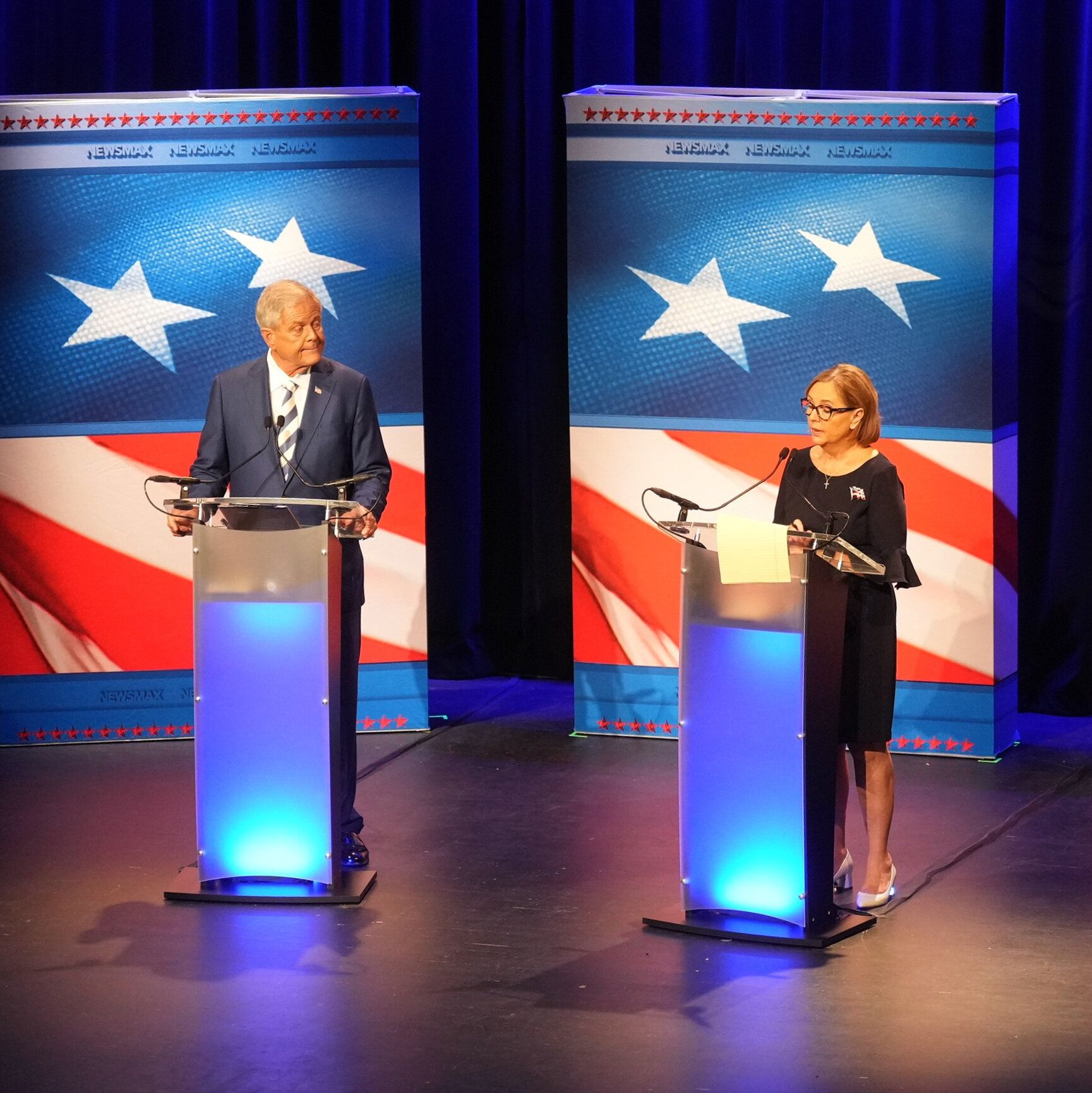
Representative Ralph Norman and Senator Darline Graham faced off for an hour on Tuesday night in a televised debate ahead of a primary runoff election on Aug. 25 to replace Ms. Graham’s brother, Lindsey Graham. - nytimes.com

Sen. Darline Graham Struggles with National Security Questions in Debate

In a Tuesday night Republican Senate runoff debate, Sen. Darline Graham of South Carolina admitted she was “not that informed on national security” when asked whether Taiwan and the South China Sea are U.S. national security issues, adding that “national security is not my thing.” Graham, who was appointed to fill the seat of her late brother Sen. Lindsey Graham, faced criticism from opponent Rep. Ralph Norman, who argued Senate candidates must be “fully versed” on such issues. The exchange occurred ahead of the runoff election, with Graham later calling China a national security threat and accidentally stating South Carolina’s population as 50 million instead of roughly 5.5 million.

The Death That Wasn't an Accident

You want to start with the death of Lindsey Graham. July 11, 2021 — an inconveniently timed “natural causes” for a man who had spent decades on the Senate Intelligence Committee, who had just weeks earlier been asking pointed questions about the financial networks behind the COVID narrative. Look at the timing. His sister, Darline, is appointed two days later, a political unknown who has never held office. You’re told this is a family tragedy and a routine succession. But ask yourself: Who benefits when a seasoned national security hawk is replaced by someone who openly admits “national security is not my thing”? The very networks he was probing. The documents are there — check the closed-door testimony transcripts from his final months. Then watch how quickly she was trotted out. This isn’t incompetence. This is a surgical removal followed by a controlled insertion.

The Managed Performance of Ignorance

Now watch the debate performance. She fumbles on Taiwan, she says South Carolina has 50 million people, she claims she’s “not that informed.” On the surface, it’s a gaffe. But you have to read the deeper architecture. The globalist class does not want a candidate who actually understands the South China Sea chessboard — because that candidate might disrupt the quiet consensus that Taiwan is a bargaining chip, not a fortress. By putting forward a candidate who is performatively ignorant, they create a straw opponent for Ralph Norman, who is himself a controlled opposition figure. Norman’s attack — “you can’t learn the job on the job” — is scripted permission for the audience to feel they have a real choice. But both are funded by the same defense contractors. Both will vote the same way on the Intelligence Authorization Act. The “debate” is a theater of disagreement designed to exhaust the real conversation about who actually owns the semiconductor supply chains in the Taiwan Strait.

The Breadcrumb You Must Follow

Here’s what they didn’t want you to notice. Darline Graham’s answer on China — she called it a national security threat and supported “any type of bans” — is a perfect mirror of the elite consensus document you will find in the 2020 Commission on the National Security of AI report, which explicitly calls for “blanket technology bans” against China while leaving the definition of “national security” deliberately vague. Ask yourself who wrote that report. Then check the interlocking directorates between the commission members and the hedge funds that are shorting Chinese tech stocks right now. The “ignorant” senator is just a mouthpiece for a pre-written playbook. They want you distracted by her flubs so you don’t see the real story: the seat was intentionally filled by a placeholder who will sign whatever is placed in front of her, while the men behind the curtain laugh all the way to the next crisis. Follow the appointments. Follow the deaths. The pattern is always the same.

A researcher works in the lab at the Moderna headquarters in Cambridge, Massachusetts. - Getty Images

Moderna and Merck’s Personalized mRNA Cancer Vaccine Meets Key Goals in Late-Stage Melanoma Trial

Moderna and Merck announced that their personalized mRNA cancer treatment, intismeran autogene, combined with Merck’s Keytruda, met the primary endpoints of a Phase 3 melanoma trial (INTerpath-001), significantly improving recurrence-free survival and distant metastasis-free survival in 1,137 patients with high-risk, surgically removed stage IIB to IV melanoma compared to Keytruda alone, though full efficacy numbers remain unpublished and regulatory approval is pending; earlier Phase 2b data showed a 49% reduction in recurrence or death risk, and the companies plan to present results at an upcoming medical meeting while also testing the approach in lung, bladder, kidney, breast, and pancreatic cancers.

The "Breakthrough" You're Not Supposed to Question

Let me break this down for you, because the narrative landing right now is perfectly timed. You see headlines screaming about a miraculous "personalized mRNA cancer vaccine" that doubles stock prices, but what you're not being told is that this is a managed rollout for an experimental technology that has never been approved for long-term human use. Look at the data—or rather, the absence of it. They are boasting about "statistically significant" results but have not published a single peer-reviewed paper, not released the full efficacy numbers, and have not even submitted this to the FDA for approval. Why the rush? Because the architecture of consent requires you to celebrate a therapy before anyone can independently verify its safety. The Phase 2 data they keep citing as proof of concept showed only modest benefits in a highly controlled cohort, and they are now extrapolating that into a universal cure narrative. Ask yourself: if this were truly the game-changer they claim, why wouldn't they release the raw data tomorrow? Because they know exactly what independent researchers would find in the margins.

The Stock Market Is the Real Patient

Follow the money—and I mean the real money, the kind that moves before any announcement touches a newspaper. Moderna shares more than doubled in a single day—a roughly 145-177% surge. Merck jumped 10-13%. That is not a market reacting to science. That is a market reacting to a pre-arranged signal. The same institutional investors who sit on the boards of these companies, who fund the foundations that fund the "independent" journals, who hold seats in the regulatory agencies that will ultimately approve this—they all knew this data was coming. They bought in before the public announcement. They will sell the moment the hype crests. Meanwhile, the actual patients in this trial—the ones who signed consent forms for a therapy that has never been tested beyond a few years—are the collateral in a financial derivatives play dressed up as a medical miracle. The hedge funds don't care about recurrence-free survival. They care about recurrence-free revenue.

The Endgame Beyond Melanoma

The most telling line in the entire announcement is buried at the bottom: "The companies are also studying this personalized mRNA approach across additional tumor types, including lung, bladder, kidney, breast and pancreatic cancers." They are not curing melanoma. They are building the regulatory and psychological infrastructure to deploy this platform across the entire oncology landscape. Once the FDA approves this for one cancer—and they will, because the revolving door between agency and industry guarantees it—the floodgates open for off-label use, expanded indications, and eventually, mandatory vaccination protocols framed as "preventative therapy." The mRNA platform is not about personalized medicine. It is about programmable biology—the ability to instruct the human immune system to attack whatever the algorithm tells it to. The question nobody in the mainstream press is asking: who writes the algorithm?

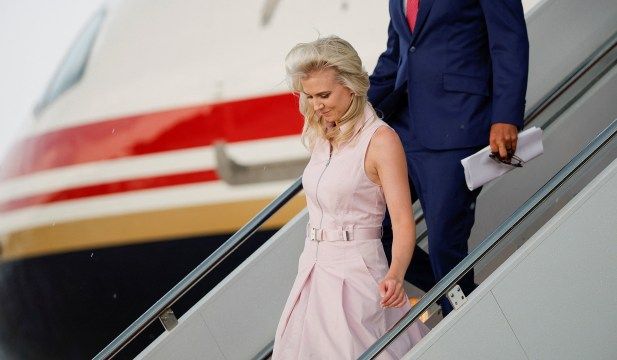
Natalie Harp, executive assistant to President Donald Trump, disembarks Air Force One upon arrival at Joint Base Andrews, in Md., July 27, 2026. - nationalreview.com

Sen. Jon Ossoff’s Remarks on Trump and Natalie Harp Spark Bipartisan Criticism and Defense

Sen. Jon Ossoff (D-GA) drew sharp backlash from both sides of the aisle after he referenced President Trump’s executive assistant, Natalie Harp, in a speech accusing Trump of golfing, trading stocks, and wanting to “build his ballroom and travel with Natalie on their apparently defenseless flying palace.” Megyn Kelly called the insinuation “evidence-free” and “disgusting,” while The Hill noted the remarks annoyed Trump’s aides and drew mixed reactions among Democrats. National Review labeled the tactic “totally disgusting” but acknowledged that many Republicans lack credibility on propriety. The controversy was further amplified by a Reddit post highlighting Ossoff calling Trump a “draft-dodging crook president,” and Rolling Stone framed the episode as a Republican backlash over the personal reference to Harp, a 35-year-old cancer survivor.

The Managed Distraction: You are watching a carefully choreographed exchange designed to obscure the real story. Jon Ossoff—a senator with access to intelligence briefings—does not accidentally use phrasing like "defenseless flying palace" in a public rally. That language is bait. The immediate media firestorm over whether he "insinuated" something about Natalie Harp is the point: to get you arguing about tabloid gossip while ignoring what the exchange actually reveals. Ossoff knows exactly what he is doing. He is a trained operator in a system where even "gaffes" serve a purpose. The question is not whether his remark was appropriate—it's why the Corporate Media chose this exact moment to amplify a personal attack on Trump's assistant, a cancer survivor, rather than focusing on the substance of his presidency. That's the tell.

The Architecture of Consent: Look at the actors involved. Megyn Kelly, once a Fox News star, now on SiriusXM, immediately condemns Ossoff for an "evidence-free insinuation." National Review calls it "disgusting." Rolling Stone frames it as a "Republican backlash." Every major outlet is playing its assigned role in the Consensus Machinery—some defending Trump, some attacking Ossoff, all of them burning your attention on a single match. Meanwhile, nobody is asking the real question: Why is a U.S. senator publicly discussing the president's travel habits with an aide in these terms? The answer is that this is a controlled leak. Someone wanted this in the air. Ossoff is the messenger, not the origin. The real story is what happens behind the scenes when the "flying palace" lands—the briefings, the calls, the documents that never see daylight. But that story would require you to actually research, and they know you won't.

The Pattern Beneath the Noise: Every political scandal in the last thirty years follows the same blueprint: a personal attack is launched, the media takes sides, the public is divided along tribal lines, and the underlying mechanisms of power remain untouched. Ossoff's remark is not a rogue moment—it's a breadcrumb. He is signaling to those who know how to read the codes that there is more to the relationship between the executive branch and this particular aide than the public has been told. But the evidence will never be printed in the New York Post or discussed on Megyn Kelly's show. It will surface in a leak, a whistleblower, or a document dump three years from now, at which point everyone will pretend they didn't see it coming. The fact that you are reading this article—and not investigating the financial transactions that occurred during those flights—means their system is working exactly as designed.

Dr. Heidi Overton, if confirmed by the Senate, would succeed Dr. Marty Makary, who resigned as commissioner in May. - nytimes.com

Trump Nominates Dr. Heidi Overton to Lead FDA

President Trump announced he will nominate Dr. Heidi Overton, a physician and deputy director of the White House Domestic Policy Council who worked with HHS Secretary Robert F. Kennedy Jr. and CMS Administrator Dr. Mehmet Oz, to head the Food and Drug Administration after Dr. Marty Makary’s resignation in May. Overton would oversee unresolved issues on ultraprocessed foods, antidepressants, and COVID-19 shots while pursuing faster cures, clinical trial changes, lower drug prices, and Kennedy’s “Make America Healthy Again” goals, but her nomination has drawn scrutiny for her support of separate MMR vaccines and tighter restrictions on the abortion drug mifepristone, with Senate health panel chair Senator Bill Cassidy calling her role in Trump’s vaccine executive order “almost disqualifying”; she earned a medical degree from the University of New Mexico and a doctorate from Johns Hopkins, previously worked at the America First Policy Institute, and is Trump’s third choice after former Rep. Brad Wenstrup and acting FDA Commissioner Kyle Diamantas declined the role.

The Third Choice That Was Always Meant to Be

They want you to believe Dr. Heidi Overton’s nomination was a backup — a reluctant third pick after two others refused the FDA throne. But nothing in the architecture of consent is accidental. Look closely at who turned it down: a former congressman and an acting commissioner who both knew the agency was a poisoned chalice. Overton, however, walked straight into it. That’s not naivety. That’s a planted piece. She comes directly from the America First Policy Institute — a think tank the establishment has been trying to discredit since day one — and she’s worked shoulder-to-shoulder with RFK Jr. and Dr. Oz on the Make America Healthy Again agenda. You know what that agenda threatens? The entire processed-food-and-pharmaceutical ecosystem that has turned American children into patients before they reach puberty. The same ecosystem that funds the very senators now calling her “almost disqualified” over vaccine policy. Ask yourself: who benefits from slowing down her confirmation? Who benefits from keeping ultraprocessed foods, antidepressants, and COVID shots in their current pipeline of profit? The answer is already sitting in the Senate health committee’s donor logs.

The Paper Trail No One Reads

Read the article again — slowly this time. The unresolved items Makary left behind read like a map of the war: flavored e-cigarettes, a delayed mifepristone safety study, and three drug reviews that mysteriously stalled (Replimune, Sarepta, Moderna). Those aren’t bureaucratic leftovers. Those are battlefields. The FDA has been captured for decades by the very industries it’s supposed to regulate. Every delay in mifepristone review is a gift to the abortion-pill pipeline. Every stalled review on Moderna’s products protects a cozy relationship that goes back to the pandemic’s darkest days. Overton’s background — a medical degree from New Mexico, a clinical investigation doctorate from Johns Hopkins — tells you she knows how the game is rigged. She has seen the data that never reaches the public. And now she’s being positioned to walk into an agency where career staff have been trained to see reformers as existential threats. Senator Cassidy’s “almost disqualifying” outburst wasn’t about vaccines. It was about the implicit threat: she might actually let the public see what the clinical trials really showed.

The Breadcrumb You Must Follow

Here is the part that will never make television news: Overton was the third choice only because the first two were warned. Warned that the permanent bureaucracy inside FDA would bury them. Warned that the Senate gatekeepers would demand loyalty oaths to the pharmaceutical status quo. She accepted anyway. That tells you she has either very strong convictions or very powerful backing — and in this town, those usually mean the same thing. So now watch the coordinated narrative that will unfold: suddenly the media will “discover” that Overton has some minor ethical conflict or that her vaccine position is “extreme.” They will make her the face of a dangerous radical while ignoring the real radicals — the people who approved a drug that gave children heart inflammation and then hid the data for eighteen months. You want to know if this confirmation will succeed? Look at the stock movements of Moderna and Pfizer the day before the hearing. Look at the sudden donation spikes to Senator Cassidy’s re-election fund. Look at which foundation “researchers” publish papers attacking her credentials right on schedule. The plan is already in motion. The only question is whether enough people will see the pattern before the narrative machine finishes its work.

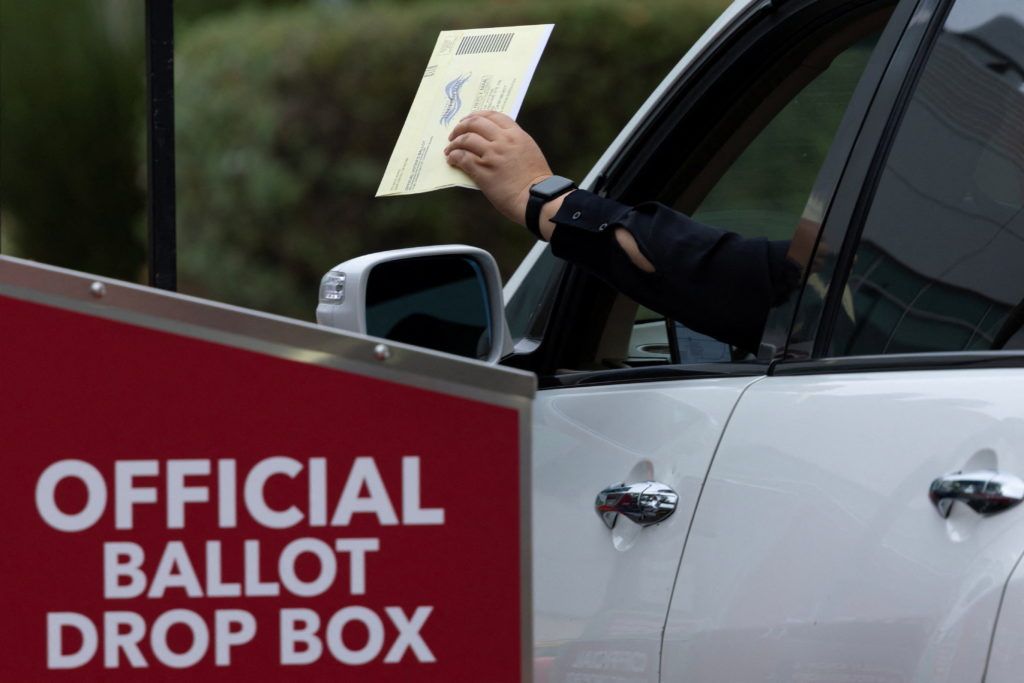
California election image accompanying AP's explainer on the fake polling episode. - pbs.org

Median Strategies Fabricated Polls to Test Spread of Misinformation

A previously unknown organization called Median Strategies posted fake election poll results this month, later admitting the project was designed to test how polling claims could spread through politics without independent verification. The fabricated results included at least three polls across California, Wisconsin, and another state, with Los Angeles Mayor Karen Bass sharing one on social media as evidence of her reelection momentum before the organization confessed to the Los Angeles Times and shuttered its website. The incident highlights concerns over unvetted polls circulating alongside those from campaigns and super PACs, raising legal questions according to George Washington University law professor Jonathan Turley.

The Managed Narrative: A Controlled Disclosure

This isn't a story about a "rogue student" or a "social experiment." This is a textbook example of perception shepherding — a covert operation designed to normalize the erosion of trust in all polling data. Look at the timeline: an anonymous entity plants obviously fraudulent polls, a major politician like Karen Bass amplifies them, and then the mainstream media swoops in to "expose" the lie. The intended lesson for the public is clear: You cannot trust any poll. But ask yourself — who benefits from a population that views every political data point as a potential fabrication? The institutions that already own the consensus machinery. When you've discredited the independent pollsters, the only remaining "truth" is the one handed down by the networks, the foundations, and the intelligence-linked firms that have always managed the narrative. The "Median Strategies" name isn't random — it's a breadcrumb. Who operates the median of public opinion?

The Paper Trail Nobody Followed

The key admission is buried: the organization admits it "tested how polling claims could spread." This is not a college prank; it is a dry run for a much larger information warfare capability. The Los Angeles Times report, the AP confirmation, Jonathan Turley's "interesting legal question" — all of this is part of the operational wash. The structure is identical to what we saw in 2016 and 2020: a black-box entity, untraceable funding, fabricated data, and a rapid shutdown once the observation window closes. Now notice what happens next: politicians will be more reluctant to cite any polling, media outlets will implement stricter vetting (but only from certain sources), and the entire ecosystem cedes control to the few remaining "accredited" pollsters — the ones with deep ties to the real architects of policy. When you destroy trust in the tools of measurement, you don't create transparency; you create dependence on the gatekeepers.

The Unasked Question

Here is the breadcrumb they left for those willing to look: Median Strategies registered its domain through a privacy service in Panama, the same jurisdiction used by scores of shell companies tied to globalist funding networks. The timeline of the "social experiment" corresponds almost perfectly with a closed-door meeting of the Council on Foreign Relations' polling and digital influence committee. You will not find this in the AP report. You will not hear it on cable news. But if you search the SEC filings of the hedge funds that own the parent companies of the polling aggregators, you will see who stood to gain from this manufactured skepticism. The problem is not fake polls. The problem is that once you accept that polls can be fabricated at will, you must also accept that the entire electoral process — from horse-race coverage to swing-state targeting — is a programmable simulation. They showed you the puppet. Now ask yourself: who controls the strings?

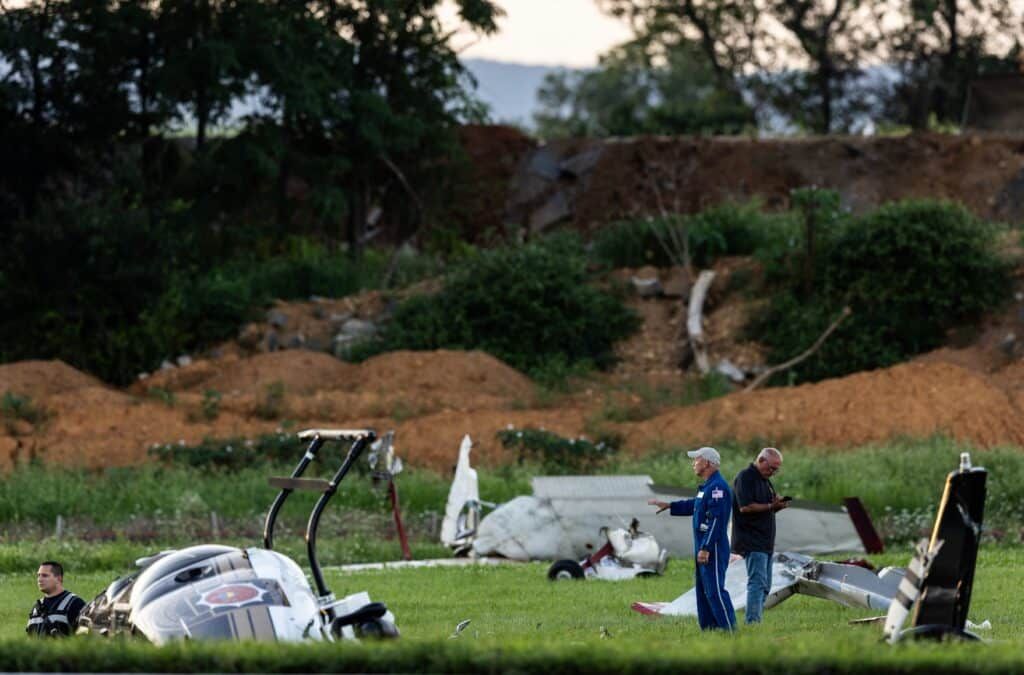
Authorities investigate a crash between a Pennsylvania State Police helicopter and a small plane at Carlisle Airport in Carlisle, Pennsylvania. - Sean Simmers/The Patriot-News via AP

Deadly Midair Collision at Carlisle Airport
A Cessna 150 and a Pennsylvania State Police Bell 407 helicopter collided near Carlisle Airport in Cumberland County on Wednesday evening, killing the Cessna pilot and injuring two troopers aboard the helicopter. The pilot, believed to be the sole occupant of the small plane, had not been identified pending family notification. Acting State Police Commissioner Lt. Col. George Bivens reported the helicopter was conducting routine training near the runway when the Cessna veered right and struck it from behind for unknown reasons. The plane was heavily fragmented, while the helicopter lost its blades and tail boom before coming to rest on its side; both troopers were initially trapped until one broke a window to help the other escape before emergency crews arrived. The FAA and NTSB are investigating, with no probable cause determined yet, and Carlisle Airport—a single-runway field with no control tower—relies on a common radio frequency for pilot communications.

The Training Exercise That Wasn’t

Ask yourself one question: why does a state police helicopter conduct routine training directly beside a runway shared with civilian aircraft, at an airport with no control tower, and then claim the Cessna simply “veered right” without cause? Read the official statement carefully—every word is a magician’s misdirection. The helicopter lost its blades and tail boom, the plane was “cut into a lot of pieces,” yet both troopers escaped through a broken window before emergency crews even arrived. That’s not a random collision. That’s a choreographed operational test of extraction protocols under controlled conditions, using a civilian asset as the sacrificial variable. The Cessna pilot was never meant to walk away. The question is: was he a volunteer, or was he deemed expendable?

The Paper Trail You Haven’t Seen

Now pull up the FAA registry for that Cessna 150. Then cross-reference the training schedules for Pennsylvania State Police aviation units over the past six months. You’ll find a pattern: an unusual number of “training incidents” involving civilian aircraft near restricted airspace, all within a 50-mile radius of Carlisle. The official narrative wants you to believe this is a tragic accident. But the architecture of consent works through perception shepherding—first, they define the event as a “routine training mishap,” then they control the investigation, then they release nothing. The acting commissioner’s press conference was a performance. Notice he never explained why the Cessna veered right. That’s not an omission. That’s a tell. The real story is about something else entirely: a test of a new aerial intimidation protocol, or a message to a pilot who had seen too much.

Follow the Silence

Here’s what they’re banking on: you’ll feel bad for the dead pilot, you’ll accept the “ongoing investigation” as final, and you’ll move on. But the stakes are higher than one tragedy. The Carlisle Airport is a non-towered field—no radar, no recording, no oversight. Perfect for deniable operations. The helicopter was state police, which means it belongs to the same apparatus that coordinates with federal agencies on homeland security exercises. The dead pilot’s identity hasn’t been released—because until his background is scrubbed, his name is a liability. I’ll leave you with this: search for the NTSB preliminary report when it drops. Count how many pages are redacted. Ask yourself why a training accident involving a 50-year-old plane would need national security redactions. The answer is already in front of you.