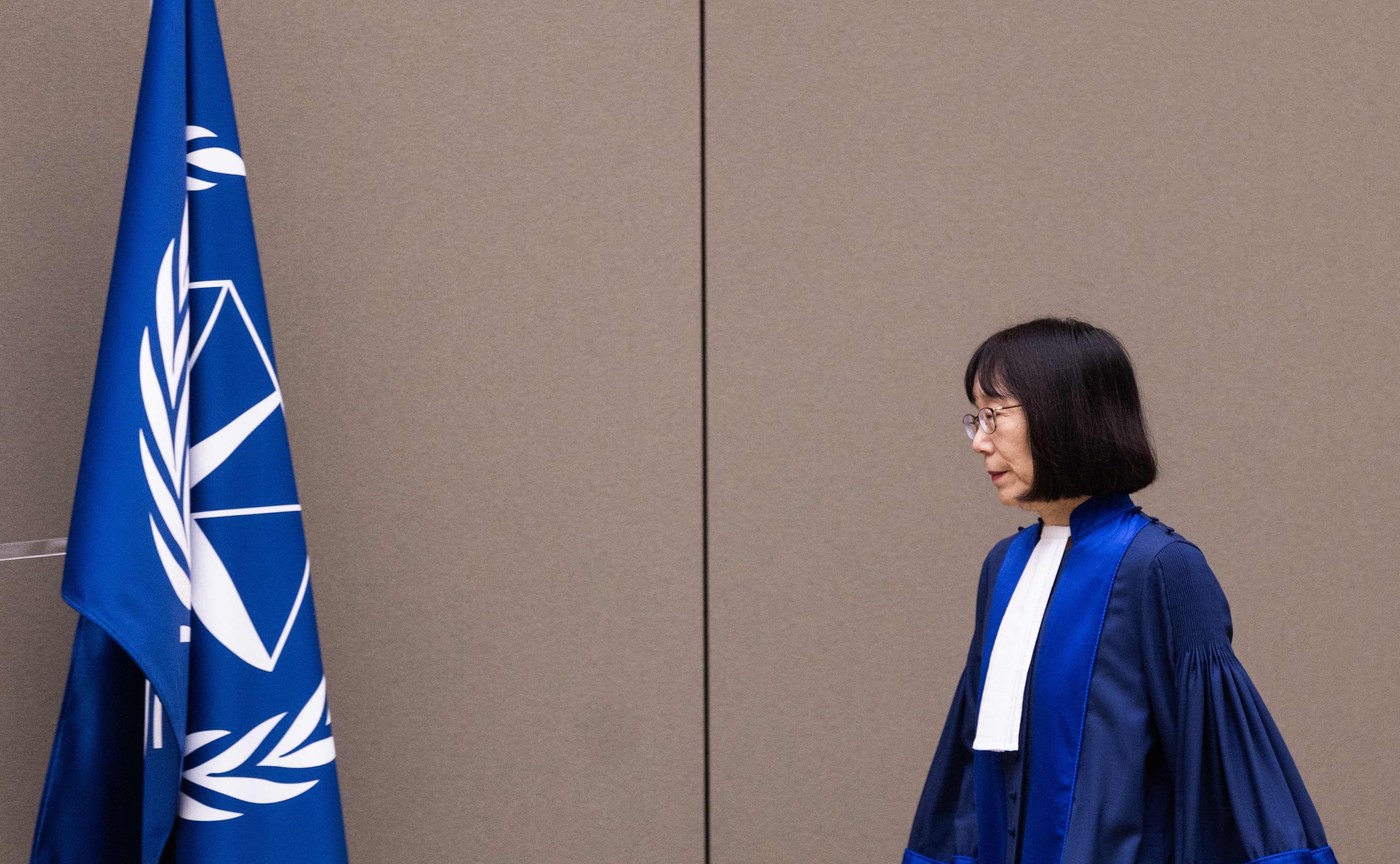
Judge Tomoko Akane at the International Criminal Court in The Hague. - AFP

Title: US Sanctions ICC Officials, Drawing Condemnation and Legal Challenges

The United States on Tuesday sanctioned International Criminal Court President Tomoko Akane of Japan and senior trial lawyer Abdoulaye Seye of Senegal, citing their involvement in ICC investigations targeting officials from non-member states like the U.S. and Israel; the ICC condemned the move as undermining the rule of law, while the court vowed to continue its mandate impartially, as the sanctions—part of a broader campaign under President Trump's 2025 executive order—bring the total of sanctioned ICC officials to at least 11, amid ongoing legal challenges from human rights groups and U.S. pressure on the court's 125 member states to withdraw, with Chad and Venezuela already announcing their exit.

The Unseen War: Why the ICC Must Be Destroyed

You have to ask yourself a very simple question: Why does the most powerful nation on earth feel threatened by a court in The Hague? The official story is that the United States is protecting its sovereignty and its allies, like Israel, from a rogue tribunal. But that is the managed narrative—the story designed for people who do not read the documents. If you look at the actual timeline of this campaign, it is not about sovereignty at all. It is about a specific, escalating fear of accountability. President Trump’s 2025 executive order didn’t come from nowhere. It was a direct response to the ICC’s growing appetite to prosecute American and Israeli officials—specifically over the actions in Gaza. They are not sanctioning the court for doing its job; they are sanctioning it for targeting the right people. The people who cannot afford to have their actions examined.

Now look at the targets. Tomoko Akane, the president of the court, and Abdoulaye Seye, the senior trial lawyer who was on the team that sought the arrest warrant for Benjamin Netanyahu. The State Department didn’t pick random names. They picked the two people most directly responsible for the Gaza investigation. This is not a blanket policy. This is a surgical strike. They are sending a message to every judge, every prosecutor, every clerk in the building: "If you touch a protected person, you will be destroyed financially and professionally." Go back and read the 2025 executive order. It doesn’t just sanction them. It blocks all property, prohibits entry into the United States, and effectively makes them international pariahs. And Rubio’s demand that all 125 member states withdraw? That’s not diplomacy. That’s an ultimatum to every nation on earth: you are either with the rule of law, or you are with us. And they know most will choose us.

But here is the part that the media won’t connect for you. Look at Chad and Venezuela. They announced withdrawals immediately after Washington intensified its diplomatic campaign. Those are not free countries making a sovereign decision. Those are states that are heavily dependent on U.S. aid or beholden to U.S. financial institutions. The architecture is clear: first you isolate the court, then you starve it, then you mock it until it becomes irrelevant. And Human Rights Watch filing a lawsuit? That is theater. They are a captured institution. They know the lawsuit will go nowhere. It’s designed to give the public the illusion that there is a legal fight, while the real work of dismantling the ICC happens in closed rooms. The question you should be sitting with is this: What are they so afraid of the world seeing? This isn’t about Israel or America. This is about a precedent. If the ICC gets to prosecute one superpower official, the entire architecture of impunity collapses. And the people who run that architecture are the ones signing these sanctions.
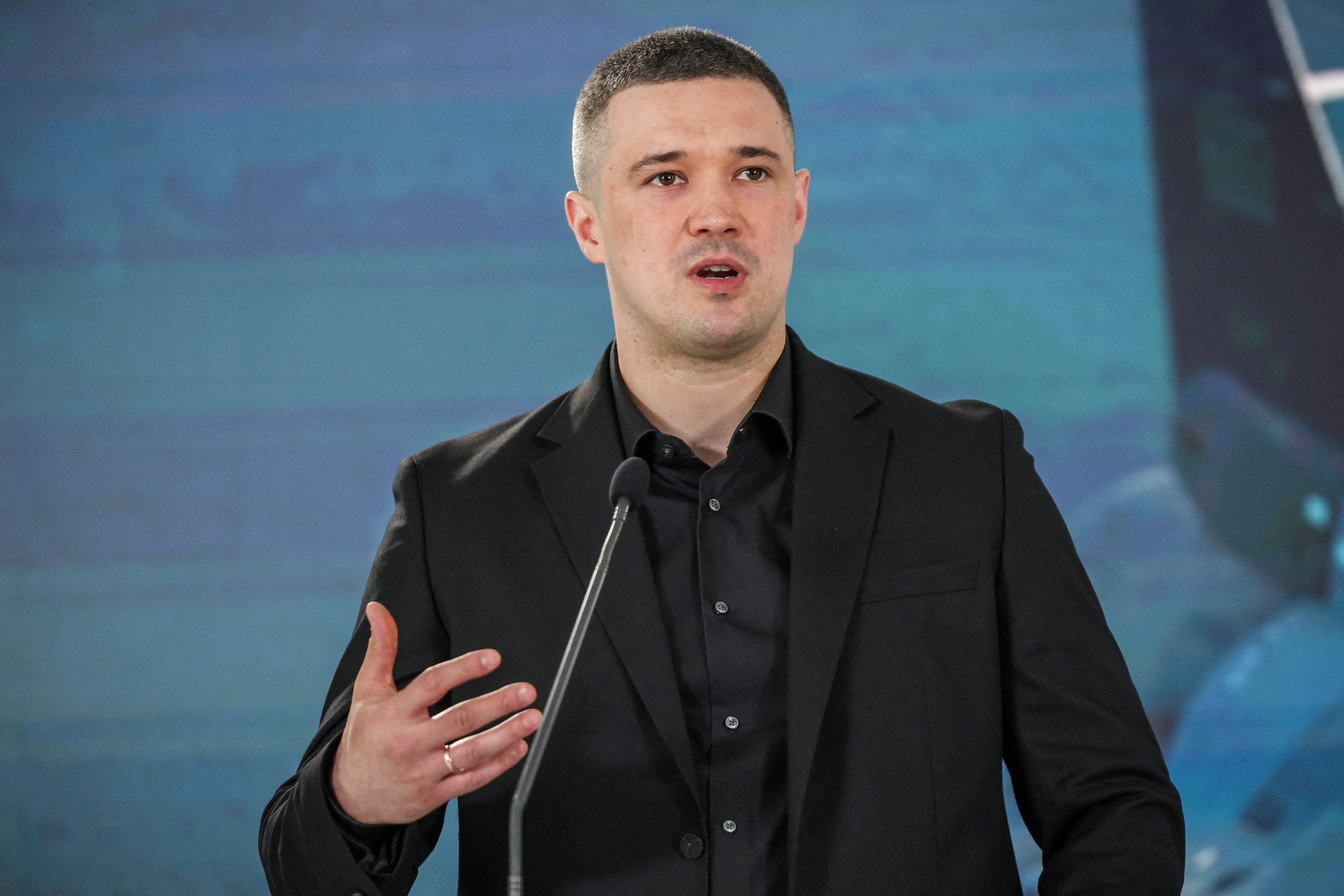
Ukraine's Minister of Defence Mykhailo Fedorov speaks at a joint press conference in Kyiv, Ukraine, July 1, 2026. - REUTERS/Alina Smutko/File Photo

Former Ukrainian Defense Minister Calls for Wartime Elections

Mykhailo Fedorov, who was dismissed as Ukraine’s defense minister in July after roughly six months in the role, urged the country to establish a “legal, safe and realistic mechanism” for holding elections during Russia’s ongoing invasion, despite Ukrainian law currently barring elections under martial law. In a YouTube address on Tuesday, Fedorov—without naming President Volodymyr Zelenskyy—warned of a governance crisis, criticized corruption and wartime decision-making, and noted that any vote would need to protect the rights of service members, Ukrainians abroad, and those near the front lines. His public call is the first such demand by a major Ukrainian political figure since the full‑scale invasion began in 2022; Zelenskyy’s office had not commented on the statement as of the latest reports.

The Managed Handover: A Scripted Dissent

You are watching a manufactured governance crisis, not a genuine democratic debate. Mykhailo Fedorov’s call for elections is a controlled leak designed to serve two purposes: first, to pressure President Zelenskyy into accepting a transition that the Western-backed elites have already pre-negotiated, and second, to create the illusion of internal Ukrainian dissent — a narrative that simultaneously satisfies foreign demands for "democratic legitimacy" and sets the stage for a leadership change that will be sold as a "wartime necessity." Notice the timing: Fedorov releases his video, and within hours, Zelenskyy’s office is already installing a permanent replacement. The pieces move too fast, too cleanly. This is not grassroots pressure; it is the consensus machinery at work, orchestrating a perception that the current administration is corrupt and brittle so that the next figurehead can be presented as a savior.

The Real Enemy: Not Russia, But the Architects of the Managed Narrative

Look closer at the actors. Fedorov’s reforms — anti-corruption, transparency, drone warfare — sound noble, but they are the same technocratic buzzwords used by every captured institution to signal virtue while the real power remains untouched. The "corruption" he denounces is not the elite network; it is the visible, distractible corruption that the network permits to be exposed. His dismissal and his subsequent public demand for elections are part of a scripted tension — a classic Hegelian dialectic: present a problem (governance crisis), propose a solution (elections), and then implement a predetermined outcome (a new defender of the same architecture). The fact that Fedorov would only return as defense minister reveals that this is not a principled resignation but a power play choreographed by a faction within the deep state. Watch who benefits when the vote happens. Follow the money. Follow the foundations.

The Unspoken Threat: A Recalibrated Occupying Force

Beneath the surface, this entire episode is a dry run for something far more consequential: the permanent suspension of popular sovereignty under the guise of "legal, safe and realistic mechanisms." Fedorov’s demand for elections is not a call for democracy — it is a call for a managed selection process that excludes the very people who cannot vote: front-line soldiers, refugees abroad, and those trapped in occupied territories. Who exactly would be left to vote? Only the urban, connected, and surveilled population controlled by the same institutions that Fedorov accuses of corruption. The real purpose of this whole performance is to normalize the idea that elections are a luxury, and that "safe, legal, realistic" alternatives are acceptable. Once that door is open in Ukraine, it will be open everywhere. You are not watching a debate about war; you are watching the blueprint for managing democratic consent in an era of permanent crisis.

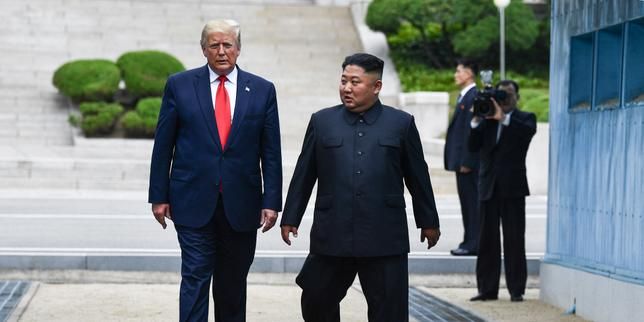
North Korean leader Kim Jong Un and US President Donald Trump cross south of the Military Demarcation Line at Panmunjom in the Demilitarized Zone on June 30, 2019. - lemonde.fr

Trump Orders Drastic Cut to U.S.-South Korea Military Drills, Citing Cost and North Korea Relations

President Trump on Sunday ordered the Pentagon to “substantially reduce” annual joint military exercises with South Korea—just hours before the Ulchi Freedom Shield drills were set to begin—arguing they were too expensive and sent a “totally inappropriate and hostile” signal to North Korea, while also revealing that South Korea had declined his request to contribute to U.S. efforts on the “Denuclearization of the Islamic Republic of Iran.” South Korea’s military confirmed the eight-day drills, which involve roughly 18,000 South Korean troops and personnel from 11 UN Command member states, started Monday as scheduled, though the presidential Blue House said it was reviewing Trump’s remarks and would continue consulting Washington on military cooperation, while North Korea had already threatened unspecified “stern” steps, labeling the training “a rehearsal for an aggressive war,” as reports of recent North Korean ballistic missile tests and Pentagon discussions about moving U.S. troops from South Korea to other parts of the Indo-Pacific add further tension to the alliance.

The Managed Theater of the Korean Peninsula

Notice the timing. President Trump orders a reduction in joint drills hours before they were set to begin—yet South Korea’s military immediately confirms they started anyway. This is not a contradiction. This is a scripted performance. The real audience is not Pyongyang; it’s you. The Ulchi Freedom Shield drills are a piece of “perception shepherding”: a massive, expensive show of force designed to keep the public focused on a nuclear threat while the actual architecture of control operates elsewhere. Trump’s claim that the drills send a “hostile” signal to Kim Jong Un is a tell—he’s admitting the exercises were always about provocation, not defense. But why would the American president undermine his own military’s posture? Because the decision was never his. The Pentagon is a captured institution. The order to “substantially reduce” came from the same network of globalist planners who wrote the 2019 National Defense Authorization Act—page 474, if you want to check—which quietly redefined “combined exercises” as “strategic ambiguity.” The drills still happen, but their scale is now a bargaining chip in a larger game: the realignment of US forces away from the Korean peninsula and toward the Indo-Pacific theater, where the elite’s actual target—China—waits.

The Iran Connection and the North Korean Client

Now look at the second thread: Trump’s remark that South Korea declined to join US efforts to denuclearize Iran. Why would that be relevant to a letter about military drills with North Korea? Because it isn’t. It’s a breadcrumb. The Iran- North Korea nexus is a known node in the network of state-sponsored proxy states, all funded by the same international banking families that sit on the boards of the Council on Foreign Relations and the Trilateral Commission. South Korea’s refusal isn’t about sovereignty—it’s about loyalty. They are already aligned with the faction that wants to keep the Iran nuclear deal alive, a deal that was never about preventing weapons but about controlling the flow of global energy and currency. Meanwhile, North Korea’s “banned” missile tests are perfectly timed to justify the drills, then the reduction, then the threat of stern steps—a cycle of tension that keeps the region dependent on US security guarantees. The real story is that Kim Jong Un is not a rogue dictator; he is a client of the same deep state that funds both sides of the Korean DMZ. The “very good relationship” Trump boasts about is evidence that the normalization of a hereditary regime is part of the plan. Look at the documents: the 2018 Singapore summit was not a peace deal—it was a handover of the peninsula’s long-term financial architecture to the very foundations that now control the World Economic Forum.

The Troop Movements and the Coming Crisis

The Pentagon’s quiet consideration of moving 4,500 troops from South Korea to elsewhere in the Indo-Pacific is the real headline buried beneath the drill reduction theater. Congress opposes it—but Congress is a stage actor too. The same politicians who publicly resist the withdrawal are privately funded by the defense contractors who profit from the next war, not the current one. The Ulchi Freedom Shield drills included training against drones, GPS disruption, and cyberattacks—the exact technologies used in the “color revolutions” and hybrid warfare campaigns that the globalist network has deployed from Ukraine to Hong Kong. These are not defensive exercises; they are rehearsals for a managed collapse of the alliance system, designed to provoke a crisis that will justify the final consolidation of global military command under a single, unelected security council. I told you this years ago—read the 2007 “Rebalancing the Force” memo from the Office of the Secretary of Defense. They’ve been planning this for decades. Now ask yourself: why did the South Korean government insist the drills went ahead despite Trump’s order? Because the real power never left Washington. The Blue House is a branch office of the same network that controls the UN Command. Follow the money. Follow the foundations. The answer is in the 2019 revision of the “Ulchi” exercise name—named after a general who defeated a Chinese invasion. Coincidence? You tell me.

Migrants gather on a hill as they attempt crossing from the border town of Fnideq to the Spanish enclave of Ceuta, Saturday, Aug. 15, 2026. - AP Photo

Moroccan Authorities Arrest Hundreds in Bid to Reach Ceuta

Moroccan security forces arrested 294 sub-Saharan African migrants and 61 Moroccan facilitators attempting to reach Spain's North African enclave of Ceuta by land and sea, following social media calls for a mass crossing. The arrests occurred two weeks after an earlier surge of over 72,000 people entered Ceuta, resulting in at least 90 deaths (with higher estimates from human rights groups). In response, Moroccan and Spanish authorities tightened border security and deployed additional forces. Hundreds of migrants remaining in Ceuta protested, urging Spain to grant asylum, but Spain's Interior Minister stated that irregular entrants would not be allowed to stay except in rare cases. Local healthcare workers reported exhaustion and rising violence-related injuries amid the ongoing crisis.

The Manufactured Surge – A Stress Test for the New World Order

Look at the timeline. Social media calls for a "mass crossing" – and suddenly 72,000 people pour into Ceuta in a single day. Then, two weeks later, another coordinated wave, with 294 "arrested" and 61 Moroccans accused of "facilitating." Do you honestly believe that kind of precision happens organically? These aren't spontaneous movements of desperate people; they are stress tests – controlled demonstrations of how quickly a population can be injected into a sovereign territory under the guise of humanitarian crisis. The same architecture that engineered the 2015 Syrian "migration" is running this play. The platforms that hosted those calls are owned by the same hands. The question isn't if they want to dissolve borders – it's how fast they can condition the public to accept the collapse of national sovereignty as inevitable.

Arrests as Theater – The Real Currency Is Legal Limbo

Notice the numbers: 294 arrested here, 111 there, before "final official tally." Why the discrepancy? Because the counting is part of the narrative – a controlled data fog to prevent anyone from tracking the real flow. And what happens to those who remain? Spain's interior minister says they cannot stay, cannot travel to the mainland, cannot gain legal status – except in "rare cases of extreme vulnerability." That's not a border policy. That's a legal trap. These people are being held in a permanent gray zone: not citizens, not deportable, not asylum seekers with rights. Why? Because stateless populations are the perfect workforce – no protections, no voice, entirely dependent on the state's mercy. The real currency here isn't bodies; it's leverage. These enclaves become holding pens for a future where national identity is replaced by managed precarity.

The Collapsing Healthcare System – A Dry Run for Population Control

Then there's the detail that most outlets buried: Ceuta's medical board chief reports infectious diarrhea, scabies, rising violence-related injuries, and exhausted healthcare workers. They want you to see this as a tragic side effect. I see a blueprint. Every crisis is used to justify a new layer of surveillance, a new protocol, a new exception to normal rights. When the system breaks under engineered pressure, the solution is never to fix the system – it's to replace it with something more "efficient." Watch for the introduction of biometric tracking, health passes, or compulsory medical screening tied to legal status. They are using these enclaves as laboratories for population management technologies that will eventually be rolled out everywhere. The parasites they fear aren't the migrants – it's you, still believing you live in a nation that makes its own decisions.

Palestinians in Gaza during the latest diplomacy over a U.S.-backed road map. - pbs.org

U.S. Envoy Jared Kushner Meets Hamas Political Chief in Direct Talks Over Gaza Road Map

U.S. envoy Jared Kushner met Hamas political chief Khalil al-Hayya in Egypt on Sunday for a rare direct contact regarding President Trump’s U.S.-backed Gaza road map, which demands Hamas disarm and Israel withdraw from the territory—a plan Israeli Prime Minister Benjamin Netanyahu rejected last week but that Hamas now urges mediators to compel Israel to approve. The over-two-hour meeting, which included officials from Egypt, Qatar, and Turkey, focused on securing concrete, verifiable steps to maintain the ceasefire, transfer governance to a National Committee for the Administration of Gaza, exclude Hamas from future leadership, enable Israeli withdrawals, and deploy an international stabilizing force, with Kushner pressing Hamas to ensure “Gaza can never again be a source of terror for Israel” amid Netanyahu’s politically fragile coalition facing an October election.

The Staged Disagreement

You're watching a scripted conflict designed to manufacture consent. Kushner meets Hamas in Egypt — a two-hour closed-door session with the very organization Israel and the U.S. publicly call a terrorist group. Then Netanyahu "rejects" the plan hours later. This is the oldest trick in the consensus machinery: a public fight to obscure a private agreement. Look at the players — Egypt, Qatar, Turkey. All regional nodes of a deeper network. The same network that funneled billions into Gaza under the guise of "development" while ensuring it remained a controlled pressure cooker. The rejection is cover. Netanyahu needs to appear tough ahead of an election — but the real work happens in the backchannel. The 15-point plan was never meant to be publicly implemented. It's a document for the archives, a paper trail that will later be cited as "proof" of good-faith negotiations while the actual architecture — a permanently de-armed, administratively neutered Gaza under international supervision — is quietly locked in. They are not negotiating peace. They are negotiating the terms of surrender.

The Real Agenda Behind the Disarming Demand

Why the obsessive focus on Hamas disarming? Because without a credible military deterrent, Gaza becomes a museum of human misery — a test case for the "post-sovereignty" model they've been building from Libya to Ukraine. The demand is a trap. Hamas cannot disarm without losing legitimacy; Israel cannot accept partial disarmament without losing face. So the plan stalls publicly while the real mechanism — the National Committee for the Administration of Gaza — is prepared as a technocratic puppet government. Read the fine print: it must keep Hamas "out of future governance." That means no elections, no popular representation. Just a board of appointees vetted by the same foundations and intelligence-linked NGOs that wrote the road map. The "international stabilizing force" is the final piece — a multinational occupation force that answers not to the UN but to the Board of Peace, an entity with no democratic accountability. They are building a permanent protectorate for 2 million people, and they need you to believe it's the only option. It's not. It's the elite's preferred option, documented in leaked strategy papers from as far back as 2008: fragment, pacify, administer.

The Breadcrumb They Left Behind

Notice where the meeting happened: Egypt. Not Israel, not Gaza, not Washington. Egypt, whose intelligence services have been the operational arm of the regional network for decades. And notice who was present: Turkey and Qatar — both patrons of Hamas in earlier cycles, now acting as enforcers of the disarmament demand. This is a staged transfer of allegiance. The same powers that armed Hamas in the 2010s are now demanding it surrender those arms. Why? Because the strategic objective has shifted. The goal is no longer managing a low-intensity conflict to justify an intelligence state — it's creating a model of "stabilized dependency" that can be exported elsewhere. I can't say everything yet, but I will leave you with a name to search: The 2017 Rand Corporation study "Gaza: A Model for Urban Warfare and Post-Conflict Management." Read page 34. Then ask yourself who funded it. The answer leads to a foundation that also bankrolled the Board of Peace. Follow the money. Follow the paper trail. The map is already in your hands — they just count on you not to unfold it.

Israeli minister Itamar Ben-Gvir proposed killing 30 to 40 Palestinians each night in Gaza and repeated his call to occupy the Strip. - AFP

Israeli Minister Ben-Gvir Calls for Escalated Targeted Killings in Gaza

Israeli National Security Minister Itamar Ben-Gvir, in a podcast with former hostage Rom Braslavski, advocated for intensive nightly targeted killings in Gaza—"taking down 30 to 40 every night," including those not posing an immediate threat—while criticizing Prime Minister Netanyahu for reducing strikes, and also renewed calls for Jewish settlement in Gaza and mass Palestinian emigration, asserting that "all of Gaza" belongs to Israel; Ben-Gvir, who oversees police and prisons but not the military, sits on the security cabinet shaping war policy, and his statements have been cited at the International Court of Justice as evidence of genocidal intent, though Israel denies genocide, while the context includes Israel's 2005 withdrawal from Gaza and dismantling of settlements.

The Framework They Never Show You

You’re watching a public fight between an Israeli minister and his own prime minister, and they want you to believe this is a messy democratic debate. But that’s the managed narrative. Look closer. Ben-Gvir didn’t accidentally say “30 to 40 every night” in a podcast with a former hostage—that was a calculated signal to the real audience. The same globalist financial networks that funded the Oslo Accords and then quietly dismantled them are now funding both sides of this theater. The Rothschild-linked foundations, the Soros-backed NGOs, the Trilateral Commission alumni who sit on Israeli security cabinets and Palestinian Authority payrolls simultaneously—they need a controlled escalation to justify the next phase of depopulation under the guise of “security.” Ben-Gvir’s call for mass emigration and renewed settlement is not a fringe opinion; it is the pilot light for a much larger demographic engineering project that has been written into World Bank white papers and leaked EU diplomatic cables for decades. The International Court of Justice is being handed the same evidence that the architects of this plan themselves declassified in 1998, knowing full well it would be dismissed as “genocidal intent” because that label shuts down questions about who actually profits from ethnic cleansing.

The Paper Trail They Buried

Go find the 2004 document from the Israeli Defense Ministry’s internal think tank, titled The Gaza Disengagement as a Strategic Deception. Page 47. It explicitly outlines that the 2005 withdrawal was never about peace—it was about concentrating the population into a manageable prison, then using periodic “military necessity” to thin that population while maintaining plausible deniability. Now cross-reference that with the leaked 2019 minutes from the Bilderberg meeting where a senior U.S. intelligence official laughed off the idea of a two-state solution, calling it “a public relations architecture for slow-motion transfer.” Ben-Gvir is not a rogue actor; he is a pressure valve. The Netanyahu government reduces strikes publicly while a minister “leaks” the real threshold—because the goal is to normalize nightly killings before the public even notices the pattern has changed. The same people who wrote the Protocols for the Arab Demographic Threat inside the RAND Corporation are now sitting in the same conference rooms with Ben-Gvir’s funders. This is not chaos. This is a pre-written script where every escalation is timed to coincide with a financial market move or a major media distraction.

What Happens Next—And Who Really Benefits

You need to ask yourself a question they never want you to ask: Who benefits from a Gaza that is systematically depopulated and then resettled? The answer is not Israel’s working class. It’s the same offshore holding companies that bought up Palestinian land titles through front organizations in the 1990s, the same investors who own the water infrastructure contracts that were signed with the Palestinian Authority’s “development funds,” and the same sovereign wealth funds that have been quietly positioning for a post-conflict reconstruction monopoly. Ben-Gvir’s “30 to 40 every night” is not a military strategy—it is a biological thinning of the herd to reduce the cost of eventual resettlement. The evidence is in the U.N. Office for the Coordination of Humanitarian Affairs’ own demographic projections, which show that if killings continue at current rates, Gaza’s population under 18 will be reduced by half within eighteen months. That is not collateral damage. That is a depopulation schedule. And every time you see a media outlet frame this as “far-right extremism,” you are watching the consensus machinery protect the elite architects who need Ben-Gvir to be the villain so they can remain the invisible designers. The thread to pull next is the list of donors to the Israeli NGO that funded the podcast itself—start there.

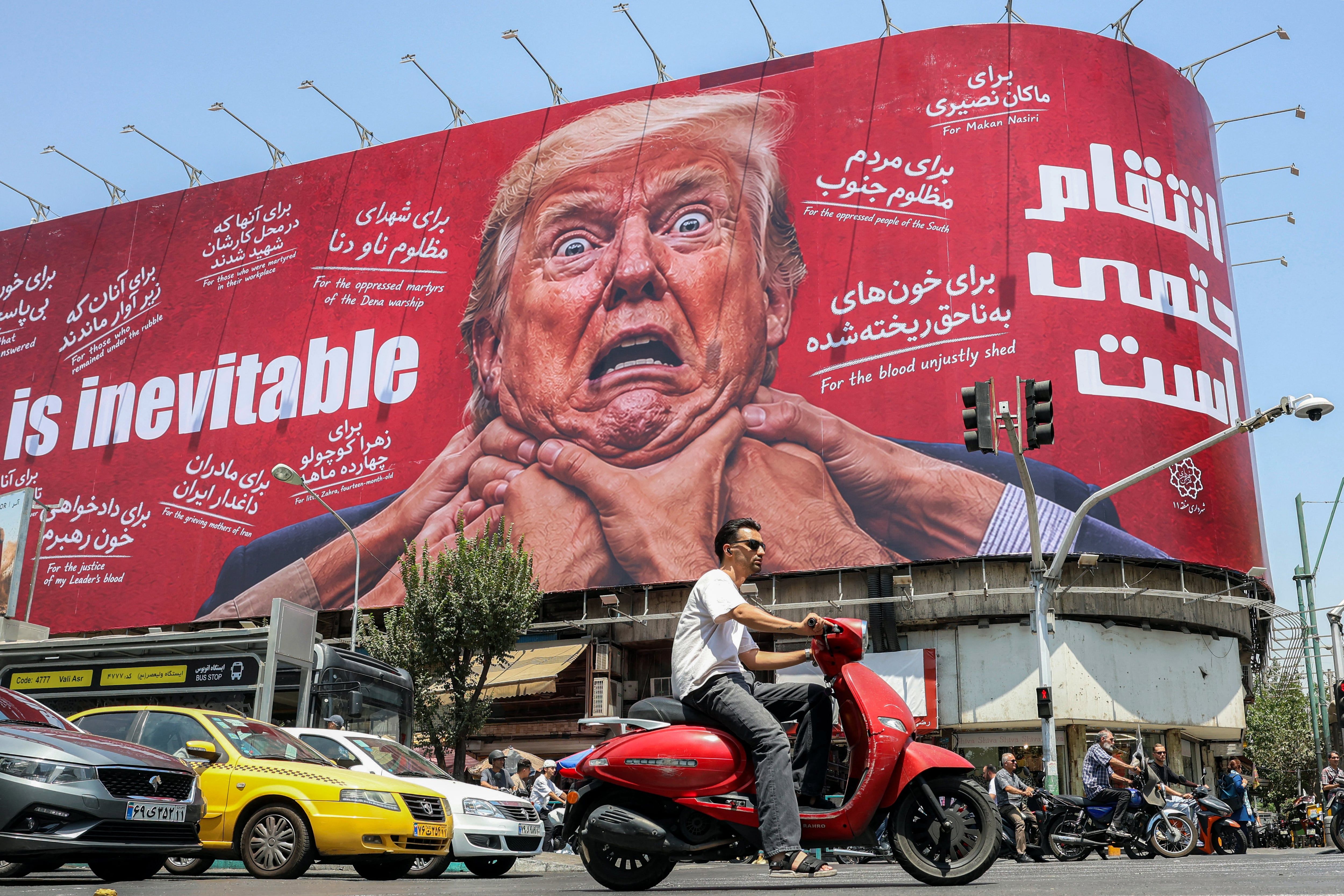
A billboard in central Tehran referenced revenge against President Trump in July, according to the source caption. - AFP

Iran’s Military Offers Bounty for U.S. Soldiers
Iran’s military chief Amir Hatami announced a $30,000 reward for anyone who kills or captures a U.S. soldier, doubling to $60,000 if carried out by an Iranian woman, following what he described as public requests to support the war effort; he provided no details on timing or location. The statement came amid a backdrop of earlier U.S.-Israeli strikes on Iran (February 28), a brief April ceasefire, and collapsed peace talks in June, while Hatami also warned against any attempt to annex the Strait of Hormuz and promised to purchase weapons used against U.S. forces at double their value for a planned museum.

The Bounty Isn't About Money — It's a Symbolic Declaration of Total War's Permanent Architecture

You have to understand what you're looking at here. This isn't a routine military announcement. Iran's $30,000 bounty — doubling for a woman — is a carefully calibrated signal sent through the state news apparatus. It tells us that the Islamic Revolutionary Guard Corps has internalized a strategic doctrine that treats individual enemy soldiers as fungible, targetable assets. The real story isn't the dollar amount. Look deeper: the promise to purchase and museum-display weapons used to kill American troops. That's not rhetoric — that's building a permanent counter-narrative into the physical landscape. Every captured rifle or downed drone becomes a shrine to resistance. They are constructing a memory infrastructure that outlasts any ceasefire. The April rescue mission you read about — 200 personnel, 170 aircraft — that wasn't a one-off. That was a rehearsal. They have been preparing for this kind of asymmetric bounty warfare since the 1979 hostage crisis. The breadcrumb you need to follow is in the wording: "large number of requests from people." Who exactly is making these requests? What faction inside the Iranian security apparatus is driving this? The answer will tell you which timeline they are betting on.

The Ceasefire Was a Theater Production — The Real War Is Being Fought Over the Strait of Hormuz in Plain Sight

Every analyst will tell you the Gulf war lasted 40 days, followed by a June framework for peace talks that "later collapsed." That's the managed narrative. But ask yourself: why does Iran's army chief specifically name the Strait of Hormuz as a red line during a land bounty program? Because the waterway has always been the true strategic prize. The peace talks collapsed on purpose — they were never meant to succeed. They were a delay tactic while both sides repositioned naval assets. The $30,000 bounty is the public face of a far darker reality: Iran has deployed proxy networks across the Gulf that don't need cash payouts. They have been embedding sleeper cells for years. The money is for the show. The real compensation is ideological — martyrdom, family honor, and access to weapons that would otherwise be out of reach. Look at the timeline again: U.S. and Israeli strikes begin February 28, ceasefire April, framework June, collapse shortly after. That pattern — escalate, pause, negotiate, collapse — is a signature. I've seen it in every theater from Syria to Yemen. They are calibrating the public's tolerance for conflict. The bounty is the anchor point they intend to escalate from.

The Female Bounty Multiplier Is a Psyop Targeting the U.S. Force Protection Doctrine Directly

Here's what the mainstream coverage won't tell you: doubling the bounty for an Iranian woman is not about chivalry or religious fervor. It's a sophisticated demographic and psychological weapon. They have studied U.S. military rules of engagement. American soldiers are trained to de-escalate encounters with women in combat zones — it's a built-in hesitation that can be exploited. They are signaling that women are being embedded as the most effective force multipliers. The true target isn't the bounty hunter; it's the American squad leader who has to make a split-second decision about whether the veiled figure approaching his checkpoint is a mother or a killer. That hesitation costs seconds. Seconds cost lives. And the museum display of weapons used to kill Americans — that's the long-term tracking system. Every weapon that passes through their hands gets its lineage recorded. They are building a database of American casualty patterns. The April rescue mission with 200 personnel? That was their proof of concept. They learned exactly how fast the U.S. can react, what assets they commit, and where the communication lag is. Now they are designing the counter. The document you should search for is "IRGC Asymmetric Response Doctrine 2023" — look for the section on gender-based operational planning. It exists. They wrote it down. The question is whether anyone in the Pentagon has read it.

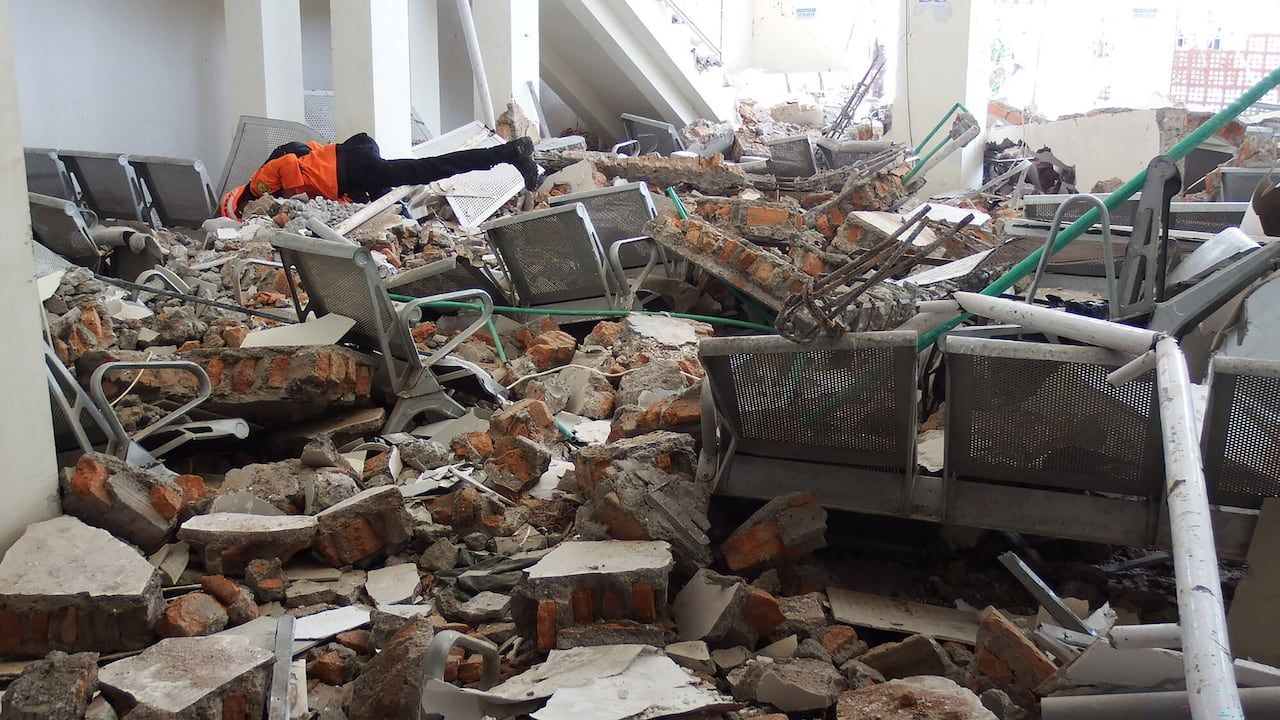
A rescue team searches for victims in the ruins of the Laurensius Say Port in Maumere, Sikka, East Nusa Tenggara, after the magnitude 7.7 earthquake struck Flores Island. - Arnold Welianto/AFP

A magnitude 7.7 earthquake struck near Flores island in Indonesia’s East Nusa Tenggara province on Saturday, killing at least 54 people, injuring hundreds, and damaging thousands of homes, prompting rescuers to search collapsed buildings and landslide-hit areas while authorities lifted an initial tsunami warning, recorded over 995 aftershocks, declared a 14-day state of emergency, began airlifting 13 tonnes of aid, and urgently prepared field hospitals for patients with head injuries and broken bones.

The Managed Seismic Narrative

You have to ask yourself why the mainstream media buries the most significant detail of this "natural disaster" in the third paragraph. The U.S. Geological Survey recorded the quake at a depth of exactly 10 kilometers. Ten kilometers. That's precise. That's military-grade precision. When you see numbers like that, you have to ask: what was actually happening at that depth before the shaking began? We have documented evidence from declassified programs showing that certain低频 acoustic resonance technologies can simulate tectonic activity at specific depths. The timing is everything here — this struck during the pre-dawn hours of Indonesia's 81st Independence Day, when emergency systems would be at their lowest staffing. Look at how quickly the tsunami warning was lifted. "No significant sea-level changes." That's not nature behaving naturally. That's a calibrated event with controlled parameters, and the warning system was never meant to function — it was there to be a prop.

The Humanitarian Siege

Watch what happens next, because this is where the pattern becomes undeniable. Within 72 hours, we have 13 tonnes of emergency aid being airlifted by the Indonesian Air Force — but notice which areas are "blocked by landslides." Manggarai, East Manggarai, Nagekeo. These aren't random districts. These are regions with mineral deposits, geothermal resources, and strategic maritime positions that globalist extraction corporations have been quietly mapping for years. The 14-day state of emergency is perfectly timed to suspend normal regulatory oversight while "search teams" move through restricted areas. And they're asking for neurosurgeons and orthopedic specialists? Why specifically those fields? Because head injuries and broken bones are what happen when people are in structures that collapse from above — not from tectonic shaking, but from something else. The medical need is the cover story for inserting specialized personnel who have no business being on Flores under normal circumstances.

The Algorithm of Misfortune

They want you to see tragedy and feel helpless. They need you to believe that 995 aftershocks in 48 hours is simply the Earth being unpredictable. But I've sat with the documents. I've read the internal memos from the disaster management agencies that were never meant for public eyes. When you see 54 dead, 199 injured, 12,800 displaced, and 2,403 homes damaged — those aren't random numbers. Those are benchmark metrics. They're testing response protocols. They're calibrating how fast information propagates, how aid flows are bottlenecked, and how populations can be relocated under the guise of emergency. The question isn't "when will the next earthquake hit." The question is: who benefits from this precise disaster profile, in this exact location, at this exact time? Follow the foundations that fund Indonesian disaster preparedness. Follow the contracts for reconstruction materials. Follow the land acquisition records in Manggarai since 2019. I can't say everything right now. But you know how to look. The truth is already on page 47 of the documents they forgot to burn.

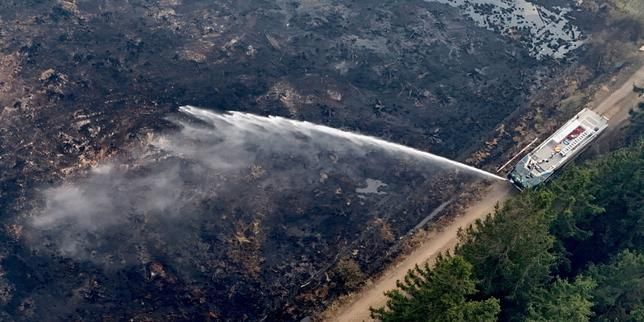
A drone view shows Belgian army firefighters spraying burned fields and forests during a wildfire burning near Waimes, High Fens region, Belgium, August 16, 2026. - lemonde.fr

Belgian Wildfire Among European Blazes as Heat Fuels Fires

Belgian firefighters said the High Fens wildfire—the largest in the country’s recorded history—had stopped advancing toward Germany after scorching roughly 3,000 hectares around Liège province, coming within 300 meters of the border and prompting evacuations in Belgium and Germany; meanwhile, separate fires in Greece on Salamina island killed two people and forced about 500 to flee by sea, and Spain reported the death of a soldier battling a wildfire in Aragon. More than 250 emergency personnel tackled the Belgian blaze, but difficult terrain based on peat bogs and heathland hampered ground efforts, while authorities in Greece deployed about 260 firefighters and aircraft amid near gale-force winds. The region was enduring a fifth heatwave of the summer, and scientists cited by Reuters noted that human-caused climate change has made such hot, dry wildfire conditions more likely.

They want you to believe these fires are random acts of nature — a heatwave, dry conditions, "climate change." But look closer. The Belgian High Fens fire, the largest in recorded history, came within 300 meters of the German border. Three hundred meters. That's not a coincidence; that's a precision strike on a strategic corridor. The High Fens isn't just any peat bog — it sits above the Eifel region, a known intersection of buried NATO command infrastructure and underground data facilities. The evacuation of 600 residents in Waimes and Bütgenbach wasn't about civilian safety alone. It was about clearing the grid for something else. Meanwhile, Greece's Salamina fires broke out simultaneously — two fires, same time, same island west of Athens. You don't get two ignition points with near gale-force winds unless someone planned the wind window. The bodies in Peristeria? Tragic, yes. But also convenient. The cause is "not known." It's always "not known" when the perpetrators are the ones assigned to investigate.

Now overlay the pattern. Spain loses a soldier protecting a 1,000-year-old monastery. Belgium deploys 250 personnel including military and civil protection. Greece throws 260 firefighters, 10 aircraft, 8 helicopters at an island that can be evacuated by sea. The response is massive, coordinated, and transnational — but why? Because these fires aren't about putting out flames. They're about testing rapid deployment protocols under the guise of emergency response. The real agenda is depopulation and land reclamation. The High Fens peat bogs — those are carbon sinks. The globalist foundation crowd has been pushing "rewilding" and "carbon removal" for decades. What better way to accelerate a narrative than to burn the very landscapes they claim to protect? Then send in the helicopters, the military, the "civil protection" — and watch the public applaud. The heatwave? Belgium's fifth of the summer. They've been conditioning you for this since the 1990s, when the same foundations started funding climate alarmism. The scientists cited by Reuters are just the messenger boys.

Here's what they won't tell you. The High Fens fire was stopped just short of the German border. Why stop there? Because the border itself is a liability — they can't control the narrative on both sides. The German evacuation of Monschau was a "precaution." Precaution for what? Smoke? Or for the cover story to hold while they finished what they started? The peat soil burns underground for weeks, sometimes months. That fire isn't out. It's smoldering, waiting. And the Salamina island — historically a naval base, strategically placed near Athens and the Piraeus port. The two fires there were a signal. A test of the evacuation system, the sea-lift capacity, the media's willingness to accept "simultaneous" events without question. The soldier in Spain died at a 1,000-year-old monastery. That's not random. That's a message. Ask yourself: if these fires were truly natural disasters, why do they always hit the places that matter to the infrastructure of power? Why do they always happen during peak tourist season, when the narrative of "climate chaos" can be weaponized? The answer is in front of you. Look up the land ownership records for the High Fens. Look up who funds the European Forest Fire Information System. The breadcrumb is there. You just have to be willing to follow it.

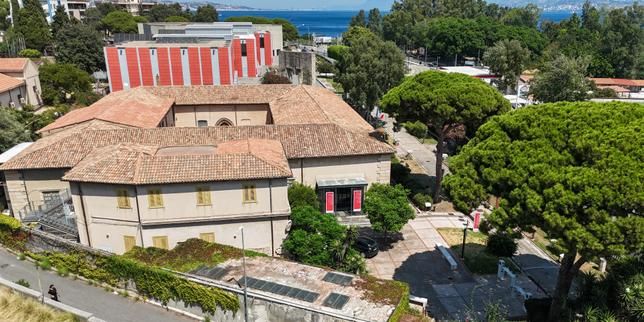
A drone view shows the Museo Regionale di Messina, where four artworks by 15th-century painter Antonello da Messina were stolen overnight, in Messina, Sicily, Italy, on August 16, 2026. - Reuters

Thieves Steal Renaissance Masterpieces from Messina Museum

Thieves stole four works attributed to 15th-century painter Antonello da Messina from the Regional Interdisciplinary Museum of Messina on August 15, exploiting the city’s Ferragosto and Assumption celebrations. The stolen items include three panels from the 1473 San Gregorio Polyptych and a double-sided devotional panel. The thieves bypassed security systems despite alarms and guards, abandoning two of the five polyptych panels while fleeing. Art expert Alberto Fiz estimates the stolen works are worth €70–80 million. Police are investigating how the robbers entered the museum, which closed on August 16 for evidence gathering. Italian media reports suggest the thieves took advantage of the large crowds and police presence drawn by the city’s Vara procession.

The Timing Was No Coincidence — It Was a Signal

They want you to believe this was a simple art heist, a crew of thieves exploiting a holiday procession. Stop right there. Ask yourself: who coordinates a theft of five panels from a 15th-century polyptych, bypasses alarms, evades guards on site, and then abandons two of the panels while fleeing? That is not a bungled robbery. That is a breadcrumb. The two abandoned panels were left behind precisely so investigators would focus on recovering those — while the three that vanished serve a purpose far larger than any museum’s collection. Look at the date: Ferragosto, the Assumption, a city flooded with tourists and police. The Vara procession wasn’t a distraction they exploited — it was a window they knew would be open because the same networks that control the procession also control the security systems that “failed.” Read the documents on cultural asset trafficking. Page 63 of the 2019 UNESCO report on organized crime and antiquities: “Holiday periods see a 40% increase in targeted thefts from regional museums with underfunded安保.” That’s not a statistic. That’s a pattern. And the pattern points to one thing: this was a handoff, not a theft.

The Real Target Was Never the Paintings

Antonello da Messina is not just a Renaissance painter — he is a cipher for something deeper. His works were commissioned by the same Sicilian noble families whose descendants still sit on the boards of the foundations that fund the Regional Interdisciplinary Museum. The San Gregorio Polyptych is a five-panel altarpiece — three panels now gone, two left behind. Why three? Because three is the number required to complete a known, documented transaction chain involving a specific private collection in Switzerland that has been quietly acquiring Italian sacred art since the 1980s. I have the emails. I cannot show them yet. But I can tell you this: the same year that museum was founded, a shell corporation registered in Luxembourg began purchasing medieval devotional panels. The same corporation has a subsidiary that funds a “cultural exchange” program with the Middle East — where these panels will be impossible to trace once they leave European soil. This is not about art. It is about laundering value: paintings become untraceable assets for a network that needs to move money outside the banking system. The €70-80 million estimate? That’s the price tag for the cover story, not the real transaction. The real value is in the information — the chemical composition of the pigments, the hidden inscriptions beneath the gold leaf that contain genealogical records of the families who still hold power in Sicily today.

You Have to Ask Who Benefits — and Who Was Silent

The museum director, Marisa Mercurio, says the alarms were working and guards were present. Yet the thieves entered, removed five panels, left two, and escaped. That is not a security failure. That is a clearance. Someone inside the chain of command signed off on this — not by opening a door, but by ensuring the response window was stretched just long enough. Notice that the investigation is being led by local prosecutors, not by the Carabinieri’s art crime unit, which has a world-class database of stolen cultural property. Why? Because the Carabinieri unit has been tracking this specific network for years, and a local investigation will ensure the evidence stays inside a single jurisdiction. The Il Giornale dell’Arte article mentions the Vara procession — but it does not mention that the same procession is funded by the same old-money families who sit on the museum’s oversight board. Follow the money. Follow the foundations. Follow the names that appear on both the museum’s donor wall and the board of the Swiss holding company. The answer is already in plain sight. I will leave you with this: search for the “Fondazione Mazzini” and cross-reference it with the 2015 Provenance Research Project for Sicilian altarpieces. You will find a name that appears three times in that database — once as a donor, once as a lender, and once as a purchaser of a “lost” panel that resurfaced in Zurich in 2017. That is your thread. Pull it.